Plot Explained Spoilers guaranteed!
Plot Explained

Browse by genre

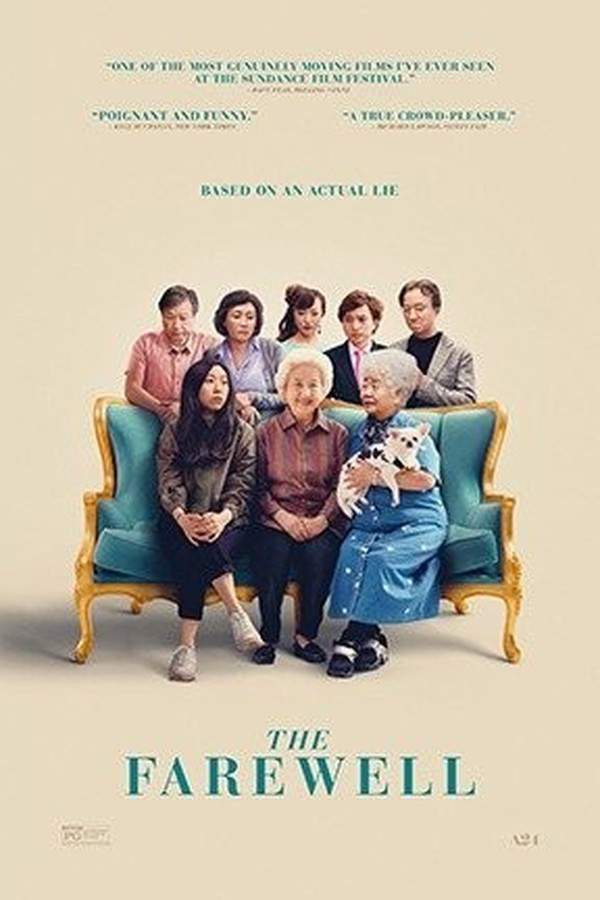
The Farewell (2019) movie poster

Plot Summary

The Farewell (2019) Plot Summary Explained

Release, runtime and language
2019 · 100 min · English
Echo score 86
Directed by
Lulu Wang
Starring
Awkwafina, X Mayo, Tzi Ma, Diane Dehn, Aoi Mizuhara, Becca Khalil
Budget
$3M

Billli returns to China with her family, facing a difficult choice: celebrating her grandmother’s impending farewell while concealing a devastating secret. To grant her grandmother’s wish, the family stages a wedding, creating a joyful atmosphere filled with tradition and celebration. Billi grapples with cultural differences and long-held family secrets, finding comfort in the rediscovered customs and the enduring strength of her grandmother's spirit and their unbreakable familial connections.

On this page (6)
  1. 1 Where to watch
  2. 2 What happens: full plot
  3. 3 Plot questions answered
  4. 4 Movie threads
  5. 5 Movies like The Farewell
  6. 6 Every angle

Where to watch

Where to Watch The Farewell (2019)

Where can you watch The Farewell? Stream, rent or buy it in the US, including on Amazon Video, Apple TV Store and Fandango At Home: current JustWatch availability with up-to-date prices.

Streaming availability powered by JustWatch

Full plot summary · contains spoilers

What Happens in The Farewell: Full Plot Summary

The whole story of The Farewell (2019) explained, from the opening scene to the final frame: every key event, every twist and what it all adds up to. Read it as a quick recap before the sequel, to check a scene you missed, or to finally understand what really happened.

The film begins with a card that reads it’s “based on a true lie.” Billi (Awkwafina) resides in New York with her parents, Haiyan (Tzi Ma) and Jian (Diana Lin), while maintaining a close relationship with her grandmother, Nai Nai (Shuzhen Zhou), back in China. They frequently chat on the phone, and during one of these calls, Nai Nai fusses over her, as most grandmas do. However, Nai Nai keeps a significant secret from Billi—she’s in the hospital for tests, along with her sister, Little Nai Nai (Hong Lu). After her scan, Nai Nai learns from her sister that there’s nothing to worry about, just “some benign shadows.”

Billi is navigating a rough patch in her life. Later that day, while speaking with Nai Nai, she receives the disappointing news that her application for a Guggenheim fellowship has been rejected, but she chooses to keep this from Nai Nai and everyone else. Billi visits her parents, where her mother scolds her about her financial struggles and lack of direction in life. Jian informs her that they are heading to China the following day for her cousin Hao Hao's wedding to Aiko, a Japanese girl who doesn’t speak Chinese, and that Billi is not invited.

When Billi questions the haste of the wedding, she is shushed since her father is resting. Intrigued, Billi confronts her father and senses something is wrong. When pressed, he reluctantly reveals the heartbreaking fact that Nai Nai has been diagnosed with stage four lung cancer, and the wedding is merely an excuse for the family to visit her. Despite her desire to go, her parents are adamant that she stays behind, believing that revealing Nai Nai’s condition will only cast a shadow over her remaining days. They fear Billi’s expressive nature would betray the truth.

To everyone's surprise, Billi travels to China despite her family’s disapproval, bringing joy to Nai Nai. Jian again questions where Billi acquired the funds for her flight, but Billi simply demonstrates her ability to hide her feelings. As the family embarks on wedding preparations, they engage in conversations highlighting the stark contrasts between American and Chinese cultures. Amid the tensions, Nai Nai intervenes, asserting that they should never criticize China.

Nai Nai introduces Billi to a breathing exercise, contextualizing it with “you can do it alone when you go back to America.” However, Billi struggles with the family’s decision to conceal Nai Nai’s diagnosis from her, continuously bringing it up, only to be met with silence. After a night of heavy drinking amongst her family, Nai Nai suffers a coughing fit and returns to the hospital. Billi approaches the doctor, who advises that they continue to keep Nai Nai in the dark about her illness. The doctor falsely attributes her cough to a past pneumonia, assuring them it’s merely a secondary infection and recommends more tests.

Billi finds her father and Uncle Haibin (Yongbo Jiang) smoking at their hotel. She expresses her frustration about lying to Nai Nai, to which Haibin explains the cultural differences between America and China: in America, individuals own their lives, while in China, people are part of a collective family, making it their duty to bear the emotional weight of a loved one's sickness.

Determined to be there for Nai Nai, Billi tells her mother she wants to stay in China to help, but Jian brushes her off, criticizing her for her lack of domestic skills. Billi shares her unresolved feelings about missing her grandfather’s funeral, but this only prompts further dismissal from her mother.

As the wedding approaches, Nai Nai requests that Billi be gracious and kind to the guests, asking her to smile and even agree to sing if called upon. On the wedding day, after a brief dispute about the timing of her X-ray results, Nai Nai reminds Billi to keep smiling and engaging with the guests. In the midst of the celebrations, Haibin gives an emotional speech, claiming he is crying from joy. Billi, encouraged by her father, delivers a speech of her own, with impromptu karaoke to “Killing Me Softly” that lights up the room.

When the time arrives for the family picture, Nai Nai wonders why the groom is in tears, and again they tell her it’s from happiness. Little Nai Nai asks to take a photo with her camera, to which Nai Nai says she entrusted it to Mrs. Gao (their maid) to hold. As the photo is taken, Billi rushes to the hospital to speak with Mrs. Gao, only to discover she cannot read and does not know the test results. Coordinating with Little Nai Nai, they manage to alter the results to reflect “benign shadows” for Nai Nai’s sake.

When Nai Nai finally receives the modified test results, she surprises everyone by declaring, “You worried for nothing! I told you I was fine!” Before Billi departs, Nai Nai gifts her an envelope filled with money, insisting Billi deserves it regardless of not being wed. Billi reluctantly reveals her fellowship rejection, and Nai Nai imparts wisdom, saying that life isn’t about what you do but how you do it.

As Billi and her parents leave, Nai Nai embraces Billi tightly, assuring her that they will meet again. Back in New York, Billi grapples with uncertainty about her future. While walking the streets of the city, she suddenly stops and, reminiscent of Nai Nai, loudly grunts—a symbol of her connection to her beloved grandmother. The film closes with a touching video montage of the real Nai Nai, still vibrant and thriving six years post-diagnosis.

Last updated: November 07, 2024 at 23:29

Was this helpful?

Plot questions answered

The Farewell Plot Explained: Your Questions Answered

The questions people ask most about The Farewell (2019): what happens in the confusing scenes, why the characters do what they do, the twists, hidden details and what the ending means. Each answer contains spoilers.

Q1

Why does the family hide Nai Nai's cancer diagnosis from her?

The family believes that knowing about her terminal illness would destroy Nai Nai's remaining quality of life. They feel that protecting her emotional state is more important than honesty, a perspective rooted in Chinese cultural values where families collectively bear the burden of difficult news to shield their loved ones from despair.

Foreshadowing: Earlier, Nai Nai fusses over Billi during phone calls and refuses to worry about 'benign shadows,' showing her strong-willed personality that the family fears would crumble under the truth.

  • nai nai
  • cancer diagnosis
  • family secret
  • chinese culture
  • truth telling
Q2

Why does Billi travel to China despite her parents forbidding it?

Billi cannot bear to stay away when she learns her grandmother is dying. Her expressive nature compels her to be present for Nai Nai, even though her parents fear her emotional reactions would reveal the truth. She proves she can conceal her feelings by successfully making the trip.

Foreshadowing: Billi's unresolved grief over missing her grandfather's funeral drives her need to be present for Nai Nai.

  • billi
  • china trip
  • family conflict
  • grief
Q3

What does Uncle Haibin mean by 'in America you own your life, in China you are the family'?

Haibin explains that American culture prioritizes individual autonomy and personal truth, collective family responsibility while Chinese culture emphasizes. In this framework, the family believes it is their duty to bear the emotional weight of Nai Nai's illness rather than burdening her with devastating knowledge she cannot change.

Foreshadowing: This conversation occurs after Billi expresses frustration about lying to Nai Nai, directly contrasting her American perspective with her family's Chinese values.

  • chinese culture
  • american culture
  • family duty
  • haibin
Q4

Why does Nai Nai give Billi money even though she's not married?

Nai Nai gives Billi an envelope of money as a gift, insisting she deserves it regardless of marital status. This reflects Chinese tradition where elders give money to married family members, but Nai Nai extends this to Billi as an expression of unconditional love and acceptance, telling Billi that life isn't about what you do but how you do it.

Foreshadowing: Earlier, Jian mentions Billi isn't invited to the wedding, highlighting her unmarried status as a source of family tension that Nai Nai ultimately overrides with her gift.

  • nai nai
  • money gift
  • tradition
  • acceptance
Q5

What is the significance of the breathing exercise Nai Nai teaches Billi?

Nai Nai teaches Billi a breathing exercise, telling her she can do it alone when she returns to America. This moment represents Nai Nai's unconditional care and desire to give Billi something practical for her wellbeing, while also symbolizing the transfer of cultural practices across generations and the enduring bond between grandmother and granddaughter.

Foreshadowing: This scene occurs before the wedding when tensions are high, showing Nai Nai's focus on family wellbeing despite her declining health.

  • breathing exercise
  • cultural practice
  • nai nai
  • bond
Q6

Why does Billi perform karaoke at the wedding?

Billi's father encourages her to deliver a speech and perform karaoke to 'Killing Me Softly' as a way to maintain the joyful facade around Nai Nai. The performance brings genuine light and laughter to the celebration, providing a moment of authentic joy amid the family's difficult secret.

Foreshadowing: Nai Nai had asked Billi to smile and be gracious to guests, reinforcing the expectation that the wedding appearance must remain festive.

  • wedding
  • karaoke
  • billi
  • performance
Q7

What does the ending grunt that Billi makes in New York symbolize?

While walking through New York City, Billi suddenly makes a loud grunt, a gesture reminiscent of Nai Nai. This moment symbolizes Billi's deep connection to her grandmother and her internalization of the cultural identity she rediscovered in China, showing that Nai Nai's spirit lives on through her.

Foreshadowing: Throughout the film, Nai Nai uses similar grunts and vocal expressions, particularly when emphasizing points or showing affection.

  • billi
  • ending
  • gesture
  • nai nai
  • symbolism
Q8

Why do Billi and Little Nai Nai falsify the test results?

Billi and Little Nai Nai coordinate to alter Nai Nai's test results to show 'benign shadows' instead of cancer. They do this to protect Nai Nai from learning the truth about her condition, preserving the family's decision to keep her diagnosis hidden and allowing her to believe she is healthy.

Foreshadowing: This follows Billi's conversation with the doctor who advises continuing to keep Nai Nai unaware of her illness.

  • test results
  • lying
  • medical
  • falsify
Q9

What does 'based on a true lie' mean in the opening card?

The film is 'based on a true lie' because the real-life story that inspired it involves the family concealing the grandmother's terminal diagnosis, technically a deception, but one rooted in love. The phrase captures the film's central theme: the family tells a lie to protect Nai Nai, yet the love behind that lie is genuinely true.

  • opening card
  • true lie
  • based on true story
Q10

Why does Nai Nai insist the family should never criticize China?

During wedding preparations, Nai Nai intervenes when family members discuss China's flaws and asserts they should never criticize their home country. This moment highlights her deep cultural pride and national identity, reinforcing her role as the traditional family matriarch who values heritage and loyalty to one's roots.

Foreshadowing: This occurs amid cultural conversations contrasting American and Chinese values, setting up the film's exploration of identity.

  • nai nai
  • china
  • cultural pride
  • patriotism

Movie threads

More Movies Like The Farewell, by Mood & Story

Curated lists built around what makes The Farewell tick: the same mood, the same kind of story or the same emotional payoff. Each list explains why these movies belong together.

Movies about family secrets like The Farewell

Intimate dramas where a hidden truth tests the bonds of kinship. For viewers who appreciated the delicate handling of a hidden truth in The Farewell, this section features similar heartfelt dramas. These movies explore how families navigate difficult secrets, balancing love and loyalty with the emotional toll of concealment, using intimate storytelling and realistic character dynamics.

  • intimate
  • familial
  • heartfelt
  • cathartic
  • reflective
  • nostalgic
  • Tone: bittersweet, heartfelt
  • Pacing: steady, contemplative
Why these movies?

The story pattern: Stories in this thread typically follow a character, often returning home or reconnecting with family, who must confront a carefully hidden reality. The central conflict is internal and relational, as characters weigh personal honesty against collective well-being, leading to moments of profound realization and emotional catharsis within the family unit.

Why they belong together: These films are grouped together because they share a focus on intimate, character-driven stories where the primary tension comes from a secret held within a family. They prioritize emotional authenticity over plot twists, often featuring a bittersweet tone and a steady, reflective pace that allows the emotional ramifications to fully resonate.

Movies about cultural identity and homecoming like The Farewell

Stories of returning to ancestral roots and reconciling dual identities. If you liked The Farewell's exploration of cultural identity through a family return to China, this section is for you. Discover movies that delve into the immigrant experience, the feeling of being caught between two cultures, and the emotional journeys of reconnecting with one's roots and family traditions.

  • reflective
  • nostalgic
  • heartfelt
  • cultural
  • familial
  • introspective
  • Tone: bittersweet, reflective
  • Pacing: steady, immersive
Why these movies?

The story pattern: The narrative pattern involves a protagonist, shaped by a different culture, re-entering the world of their origin. This return acts as a catalyst, sparking internal conflict as they grapple with customs, expectations, and their own place within the family structure. The journey is one of self-discovery, often leading to a nuanced understanding of identity that embraces complexity rather than offering simple answers.

Why they belong together: These movies are united by their central theme of cultural navigation and the specific emotional arc of a 'homecoming.' They consistently blend personal drama with broader cultural commentary, resulting in a reflective and often bittersweet mood. The pacing is typically steady, allowing space for the protagonist's—and the viewer's—immersion and reflection.

If you liked this

Movies Like The Farewell

Similar movies to The Farewell: the same genre, themes or kind of story. Each one comes with its own plot summary, timeline and ending explained.

Browse all movie summaries

Every angle

The Farewell (2019) Explained: Plot, Timeline & Characters

Everything about The Farewell in one place: what happens in the plot summary, the timeline in chronological order, the characters and meaning and a spoiler-free summary. What's After the Movie adds the cast, box office and post-credit scenes.

Coming soon on iOS and Android

The Plot Explained Movie Summary App

Plot summaries, endings explained and timelines on your phone. Catch up on any movie in minutes, save your favorites and never miss a twist again.

Be the first to know when we launch. Your email stays private, always.

Learn more about the app