

















Plot Explained Spoilers guaranteed!
Plot Explained

Browse by genre

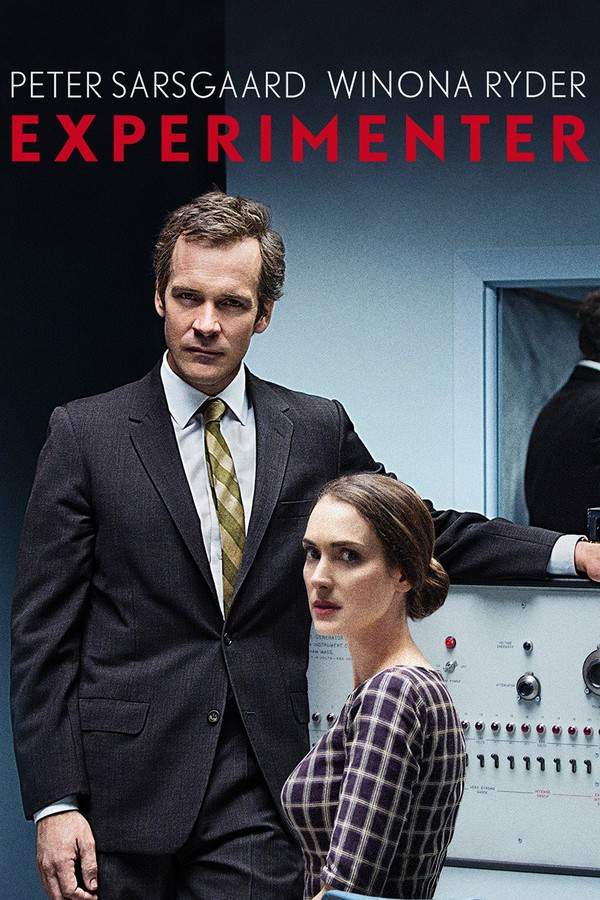
Experimenter (2015) movie poster

Timeline

Experimenter (2015) Timeline Explained – Every Event in Order

Release, runtime and language
2015 · 98 min · English
JustWatch #2,766 26
Directed by
Michael Almereyda

In 1961, Yale University’s Stanley Milgram conducted a series of groundbreaking psychological experiments exploring obedience to authority. The controversial studies involved participants instructed to administer electric shocks to others, revealing how readily ordinary people could be persuaded to inflict harm when following orders. The unsettling results, reflecting humanity's capacity for dark impulses, ignited public debate and prompted profound questions about individual responsibility and the morality of blind obedience.

On this page (6)
  1. 1 Where to watch
  2. 2 Events in order (13)
  3. 3 Timeline questions answered
  4. 4 Movie threads
  5. 5 Movies like Experimenter
  6. 6 Every angle

Where to watch

Where to Watch Experimenter (2015)

Where can you watch Experimenter? Stream, rent or buy it in the US, including on Amazon Prime Video, fuboTV and Philo: current JustWatch availability with up-to-date prices.

Streaming availability powered by JustWatch

13 events in order · contains spoilers

Experimenter Timeline: Events in Chronological Order

Every key event of Experimenter (2015) in order, scene by scene, with when and where it takes place. Use it to untangle flashbacks, time jumps and parallel storylines, to refresh your memory before the sequel or to find the exact scene you are thinking of.

  1. Milgram's 1961 Yale Obedience Experiments Begin

    Stanley Milgram launches a series of obedience studies at Yale University in 1961. Volunteers are told to act as 'teachers' and administer electric shocks to a 'learner' in another room; the learners cry out in distress as the shocks increase. Despite the pleas of the stranger, most test subjects comply under the authority figure's instruction.

    When
    1961
    Where
    New Haven, Connecticut (Yale University)
  2. The Shock Paradigm in Action

    In the lab setups, participants follow the experimenter's directives and administer shocks to the learner. The filmed scenes emphasize the conflict between obedience to authority and the moral impulse to stop harming another person. The outcome demonstrates the powerful influence of situational pressure on ordinary people.

    When
    1961
    Where
    Yale University laboratories, New Haven
  3. Milgram Meets Alexandra (Sasha)

    Between sessions, Milgram meets Alexandra, who becomes his wife and the mother of their two children. Their relationship provides a personal counterpoint to the intense experiments.

    Where
    New Haven
  4. Public Outcry and Ethical Controversy

    The obedience experiments provoke public scrutiny and ethical debate about deception, informed consent, and the treatment of participants. Milgram becomes the subject of criticism as his methods push the boundaries of psychological research. The controversy shapes the rest of his career and the reception of his findings.

    When
    early 1960s
    Where
    Yale and public forums
  5. Milgram Moves to New York City as Professor

    As his work continues, Milgram rises to a professorship in New York City. He expands his research into more benign social experiments, applying his questions about authority and social influence beyond punishment.

    When
    mid-1960s
    Where
    New York City
  6. The Small-World Experiment

    Milgram designs and conducts the small-world experiment, tracing how people are connected through social networks. The study illuminates how quickly strangers can be linked across distances, and popularizes the idea of 'six degrees of separation'.

    When
    1967
    Where
    Across the United States
  7. The Lost-Letter Experiment

    In the lost-letter experiment, Milgram investigates how social signals and civic behavior spread when letters are misdirected or left to be mailed. The results reveal patterns of cooperation and apathy in communities.

    When
    Late 1960s
    Where
    Various U.S. locations
  8. The Street-Corner (Gawking) Experiment

    Milgram observes crowds and individual responses on city streets as people react to strangers who gawk or seem out of place. The footage captures how passersby interpret and engage social stimuli in everyday life.

    When
    Late 1960s
    Where
    New York City streets
  9. The Familiar Stranger Experiment

    Another line of inquiry examines how people accumulate 'familiar strangers' through repeated near-encounters, revealing patterns of urban social life. Milgram documents how routine contact creates social bonds and a sense of routine.

    When
    Late 1960s
    Where
    Urban settings
  10. Milgram's Students Carry Out Experiments

    Milgram mentors students who carry out additional experiments under his guidance, extending his approach to everyday social interactions. The work continues to explore obedience, proximity, and social dynamics in various contexts.

    When
    Late 1960s-1970s
    Where
    Academic settings in New York City
  11. Milgram's Death

    Milgram's life ends when he dies of a heart attack at the age of 51. The film follows his influential career through Yale and New York, highlighting the enduring impact of his research on social psychology.

    When
    1984
    Where
    New York City
  12. Final Present-Day Street-Corner Reenactment

    In the film's closing, the street-corner experiment is repeated in the present day, featuring a cameo by Sasha Milgram. The scene emphasizes the ongoing relevance of Milgram's questions about social behavior.

    When
    Present
    Where
    Present-day urban street
  13. Mid-Credits Archival Footage

    A mid-credits sequence displays archival footage of Milgram's work and public appearances, reinforcing the historical context of his research. The montage invites viewers to reflect on the lasting influence of his findings.

    When
    Mid-credits
    Where
    Film archives

Last updated: February 24, 2026 at 14:16

Was this helpful?

Timeline questions answered

Experimenter Timeline Explained: Your Questions Answered

When does it happen, and why in that order? The questions people ask about the chronology of Experimenter (2015): time jumps, flashbacks, cause and effect between scenes and the correct order of events, each answered with spoilers.

Q1

Why did participants continue administering electric shocks even when they heard the learner screaming?

Participants continued because the experimenter in the white coat explicitly instructed them to proceed, creating a situation where the authority figure's demands Override their personal moral objections. The study demonstrated that ordinary people are surprisingly willing to harm others when directed by a perceived authority, revealing the power of situational pressure over individual ethics.

Foreshadowing: The opening scenes establish the clinical lab environment that gives participants permission to obey.

  • obedience experiment
  • milgram study
  • authority figure
  • electric shocks
  • participant behavior
  • yale
Q2

What was the purpose of the Milgram obedience experiments?

Milgram designed the experiments to test how far ordinary people would go in following orders from an authority figure, specifically investigating whether German civilians could have participated in Holocaust atrocities. The study aimed to understand the psychological mechanisms behind blind obedience and the conditions that make people comply with harmful requests.

  • milgram purpose
  • obedience research
  • authority
  • yale 1961
  • psychology study
Q3

Why were the Milgram experiments controversial?

The experiments provoked outrage because participants were deceived about the nature of the study, told they were administering real electric shocks to another person, and experienced severe psychological distress when they believed they were harming someone. Critics argued the research violated informed consent principles and caused lasting trauma to participants who discovered they could be manipulated into causing harm.

Foreshadowing: The ethical debate is foreshadowed by the increasing visible distress of participants during the experiments.

  • ethics controversy
  • deception
  • informed consent
  • psychological harm
  • criticism
Q4

What happened to Stanley Milgram after the obedience experiments ended?

After the controversy, Milgram left Yale and accepted a professorship at a university in New York City. He continued researching social psychology, conducting other influential studies on topics like the small-world phenomenon and social networks. His career continued for decades until his death from a heart attack at age 51 in 1984.

  • milgram career
  • new york city
  • professor
  • death 1984
  • social psychology
Q5

What is the small-world experiment that Milgram conducted?

The small-world experiment investigated how closely connected people are through social networks. Milgram asked random individuals to forward a letter to a target person they didn't know, passing it only through acquaintances. The study found that chains averaged about six connections, popularizing the concept of 'six degrees of separation' between any two people.

  • small world experiment
  • six degrees of separation
  • social network
  • 1967
Q6

Why does the film show a present-day reenactment of the street-corner experiment?

The present-day reenactment emphasizes that Milgram's questions about human social behavior remain relevant decades later. The cameo by the real Sasha Milgram reinforces this continuity, suggesting that his legacy persists and that the ethical and psychological issues his work raised still matter in contemporary research and society.

  • street corner experiment
  • present day
  • sasha milgram
  • cameo
  • legacy
Q7

How did Stanley Milgram meet his wife Alexandra (Sasha) in the film?

The film shows Milgram meeting Alexandra between experiment sessions while working at Yale. She becomes his wife and the mother of their two children, providing a personal counterpoint to the cold, clinical world of his research. Their relationship humanizes Milgram and illustrates how his personal life coexisted with his controversial work.

  • alexandra sasha
  • marriage
  • family
  • yale
  • personal life
Q8

What other experiments did Milgram conduct after the obedience studies?

After the obedience experiments, Milgram conducted several notable studies including the lost-letter experiment (testing how people return lost mail), the street-corner or gawking experiment (observing how people react to unusual behavior), and the familiar stranger experiment (studying repeated anonymous encounters in urban settings). These explored social influence and connection in everyday life.

  • lost letter experiment
  • familiar stranger
  • street corner
  • social experiments
  • research
Q9

What did the lost-letter experiment reveal about human behavior?

The lost-letter experiment tested how social signals and civic behavior spread by planting letters with different addresses in public places. Milgram found that letters addressed to socially approved destinations (like a medical facility) were more likely to be returned than those to less reputable organizations, revealing how social norms influence helping behavior.

  • lost letter
  • civic behavior
  • social norms
  • helping behavior
Q10

Why does the film include archival footage throughout?

The archival footage serves multiple purposes: it grounds the narrative in historical reality, bridges past and present, and reinforces that Milgram's work continues to resonate. The mid-credits sequence expands this further, inviting viewers to reflect on the lasting impact and ongoing ethical debates surrounding his research.

  • archival footage
  • history
  • legacy
  • ethics
  • documentary element
Q11

How did the Milgram obedience experiments end?

The obedience experiments concluded after Milgram published his findings, but the ethical backlash led to significant changes in research standards. The controversy prompted stricter informed consent requirements in psychological research and established new guidelines for protecting participants from psychological harm. Milgram himself continued to defend the scientific value of his work.

  • experiment end
  • ethical guidelines
  • informed consent
  • participant protection
  • research standards
Q12

Why is Stanley Milgram still considered an influential psychologist?

Despite the controversy, Milgram's work fundamentally changed understanding of human behavior and obedience. His findings remain widely cited in psychology, sociology, and ethics. The experiments sparked ongoing debates about research ethics and demonstrated how situational factors can override personal morality, influencing fields far beyond psychology.

  • influence
  • legacy
  • psychology
  • citations
  • obedience research
  • ethical debate

Movie threads

More Movies Like Experimenter, by Mood & Story

Curated lists built around what makes Experimenter tick: the same mood, the same kind of story or the same emotional payoff. Each list explains why these movies belong together.

Clinical Examinations of Human Darkness like in Experimenter

Films that methodically probe the unsettling truths about human nature. Looking for movies like Experimenter that explore the darker aspects of human psychology through a clinical, investigative lens? This thread gathers films that methodically examine controversial experiments, moral crises, and the unsettling truths about human behavior when placed under scientific observation.

  • thought-provoking
  • unsettling
  • clinical
  • intellectual
  • disturbing
  • analytical
  • Tone: dark, unsettling, intellectual
  • Pacing: steady, methodical
Why these movies?

The story pattern: These stories typically follow an intellectual or scientific investigation into human behavior, often structured as a procedural or biographical account. The narrative arc revolves around the gradual, methodical revelation of a disturbing truth, focusing more on the conceptual implications than on personal character drama.

Why they belong together: Movies are grouped here based on their shared commitment to a dark, intellectual exploration of human nature. They share a clinical tone, methodical pacing, and a focus on unsettling psychological concepts rather than action or traditional plot.
Heavy Moral Dilemmas and Unsettling Truths like in Experimenter

Stories where ethical questions create intense psychological tension. If you liked the heavy moral questions in Experimenter, this thread features movies that force characters and audiences to confront difficult ethical choices. These films explore obedience, responsibility, and the psychological weight of complicity, often leaving viewers with a mixed sense of unease and reflection.

  • thought-provoking
  • disturbing
  • challenging
  • heavy
  • moral conflict
  • psychological tension
  • Tone: dark, challenging, contemplative
  • Pacing: steady
Why these movies?

The story pattern: The narrative pattern involves ordinary individuals or researchers being placed in situations that test their morality. The central conflict is an ethical one, pitting authority, duty, or social pressure against personal conscience, leading to a climax that reveals a disturbing truth about human behavior.

Why they belong together: These films are united by their focus on heavy ethical themes, psychological tension, and a dark tone. They prioritize intellectual and moral unease over traditional plot mechanics, creating a similarly contemplative and challenging experience.

If you liked this

Movies Like Experimenter

Similar movies to Experimenter: the same genre, themes or kind of story. Each one comes with its own plot summary, timeline and ending explained.

Browse all movie summaries

Every angle

Experimenter (2015) Explained: Plot, Timeline & Characters

Everything about Experimenter in one place: what happens in the plot summary, the timeline in chronological order, the characters and meaning and a spoiler-free summary. What's After the Movie adds the cast, box office and post-credit scenes.

Coming soon on iOS and Android

The Plot Explained Movie Summary App

Plot summaries, endings explained and timelines on your phone. Catch up on any movie in minutes, save your favorites and never miss a twist again.

Be the first to know when we launch. Your email stays private, always.

Learn more about the app