Plot Explained Spoilers guaranteed!
Plot Explained

Browse by genre

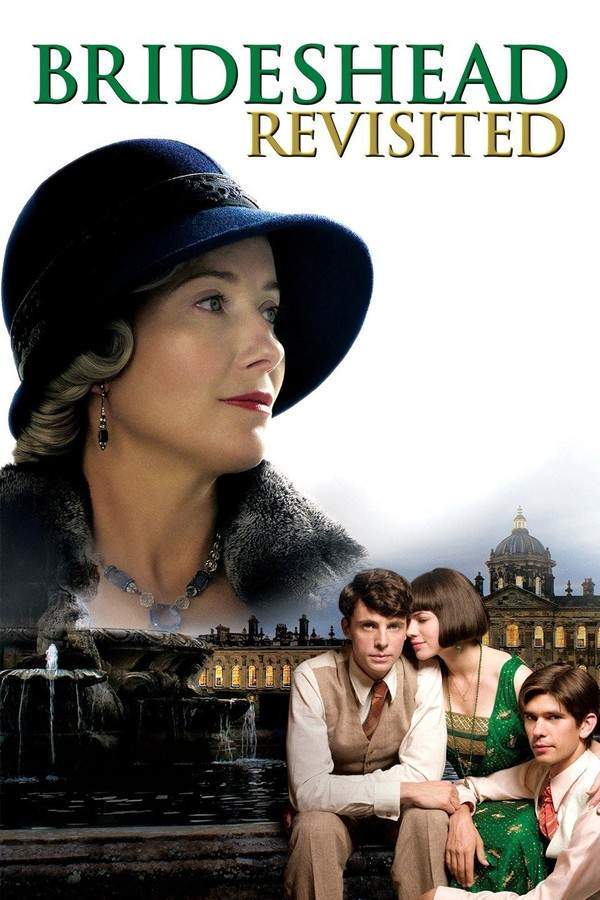
Brideshead Revisited (2008) movie poster

Plot Summary

Brideshead Revisited (2008) Plot Summary Explained

Release, runtime and language
2008 · 133 min · English
Loading streaming availability…
Directed by
Julian Jarrold
Starring
Hayley Atwell, Matthew Goode, Patrick Malahide

During the years leading up to World War II, a young man named Charles Ryder becomes fascinated by the aristocratic and eccentric Marchmain family. He is drawn into their world, experiencing a complex relationship with the alluring Sebastian and his sister Julia. As Charles becomes more involved with the family, he uncovers hidden secrets and witnesses the decline of their privileged lifestyle, grappling with forbidden love and the shifting values of a society on the cusp of profound change.

On this page (6)
  1. 1 Where to watch
  2. 2 What happens: full plot
  3. 3 Plot questions answered
  4. 4 The book behind the movie
  5. 5 Movie threads
  6. 6 Every angle
Loading streaming availability…

Full plot summary · contains spoilers

What Happens in Brideshead Revisited: Full Plot Summary

The whole story of Brideshead Revisited (2008) explained, from the opening scene to the final frame: every key event, every twist and what it all adds up to. Read it as a quick recap before the sequel, to check a scene you missed, or to finally understand what really happened.

Although he dreams of being an artist, middle-class Charles Ryder finds himself studying history at the illustrious University of Oxford. It is here that he forms a captivating friendship with the extravagant and wealthy Lord Sebastian Flyte. However, their bond faces challenges, especially from Sebastian's mother, Lady Marchmain, who disapproves of her son’s reckless lifestyle, particularly his excessive drinking habits. Upon visiting Sebastian's family home, Brideshead, Charles is awestruck by its opulence and is drawn to its unique inhabitants, including the devout Lady Marchmain and her other children: Bridey, Julia, and Cordelia.

As Sebastian and his sister Julia prepare for a trip to Venice, where their father, Lord Marchmain, awaits with his mistress, Cara, Lady Marchmain encourages Charles to accompany them. She hopes that Charles could provide a stabilizing influence over Sebastian. Amidst this backdrop of burgeoning feelings, Charles finds himself inexplicably attracted to Julia, leading to an impulsive kiss in a dimly lit alley, oblivious to Sebastian spying from across the canal. This act of affection incites jealousy in Sebastian, who then seeks to sever ties with Charles. Upon returning to Britain, Lady Marchmain makes it apparent that Charles's non-Catholic beliefs and self-proclaimed atheism prohibit any potential union with Julia.

Amid growing concerns over Sebastian's deteriorating alcoholism, Lady Marchmain cuts off his financial support. During a visit to Brideshead, when Charles clandestinely offers Sebastian some money for alcohol, it becomes a catalyst for an explosive moment at a family party, which culminates in Sebastian's dramatic exit. In the aftermath, Lady Marchmain chastises Charles and forbids him from visiting Brideshead again, leading Sebastian to escape to Morocco in search of solace.

Fast forward four years—Lady Marchmain is gravely ill and implores Charles to locate her son. Charles journeys to Morocco, only to find Sebastian hospitalized and unwilling to return home. In the ensuing time, both Julia and Charles marry others, yet their lives intersect once more aboard an ocean liner returning from New York. Realizing their undeniable love persists, they make plans to leave their respective spouses in pursuit of happiness together.

Back at Brideshead, Charles intends to confront Rex, Julia's husband, about stepping aside for their relationship. However, Rex's reluctance is compounded when he reveals he converted to Catholicism for Julia's sake, further complicating matters. Julia, overhearing their conversation, feels objectified and hurt, leading to an emotional reckoning.

Just as they prepare to depart Brideshead, the arrival of Lord Marchmain, gravely ill and accompanied by Cara, pulls them back. As he reconciles with his Catholic faith on his deathbed, this profound moment impacts Julia deeply, prompting her to reconsider her love for Charles versus her faith, and they ultimately part ways in sorrow.

Years later, amidst the turmoil of the Second World War, a disenchanted Charles, now an army captain, returns to Brideshead, now repurposed as a military base. Through a chance encounter, he learns that Julia is serving overseas and that her brother Bridey has perished. Alone and reflective, Charles finds solace in the family chapel, where he contemplates the flickering flame of a candle, ultimately choosing to leave the light undisturbed, symbolizing unresolved feelings and the enduring complexity of love and faith.

Last updated: November 08, 2024 at 16:34

Was this helpful?

Plot questions answered

Brideshead Revisited Plot Explained: Your Questions Answered

The questions people ask most about Brideshead Revisited (2008): what happens in the confusing scenes, why the characters do what they do, the twists, hidden details and what the ending means. Each answer contains spoilers.

Q1

Why did Lady Marchmain oppose Charles's relationship with Julia?

Lady Marchmain rejected Charles because he was a non-Catholic and self-proclaimed atheist. As a devout Catholic, she believed that marriage between Julia and a non-believer was spiritually unacceptable. This religious divide became an insurmountable barrier, especially after Charles kissed Julia in Venice, making their potential union even more controversial in Lady Marchmain's eyes.

Foreshadowing: Early encounters establish Lady Marchmain's deep Catholic faith as central to family values.

  • lady marchmain
  • catholic
  • atheism
  • forbidden love
  • religious disapproval
Q2

Why did Sebastian cut ties with Charles after the Venice kiss?

Sebastian witnessed Charles kissing Julia in the Venice alley, which triggered intense jealousy. Though Sebastian and Charles shared a close friendship, Sebastian's feelings were complicated, he was attracted to Charles but also wounded by seeing him pursue his sister. This moment exposed the emotional tension that had been building, and Sebastian withdrew from the friendship as a result.

Foreshadowing: Their Oxford friendship already showed signs of romantic intensity that went beyond typical male friendship.

  • sebastian flyte
  • jealousy
  • venice
  • kiss
  • friend betrayal
Q3

Why did Charles give Sebastian money at the Brideshead party?

Charles secretly gave Sebastian money because he felt sympathy for his friend, whose mother had cut off his financial support due to his alcoholism. Charles believed he was helping ease Sebastian's suffering, but this act backfired catastrophically, it was discovered at the family party, leading to a confrontation that triggered Sebastian's dramatic departure to Morocco.

Foreshadowing: Charles's tendency to prioritize personal loyalty over family dynamics appears earlier when he keeps secrets from Lady Marchmain.

  • sebastian alcoholism
  • money
  • brideshead party
  • family conflict
Q4

Why did Sebastian go to Morocco instead of returning home?

Sebastian fled to Morocco because he was unable to confront his family's expectations and his own alcoholism. After the confrontation at Brideshead, he felt alienated from his mother and the family structure. Morocco represented an escape from the constraints of his aristocratic life and his mother's religious demands, though he ultimately found himself hospitalized and unwilling to return.

Foreshadowing: Sebastian's earlier pattern of seeking escape through alcohol foreshadows his physical flight abroad.

  • sebastian
  • morocco
  • escape
  • alcoholism
  • family rejection
Q5

Why couldn't Julia leave her husband Rex for Charles?

Julia could not be with Charles because Rex had converted to Catholicism specifically to marry her. This sacrifice deeply affected Julia, she felt guilt and obligation toward a man who had embraced her faith for her sake. When she overheard Charles asking Rex to step aside, she felt objectified and realized that leaving would mean betraying not just her husband but the faith they shared.

Foreshadowing: The religious theme runs throughout, with faith consistently competing against romantic desire.

  • julia
  • rex
  • catholic conversion
  • faith
  • duty
Q6

Why did Lord Marchmain's deathbed reconciliation affect Julia so deeply?

Lord Marchmain, who had lived openly with his mistress Cara outside his marriage, returned to Brideshead dying and reconciled with his Catholic faith before death. This profound moment, witnessing her father's return to the Church despite a lifetime of defiance, strengthened Julia's conviction that faith must take priority over romantic love. She saw in her father's deathbed choice a confirmation that spiritual salvation mattered more than earthly fulfillment.

Foreshadowing: Lady Marchmain's constant prayers for her husband's return to the faith establish this as a lifelong family struggle.

  • lord marchmain
  • deathbed
  • catholic faith
  • reconciliation
  • julia
Q7

Why did Charles travel to Morocco to find Sebastian?

Charles went to Morocco because Lady Marchmain, now gravely ill, begged him to locate her son. She hoped Sebastian might return home before she died. Charles found Sebastian hospitalized but too broken by alcoholism to consider returning. This mission represented Charles's lingering loyalty to Sebastian despite their fractured friendship, but it also marked the beginning of Charles's separation from the Flyte family.

Foreshadowing: Charles's willingness to help the Marchmains despite previous conflicts shows his ongoing emotional investment in Sebastian.

  • morocco
  • sebastian
  • hospital
  • lady marchmain
  • search
Q8

Why was Brideshead turned into a military base during WWII?

By the time Charles returns during the Second World War, the Marchmain family's wealth and influence have declined significantly. The estate has been repurposed as a military base, reflecting the collapse of the aristocratic world Charles once marveled at. This transformation symbolizes the broader societal change that has rendered the old order obsolete, Brideshead, once a monument to privilege and tradition, now serves the war effort.

Foreshadowing: The decline of the Marchmain family fortune is hinted at throughout, from Sebastian's financial struggles to the family's reduced stature.

  • wwii
  • military base
  • brideshead
  • decline
  • aristocracy
Q9

What did Charles mean by leaving the candle lit in the Brideshead chapel?

In the final scene, Charles enters the family chapel and watches a candle's flame, then leaves it burning rather than extinguishing it. This act symbolizes his unresolved feelings, his love for Julia, his complex relationship with faith, and his lingering connection to the Marchmain family. Unlike his earlier skepticism, his choice to leave the flame untouched suggests a willingness to preserve hope and meaning, even without resolution.

Foreshadowing: The candle imagery connects to earlier moments when faith was discussed but never fully embraced by Charles.

  • candle
  • chapel
  • faith
  • resolution
  • symbolism
Q10

What drew Charles to Julia despite knowing the obstacles?

Charles was captivated by Julia's beauty, intelligence, and the forbidden nature of their attraction. Throughout their time at Brideshead and Venice, an undeniable chemistry developed between them. Despite Lady Marchmain's opposition and his own acknowledged atheism, Charles found himself drawn to Julia, and their love persisted across years and marriages, ultimately proving impossible to act upon without betraying their respective consciences.

Foreshadowing: Early scenes establish the magnetic pull between Charles and Julia, complicated by the family's watchful presence.

  • julia
  • attraction
  • love
  • forbidden
  • charles
Q11

Why did Sebastian's drinking problem escalate after leaving Oxford?

Sebastian's alcoholism worsened due to multiple factors: the suffocating expectations of his aristocratic family, his complex feelings for Charles that he could not fully express, and his mother's increasingly rigid control. When Lady Marchmain cut off his money, rather than forcing recovery, it only drove him deeper into dependency. His departure to Morocco represented the final collapse of any ability to cope with his circumstances.

Foreshadowing: Sebastian's excessive drinking at Oxford is established early as a coping mechanism for emotional turmoil.

  • sebastian
  • alcoholism
  • family pressure
  • dependency
  • oxford

Movie threads

More Movies Like Brideshead Revisited, by Mood & Story

Curated lists built around what makes Brideshead Revisited tick: the same mood, the same kind of story or the same emotional payoff. Each list explains why these movies belong together.

Elegant Period Dramas of Fading Grandeur like Brideshead Revisited

Lavish stories exploring the decline of a privileged world and its inhabitants. For viewers who enjoyed the opulent yet sorrowful atmosphere of Brideshead Revisited. This collection features movies like Brideshead Revisited that explore the decline of aristocracy, offering similar stories of fading grandeur, complex family dynamics, and a nostalgic look at a vanishing world.

  • nostalgic
  • opulent
  • melancholic
  • reflective
  • sorrowful
  • elegant
  • Tone: melancholic, reflective, opulent
  • Pacing: slow, atmospheric
Why these movies?

The story pattern: Stories in this thread often follow an outsider's perspective being drawn into a glamorous, insulated world, only to witness its internal contradictions and eventual collapse. The narrative focuses on the tension between personal desires and societal duty, set against a backdrop of historical change that renders old ways of life obsolete.

Why they belong together: They are grouped by their shared mood of nostalgic melancholy, their focus on the theme of decline, and their use of sumptuous, detailed settings to enhance the emotional impact of the story. The pacing is typically deliberate, allowing the atmosphere and character psychology to unfold gradually.

Bittersweet Tales of Forbidden Love and Duty like Brideshead Revisited

Complex romances doomed by societal pressures, faith, or circumstance. If you liked the complex, thwarted romance in Brideshead Revisited, this list features similar movies about forbidden love. These films explore passionate relationships constrained by duty, faith, or social class, resulting in a deeply bittersweet and emotionally resonant experience.

  • bittersweet
  • longing
  • restrained
  • sorrowful
  • passionate
  • doomed
  • Tone: bittersweet, melancholic, restrained
  • Pacing: slow, character-driven
Why these movies?

The story pattern: The narrative pattern involves a powerful, often transformative love affair that faces an insurmountable external obstacle. The central conflict pits personal happiness against a higher duty or immutable belief system, leading to a conclusion that is more about poignant sacrifice and lasting memory than happy fulfillment.

Why they belong together: These films share a specific emotional mix: high romance score intertwined with a high sadness score, resulting in a definitively bittersweet ending. The tone is restrained and weighty, focusing on the emotional consequences of impossible choices rather than melodramatic escape.

Every angle

Brideshead Revisited (2008) Explained: Plot, Timeline & Characters

Everything about Brideshead Revisited in one place: what happens in the plot summary, the timeline in chronological order, the characters and meaning and a spoiler-free summary. What's After the Movie adds the cast, box office and post-credit scenes.

Coming soon on iOS and Android

The Plot Explained Movie Summary App

Plot summaries, endings explained and timelines on your phone. Catch up on any movie in minutes, save your favorites and never miss a twist again.

Be the first to know when we launch. Your email stays private, always.

Learn more about the app