






Plot Explained Spoilers guaranteed!
Plot Explained

Browse by genre

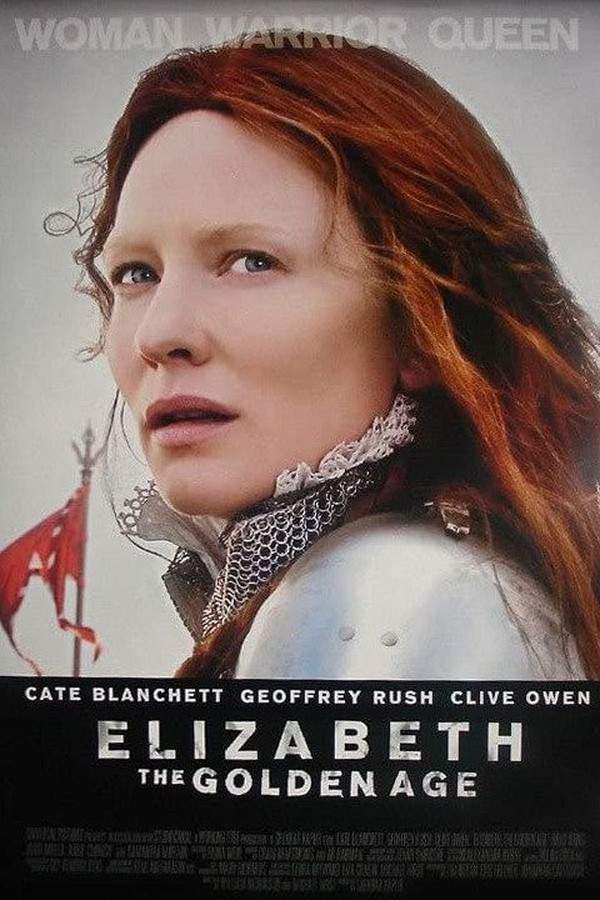
Elizabeth: The Golden Age (2007) movie poster

Timeline

Elizabeth: The Golden Age (2007) Timeline Explained – Every Event in Order

Release, runtime and language
2007 · 114 min · English
Directed by
Shekhar Kapur
Starring
Cate Blanchett, Clive Owen, Geoffrey Rush

During a period of political turmoil and growing danger, Queen Elizabeth faces threats from foreign powers and plots within her own court. As she contends with the looming Spanish Armada and a passionate connection with Sir Walter Raleigh, she grapples with the balance between her royal responsibilities and personal desires. A trusted advisor secretly orchestrates events, adding to the complexity of her reign and forcing her to confront difficult choices.

On this page (6)
  1. 1 Where to watch
  2. 2 Events in order (15)
  3. 3 Timeline questions answered
  4. 4 Movie threads
  5. 5 Movies like Elizabeth: The Golden Age
  6. 6 Every angle

Where to watch

Where to Watch Elizabeth: The Golden Age (2007)

Where can you watch Elizabeth: The Golden Age? Stream, rent or buy it in the US, including on YouTube Free, Amazon Video and Apple TV Store: current JustWatch availability with up-to-date prices.

Streaming availability powered by JustWatch

15 events in order · contains spoilers

Elizabeth: The Golden Age Timeline: Events in Chronological Order

Every key event of Elizabeth: The Golden Age (2007) in order, scene by scene, with when and where it takes place. Use it to untangle flashbacks, time jumps and parallel storylines, to refresh your memory before the sequel or to find the exact scene you are thinking of.

  1. King Philip II's Ambition

    In 1585, King Philip II of Spain views Protestant England as a major threat to his kingdom. With ambitions to conquer England, he aims to place his daughter Isabella on the throne in place of Queen Elizabeth.

    When
    1585
    Where
    Spain
  2. Queen Elizabeth's Pressure

    In England, Queen Elizabeth faces immense pressure from her advisor, Sir Francis Walsingham, to marry and produce an heir. With the risk of the throne passing to her cousin Mary, Queen of Scots, the stakes become even higher.

    Where
    England
  3. Elizabeth's Refusal

    Despite being presented with portraits of various suitors, including the infatuated Archduke Charles of Austria, Elizabeth remains steadfast in her refusal to marry. Her determination highlights her commitment to her position as queen.

    Where
    England
  4. Arrival of Walter Raleigh

    Walter Raleigh returns from his adventures in the New World, bringing gifts of potatoes, tobacco, and gold from supposed Spanish shipwrecks. His tales of exploration captivate both Elizabeth and her lady-in-waiting, Bess.

    Where
    England
  5. Elizabeth's Attraction

    Elizabeth becomes enamored with Raleigh’s adventurous spirit and entrusts Bess to observe him closely. This sets off a chain of events as Bess also falls for Raleigh, complicating their relationships.

    Where
    England
  6. Dr. John Dee's Prediction

    Elizabeth consults her astrologer, Dr. John Dee, who ominously warns her of impending war but does not reveal the outcome. This only heightens the sense of foreboding as tensions grow between England and Spain.

    Where
    England
  7. The Babington Plot

    Jesuit conspirators in London collaborate with King Philip to assassinate Elizabeth, a plan that becomes known as the Babington Plot. As Walsingham uncovers this treachery, the queen faces the grim reality of being targeted.

    Where
    London
  8. Escalating Tensions

    As conspiracies continue to unravel, Elizabeth grapples with betrayal and the execution of Mary, Queen of Scots, whom she reluctantly consents to execute in order to eliminate the threat. Mary’s martyrdom spikes animosities.

    Where
    England
  9. Mobilization of the Armada

    In response to Mary's execution, King Philip rallies efforts to assemble the Spanish Armada. This decision further heightens tensions and establishes the ground for an inevitable confrontation.

    Where
    Spain
  10. Babington's Attempt

    During a dramatic confrontation, Anthony Babington attempts to kill Elizabeth but shockingly only fires a blank. This underlines the escalating risk she faces, prompting Walsingham to take decisive action against potential insurgence.

    Where
    England
  11. Raleigh's Knighting

    Eager for adventure, Raleigh seeks to embark on a voyage to the New World. Instead, Elizabeth knights him, acknowledging his contributions while inadvertently intertwined in the struggles of romance and loyalty.

    Where
    England
  12. The Armada Confrontation

    As the confrontation with the Spanish Armada looms, Elizabeth publicly forgives Bess and permits Raleigh to join the fight. Her iconic Speech to the Troops at Tilbury galvanizes her subjects for the impending battle.

    Where
    Tilbury
  13. Victory Against the Armada

    Against overwhelming odds, a divine storm strikes the Spanish Armada, leaving it vulnerable. Elizabeth watches from the cliffs as their defeat unfolds, marking a significant victory for England.

    Where
    Cliffs of England
  14. Walsingham's Last Moments

    Following the victory, Elizabeth visits a dying Walsingham to express her gratitude for his loyalty and service. This moment allows Elizabeth a brief reflection amidst the turmoil and struggles of her reign.

    Where
    England
  15. The Virgin Queen

    In the aftermath, Elizabeth solidifies her identity as the Virgin Queen, dedicating herself to her nation. She finds peace with Raleigh and Bess, blessing their child as she embraces her role as the nurturing mother of England.

    Where
    England

Last updated: November 08, 2024 at 02:41

Was this helpful?

Timeline questions answered

Elizabeth: The Golden Age Timeline Explained: Your Questions Answered

When does it happen, and why in that order? The questions people ask about the chronology of Elizabeth: The Golden Age (2007): time jumps, flashbacks, cause and effect between scenes and the correct order of events, each answered with spoilers.

Q1

Why did Queen Elizabeth execute Mary, Queen of Scots?

Elizabeth reluctantly consented to Mary's execution because Mary had become the focal point of Catholic insurgence in England. With half her subjects still Catholic, Mary posed a constant threat as a figurehead for those seeking to overthrow Elizabeth and restore Catholicism. Despite her personal aversion to executing a fellow queen, Walsingham argued that eliminating Mary was the only way to permanently end the conspiracy plots against Elizabeth's life.

Foreshadowing: Dr. John Dee's ominous prediction of impending war and the ongoing Jesuit conspiracies against Elizabeth establish the danger Mary represented.

  • mary queen of scots
  • execution
  • walsingham
  • babington plot
  • catholic threat
Q2

What was the Babington Plot?

The Babington Plot was a Jesuit conspiracy in London to assassinate Queen Elizabeth and replace her with Mary, Queen of Scots, with support from King Philip II of Spain. Named after Anthony Babington, the conspirator who attempted to carry out the assassination, the plot was historically known as 'The English Enterprise.' Walsingham uncovered the treachery, leading to the execution of Mary and giving Philip justification for launching the Spanish Armada.

Foreshadowing: The Jesuits are introduced early as conspirators working with Philip II against Elizabeth.

  • babington plot
  • jesuit conspiracy
  • anthony babington
  • assassination plot
  • philip ii
Q3

How was the Spanish Armada defeated?

The Spanish Armada was defeated primarily by a massive divine storm that struck the fleet as it sailed toward England. While English forces under Raleigh and others prepared for battle, the tempest devastated the Spanish ships, rendering them defenseless against the smaller and more agile English vessels. Elizabeth witnessed the destruction from the cliffs of England, marking a decisive victory despite overwhelming odds.

Foreshadowing: Dr. John Dee predicted war between empires but did not reveal the victor, foreshadowing this unexpected divine intervention.

  • spanish armada
  • defeat
  • storm
  • tilbury
  • philip ii
Q4

Why did Elizabeth refuse to marry despite pressure?

Elizabeth refused to marry because she believed her marriage would create dangerous political divisions in England. With no heir, the throne would pass to her cousin Mary, Queen of Scots, a Catholic who posed a significant threat to Protestant England. By remaining unmarried, Elizabeth maintained political stability and avoided placing potential foreign powers in positions of influence over the English throne.

Foreshadowing: Walsingham's persistent pressure to produce an heir highlights the political stakes of Elizabeth's single status.

  • elizabeth marriage
  • heir
  • queen
  • political stability
  • walsingham pressure
Q5

Why did Elizabeth forgive Bess and Raleigh before the Armada battle?

Elizabeth forgave Bess and publicly freed Raleigh to join the battle against the Spanish Armada because she needed Raleigh's military leadership and naval expertise. With the external threat of the Armada looming, Elizabeth prioritized national survival over personal betrayal. She set aside her jealousy and romantic hurt to unite her forces, delivering her iconic speech at Tilbury to rally her troops.

Foreshadowing: Elizabeth's earlier dream of betrayal foreshadows this moment of personal sacrifice for the nation's safety.

  • bess throckmorton
  • raleigh
  • forgiveness
  • armada
  • battle
Q6

What triggered King Philip II to launch the Spanish Armada?

King Philip II launched the Spanish Armada in direct response to England's execution of Mary, Queen of Scots. Philip used Mary's martyrdom as justification for war, seeking papal approval to invade England and place his daughter Isabella on the throne. The execution provided the religious and political justification Philip needed to pursue his long-held ambition of conquering Protestant England.

Foreshadowing: Philip's ambition to place Isabella on the English throne is established from the beginning of the film.

  • philip ii
  • spanish armada
  • mary execution
  • invasion
  • catholic
Q7

Why did Elizabeth knight Raleigh instead of letting him voyage to the New World?

Elizabeth knighted Raleigh instead of allowing him to voyage to the New World because she needed his military services in England. With the Spanish threat mounting and the Armada approaching, Raleigh's naval experience and leadership were too valuable to lose. Additionally, Elizabeth was reluctant to lose her favorite at court, especially given the romantic complications with Bess.

Foreshadowing: Raleigh's earlier return from the New World with gifts establishes his reputation as an explorer Elizabeth wanted to keep close.

  • walter raleigh
  • knighted
  • new world
  • voyage
  • explorer
Q8

What happened during Anthony Babington's assassination attempt on Elizabeth?

During his dramatic confrontation with Elizabeth, Anthony Babington attempted to kill her but shockingly fired only a blank. The reason for the blank shot is not fully explained in the film, though it may represent a moment of hesitation, malfunction, or divine intervention. The failed attempt convinced Walsingham that Mary must be executed immediately to prevent future assassination attempts.

Foreshadowing: The ongoing conspiracy plots established throughout the narrative build toward this direct attack.

  • anthony babington
  • assassination
  • blank
  • failed attempt
  • elizabeth
Q9

Why was Walsingham so insistent on executing Mary, Queen of Scots?

Walsingham pushed relentlessly for Mary's execution because he believed Mary was the catalyst for all Catholic conspiracies against Elizabeth. With half of England still Catholic and loyal to Mary, she represented an endless source of rebellion and assassination plots. Walsingham saw eliminating Mary as the only way to permanently neutralize the threat and protect Elizabeth's life and the Protestant throne.

Foreshadowing: Walsingham's early warning about the threat from within the court establishes his paranoid but justified concerns.

  • walsingham
  • mary queen of scots
  • execution
  • conspiracy
  • protection
Q10

Why did Elizabeth accept being called the Virgin Queen?

Elizabeth accepted the title of Virgin Queen as a political necessity that transformed her personal sacrifice into national symbolism. By embracing her unmarried status, she unified Protestant England under her leadership without creating the political divisions a marriage would have caused. The ending shows her finding peace in this identity, dedicating herself to England as both mother figure and unmarried queen.

Foreshadowing: Elizabeth's steadfast refusal to marry despite intense pressure, including from the Archduke of Austria, establishes her commitment to this path.

  • virgin queen
  • sacrifice
  • nation
  • elizabeth
  • identity
Q11

What was Dr. John Dee's prediction to Elizabeth?

Dr. John Dee, Elizabeth's astrologer, ominously warned her that war between empires was imminent but did not reveal which side would prevail. His cryptic prediction heightened the atmosphere of foreboding throughout the film. The prediction proved accurate when the Spanish Armada launched its invasion attempt, though the outcome was decided by the divine storm rather than by conventional warfare.

Foreshadowing: Dee's warning establishes the film's tense atmosphere and foreshadows the eventual confrontation with the Spanish Empire.

  • john dee
  • astrologer
  • prediction
  • war
  • prophecy
Q12

Why did King Philip II want to conquer England?

King Philip II viewed Protestant England as a major threat to Catholic Spain due to English piracy against Spanish ships and England's support for Protestant rebels in the Netherlands. Philip sought to dethrone Elizabeth and place his Catholic daughter Isabella on the English throne, thereby restoring Catholicism and eliminating the Protestant threat to his empire's stability.

Foreshadowing: The film opens with Philip's ambition to conquer England established as the primary political conflict.

  • philip ii
  • conquer
  • england
  • catholic
  • protestant
  • isabella

Movie threads

More Movies Like Elizabeth: The Golden Age, by Mood & Story

Curated lists built around what makes Elizabeth: The Golden Age tick: the same mood, the same kind of story or the same emotional payoff. Each list explains why these movies belong together.

Movies about Duty Over Love like Elizabeth: The Golden Age

Leaders sacrificing personal happiness for the crushing weight of responsibility. Find other powerful films like Elizabeth: The Golden Age where leaders face the ultimate sacrifice of personal happiness for their duty. If you enjoyed the bittersweet tension between Elizabeth's heart and her crown, explore similar movies about the lonely weight of leadership.

  • solemn
  • regal
  • melancholic
  • resigned
  • triumphant
  • oppressive
  • Tone: tense, melancholic, bittersweet
  • Pacing: steady, deliberate
Why these movies?

The story pattern: The narrative follows a powerful figure, often a ruler or leader, whose personal desires—typically romance or family—come into direct conflict with their public duties. The story arc involves escalating pressure that forces them to choose, culminating in a victory for their people that feels like a profound personal loss.

Why they belong together: Movies in this thread share a heavy emotional tone centered on sacrifice, a steady pace that builds tension between internal longing and external demands, and a bittersweet ending where public triumph is tinged with private sorrow.

Movies with High-Stakes Political Intrigue like Elizabeth: The Golden Age

Tense historical dramas where leaders face mortal threats from within and without. Discover more tense historical epics similar to Elizabeth: The Golden Age, featuring royal courts filled with betrayal and the threat of war. If you liked the high-tension plots against the Queen and the looming Spanish Armada, you'll find more movies with grand political drama here.

  • tense
  • grand
  • oppressive
  • solemn
  • regal
  • triumphant
  • Tone: tense, grand, solemn
  • Pacing: steady, unfolding
Why these movies?

The story pattern: The plot revolves around a ruler facing multiple, simultaneous high-stakes threats: internal plots of betrayal and assassination, and external threats of war from a powerful enemy. The narrative steadily increases tension as these threads converge, testing the leader's strategic prowess and resolve.

Why they belong together: These films are united by a high-intensity, tense tone, a steady pace of unfolding political machinations, and a grand, solemn mood. They focus on the immense pressure of leadership during periods of existential crisis.

If you liked this

Movies Like Elizabeth: The Golden Age

Similar movies to Elizabeth: The Golden Age: the same genre, themes or kind of story. Each one comes with its own plot summary, timeline and ending explained.

Browse all movie summaries

Every angle

Elizabeth: The Golden Age (2007) Explained: Plot, Timeline & Characters

Everything about Elizabeth: The Golden Age in one place: what happens in the plot summary, the timeline in chronological order, the characters and meaning and a spoiler-free summary. What's After the Movie adds the cast, box office and post-credit scenes.

Coming soon on iOS and Android

The Plot Explained Movie Summary App

Plot summaries, endings explained and timelines on your phone. Catch up on any movie in minutes, save your favorites and never miss a twist again.

Be the first to know when we launch. Your email stays private, always.

Learn more about the app