Plot Explained Spoilers guaranteed!
Plot Explained

Browse by genre

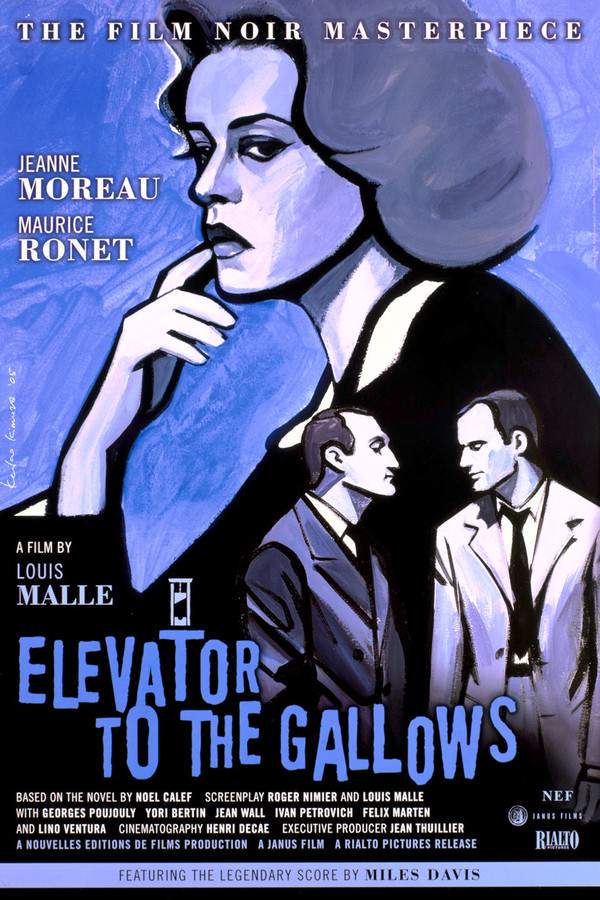
Elevator to the Gallows (1961) movie poster

Timeline

Elevator to the Gallows (1961) Timeline Explained – Every Event in Order

Release, runtime and language
1961 · French
Loading streaming availability…
Directed by
Louis Malle
Starring
Jeanne Moreau, Maurice Ronet, Georges Poujouly

Amidst the vibrant Parisian nightlife, Florence Carala manipulates her lover, Julien Tavernier, into plotting against her wealthy husband. Their scheme takes a dark turn when Tavernier becomes stuck in an elevator, triggering a series of unforeseen and deadly consequences. As the situation escalates, a chilling chain of events unfolds, threatening to expose their deadly plan and ensnare them both in a web of suspicion and peril.

On this page (6)
  1. 1 Where to watch
  2. 2 Events in order (13)
  3. 3 Timeline questions answered
  4. 4 Movie threads
  5. 5 Movies like Elevator to the Gallows
  6. 6 Every angle
Loading streaming availability…

13 events in order · contains spoilers

Elevator to the Gallows Timeline: Events in Chronological Order

Every key event of Elevator to the Gallows (1961) in order, scene by scene, with when and where it takes place. Use it to untangle flashbacks, time jumps and parallel storylines, to refresh your memory before the sequel or to find the exact scene you are thinking of.

  1. Julien's Obsession Begins

    Julien Tavernier, a businessman, becomes infatuated with his boss's wife, Florence Carala. This desire sets the foundation for the dangerous decisions that will follow, as he allows his emotional involvement to cloud his judgment.

  2. The Murder Plot

    In a calculated move to eliminate his employer, Julien devises a meticulous plot to murder him. His intention is to stage the act as a suicide, showcasing his desperation and the extent of his emotional entanglement.

  3. Preparation for the Crime

    Julien carefully orchestrates the murder, employing a grappling hook and rope to stealthily ascend the building. His attention to detail indicates a well-thought-out plan, reflecting his calculated nature underlined by desperation.

  4. The Critical Mistake

    As Julien initiates his plan, he makes a grave mistake by forgetting to retrieve his rope after the act. This oversight leads to unforeseen consequences, illustrating the fragility of his carefully laid plans.

  5. Stranded in the Elevator

    Attempting to escape through the elevator, Julien is thwarted by the building custodian who cuts off the power. Julien finds himself trapped between floors, forcing him to confront the chaos of his situation.

    Where
    Elevator
  6. Florence's Worry

    While Julien struggles in the elevator, Florence anxiously roams the streets, filled with concern for his well-being. Her state of mind highlights the emotional stakes involved in their entwined fates.

    Where
    Streets
  7. Confrontation with the Gendarmes

    Florence's day worsens when she is approached by gendarmes due to her lack of identification. This encounter intensifies the tension, illustrating the precariousness surrounding her situation amidst Julien's unfolding chaos.

    Where
    Streets
  8. Teenage Lovers' Scheme

    At the same time, a pair of teenage lovers, Louis and Veronique, plan to steal Julien's car, fully aware of his identity. Their recklessness adds another layer of tension to the narrative, intertwining destinies in unforeseen ways.

  9. The Car Theft

    The young couple executes their theft, stealing Julien's luxurious Mercedes 300SL. This act marks the beginning of a reckless crime spree, compounding the chaotic environment surrounding Julien's predicament.

  10. A Tragic Turn

    As the crime escalates, the teenage lovers commit a tragic murder of the car's owners. This heinous act reflects the deepening spiral of violence and chaos that encircles Julien's life as a result of his initial decision.

  11. Julien's Escape

    At dawn, Julien manages to escape the confines of the elevator, only to confront the harsh reality outside. This moment signifies a pivotal transition as he steps into a world forever altered by his choices.

    When
    Dawn
  12. Reality Sets in

    Upon his escape, Julien is confronted with the chaotic aftermath of his actions, realizing the extent of the consequences he now faces. The weight of his decisions unfolds before him, shaping his uncertain future.

  13. The Unforgiving World

    The film leaves the audience pondering Julien's fate in an unforgiving world. His journey underscores the unpredictability of life and the tremendous fallout that can arise from seemingly calculated decisions.

Last updated: November 07, 2024 at 22:38

Was this helpful?

Timeline questions answered

Elevator to the Gallows Timeline Explained: Your Questions Answered

When does it happen, and why in that order? The questions people ask about the chronology of Elevator to the Gallows (1961): time jumps, flashbacks, cause and effect between scenes and the correct order of events, each answered with spoilers.

Q1

Why did Julien Tavernier agree to murder Florence Carala's husband?

Julien was infatuated with Florence, his boss's wife, and allowed his emotional involvement to cloud his judgment. She manipulated him into plotting against her wealthy husband, promising them a life together. His desperation to be with her drove him to devise a murder plan staged as a suicide.

Foreshadowing: The timeline establishes early that Julien's obsession with Florence is the foundation for all his dangerous decisions.

  • Julien Tavernier
  • Florence Carala
  • murder plot
  • manipulation
  • affair
Q2

How did Julien plan to enter the building without using the elevator?

Julien devised an ingenious method using a grappling hook and rope to stealthily ascend the building exterior. This allowed him to enter without being detected by using the elevator, which would leave a record of his presence.

Foreshadowing: His meticulous preparation shows the calculated nature of his plan, making his later mistake more impactful.

  • grappling hook
  • rope
  • climbing
  • stealth entry
  • burglary
Q3

Why did Julien Tavernier get trapped in the elevator?

After committing the murder, Julien made a critical error, he forgot to retrieve the rope he had used to ascend the building. When he returned to the elevator to escape, the building custodian cut off the power, stranding him between floors.

Foreshadowing: The oversight of forgetting the rope directly contradicts his earlier meticulous preparation.

  • elevator
  • trapped
  • rope
  • mistake
  • power cut
Q4

Why did the building custodian cut the power to the elevator?

The custodian cut the power after Julien became trapped, though the exact reason isn't fully detailed in the summary. This action left Julien completely stranded between floors, unable to escape.

Foreshadowing: This seemingly small action by an unrelated character demonstrates the film's theme of random events derailing carefully laid plans.

  • custodian
  • power
  • elevator trap
  • building
Q5

What was Florence Carala doing while Julien was trapped in the elevator?

Florence was roaming the streets, anxiously wondering about Julien's fate. Her day worsened when she was confronted bygendarmes due to her lack of identification, adding to the tension and precariousness of her situation.

Foreshadowing: Her worry and legal trouble unfold in parallel to Julien's physical entrapment, showing how both conspirators face escalating problems.

  • Florence Carala
  • streets
  • anxiety
  • gendarmes
  • identification
Q6

Who stole Julien's car and what were they planning?

A pair of teenage lovers, Louis and Veronique, stole Julien's luxurious Mercedes 300SL. They were aware of his identity and planned the theft as part of a reckless crime spree.

Foreshadowing: This subplot introduces an unrelated but consequential element of chaos that will intersect with Julien's situation.

  • Louis
  • Veronique
  • Mercedes 300SL
  • car theft
  • teenage criminals
Q7

What tragic event occurred after the teenage lovers stole the car?

The crime escalated tragically when Louis and Veronique murdered the car's owners. This heinous act represents a significant escalation of violence directly connected to Julien's initial decision to leave his car unattended.

Foreshadowing: The murder is a direct consequence of the couple's reckless actions, compounding the chaos stemming from Julien's night.

  • murder
  • Mercedes
  • car owners
  • crime spree
  • escalation
Q8

What did Julien discover when he finally escaped the elevator?

When Julien escaped at dawn, he confronted the harsh reality of the chaotic aftermath. The consequences of his actions had spiraled beyond his control, he faced an unforgiving world where his carefully planned murder had triggered a chain of deadly events he never anticipated.

Foreshadowing: His escape marks not freedom, but the beginning of facing the devastating fallout of his decisions.

  • dawn
  • escape
  • consequences
  • aftermath
  • reality
Q9

How does the film show how one mistake can lead to disaster?

The film demonstrates a fatalistic chain of events where Julien's single mistake, forgetting to retrieve the rope, triggers a disastrous cascade. This error strands him in the elevator, which allows time for unrelated events (the teenage theft and murder) to unfold, ultimately leaving him to face a world forever altered by his choices.

Foreshadowing: The entire narrative structure builds from this one oversight, illustrating how minor errors can have catastrophic consequences.

  • mistake
  • chain reaction
  • fate
  • consequences
  • disaster
Q10

Why is the title "Elevator to the Gallows" significant?

The title refers to Julien literally being trapped in an elevator, but carries deeper meaning, it symbolizes his descent toward doom. The elevator becomes a metaphorical trap that leads him to face the deadly consequences of his murder plot, with the title foreshadowing his grim fate.

Foreshadowing: The title sets up the fatalistic tone from the start, indicating that Julien's criminal plan will lead to his undoing.

  • title symbolism
  • metaphor
  • doom
  • fate
  • descent

Movie threads

More Movies Like Elevator to the Gallows, by Mood & Story

Curated lists built around what makes Elevator to the Gallows tick: the same mood, the same kind of story or the same emotional payoff. Each list explains why these movies belong together.

Crime stories with ironic twists of fate like Elevator to the Gallows

A single mistake triggers a disastrous chain of unintended consequences. If you enjoyed the fatalistic spiral in Elevator to the Gallows, this collection features movies where a perfect crime unravels due to bad luck and unforeseen errors. Explore similar thrillers and noir films about characters whose plans are undone by the cruel irony of fate.

  • fatalistic
  • suspenseful
  • anxious
  • grim
  • tense
  • ironic
  • Tone: dark, fatalistic, tense
  • Pacing: steady, escalating
Why these movies?

The story pattern: Narratives in this thread typically begin with a character executing a calculated scheme, only for a random event or minor miscalculation to set off an uncontrollable domino effect. The plot structure emphasizes the fragility of control, as characters desperately try to contain a situation that grows more chaotic with each attempt, culminating in a downfall that feels both deserved and cruelly arbitrary.

Why they belong together: These movies are grouped by their shared narrative engine: the central role of irony and fate in driving the plot. They create a specific kind of suspense rooted in the anxiety of watching a simple flaw explode into catastrophe, and they share a dark, philosophical tone that questions free will and justice.

Atmospheric film noir thrillers with a sense of doom like Elevator to the Gallows

Stylish, mood-driven crime tales drenched in suspense and impending ruin. Fans of the melancholic jazz and tense Parisian nights of Elevator to the Gallows will find similar moody crime dramas here. Discover movies like it that use a strong, atmospheric style to build suspense and explore themes of fatalism, desperation, and moral compromise.

  • atmospheric
  • melancholic
  • suspenseful
  • claustrophobic
  • fatalistic
  • grim
  • Tone: dark, melancholic, atmospheric
  • Pacing: steady, deliberate
Why these movies?

The story pattern: The narrative journey in these films is often a slow, steady descent. Characters, driven by desire or desperation, make a fatal choice and are then consumed by the consequences. The plot unfolds in a way that allows the atmosphere—be it a city's nightscape or a haunting score—to become a character itself, reinforcing the themes of entrapment and hopelessness.

Why they belong together: These films are united by their primary focus on mood and tone. They share a specific aesthetic and emotional palette: a combination of stylistic elegance, a melancholic or anxious score, claustrophobic tension, and a pervasive sense that the characters are doomed from the start, making the viewing experience intensely atmospheric and emotionally heavy.

If you liked this

Movies Like Elevator to the Gallows

Similar movies to Elevator to the Gallows: the same genre, themes or kind of story. Each one comes with its own plot summary, timeline and ending explained.

Browse all movie summaries

Every angle

Elevator to the Gallows (1961) Explained: Plot, Timeline & Characters

Everything about Elevator to the Gallows in one place: what happens in the plot summary, the timeline in chronological order, the characters and meaning and a spoiler-free summary. What's After the Movie adds the cast, box office and post-credit scenes.

Coming soon on iOS and Android

The Plot Explained Movie Summary App

Plot summaries, endings explained and timelines on your phone. Catch up on any movie in minutes, save your favorites and never miss a twist again.

Be the first to know when we launch. Your email stays private, always.

Learn more about the app