Plot Explained Spoilers guaranteed!
Plot Explained

Browse by genre

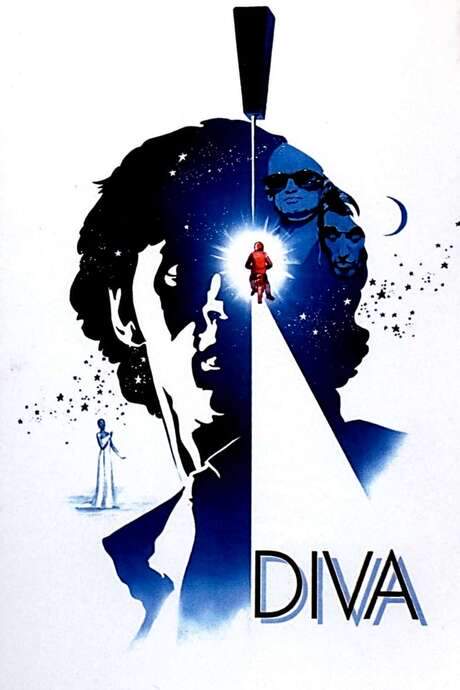
Diva (1981) movie poster

Plot Summary

Diva (1981) Plot Summary Explained

Release, runtime and language
1981 · 117 mins · French
Directed by
Jean-Jacques Beineix
Starring
Dominique Pinon, Richard Bohringer, Roland Bertin, Gérard Darmon, Brigitte Lahaie, Isabelle Mergault

Jules, a young Parisian postman, secretly records a concert by his idol, opera diva Cynthia Hawkins. The next day he encounters a woman chased by armed thugs; before she is murdered she hides an audio cassette in his mailbag. The tape contains a priceless recording that draws Jules into a dangerous conspiracy.

On this page (7)
  1. 1 Where to watch
  2. 2 What happens: full plot
  3. 3 Plot questions answered
  4. 4 The book behind the movie
  5. 5 Movie threads
  6. 6 Movies like Diva
  7. 7 Every angle

Where to watch

Where to Watch Diva (1981)

Where can you watch Diva? Stream, rent or buy it in the US, including on Kanopy, Amazon Video and Apple TV Store: current JustWatch availability with up-to-date prices.

Streaming availability powered by JustWatch

Full plot summary · contains spoilers

What Happens in Diva: Full Plot Summary

The whole story of Diva (1981) explained, from the opening scene to the final frame: every key event, every twist and what it all adds up to. Read it as a quick recap before the sequel, to check a scene you missed, or to finally understand what really happened.

Jules, Frédéric Andréi, a young Parisian postman, is obsessed with opera, especially with Cynthia Hawkins, Wilhelmenia Fernandez, a celebrated American soprano whose voice has never been committed to tape. He attends a recital where Hawkins performs the aria Ebben? Ne andrò lontana from La Wally, and, with a mix of audacity and tenderness, he records a pristine bootleg of her performance using a Nagra tape-recorder. In a dangerous spin of luck and nerve, he also seizes the gown she wore from her dressing room, an object that will become a flashpoint for everything that follows. The thrill of capturing such a rare voice on tape pulls Jules deeper into a world where art and crime intertwine, and his single-minded devotion to Hawkins begins to blur the line between admiration and obsession.

Soon after, Jules accidentally comes into possession of an audio cassette containing Nadia’s testimony, which exposes Commissaire divisionnaire Jean Saporta, the man in charge of a tangled drug trafficking and prostitution racket. Nadia, Chantal Deruaz, slips the cassette into the bag of Jules’s moped just before she is killed by Saporta’s two relentless enforcers, L’Antillais and Le Curé. The moment is chaotic and cold, and the consequences ripple outward in every direction. Two police officers, Paula Anny Romand and Zatopek Patrick Floersheim, begin pursuing Jules, convinced he holds the key to a larger crime, even as they themselves become targets in a shifting game of power. Saporta’s leverage grows as his henchmen hunt Jules through the city, while two Taiwanese men race to obtain Jules’s irreplaceable recording of Hawkins, hoping to leverage the sensational material into a lucrative contract or a fatal secret. The chase tightens around Jules, who finds himself drawn into a widening conspiracy that seems to involve everyone around him.

Seeking refuge, Jules finds shelter with the bohemian Serge Gorodish, a charismatic figure who becomes his guardian in a storm he never asked for. Gorodish, Richard Bohringer, and his companion Alba, Thuy An Luu, offer Jules a temporary safe haven and a chance to breathe amid the danger. With their help, Jules plans a risky move: he intends to return Hawkins’s dress to the star at her luxury hotel, hoping to mollify the chaos around him and perhaps win a measure of Hawkins’s trust. The encounter with Hawkins becomes a delicate dance of boundaries and longing. Initially furious at the intrusion, Hawkins softens as she senses the sincerity behind Jules’s obsessive devotion, and a tentative bond begins to form between the two of them. Their morning walk through the Jardin des Tuileries, underscored by a piano backdrop, hints at something gentler blooming within the turbulent storm surrounding them.

Meanwhile, the pressure from the two Taiwanese figures intensifies as they threaten Hawkins with a coercive recording contract, pressing her to surrender to their terms. She refuses, standing firm against the idea of exploiting the moment for a manipulative deal. Jules, meanwhile, is hunted through the labyrinth of Paris’s streets and tunnels, and after a perilous chase he hides in the apartment of a prostitute friend, only to realize too late that she is entangled with Saporta’s criminal network. He escapes just before L’Antillais and Le Curé close in, but the danger follows him like a shadow. The enforcers catch up with him, and Jules is shot, though Gorodish arrives in time to pull him to safety. The two of them speed away to a remote lighthouse outside Paris in Gorodish’s vintage Citroën Traction Avant, a moving sanctuary where the recording’s power can be wielded without immediate consequence.

With Jules safe for the moment, Gorodish uses the incriminating recording to press Saporta for leverage. Saporta agrees to pay off Gorodish, yet the meeting is a ruse, built on the fear that Gorodish could expose him to the world. Before they can settle the score, two Taiwanese operatives interrupt and grab the cassette, thinking it contains Jules’s reel of Hawkins. Saporta, determined to crush any threat to his empire, detonates a remote control bomb under Gorodish’s car, killing the foreign intruders and sending Gorodish and his car careening away in an identical Citroën that he had secretly stored in advance. The chase continues to twist, and the true stakes begin to reveal themselves: not merely a confrontation over a single recording, but a battle over control, loyalty, and the very future of everyone involved.

Back in Paris, Jules returns to Hawkins’s orbit, hoping to hand her the bootleg as a sign of trust and perhaps to set things right. But outside her hotel, L’Antillais and Le Curé lie in wait, abducting Jules and dragging him back to his loft for a staged suicide that will silence him once and for all. Yet Paula remains vigilant, keeping a close eye on Jules’s apartment. She intervenes at the last moment, killing Le Curé and wounding L’Antillais, a strike that tilts the balance away from Saporta’s lethal plan. Saporta himself reappears, eliminating his remaining henchman and aiming to pour suspicion onto Jules and Paula by staging their demise as if carried out by his workers. Gorodish returns to the fray, outsmarting Saporta by luring him into an empty elevator shaft where the sinister official meets his end, tumbling to his death.

In the film’s final act, Jules makes his way back to Hawkins for one last, intimate moment. They meet in an empty theater, and Jules lovingly plays the La Wally bootleg for her, a private performance that forces Hawkins to confront her own vulnerability. She admits she has never heard herself sing in this way before, a confession that exposes both the awe and the fear she holds about her own legend. The moment crystallizes a bond built on shared longing and danger, a fragile solace carved out of a world that demanded more than art, more than fame, and more than either could safely give. The finale lingers on this fragile connection, offering a quiet, human beat amid the tumult of pursuit, power, and the indiscriminate pull of music.

Last updated: October 09, 2025 at 14:58

Was this helpful?

Plot questions answered

Diva Plot Explained: Your Questions Answered

The questions people ask most about Diva (1981): what happens in the confusing scenes, why the characters do what they do, the twists, hidden details and what the ending means. Each answer contains spoilers.

Q1

Why does Nadia hide the cassette in Jules's mailbag before being killed?

Nadia, a witness to Saporta's criminal operations, slips her incriminating testimony into Jules's moped bag in a desperate act of self-preservation. She knows Saporta's men are about to kill her and needs a random stranger to carry the evidence without their knowledge. Jules happens to be in the right place at the wrong time, becoming an unwitting courier of dangerous information that could expose the police chief's drug and prostitution racket.

Foreshadowing: Earlier, Jules's obsessive的行为 (recording the concert and stealing the gown) marks him as someone bold enough to handle something illegal, though Nadia couldn't have known this.

  • nadia
  • saporta
  • cassette
  • evidence
  • death
  • hiding
Q2

Why is Commissaire Saporta so determined to kill Jules?

Saporta, the corrupt police chief running a criminal network, wants Jules dead because Nadia's testimony cassette is now in Jules's possession. The tape directly exposes Saporta's involvement in drug trafficking and prostitution. Even though Jules doesn't know what's on the tape initially, Saporta cannot risk anyone retrieving and broadcasting the evidence that could destroy his career and freedom.

Foreshadowing: The film establishes early that Saporta commands both his criminal henchmen and has influence over his own police force, giving him reach to hunt Jules from multiple angles.

  • saporta
  • jules
  • hunt
  • corrupt police
  • testimony cassette
Q3

Why does Jules continue pursuing Cynthia Hawkins despite the danger?

Jules's obsession with opera and specifically with Hawkins goes beyond simple fandom. He is a lonely postman who finds meaning and transcendence in her voice - it represents beauty and art in a world he feels disconnected from. His fixation intensifies after he obtains a rare recording of her voice, which becomes his most prized possession. Despite the deadly danger surrounding him, he cannot abandon his devotion because his identity is tied to this artistic ideal.

Foreshadowing: From the opening scene, Jules risks his job and safety to record Hawkins's performance, showing his obsession predates any danger.

  • jules
  • hawkins
  • obsession
  • opera
  • bootleg recording
Q4

What's the difference between the two recordings in the movie?

There are two distinct recordings: Jules's bootleg of Cynthia Hawkins performing the aria 'Ebben? Ne andrò lontana' from La Wally, which he records at her recital out of devotion; and Nadia's cassette containing her testimony against Saporta's criminal activities, which she hides in Jules's bag before dying. The bootleg is the object the Taiwanese blackmailers want, while Nadia's testimony is what threatens Saporta - both draw dangerous attention to Jules, but for completely different reasons.

Foreshadowing: The timeline establishes these as separate incidents: Jules gets the bootleg at the opera, while Nadia's cassette appears the next day.

  • bootleg
  • cassette
  • hawkins
  • saporta
  • taiwanese
  • recording
Q5

Why does Serge Gorodish risk his life to protect Jules?

Gorodish is a bohemian figure who operates in gray areas of society. He helps Jules partly out of genuine compassion - recognizing a fellow outsider - but also because the situation presents opportunity. Gorodish sees potential leverage in possessing Saporta's criminal evidence. His character operates on moral ambiguity, combining protective instincts with strategic self-interest in the criminal underworld.

Foreshadowing: Gorodish's bohemian lifestyle and connections suggest he's experienced enough to understand the stakes of the conspiracy and计算的 benefits of involvement.

  • gorodish
  • jules
  • protection
  • bohemian
  • alliance
Q6

Why does the prostitute betray Jules to Saporta's men?

Jules's prostitute friend is connected to Saporta's criminal network, likely through the prostitution racket he controls. When Jules seeks refuge with her, she doesn't actively protect him - she either can't refuse Saporta's network or chooses self-preservation over loyalty. Jules realizes too late that his trust was misplaced, and this betrayal forces him back into dangerous streets.

Foreshadowing: The film establishes early that Saporta's criminal empire extends to prostitution, making it logical that people in that world would report to him.

  • prostitute
  • betrayal
  • saporta
  • jules apartment
Q7

Why does police officer Paula save Jules from Saporta's men?

Paula and her partner Zatopek initially pursue Jules because they believe he holds evidence related to larger crimes. However, as the investigation progresses, Paula becomes suspicious of Saporta's true nature and his unusual interest in Jules. She maintains surveillance on Jules's apartment and intervenes at the critical moment when Le Curé is about to kill him. Her change of heart stems from professional instinct - she recognizes that Saporta is orchestrating something corrupt rather than pursuing legitimate justice.

Foreshadowing: Early on, the police are shown investigating Saporta's criminal network without knowing he's their own boss's ally, creating internal conflict.

  • paula
  • jules rescue
  • saporta
  • police
  • corruption
Q8

Why is Cynthia Hawkins so emotional when hearing Jules's bootleg recording?

Hawkins has never heard herself recorded professionally - her legend exists only in live performances she controls. When Jules plays his bootleg of her singing 'La Wally', she confronts her own voice as others hear it for the first time. This creates vulnerability: the recording captures an unguarded, authentic performance she never intended to preserve. The moment represents both the awe of hearing her own artistry and the fear of facing her legend unfiltered.

Foreshadowing: From their first meeting, Hawkins is protective of her image and initially furious about Jules's intrusion into her dressing room.

  • hawkins
  • bootleg
  • emotional
  • la willy
  • recording
  • vulnerability
Q9

Why does Gorodish take Jules to the lighthouse outside Paris?

The remote lighthouse serves as a strategic hideout far from Saporta's Paris-based criminal network. Isolated and difficult to find, it provides temporary safety while Gorodish prepares to use Nadia's testimony as leverage against Saporta. The lighthouse also symbolizes a refuge from the urban chaos - a liminal space between danger and sanctuary that fits the film's mood.

Foreshadowing: Gorodish's character setup as a well-connected bohemian suggests he would have access to such unconventional safe houses.

  • lighthouse
  • safe house
  • paris
  • escape
  • protection
Q10

Why do Saporta's men stage Jules's suicide in his loft?

Saporta wants Jules dead but needs to make it look like suicide to avoid drawing police attention to his involvement. By making it appear that Jules killed himself out of guilt or desperation, Saporta eliminates the threat of the testimony cassette without creating a murder investigation that might unravel his criminal enterprise. It's a calculated cover-up designed to protect his position as a police official.

Foreshadowing: The timeline shows Saporta maintains both criminal operations and an official police position, requiring careful image management.

  • suicide
  • staged
  • saporta
  • jules loft
  • cover up
Q11

Why are the Taiwanese agents so desperate to get Jules's recording of Hawkins?

The Taiwanese criminals see Jules's bootleg of Hawkins as extremely valuable - they attempt to use it to blackmail her into signing an exploitative recording contract. They believe the rarity of a recorded Hawkins performance (she never records professionally) gives them leverage for financial gain. Their interest is purely mercenary: they want to monetize the only existing recording of a legendary diva.

Foreshadowing: The bootleg is established as unique - Hawkins has never been recorded before - making it legally and financially significant.

  • taiwanese
  • bootleg
  • hawkins
  • blackmail
  • contract
Q12

Why does Saporta kill L'Antillais and Le Curé at the end?

Saporta eliminates his own henchmen to cover his tracks and prevent them from testifying against him. With his criminal empire unraveling and the police increasingly suspicious, he removes anyone who could connect him to the crimes. This is a final act of self-preservation - eliminating loose ends rather than allowing them to be captured and potentially reveal his involvement.

Foreshadowing: Throughout the film, Saporta is established as a calculating figure who prioritizes protecting his position over loyalty to his workers.

  • saporta
  • l'antillais
  • le curé
  • henchmen
  • kill
  • elimination
Q13

How does Gorodish survive Saporta's bomb at the factory?

Gorodish anticipates betrayal and prepares in advance. Before meeting Saporta, he stores an identical vintage Citroën Traction Avant at the factory. When the bomb detonates, he escapes in this second car while the criminals believe he's dead in the first vehicle. This calculated escape demonstrates Gorodish's survival instincts and experience operating in dangerous criminal circles.

Foreshadowing: Gorodish's character is portrayed as a cunning, experienced figure who operates multiple steps ahead.

  • gorodish
  • bomb
  • escape
  • citroën
  • factory
  • survival

Movie threads

More Movies Like Diva, by Mood & Story

Curated lists built around what makes Diva tick: the same mood, the same kind of story or the same emotional payoff. Each list explains why these movies belong together.

Thrillers about art vs. crime like Diva

Lives consumed by a passion for art become entangled in a deadly conspiracy. If you liked the tense, atmospheric clash of high art and brutal crime in Diva, you'll find similar stories in this thread. These movies feature characters whose artistic obsessions draw them into dangerous conspiracies, blending aesthetic beauty with gritty thriller plots.

  • atmospheric
  • romantic
  • paranoid
  • driven
  • melancholic
  • dangerous
  • Tone: tense, melancholic, romantic
  • Pacing: fast, driven
Why these movies?

The story pattern: These narratives typically begin with a protagonist deeply immersed in their art, whose life is upended when they inadvertently acquire something of immense value or danger to criminals. This forces them to use their unique, often observational, skills to survive a high-stakes chase, with their cherished art form becoming both the cause of their peril and a source of solace.

Why they belong together: They are grouped by their unique blend of aesthetic appreciation and thriller tension. They share a specific emotional mix: the romantic, melancholic weight of artistic passion set against the anxious, paranoid energy of a dangerous pursuit.

Paranoid urban chase movies like Diva

An ordinary person is hunted through a city after stumbling upon a dangerous secret. This thread gathers movies similar to Diva, featuring a frantic chase through a city where an innocent person is hunted for a secret they possess. If you enjoyed the tense, fast-paced pursuit through Paris and the feeling of a lone individual against powerful forces, explore these recommendations.

  • tense
  • anxious
  • claustrophobic
  • paranoid
  • driven
  • dangerous
  • Tone: tense, anxious, claustrophobic
  • Pacing: fast, relentless
Why these movies?

The story pattern: The plot hinges on a single, accidental discovery that instantly transforms the protagonist's life from normal to perilous. They are relentlessly pursued by sophisticated and dangerous antagonists, forcing them to rely on their wits and resourcefulness to survive. The urban setting is essential, providing both hiding places and traps, creating a sense of constant surveillance and inescapable pressure.

Why they belong together: They share a core narrative engine: the frantic, life-or-death chase of an unlikely hero. The experience is defined by high tension, fast pacing, and a pervasive sense of paranoia and claustrophobia, often leading to a bittersweet resolution after significant struggle.

If you liked this

Movies Like Diva

Similar movies to Diva: the same genre, themes or kind of story. Each one comes with its own plot summary, timeline and ending explained.

Browse all movie summaries

Every angle

Diva (1981) Explained: Plot, Timeline & Characters

Everything about Diva in one place: what happens in the plot summary, the timeline in chronological order, the characters and meaning and a spoiler-free summary. What's After the Movie adds the cast, box office and post-credit scenes.

Coming soon on iOS and Android

The Plot Explained Movie Summary App

Plot summaries, endings explained and timelines on your phone. Catch up on any movie in minutes, save your favorites and never miss a twist again.

Be the first to know when we launch. Your email stays private, always.

Learn more about the app