Plot Explained Spoilers guaranteed!
Plot Explained

Browse by genre

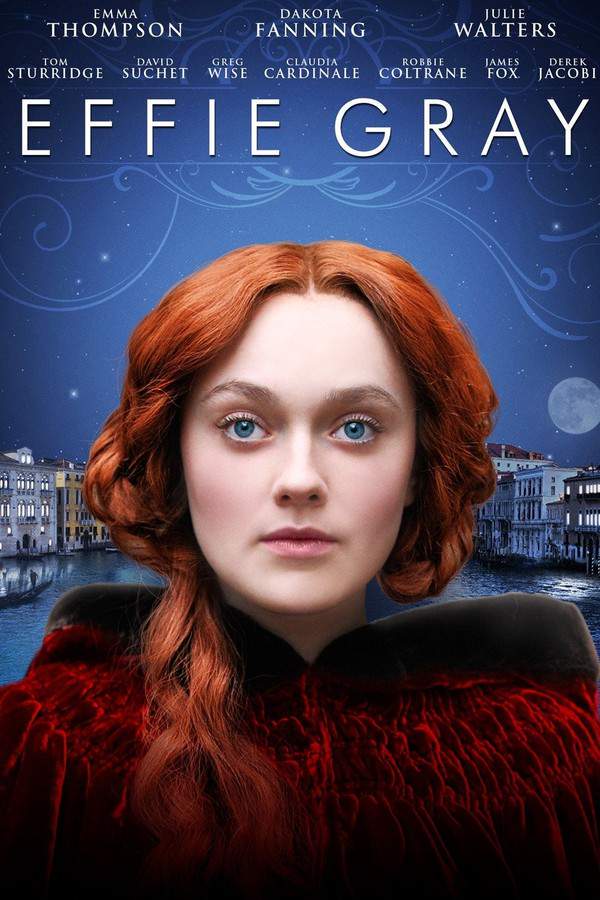
Effie Gray (2015) movie poster

Plot Summary

Effie Gray (2015) Plot Summary Explained

Release, runtime and language
2015 · 104 min · English
Directed by
Richard Laxton
Starring
Emma Thompson, Tom Sturridge, Dakota Fanning, Greg Wise

During the Victorian era in England, a young woman finds herself trapped in an arranged marriage to the celebrated art critic John Ruskin. As she grapples with the constraints of her new life and the limitations placed upon her, she begins a personal journey toward self-discovery and seeks liberation from the societal expectations of her time. The story explores themes of duty, passion, and the search for individual freedom within a restrictive social landscape.

On this page (6)
  1. 1 Where to watch
  2. 2 What happens: full plot
  3. 3 Plot questions answered
  4. 4 Movie threads
  5. 5 Movies like Effie Gray
  6. 6 Every angle

Where to watch

Where to Watch Effie Gray (2015)

Where can you watch Effie Gray? Stream, rent or buy it in the US, including on Amazon Video, Apple TV Store and Fandango At Home: current JustWatch availability with up-to-date prices.

Streaming availability powered by JustWatch

Full plot summary · contains spoilers

What Happens in Effie Gray: Full Plot Summary

The whole story of Effie Gray (2015) explained, from the opening scene to the final frame: every key event, every twist and what it all adds up to. Read it as a quick recap before the sequel, to check a scene you missed, or to finally understand what really happened.

In a quiet, almost fairytale-like opening, Euphemia "Effie" Gray walks through a garden while confiding in her younger sister Sophie about a story where a girl ends up bound to a husband whose parents wield wickedness. This frames Effie's own path as she enters marriage with the respected art critic and philosopher John Ruskin in Perth, and the couple soon move to London to stay with his family. From the start, Effie feels adrift, her sense of self smaller under the weight of a cold, critical mother-in-law who belittles her at every turn.

As the family life unfolds, Effie's distress deepens. John shows little interest in the marriage itself and avoids any discussions about intimate matters, leaving Effie craving connection and clarity that never comes. The tensions spill into social circles when the couple attends a dinner at the Royal Academy of Arts, where the heated debate around the Pre-Raphaelite movement resonates with John’s support for the cause. He manages to persuade Sir Charles Eastlake, the academy’s president, to permit the young painters to exhibit their work, elevating their ambitions even as Effie’s own happiness remains neglected.

Effie’s unease draws attention from Elizabeth Eastlake, Sir Charles’ wife, who visits the Ruskins and perceives the misery behind the facade of a genteel household. The encounter, coupled with Effie’s deteriorating state, prompts John to call in a doctor to examine her. A first measure of hope flickers as Effie and those around her weigh the possibility of improvement, though their plans are soon tested by the trip to Venice, where John travels to work on a new book, The Stones of Venice. Instead of sharing the city’s romance with Effie, John immerses himself in its monuments, leaving her largely on her own in a lively, unfamiliar world.

In Venice, Effie enjoys city life but faces a grave violation when a young Italian named Raffaele pressures himself on her, an ordeal that leaves her shaken while John remains oblivious to her suffering. The prospect of returning to the Ruskin household looms as Effie experiences renewed nervous ailments. Home life becomes even more strained when a doctor laments John’s apparent indifference toward Effie and reveals that Effie has been drugged with laudanum, a practice initiated unintentionally through tonics prescribed by his mother. The doctor urges fresh air and greater attentiveness from John as essential steps toward recovery.

A planned journey to Edinburgh brings the possibility of a deeper professional circle into Effie’s life as John Everett Millais, one of the Pre-Raphaelite painters, becomes a sympathetic confidant. Millais forms a cautious bond with Effie, and his presence unsettles John, who leaves the two alone for several nights during his Edinburgh visit. In this fragile space, Effie and Millais find a growing closeness; Millais urges Effie to think about the future and consider the options for a divorce. The idea of freedom becomes a beacon, even as Effie’s sense of duty and loyalty remains intact.

Seeking guidance, Effie asks her sister Sophie to accompany her on visits to influential figures, and together they meet Elizabeth Eastlake. In a frank and intimate conversation, Effie reveals that she remains a virgin and recalls John’s harsh reaction to her body on their wedding night. Elizabeth does not shy away from acknowledging the reality of Effie’s marriage and urges her to seek legal counsel, reminding her that she deserves a life with dignity and care. This encounter strengthens Effie’s resolve to pursue a lawful route out of the marriage if she can secure a fair resolution.

A medical examination confirms Effie’s virginity, and a compassionate, businesslike lawyer outlines the possibility of an annulment. Leaving London under the pretense of accompanying Sophie back to Perth, Effie makes clear to herself and those around her that she intends to leave John behind for good. Before she departs, she visits Millais once more, though their communication remains filtered through Sophie. Millais promises to wait, signaling a future where Effie might seek a different path, away from the suppression she has endured.

The Ruskin family is shocked when Effie’s lawyer delivers notice of annulment proceedings grounded in John’s alleged impotence. The process marks a decisive break from the life she was expected to lead and signals a public reckoning for a marriage built on unequal power dynamics. Throughout, Effie’s journey is one of quiet courage, as she navigates social scrutiny, personal heartache, and the legal machinery that could restore her autonomy. In the end, what remains clear is Effie’s resolve to reclaim a life of agency, even as the echoes of a complicated marriage linger in the background.

Last updated: October 09, 2025 at 16:21

Was this helpful?

Plot questions answered

Effie Gray Plot Explained: Your Questions Answered

The questions people ask most about Effie Gray (2015): what happens in the confusing scenes, why the characters do what they do, the twists, hidden details and what the ending means. Each answer contains spoilers.

Q1

Why did John Ruskin avoid physical intimacy with Effie?

John Ruskin refused to consummate the marriage, and on their wedding night he reportedly expressed disgust at Effie's body. The exact reasons remain somewhat ambiguous, but the film suggests John was emotionally unable or unwilling to engage in physical intimacy, leaving Effie confused and wounded. This became the legal grounds for annulment years later, as Effie's virginity was later confirmed by medical examination.

  • john ruskin
  • intimacy
  • marriage
  • wedding night
  • virginity
  • annulment
Q2

Why was Effie given laudanum?

Effie was unknowingly drugged with laudanum, which was administered through tonics prescribed by John's mother. While not intentionally malicious, the laudanum worsened Effie's nervous ailments and contributed to her deteriorating health. A doctor later condemned this practice and urged fresh air and more attentive care from John.

  • laudanum
  • drugged
  • health
  • john's mother
  • tonics
  • doctor
Q3

What happened in Venice with the Italian man Raffaele?

In Venice, while John was absorbed in researching "The Stones of Venice," Effie was left largely alone. A young Italian named Raffaele pressured himself on her and attempted to assault her, leaving her shaken and traumatized. John remained completely oblivious to this ordeal, highlighting his neglect of Effie's wellbeing throughout their trip.

  • venice
  • raffaele
  • assault
  • john neglect
  • trip
Q4

Why did John Ruskin leave Effie alone with Millais in Edinburgh?

During the Edinburgh visit, John left Effie and Millais alone for several nights, apparently indifferent to his wife's wellbeing or the potential impropriety of the situation. This decision allowed Effie and Millais to develop a deeper bond, and Millais eventually urged Effie to consider seeking a divorce, becoming a crucial ally in her journey toward freedom.

  • millais
  • edinburgh
  • john leaves
  • alone
  • bond
  • divorce
Q5

How was Effie able to obtain an annulment?

Effie secured a medical examination that confirmed her virginity, providing concrete evidence that the marriage had never been consummated. Her lawyer then initiated annulment proceedings on the grounds of John's impotence. The legal process was decisive, publicly confronting the Ruskin family and ending Effie's marriage to a man who had failed to fulfill his marital duties.

  • annulment
  • impotence
  • virginity
  • lawyer
  • legal proceedings
  • divorce
Q6

Why did Elizabeth Eastlake help Effie?

Elizabeth Eastlake recognized the misery behind the facade of Effie's marriage during a visit to the Ruskins. After Effie confided that she remained a virgin and described John's harsh reaction to her on their wedding night, Elizabeth urged Effie to seek legal counsel and reminded her that she deserved a life with dignity and care. Her support was instrumental in empowering Effie to pursue the annulment.

  • elizabeth eastlake
  • support
  • legal advice
  • virginity
  • wedding night
  • dignity
Q7

What did the medical examination reveal about Effie?

The medical examination confirmed Effie's virginity, which was crucial evidence for her annulment case. The doctor had previously criticized John's neglect and noted that laudanum usage had worsened Effie's health. This medical documentation became the foundation for the legal argument that John's impotence prevented the marriage from being consummated.

  • medical examination
  • virginity
  • health
  • doctor
  • laudanum
  • annulment evidence
Q8

Why did Effie marry John Ruskin despite not knowing him?

Effie entered an arranged marriage to the celebrated art critic John Ruskin, as was customary for young women in Victorian England. The opening scene foreshadows this by showing Effie discussing a fairy tale about a girl who marries a man with wicked parents. Effie likely believed she would find security and status, but instead found emotional neglect and confinement.

Foreshadowing: The opening fairy tale discussion directly mirrors Effie's own marriage to a man whose family would prove cruel and controlling.

  • arranged marriage
  • victorian
  • john ruskin
  • family
  • expectations
Q9

Why was Effie so unhappy in the Ruskin household?

Effie felt isolated and belittled within the Ruskin family home. John's mother constantly undermined her, and John himself showed little interest in their marriage, avoiding any discussions about intimate matters. This emotional neglect, combined with social isolation in London, deepened Effie's distress and sense of entrapment.

  • unhappy
  • household
  • mother-in-law
  • isolation
  • emotional neglect
  • london
Q10

What was the significance of the Pre-Raphaelite movement in the story?

John Ruskin was a vocal supporter of the Pre-Raphaelite Brotherhood, a group of young painters challenging academic art conventions. At a Royal Academy dinner, John persuaded Sir Charles Eastlake to allow these painters to exhibit their work. This subplot highlights John's passion for artistic causes while contrasting sharply with his neglect of Effie's emotional needs.

  • pre-raphaelite
  • art
  • royal academy
  • john ruskin
  • support
  • painters
Q11

Why did Effie fall in love with Millais?

In Edinburgh, John Everett Millais became a sympathetic confidant to Effie, listening to her struggles and treating her with genuine kindness. His empathy contrasted sharply with John's coldness, and he encouraged Effie to envision a future with agency. Millais promised to wait for her, offering hope of a different life beyond her oppressive marriage.

  • millais
  • love
  • edinburgh
  • kindness
  • hope
  • future
  • support

Movie threads

More Movies Like Effie Gray, by Mood & Story

Curated lists built around what makes Effie Gray tick: the same mood, the same kind of story or the same emotional payoff. Each list explains why these movies belong together.

Movies about constrained women seeking liberation like Effie Gray

Quiet, determined journeys of women breaking free from oppressive systems. Discover movies like Effie Gray that explore the quiet struggles and personal triumphs of women fighting for autonomy. These films often feature melancholic period settings or restrictive societies, focusing on a slow-burn emotional journey from oppression to hope.

  • oppressive
  • introspective
  • hopeful
  • lonely
  • somber
  • quiet
  • Tone: melancholic, somber, hopeful
  • Pacing: slow, deliberate
Why these movies?

The story pattern: These narratives typically follow a linear path from confinement to escape. A protagonist endures psychological or societal pressure, leading to a gradual awakening and a climactic, often legal or social, act of defiance. The journey emphasizes internal growth over external action.

Why they belong together: Movies are grouped here for their shared thematic focus on female agency within oppressive environments, a melancholic and quiet tone, and a narrative structure built around a pivotal journey toward personal freedom.

Slow burn psychological dramas with emotional tension like Effie Gray

Stories where quiet tension and emotional neglect accumulate into a breaking point. If you liked the quiet, accumulating tension of Effie Gray, explore these slow burn psychological dramas. These movies use a deliberate pace to explore themes of emotional neglect, confinement, and a character's internal struggle leading to a climactic personal breakthrough.

  • claustrophobic
  • psychological
  • uneasy
  • quiet
  • somber
  • introspective
  • Tone: melancholic, claustrophobic, tense
  • Pacing: slow burn, gradual
Why these movies?

The story pattern: The narrative pattern involves a character enduring a sustained state of psychological pressure, often from a domestic or relational source. There are few dramatic events; instead, the story focuses on subtle moments of realization and the slow erosion of spirit, culminating in a decisive act of change.

Why they belong together: These films share a specific mix of a slow pace, medium psychological intensity, and a melancholic tone. They are united by their focus on the internal experience of a character unraveling under pressure and finding a path forward.

If you liked this

Movies Like Effie Gray

Similar movies to Effie Gray: the same genre, themes or kind of story. Each one comes with its own plot summary, timeline and ending explained.

Browse all movie summaries

Every angle

Effie Gray (2015) Explained: Plot, Timeline & Characters

Everything about Effie Gray in one place: what happens in the plot summary, the timeline in chronological order, the characters and meaning and a spoiler-free summary. What's After the Movie adds the cast, box office and post-credit scenes.

Coming soon on iOS and Android

The Plot Explained Movie Summary App

Plot summaries, endings explained and timelines on your phone. Catch up on any movie in minutes, save your favorites and never miss a twist again.

Be the first to know when we launch. Your email stays private, always.

Learn more about the app