Plot Explained Spoilers guaranteed!
Plot Explained

Browse by genre

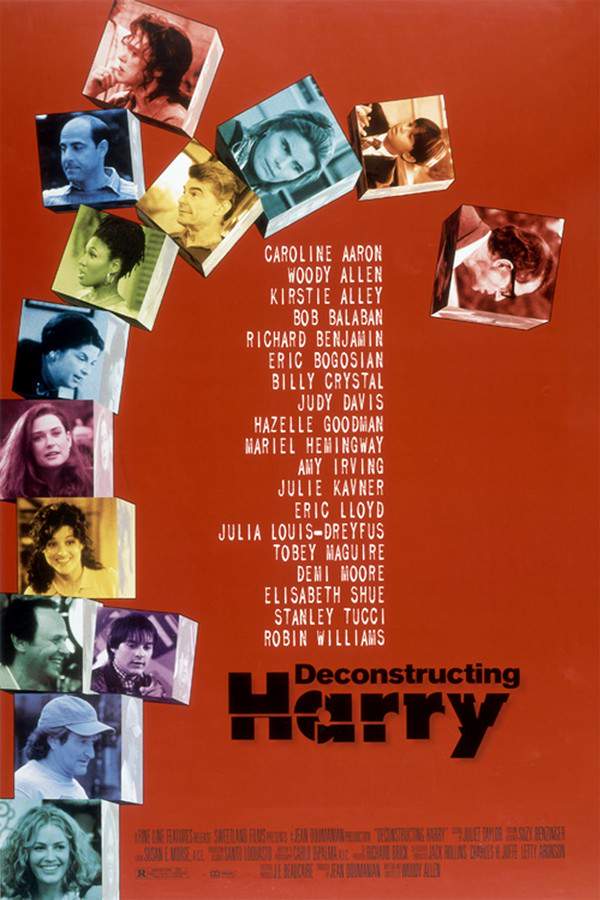
Deconstructing Harry (1997) movie poster

Plot Summary

Deconstructing Harry (1997) Plot Summary Explained

Release, runtime and language
1997 · 96 min · English
Starring
Woody Allen
Budget
$20M

Returning to his alma mater for an honorary celebration, bestselling novelist Harry Block finds himself confronted by the fictional characters he’s written about. These creations, representing his former friends and family, challenge him to consider the consequences of his fame and the impact of his revealing stories on the people he’s portrayed. As the line between reality and fantasy blurs, Harry is forced to confront the personal cost of his creative work and re-evaluate his relationship with his characters and their real-world counterparts.

On this page (6)
  1. 1 Where to watch
  2. 2 What happens: full plot
  3. 3 Plot questions answered
  4. 4 Movie threads
  5. 5 Movies like Deconstructing Harry
  6. 6 Every angle

Where to watch

Where to Watch Deconstructing Harry (1997)

Where can you watch Deconstructing Harry? Stream, rent or buy it in the US, including on Fawesome, Amazon MX Player and Amazon Prime Video Free: current JustWatch availability with up-to-date prices.

Streaming availability powered by JustWatch

Full plot summary · contains spoilers

What Happens in Deconstructing Harry: Full Plot Summary

The whole story of Deconstructing Harry (1997) explained, from the opening scene to the final frame: every key event, every twist and what it all adds up to. Read it as a quick recap before the sequel, to check a scene you missed, or to finally understand what really happened.

As Lucy arrives at the Manhattan home of the celebrated author Harry Block (woody-allen), she is overwhelmed with feelings of rage and betrayal after reading his latest book. The story, which details their sordid affair in a thinly veiled manner, exposes her vulnerable side, making her feel as if the entire city is privy to her deepest secrets. In a fit of desperation and anger, Lucy pulls a gun from her purse, aiming it at Harry and forcing him to flee onto the rooftop. There, he desperately tries to explain that his heartbreak over Fay's departure for his best friend Larry is punishment enough for his transgressions.

To distract her from her explosive emotions, Harry recounts an unfinished tale about a young man named Harvey, whose life tragically ends during a chance encounter with a prostitute, reflecting the themes of desire and loss that permeate his life.

During a therapy session, Harry comes face to face with a painful truth: he remains ensnared in the same hedonistic patterns that defined his youth. As he contemplates his impending honor at his old university, a weight of loneliness settles in—he has no one to share this significant moment with. In a bid to reconnect, he approaches his ex-wife Joan about bringing their son Hilliard to the ceremony, only to be met with a firm refusal. Though he has achieved acclaim as a master storyteller, the consequences of his artistry have fractured relationships with those he cares about.

In the lead-up to the ceremony, Harry runs into an old friend, Richard, who is dealing with serious health issues. Harry offers to take Richard to the hospital, a gesture that reflects his desire for connection amidst growing isolation. When Richard declines Harry's invitation to attend the ceremony due to prior engagements, Harry feels the pangs of loneliness intensify. A surprising meeting with Fay reveals that she is engaged, a bitter reminder of his lost opportunities for love and connection. Desperately, he invites her to his ceremony, only to learn that it conflicts with her wedding.

As Harry's world begins to unravel, he seeks solace in the company of Cookie, a lively prostitute. Their meeting takes an unexpected turn when Cookie decides to accompany him to the ceremony. Just as they are preparing to leave, Richard reappears, eager to join the festivities. This leads Harry to seize the moment and embark on a spontaneous adventure with Hilliard, Cookie, and Richard. Their escapades guide them to a lively carnival, where the fun is undermined by the discontent expressed by Harry's half-sister Doris and her husband regarding the representations of Judaism in his works.

The journey begins to blur the lines between Harry's reality and his fictional creations as he is confronted by the spirits of Ken and Helen. Their haunting presence compels him to acknowledge the painful aspects of his past, transforming the outing into a cathartic experience. However, just as they approach the university, fate strikes again, and Richard passes away in the car, leaving Harry grappling with grief.

At the ceremony, Harry is celebrated by the university staff but feels the pressure mounting as they inquire about his next literary project. He shares a tale of a protagonist who must brave the depths of Hell to reclaim his lost love—a reflection of his own internal struggles. What follows is an intense verbal duel between Harry and the embodiment of the Devil, each trying to outwit the other. Their exchange is shattered by the sudden appearance of law enforcement, there to arrest Harry for kidnapping Hilliard, possessing Lucy's firearm, and having illegal substances thanks to Cookie.

As Larry and Fay arrive, still basking in the glow of their wedding, they assist Harry with bail money. His acceptance comes reluctantly, burdened by his creative stagnation. Back home, Harry's despair drives him into a fantasy where he imagines the ceremony already underway. Finally motivated by the need to overcome his writer's block, he embarks on crafting a new narrative, exploring the complex terrain between art and reality, where the protagonist, much like himself, can only truly thrive within the boundless realm of imagination.

Last updated: April 16, 2025 at 14:33

Was this helpful?

Plot questions answered

Deconstructing Harry Plot Explained: Your Questions Answered

The questions people ask most about Deconstructing Harry (1997): what happens in the confusing scenes, why the characters do what they do, the twists, hidden details and what the ending means. Each answer contains spoilers.

Q1

Why does Lucy point a gun at Harry?

Lucy is furious because Harry's latest novel reveals intimate details about their affair, exposing her vulnerabilities to the public. She feels betrayed that her private life has been turned into entertainment for readers. This isn't just literary inspiration to her, she sees it as a fundamental violation of her trust and privacy.

Foreshadowing: Earlier references to Harry's habit of basing his fiction on real people foreshadow this confrontation.

  • lucy
  • gun
  • confrontation
  • betrayal
  • affair
  • book exposure
Q2

Why does Harry tell Lucy the story about Harvey?

Harry tells the unfinished Harvey story as a distraction to defuse Lucy's anger and prevent her from using the gun. The tale about a young man whose life ends during a chance encounter with a prostitute mirrors the themes of desire and loss that permeate Harry's own life, making it both a narrative device and a reflection of his current emotional state.

Foreshadowing: The Harvey story echoes the earlier mention of Harry's heartbreak over Fay's departure.

  • harvey
  • story
  • distraction
  • desire
  • loss
  • prostitute
Q3

Why do fictional characters like Ken and Helen appear to Harry?

The film uses a metafictional device where Harry's fictional creations manifest physically, forcing him to confront the real-world people they were based on and the painful aspects of his past he has not addressed. Ken and Helen represent characters Harry wrote about, and their appearance symbolizes his inability to separate his art from reality, the consequences of basing his work on real people's lives.

Foreshadowing: The premise establishes early on that Harry's fictional characters challenge him about the impact of his stories.

  • ken
  • helen
  • fictional characters
  • metafiction
  • confrontation
  • past
Q4

What happens to Richard on the way to the university?

Richard, who was already dealing with serious health issues, passes away in the car during the journey to Harry's honors ceremony. This tragic death occurs just as they approach the university, casting a dark shadow over the entire trip and intensifying Harry's existing feelings of grief and guilt.

Foreshadowing: Richard's earlier refusal to attend due to health issues and his weakened condition hint at his fragility.

  • richard
  • death
  • car
  • university
  • tragic loss
Q5

Why is Harry arrested at his honors ceremony?

Harry is arrested for multiple charges: kidnapping his son Hilliard, possessing Lucy's illegal firearm, and having illegal substances that belonged to Cookie. The police arrive during his Hell story performance, dramatically shattering the ceremony and exposing the chaos underlying his carefully constructed public persona.

Foreshadowing: Harry's spontaneous decision to take Hilliard and his association with Cookie foreshadow the legal consequences.

  • arrest
  • kidnapping
  • firearm
  • drugs
  • police
  • ceremony
Q6

Why does Harry tell the story about going to Hell?

At the ceremony, university staff pressure Harry about his next literary project, prompting him to share a story about a protagonist who must brave the depths of Hell to reclaim his lost love. This narrative directly reflects Harry's own internal struggles, his creative stagnation, guilt over lost relationships, and desire to recover what he's destroyed through his art.

Foreshadowing: This Hell narrative connects to Harry's earlier reference to his heartbreak over Fay's departure.

  • hell
  • story
  • creative block
  • retrieval
  • love
  • ceremony
Q7

What is the significance of Harry's duel with the Devil?

The verbal duel between Harry and the embodiment of the Devil represents Harry's internal creative battle, his struggle with writer's block, guilt over his artistic choices, and the tension between his desire for success and the personal damage it causes. Each tries to outwit the other, symbolizing the psychological warfare Harry wages with his own conscience and artistic demons.

Foreshadowing: The Hell story naturally leads to this confrontation with the Devil figure.

  • devil
  • duel
  • creative struggle
  • writer's block
  • guilt
  • psychological
Q8

Why does Harry's ex-wife Joan refuse to bring their son to the ceremony?

Joan firmly refuses Harry's request to bring their son Hilliard to the honors ceremony, reflecting the fractured state of their relationship. Despite Harry's professional success as a celebrated author, his personal failures, particularly his habit of exposing private matters in his novels, have damaged his connections with family. This rejection underscores his loneliness despite his fame.

Foreshadowing: Harry's therapy session reveals he's caught in the same hedonistic patterns that damaged his relationships.

  • joan
  • hilliard
  • ex-wife
  • refusal
  • ceremony
  • family
Q9

Why does Harry decide to take Hilliard on the spontaneous trip?

When Richard unexpectedly reappears wanting to join the festivities, Harry sees an opportunity to create the meaningful connection he's been lacking. He seizes the moment to take Hilliard, Cookie, and Richard on a spontaneous adventure to the carnival, desperately seeking the companionship and family warmth his isolated life has been missing.

Foreshadowing: Harry's earlier loneliness and failed attempts to reconnect with Joan and Fay set up this desire for connection.
  • hilliard
  • adventure
  • carnival
  • connection
  • spontaneous
  • family
Q10

What does the ending mean when Harry starts writing again?

The ending is bittersweet: Harry is bailed out by Larry and Fay (now married), and he imagines the ceremony while finally feeling motivated to write again. However, this triumph exists only within 'the boundless realm of imagination.' The film suggests Harry can only truly function and create within fiction, while his real-world relationships remain fractured and failing.

Foreshadowing: The entire film blurs reality and fantasy, making this retreat into imagination consistent with Harry's character.

  • ending
  • writing
  • imagination
  • bittersweet
  • art vs reality
  • new narrative
Q11

Why is Harry's ex-wife Fay at Larry's wedding if she's his ex?

Fay left Harry for his best friend Larry, and by the time of the film, they have gotten married. When Harry runs into Fay earlier, she reveals she's engaged, and when he invites her to his ceremony, she reveals it conflicts with her wedding, her wedding to Larry. This painful overlap underscores Harry's lost opportunities for love and the irony of his ex-wife marrying his best friend.

Foreshadowing: Harry's earlier heartbreak over Fay's departure to Larry is referenced during the rooftop confrontation.
  • fay
  • larry
  • wedding
  • marriage
  • ex-wife
  • best friend
Q12

Why do Harry's fictional characters confront him about his writing?

The characters Harry created challenge him to consider the real consequences of his fiction, specifically how his habit of basing characters on real people has hurt those close to him. This metafictional premise forces Harry to face the personal cost of his artistic success and the ethical dilemmas of autobiographical writing.

Foreshadowing: The film establishes early that these creations represent his former friends and family.

  • fictional characters
  • confrontation
  • artistic consequences
  • autobiography
  • real people

Movie threads

More Movies Like Deconstructing Harry, by Mood & Story

Curated lists built around what makes Deconstructing Harry tick: the same mood, the same kind of story or the same emotional payoff. Each list explains why these movies belong together.

Movies about Art vs. Life like Deconstructing Harry

Stories where creators confront the real-world consequences of their art. If you enjoyed the ethical dilemmas in Deconstructing Harry, explore these movies where writers, painters, and filmmakers confront the consequences of their work. These similar stories examine the tension between creativity and personal responsibility, often with a melancholic and metafictional feel.

  • metafictional
  • introspective
  • regretful
  • cathartic
  • anxious
  • lonely
  • Tone: melancholic, introspective
  • Pacing: variable, character-driven
Why these movies?

The story pattern: Narratives in this thread typically follow a successful but troubled artist whose life is in shambles, largely due to their tendency to mine their personal relationships for material. The story structure often involves flashbacks, confessions, and confrontations with the people they've exploited, leading to a crisis that forces them to reconsider the cost of their art.

Why they belong together: Movies are grouped here because they share a central thematic focus on the conflict between artistic expression and personal ethics. They often feature a melancholic tone, complex narrative structures that play with reality, and protagonists who are simultaneously brilliant and deeply flawed.

Metafictional Mind Journeys like in Deconstructing Harry

Films where a protagonist's psychological state manifests as a fictional reality. For viewers who liked the blending of reality and fiction in Deconstructing Harry, this list features similar movies with complex, metafictional narratives. Discover other stories where a character's psyche is dramatized through surreal encounters and introspective fantasies.

  • metafictional
  • surreal
  • introspective
  • unreliable narrator
  • psychological
  • cathartic
  • Tone: bittersweet, melancholic
  • Pacing: variable, unconventional
Why these movies?

The story pattern: The narrative pattern involves a protagonist, often a creative type, whose perception of reality is unstable. The plot unfolds through a mix of present-day events and imaginative sequences where past traumas or deep-seated fears are acted out. This structure allows for a deep dive into the character's psychology, leading to a moment of clarity or acceptance.

Why they belong together: These films are united by their unique narrative approach to exploring consciousness. They share a variable pace that shifts between quiet reflection and chaotic invention, a bittersweet emotional core, and a tone that blends intellectual humor with profound sadness.

If you liked this

Movies Like Deconstructing Harry

Similar movies to Deconstructing Harry: the same genre, themes or kind of story. Each one comes with its own plot summary, timeline and ending explained.

Browse all movie summaries

Every angle

Deconstructing Harry (1997) Explained: Plot, Timeline & Characters

Everything about Deconstructing Harry in one place: what happens in the plot summary, the timeline in chronological order, the characters and meaning and a spoiler-free summary. What's After the Movie adds the cast, box office and post-credit scenes.

Coming soon on iOS and Android

The Plot Explained Movie Summary App

Plot summaries, endings explained and timelines on your phone. Catch up on any movie in minutes, save your favorites and never miss a twist again.

Be the first to know when we launch. Your email stays private, always.

Learn more about the app