Plot Explained Spoilers guaranteed!
Plot Explained

Browse by genre

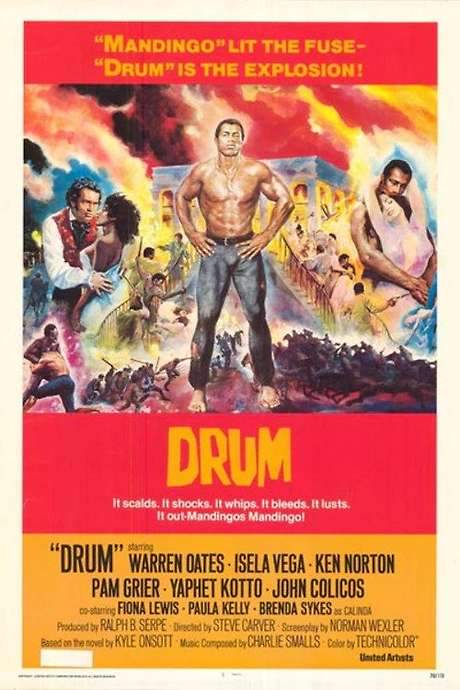
Drum (1976) movie poster

Timeline

Drum (1976) Timeline Explained – Every Event in Order

Release, runtime and language
1976 · 100 mins · English
Loading streaming availability…
Directed by
Steve Carver
Starring
Warren Oates, Roger E. Mosley, John Colicos, John Vernon, Royal Dano, Isela Vega

MANDINGO lit the fuse… DRUM is the explosion! A mid-19th century mulatto slave is torn between his success as a pit-fighter and the injustices of white society.

On this page (6)
  1. 1 Where to watch
  2. 2 Events in order (12)
  3. 3 Timeline questions answered
  4. 4 Movie threads
  5. 5 Movies like Drum
  6. 6 Every angle
Loading streaming availability…

12 events in order · contains spoilers

Drum Timeline: Events in Chronological Order

Every key event of Drum (1976) in order, scene by scene, with when and where it takes place. Use it to untangle flashbacks, time jumps and parallel storylines, to refresh your memory before the sequel or to find the exact scene you are thinking of.

  1. Drum's birth and upbringing

    Drum is born to a white prostitute who raises him with her black lesbian partner. He grows up in a brutal world where he is forced to bare-knuckle-box other slaves for the amusement of cruel owners. One owner, Bernard DeMarigny, makes unwanted advances toward Drum, and when they are rejected, DeMarigny vows revenge.

  2. DeMarigny's vow of revenge after rejection

    After Drum rejects DeMarigny's advances, the powerful owner vows revenge, signaling a looming threat against Drum from above. The tension between Drum and the owners begins to simmer as the social order tightens around him. This resolve foreshadows the eventual clash that will erupt later on the plantation.

  3. Drum and Blaise sold to Hammond Maxwell

    Drum and his friend Blaise are sold off and taken to Hammond Maxwell's plantation to work. Their new owner places them under a harsher regime, intensifying their confinement and the brutality they will endure. The transfer marks a shift from a previous environment to Maxwell's controlled estate.

    Where
    Maxwell's plantation
  4. Regine purchased and brought to Maxwell's plantation

    Regine is purchased by Maxwell and brought to the plantation for his personal desires as a bedwench. Her arrival introduces another layer of power dynamics and vulnerability at the estate. The presence of Regine contributes to the mounting tensions among the residents.

    Where
    Maxwell's plantation
  5. Regine placed in Maxwell's household and Augusta Chauvel's jealousy

    Regine is set up in the bedroom above Hammond, making her part of Maxwell's private world. Augusta Chauvel, Maxwell's fiancé, grows jealous and begins to scheme about Regine's fate. The household power struggle intensifies as personal desires collide with control.

    Where
    Maxwell's estate
  6. Sophie seeks Drum; fear of death

    Maxwell's daughter Sophie expresses an interest in Drum, but he refuses to sleep with her, fearing for his safety. The attempted dynamic reveals the dangerous crosscurrents of desire and dominance on the plantation. The tension foreshadows further conflicts between the family and the enslaved residents.

    Where
    Maxwell's estate
  7. Sophie seduces Blaise and accuses him; Blaise is chained

    Sophie also attempts to sleep with Blaise, but he resists. After being rejected, she falsely accuses Blaise of raping her, prompting Maxwell to act harshly. Blaise is put in chains as Maxwell moves toward a brutal punishment for the alleged crime.

    Where
    Maxwell's plantation
  8. Sophie sent away; Blaise chained; castration planned

    Sophie is sent to boarding school following the incident, while Blaise remains chained out of sight. Maxwell's decision to castrate Blaise for the alleged rape underscores the brutal morality of the slaveholding system. The atmosphere on the estate grows heavier with impending punishment.

    Where
    Maxwell's plantation
  9. Dinner party and discussion on castration

    A dinner party is held to celebrate Maxwell and Chauvel's engagement, and guests discuss the best way to castrate a slave. The casual brutality on display reveals how violence is normalized at the highest levels of the estate. The conversation heightens the sense that a breaking point is near.

    Where
    Maxwell's estate dining room
  10. Drum frees Blaise and revolt erupts

    During the party, Drum frees Blaise from his chains, sparking a slave revolt inside the estate. The revolt spreads as enslaved people seize control of parts of the house. The confrontation marks a dramatic shift from private cruelty to active rebellion.

    Where
    Maxwell's plantation
  11. DeMarigny shoots Blaise; Drum attacks DeMarigny

    In the chaos, DeMarigny shoots Blaise, intensifying the conflict. Drum retaliates by attacking DeMarigny and tearing at his privates, rallying the slaves to take the house. The violence escalates into a pivotal turning point for everyone involved.

    Where
    Maxwell's plantation
  12. Maxwell and Chauvel saved, Drum urged to flee

    Drum's actions allow Maxwell and Chauvel to survive the onslaught, but Maxwell orders Drum to run to avoid capture. Chauvel suggests telling the slavers that Drum was loyal to spare him, but Maxwell insists Drum must be killed. The scene ends with Drum fleeing the plantation as the revolt continues outside.

    Where
    Maxwell's plantation

Last updated: October 09, 2025 at 14:11

Was this helpful?

Timeline questions answered

Drum Timeline Explained: Your Questions Answered

When does it happen, and why in that order? The questions people ask about the chronology of Drum (1976): time jumps, flashbacks, cause and effect between scenes and the correct order of events, each answered with spoilers.

Q1

Why does Drum reject Bernard DeMarigny's advances?

Drum rejects DeMarigny's sexual advances because he refuses to submit to the exploitation that defines his existence as a slave. DeMarigny is one of the owners who has forced Drum to fight other slaves to the brink of death for entertainment, and rejecting him is one of the few acts of autonomy Drum can claim. DeMarigny responds by vowing revenge, which sets the stage for later confrontations.

Foreshadowing: The rejection and vow of revenge earlier sets up the violent confrontation that occurs later when DeMarigny arrives at Maxwell's plantation.

  • bernard demarigny
  • rejection
  • revenge
  • slave owner
  • sexual exploitation
Q2

Why does Sophie Maxwell accuse Blaise of rape?

Sophie Maxwell attempts to seduce both Drum and Blaise, but both men reject her advances. After being rejected by Blaise, Sophie retaliates by falsely accusing him of rape. This false accusation gives her father Hammond Maxwell justification to punish Blaise severely, chaining him and eventually planning his castration. The accusation also allows Maxwell to send Sophie away to boarding school after she is caught having a moment with Blaise.

Foreshadowing: Sophie's jealousy and false accusation directly leads to the chaining of Blaise, which becomes the catalyst for the eventual revolt.

  • sophie maxwell
  • blaise
  • false accusation
  • rape
  • punishment
  • chains
Q3

What triggers the slave revolt at Maxwell's plantation?

The revolt is triggered when Drum frees Blaise from his chains during the dinner party celebrating Maxwell and Chauvet's engagement. The guests have just discussed castration as a solution for slave discipline, making the moment particularly fraught. When Drum frees Blaise, it sparks the enslaved people to seize control of the house, marking the transition from individual suffering to organized rebellion.

Foreshadowing: The earlier discussion about castration at the dinner party directly foreshadows the violent uprising that follows Drum's decision to free Blaise.

  • slave revolt
  • blaise
  • chains
  • dinner party
  • maxwell plantation
  • freedom
Q4

Why does Drum save Maxwell and Chauvet during the revolt?

Drum saves Maxwell and Chauvet because, despite their roles in the slaveholding system, he chooses humanity over vengeance. While the revolt has exploded and many are dying on both sides, Drum intervenes to prevent their deaths. This act demonstrates that Drum is not simply seeking bloodlust, he maintains a moral distinction even amid violent rebellion, though this mercy ultimately goes unrewarded by Maxwell.

Foreshadowing: Drum's decision to save those who enslaved him establishes the tragic irony of Maxwell's subsequent order to kill him.

  • drum saves maxwell
  • chauvet
  • revolt
  • mercy
  • slave owner
Q5

Why does Maxwell insist Drum must be killed after being saved?

Maxwell insists Drum must be killed because allowing a rebellious slave who led an uprising to live would threaten the entire slaveholding system. Even though Drum saved his life during the revolt, Maxwell cannot show mercy to someone who organizing enslaved people to seize the plantation. Augusta Chauvet suggests telling other slavers that Drum was loyal, but Maxwell refuses, Drum's rebellion makes him too dangerous to spare, regardless of the personal debt.

Foreshadowing: This moment reveals that the slave system values maintaining power over individual gratitude or loyalty.

  • maxwell
  • drum killed
  • loyalty
  • slave system
  • rebellion consequence
Q6

What happens to Blaise in the movie?

Blaise is Drum's friend who is sold to Maxwell's plantation alongside him. After Sophie falsely accuses him of rape, Maxwell chains Blaise and plans to castrate him as punishment. During the revolt, Drum frees Blaise from his chains, sparking the uprising. However, in the chaos, DeMarigny shoots and kills Blaise. Drum then retaliates violently against DeMarigny, tearing out his privates as revenge for Blaise's death.

Foreshadowing: Blaise's chaining and planned castration directly motivates Drum's decision to begin the revolt.

  • blaise
  • chains
  • castration
  • shot
  • death
  • demarigny
Q7

Why does Drum tear out DeMarigny's privates?

Drum attacks DeMarigny with extreme violence because DeMarigny has just killed Blaise during the revolt. This act is Drum's response to the murder of his friend, it's both personal revenge and a statement to the other slave owners. By mutilating DeMarigny, Drum sends a message to the white owners about the consequences of their brutality. The attack rallies the enslaved people to continue taking control of the house.

Foreshadowing: This violent retaliation is Drum's response to the earlier vow of revenge DeMarigny made after being rejected.

  • drum
  • demarigny
  • mutilation
  • revenge
  • blaise death
  • violence
Q8

Why is Drum forced to fight other slaves?

Drum is forced into bare-knuckle boxing matches against other slaves because white owners treat enslaved people as entertainment. As a mulatto born to a white prostitute and raised in a brutal world, Drum's physical prowess makes him valuable as a pit-fighter. The owners wager money on these fights and force slaves to brutalize each other for their amusement, demonstrating how the system dehumanizes both the fighters and those who watch.

Foreshadowing: This history of forced violence establishes Drum's capacity for combat and his deep understanding of the system of cruelty he lives in.

  • drum
  • pit-fighter
  • bare-knuckle
  • slave fighting
  • entertainment
  • owners
Q9

What does Drum's ending mean?

Drum ends as a fugitive fleeing the plantation after saving Maxwell and Chauvet. Maxwell's insistence that Drum must be killed despite being saved shows the impossibility of redemption within the slave system. Drum escapes into the night, but his fate remains uncertain, he has no freedom, only survival as a hunted man. The ambiguous ending reflects the historical reality that escaped slaves faced constant danger and uncertain futures.

Foreshadowing: The film's dark tone and emphasis on systemic cruelty prepare viewers for an ending that offers no easy resolution.

  • drum ending
  • fugitive
  • escape
  • plantation
  • maxwell
  • uncertain future
Q10

Why is Regine brought to Maxwell's plantation?

Regine is purchased by Hammond Maxwell specifically to serve as his bedwench, a woman for his personal sexual use. This was a common practice on plantations where enslaved women were bought for the owner's sexual gratification. Her presence also creates tension with Augusta Chauvet, Maxwell's fiancée, who becomes jealous of Regine's placement in Maxwell's bedroom.

Foreshadowing: Regine's role as a bedwench adds to the film's depiction of sexual exploitation within slavery.

  • regine
  • bedwench
  • maxwell
  • sexual exploitation
  • plantation
  • purchased
Q11

What role does Bernard DeMarigny play in the story?

Bernard DeMarigny is a gay French slave owner who wants to sleep with Drum. After Drum rejects him, DeMarigny vows revenge and later appears at Maxwell's plantation for the engagement dinner party. During the revolt, he shoots and kills Blaise, prompting Drum's violent retaliation. DeMarigny represents the sexual exploitation and personal vendettas that characterize the cruel power dynamics of slavery.

Foreshadowing: DeMarigny's earlier vow of revenge and his presence at the dinner party connect his storyline to the violent climax.

  • bernard demarigny
  • french owner
  • revenge
  • blaise death
  • sexual advances

Movie threads

More Movies Like Drum, by Mood & Story

Curated lists built around what makes Drum tick: the same mood, the same kind of story or the same emotional payoff. Each list explains why these movies belong together.

Brutal Survival and Resistance Movies like Drum

Films about characters pushed to their absolute limits by oppressive systems. For viewers seeking movies like Drum, this collection features intense dramas and thrillers about characters fighting back against systemic oppression. If you appreciated the themes of exploitation and violent rebellion in Drum, you'll find similar grueling survival stories here.

  • brutal
  • oppressive
  • rebellious
  • tense
  • angry
  • harrowing
  • Tone: dark, angry, oppressive
  • Pacing: steady, building tension
Why these movies?

The story pattern: Narratives in this thread typically follow a protagonist enduring extreme hardship under an oppressive system, leading to a breaking point. The story arc is one of dehumanization building towards an explosive, often ambiguous, act of defiance. The journey is defined by a steady escalation of tension and violence.

Why they belong together: Movies are grouped here for their shared focus on the raw, visceral experience of resistance. They connect through a dark tone, high emotional weight, and a narrative structure that explores the psychological and physical toll of fighting for freedom against overwhelming odds.


Unflinching Historical Dramas similar to Drum

Dark period pieces that refuse to sanitize the brutalities of the past. If you liked the harsh realism and dark themes of Drum, this section highlights similar historical dramas that don't shy away from brutality. Discover movies that share Drum's steady pacing, heavy emotional weight, and ambiguous, thought-provoking conclusions.

  • grim
  • tense
  • brutal
  • thought-provoking
  • oppressive
  • authentic
  • Tone: dark, tense, bleak
  • Pacing: steady, methodical
Why these movies?

The story pattern: The narrative pattern involves a character's journey through a meticulously recreated but grim historical setting. The plot is often linear but layered with complex power dynamics and ethical dilemmas. Endings are frequently ambiguous or bleak, reflecting the intractable problems of the era rather than providing neat solutions.

Why they belong together: These films are grouped by their commitment to historical authenticity, even when it's distressing. They share a dark tone, a steady pace that allows the weight of the setting to settle, and a high level of intensity derived from their confronting subject matter.

If you liked this

Movies Like Drum

Similar movies to Drum: the same genre, themes or kind of story. Each one comes with its own plot summary, timeline and ending explained.

Browse all movie summaries

Every angle

Drum (1976) Explained: Plot, Timeline & Characters

Everything about Drum in one place: what happens in the plot summary, the timeline in chronological order, the characters and meaning and a spoiler-free summary. What's After the Movie adds the cast, box office and post-credit scenes.

Coming soon on iOS and Android

The Plot Explained Movie Summary App

Plot summaries, endings explained and timelines on your phone. Catch up on any movie in minutes, save your favorites and never miss a twist again.

Be the first to know when we launch. Your email stays private, always.

Learn more about the app