Plot Explained Spoilers guaranteed!
Plot Explained

Browse by genre

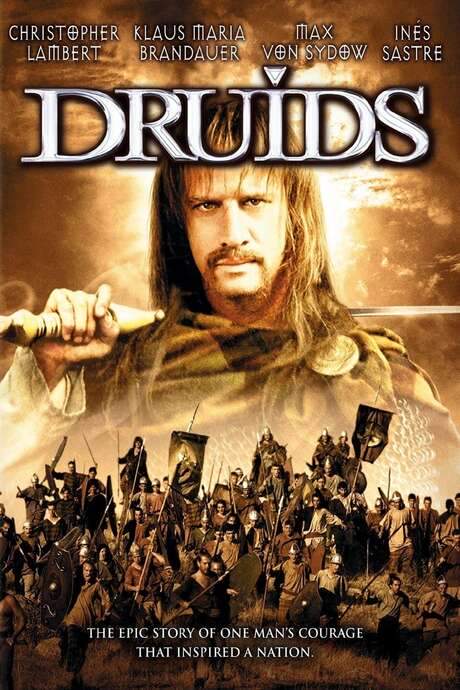
Druids (2001) movie poster

Timeline

Druids (2001) Timeline Explained – Every Event in Order

Release, runtime and language
2001 · 124 mins · French
Loading streaming availability…
Directed by
Jacques Dorfmann
Starring
Claude Brasseur, Christopher Lambert, Max von Sydow, Klaus Maria Brandauer, Inés Sastre, Vincent Moscato

In 60 BC, arch‑druid Guttuart sees a comet, interpreting it as a sign of a new king for Gaul. He travels to Gergovia, the Arverni capital, for a tribal council. Young Vercingetorix and his friend Eponia sneak into the cavern where father Celtill plans to claim a crown. Roman spies disguised as Gauls kill Celtill, throwing the council into chaos and setting the stage for Vercingetorix’s rise.

On this page (6)
  1. 1 Where to watch
  2. 2 Events in order (15)
  3. 3 Timeline questions answered
  4. 4 Movie threads
  5. 5 Movies like Druids
  6. 6 Every angle
Loading streaming availability…

15 events in order · contains spoilers

Druids Timeline: Events in Chronological Order

Every key event of Druids (2001) in order, scene by scene, with when and where it takes place. Use it to untangle flashbacks, time jumps and parallel storylines, to refresh your memory before the sequel or to find the exact scene you are thinking of.

  1. Comet omen signals a new king for Gaul

    A brilliant comet streaks across the sky, interpreted by the druids as a sign of change. In a shimmering cavern, Celtill's gathering hushes as omens swirl around the gathering. The moment sets a prophecy of destiny into motion for Gaul, foreshadowing power struggles to come.

    When
    60 B.C.
    Where
    Shimmering cavern, Arvernes territory
  2. A Roman arrow and the crown theft

    A disguised Roman spy fires an arrow at Celtill as he lifts a crown once worn by the old kings. Gobanittio swiftly arrests Celtill and seizes the crown, fleeing into the night. The act sows suspicion and hints at Rome’s unseen hand in Gallic affairs.

    When
    60 B.C.
    Where
    Cavern chamber, Arvernes territory
  3. Celtill’s fate sealed; Vercingetorix vows vengeance

    As the torchlight flickers, Celtill’s fate is sealed, and the crowd reels in shock. The scene deepens Vercingetorix’s resolve to avenge his father and restore Arvernes dignity. A vow of vengeance hardens the young leader’s heart against the Romans.

    When
    60 B.C.
    Where
    Cavern, Arvernes capital
  4. Years pass; Vercingetorix grows; Caesar’s threat looms

    Years slip by and Vercingetorix becomes the rallying voice for the Arvernes. On a road guarded by Roman troops, Guttuart senses imminent danger as Julius Caesar’s legions push forward. Caesar’s ambition to invade Britain broadens the churning political landscape of Gaul.

    When
    late 60s B.C.
    Where
    Gaul frontier
  5. Caesar invites Gaul to join the Britain campaign

    Caesar recognizes leadership in Vercingetorix and extends an offer to unite the Gauls in a grand plan to invade Britain. The invitation underlines Rome’s strategy to bend Gaul to its will through shared spoils and power. The proposal plants the seeds of uneasy alliances and competing loyalties.

    When
    late 60s B.C.
    Where
    Gaul frontier
  6. Gobanittio’s brutality and the lure of spoils

    Vercingetorix solidifies his resolve by striking down Gobanittio to avenge Celtill. Caesar’s tempting offer of shared spoils deepens the political calculus among the Gallic tribes. The personal fates of leaders collide with grand imperial ambitions.

    When
    late 60s B.C.
    Where
    On the road to Britain, Gaul
  7. Bibracte council; hostages taken to secure obedience

    At the Eduens’ capital, Bibracte, chieftains gather to hear Caesar’s grand design. Dumnorix remains wary as hostages are taken from his family to secure obedience. The balance of power tightens around Rome’s coercive diplomacy.

    When
    late 60s B.C.
    Where
    Bibracte, Eduen capital
  8. Vercingetorix and Epona reconnect; crown offer debated

    In a private moment, Vercingetorix and Epona reforge their bond as Caesar presents the crown’s perverse choice: anoint him king by conquest or let Gaul choose its own path. The dialogue crystallizes the moral crossroads facing Gaul. Destiny again presses against free will.

    When
    late 60s B.C.
    Where
    Bibracte, private chamber
  9. Dumnorix’s attack and the truth about Celtill’s death

    Dumnorix strikes at a Roman garrison, triggering a chain of events. Caesar demands Vercingetorix capture Dumnorix, who then reveals that Romans orchestrated Celtill’s death. Two Roman officers trailing Vercingetorix kill Dumnorix, sending a blunt message to Caesar about Gallic resistance.

    When
    late 60s B.C.
    Where
    Bibracte and surrounding garrisons
  10. Vercingetorix rises as commander at Gergovia

    With his tribe’s blessing, Vercingetorix is elected commander during the siege of Gergovia. He unleashes scorched-earth tactics, weaving strategy and fury into a Gaulish counterstroke against the Romans. The war’s momentum tilts as his leadership solidifies.

    When
    late 60s B.C.
    Where
    Gergovia, Gaul
  11. Avaricum falls to Caesar’s brutal campaign

    Caesar sacks Avaricum in a brutal demonstration of Roman resolve, devastating Gallic inhabitants. The massacre spreads fear through allied tribes and tests loyalties. The campaign widens the rift among Gaul’s factions as the war expands.

    When
    late 60s B.C.
    Where
    Avaricum, Gaul
  12. Alliances fray; Caesar strikes at the Rhine

    Eduens arrive only to witness the carnage; alliances fray under the weight of Caesar’s campaign. The Romans retreat to the Rhine, where a direct pact with Teutons reshapes the balance of power along the frontier. The stage is set for a climactic Gallic stand.

    When
    late 60s B.C.
    Where
    Rhine frontier
  13. Alesia: the united Gallic army against Rome

    At Alesia, Vercingetorix is named commander-in-chief of a united Gaulish army, while Caesar lands with a formidable siege array. The Gauls launch a desperate counterstroke as the Teutons are unleashed to strike the Roman perimeter. Hope and peril collide in a battle that will redefine Gaul’s fate.

    When
    late 60s B.C.
    Where
    Alesia, Gaul
  14. The siege tightens; Vercingetorix surrenders

    The Gauls’ defense collapses under Rome’s disciplined legions; Vercingetorix kneels before Caesar, surrendering in a moment charged with tragedy and inevitability. The siege concludes with Gaul’s vow of independence broken, and Roman dominance established.

    When
    ca. 52-50 B.C.
    Where
    Alesia, Gaul
  15. Guttuart’s closing meditation on empire

    Guttuart’s narration frames history as a brutal arithmetic, where Vercingetorix is imprisoned in Rome and executed by Caesar’s hand. Caesar’s own doom arrives two years later with his assassination on the Ides of March. The film closes on a meditation about destiny, power, and the cycles of rebellion.

    When
    50 B.C.
    Where
    Rome; memory of Gaul

Last updated: October 09, 2025 at 15:24

Was this helpful?

Timeline questions answered

Druids Timeline Explained: Your Questions Answered

When does it happen, and why in that order? The questions people ask about the chronology of Druids (2001): time jumps, flashbacks, cause and effect between scenes and the correct order of events, each answered with spoilers.

Q1

Why does Vercingetorix refuse Caesar's offer of the crown?

Vercingetorix refuses the crown because he insists that a true king must be chosen by destiny, not by conquest. He tells Caesar that Gaul should determine its own leader, not have one imposed by Roman hands. This principled stand reflects his belief that leadership must come from the Gauls themselves rather than being bestowed by an enemy conqueror.

  • vercingetorix crown
  • caesar offer
  • gaulish king
  • destiny
Q2

How did Celtill really die and who was responsible?

Celtill was killed by a Roman spy disguised as a Gaul. During the council in the cavern, a disguised Roman fired an arrow at Celtill as he lifted the ancient crown of the old kings. The Romans orchestrated the assassination to prevent a unified Gaul from forming under a single leader.

  • celtill death
  • roman spy
  • killing
  • assassination
Q3

Why did Gobanittio arrest and betray his own brother Celtill?

Gobanittio arrested his brother Celtill to seize power and the legendary crown for himself. When the Roman arrow struck Celtill during the council, Gobanittio used the chaos to take custody of Celtill and flee with the crown, eliminating his brother as a political rival and claiming the symbol of kingship for his own ambitions.

  • gobanittio
  • celtill
  • betrayal
  • brother
  • crown theft
Q4

What happened at the siege of Alesia?

At Alesia, Vercingetorix was named commander-in-chief of a united Gallic army against Caesar's forces. The Romans built extensive fortifications around the city, trapping the Gauls inside. Despite a desperate counterattack by Gallic relief forces, the siege succeeded; Vercingetorix surrendered to Caesar, and Gaul's resistance was effectively crushed.

Foreshadowing: The comet omen at the beginning foreshadows this final stand and the fate of the man destined to unite Gaul.

  • alesia
  • siege
  • roman fortifications
  • surrender
  • vercingetorix
Q5

Why did Vercingetorix surrender at Alesia?

Vercingetorix surrendered because the Gallic relief force was defeated and the situation had become hopeless. Recognizing that continued resistance would only result in the deaths of his remaining men, he chose to lay down his arms and kneel before Caesar. He hoped his surrender might spare his people further bloodshed.

  • vercingetorix surrender
  • alesia
  • defeat
  • gaulish surrender
Q6

Who killed Dumnorix and why?

Dumnorix was killed by two Roman officers who were trailing Vercingetorix. After Dumnorix attacked a Roman garrison, Caesar ordered Vercingetorix to capture him. During the confrontation, Dumnorix revealed that Romans had orchestrated Celtill's death before the Roman officers killed him to prevent further revelations and send a warning to Caesar about creating dangerous enemies.

  • dumnorix death
  • roman officers
  • killed
  • caesar orders
Q7

How does Vercingetorix avenge his father?

Vercingetorix avenges his father Celtill by killing Gobanittio, his own uncle who had betrayed Celtill and stolen the crown. This act of vengeance occurs on the road to Britain, solidifying Vercingetorix's resolve to challenge Roman power and claim leadership of the Arvernes.

  • vercingetorix vengeance
  • gobanittio death
  • father avenged
  • celtill
Q8

Why was Vercingetorix executed after surrendering to Caesar?

Caesar executed Vercingetorix as a demonstration of Roman power and to eliminate any symbol of Gallic resistance. Despite Vercingetorix's noble surrender, Caesar viewed him as too dangerous to keep alive as a potential figurehead for future rebellions. The execution took place in Rome several years after the siege of Alesia.

  • vercingetorix execution
  • rome
  • caesar
  • death
Q9

What happens to Caesar after Vercingetorix's defeat?

After defeating Vercingetorix and crushing the Gallic rebellion, Caesar returns to Rome where he consolidates immense power. However, two years after Vercingetorix's execution, Caesar is assassinated on the Ides of March by a group of Roman senators on the steps of the Senate, marking the end of the Roman Republic.

  • caesar death
  • ides of march
  • assassination
  • roman senate
Q10

What is the significance of the comet at the beginning of the movie?

The brilliant comet that streaks across the sky at the opening is interpreted by druid Guttuart as a sign of a new king for Gaul. This omen sets the prophecy in motion, establishing the theme of destiny that runs throughout the film. It foreshadows Vercingetorix's rise as the leader who would unite the Gallic tribes against Rome.

  • comet
  • omen
  • druid
  • guttuart
  • prophecy
  • destiny

Movie threads

More Movies Like Druids, by Mood & Story

Curated lists built around what makes Druids tick: the same mood, the same kind of story or the same emotional payoff. Each list explains why these movies belong together.

Tragic Historical Epics like Druids

Grand-scale stories of rebellion crushed by an overwhelming empire. If you liked the grand, tragic scale of Druids, explore more movies like it. This collection features epic historical dramas centered on doomed rebellions and heroic last stands, where the emotional weight comes from the inevitability of defeat and the nobility of the struggle.

  • epic
  • tragic
  • fatalistic
  • grim
  • oppressive
  • mythic
  • Tone: dark, bleak, fatalistic
  • Pacing: steady, epic build
Why these movies?

The story pattern: The narrative follows a clear, often linear, ascent and decline. A leader emerges, unites fractious allies, and achieves early successes, only to be ultimately overwhelmed by a superior power. The story is less about surprise and more about the fatalistic march towards a known, bleak conclusion, emphasizing character and thematic depth over plot twists.

Why they belong together: These movies are grouped by their shared commitment to historical tragedy. They possess a dark, oppressive tone, heavy emotional weight, and a steady pacing that builds towards an inevitable, bleak ending. The central theme is the high cost of resistance against overwhelming odds.

Movies with Grim Fatalism like Druids

Stories where historical forces crush individual hopes and destinies. For viewers who appreciated the grim, fatalistic mood of Druids, this list curates similar films. Discover movies like Druids that share a dark, oppressive atmosphere, where the narrative is driven by destiny and the crushing weight of historical inevitability rather than hope.

  • fatalistic
  • grim
  • oppressive
  • tragic
  • mythic
  • somber
  • Tone: dark, oppressive, fatalistic
  • Pacing: steady, methodical
Why these movies?

The story pattern: Narratives in this thread often begin with an omen or prophecy that sets a dark course. The plot then methodically unfolds, revealing how characters' efforts to change their fate only cement it. The journey is one of accepting a grim destiny, focusing on themes of sacrifice, the cost of leadership, and the insignificance of the individual against the tide of history.

Why they belong together: These films are connected by a pervasive mood of grim fatalism. They share a dark tone, high emotional intensity, and a steady pacing that reinforces the inescapable nature of the story's conclusion. The central unifying element is the exploration of destiny as a destructive, rather than liberating, force.

If you liked this

Movies Like Druids

Similar movies to Druids: the same genre, themes or kind of story. Each one comes with its own plot summary, timeline and ending explained.

Browse all movie summaries

Every angle

Druids (2001) Explained: Plot, Timeline & Characters

Everything about Druids in one place: what happens in the plot summary, the timeline in chronological order, the characters and meaning and a spoiler-free summary. What's After the Movie adds the cast, box office and post-credit scenes.

Coming soon on iOS and Android

The Plot Explained Movie Summary App

Plot summaries, endings explained and timelines on your phone. Catch up on any movie in minutes, save your favorites and never miss a twist again.

Be the first to know when we launch. Your email stays private, always.

Learn more about the app