Year: 1973
Runtime: 110 min
Language: English
Director: Nicolas Roeg
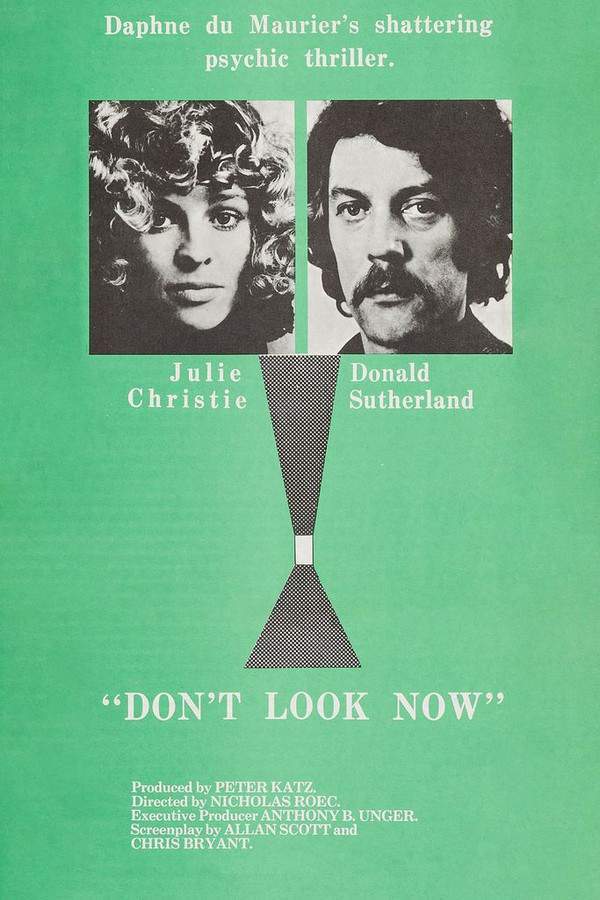
Following a devastating loss, a couple seeks solace in Venice, hoping to mend their fractured relationship. While exploring the city's historic canals and architecture, the woman experiences unsettling visions and a growing sense of spiritual awareness. Her husband, struggling with his own grief, initially dismisses her concerns, but he too begins to question his beliefs as a disturbing presence emerges, blurring the lines between reality and illusion and putting their lives in danger.
Find where to stream, rent, or buy Don't Look Now (1973) in the US with current JustWatch availability, up-to-date pricing, and platform listings for subscription, rental, and digital purchase options.
Warning: spoilers below!
Haven’t seen Don't Look Now yet? This summary contains major spoilers. Bookmark the page, watch the movie, and come back for the full breakdown. If you're ready, scroll on and relive the story!
Explore the full timeline and setting of Don't Look Now (1973). Follow every major event in chronological order and see how the environment shapes the story, characters, and dramatic tension.
Last updated: October 22, 2024 at 21:40
Meet the key characters of Don't Look Now (1973), with detailed profiles, motivations, and roles in the plot. Understand their emotional journeys and what they reveal about the film’s deeper themes.
Last updated: October 22, 2024 at 21:40
Explore the central themes of Don't Look Now (1973), from psychological, social, and emotional dimensions to philosophical messages. Understand what the film is really saying beneath the surface.
Last updated: October 22, 2024 at 21:40
Browse frequently asked questions about Don't Look Now (1973) focused on characters, relationships, themes, symbols, setting, and story context. This movie info FAQ gives spoiler-aware explanations for character arcs, world details, and thematic interpretation so readers can better understand what the film is really about.
Venice serves as both a visual and emotional backdrop that reflects the protagonists' psychological state. Its labyrinthine canals, narrow alleys, and atmospheric fog mirror the characters' sense of disorientation and grief. The city's timeless, almost surreal quality also blurs the lines between reality and illusion, reinforcing the film's exploration of perception versus truth.
The film is set in the contemporary era of the late 20th century, specifically around 1973. This modern setting grounds the supernatural elements in a recognizable world, making the intrusion of the inexplicable into everyday life more unsettling.
Grief is the emotional core of the film, stemming from the couple's loss of their daughter Christine. Both John and Laura process this trauma differently, John through rational denial and work, Laura through desperate attempts to connect with the supernatural. Their grief manifests as visions, emotional vulnerability, and a marriage strained to its breaking point.
Psychic phenomena represent Laura's attempt to find meaning and connection after tragedy. Her involvement with Heather and Wendy, who claim to communicate with Christine, introduces supernatural elements that challenge John's rigid skepticism. The film maintains deliberate ambiguity about whether these abilities are genuine or manifestations of grief-induced psychological distress.
Beyond the supernatural elements, a very real danger lurks in Venice in the form of a serial killer targeting women. This earthly threat becomes intertwined with the psychic warnings, creating a chilling layer of suspense. The film suggests that the line between supernatural premonition and real-world danger is intentionally blurred.
John Baxter is a grieving father and architectural historian who travels to Venice for work. His core motivation is maintaining control through rationality after losing his daughter. He dismisses Laura's spiritual pursuits as harmful fantasy, but his skepticism is ultimately tested as inexplicable events escalate. His professional obligation provides structure, yet he remains emotionally fractured.
Laura Baxter is a mother grappling with devastating loss, turning to psychic phenomena as a means of processing her grief. Her desperation to reconnect with her dead daughter leads her to seek out Heather and Wendy. Her transformation throughout the film reflects a woman suspended between reality and spiritual longing, ultimately blurring her perception of what is real.
The loss of their daughter creates a profound rift between John and Laura. They grieve differently, John through denial and work, Laura through spiritual seeking, which strains their marriage. Venice becomes an attempt to reconnect, but their conflicting approaches to coping with loss pushes them further apart as supernatural events intensify.
The film masterfully maintains ambiguity about whether the supernatural visions are real or psychological projections of grief. Laura's encounters could be genuine psychic events or grief-fueled delusions, and John could be either rationally correct or dangerously in denial. This uncertainty is central to the film's psychological horror.
John's rational skepticism is catastrophically vindicated when he realizes the warnings he dismissed were real. His refusal to believe in the psychic warnings leads to tragic consequences, proving that his dismissive rationality was itself a form of dangerous blindness. The ending confirms the premonitions were accurate but at devastating cost.
The English countryside represents the protagonists' past life before tragedy, their lost normalcy and family happiness. Returning to Venice after this loss marks their attempt to escape grief, but the pastoral English setting contrasts sharply with Venice's shadowy, disorienting atmosphere, emphasizing how far they have traveled from their former lives.
Discover curated groups of movies connected by mood, themes, and story style. Browse collections built around emotion, atmosphere, and narrative focus to easily find films that match what you feel like watching right now.
Stories where a profound personal loss opens the door to unsettling supernatural forces.If you liked the way Don't Look Now intertwines deep personal tragedy with eerie supernatural elements, you'll find similar stories here. These movies explore how grief can manifest as premonitions or visions, creating a tense and melancholic atmosphere where characters struggle to discern truth from their sorrow.
The narrative pattern typically follows a character reeling from a devastating loss, who begins to experience inexplicable visions or warnings. Their skepticism or the skepticism of those around them creates central conflict, often leading to a tragic or bleak conclusion that validates the very premonitions they tried to ignore.
Movies are grouped here for their shared thematic core of processing immense grief through a supernatural lens. They share a heavy emotional weight, a tense and melancholic tone, and a focus on the psychological unraveling that occurs when the metaphysical intrudes upon personal tragedy.
Atmospheric thrillers where a vivid setting becomes a character in a simmering story of dread.For viewers who appreciated the slow-building tension and the integral role of Venice's canals in Don't Look Now, this section features similar movies. These films use their settings to create a dreamlike, claustrophobic, or haunting atmosphere where psychological dread unfolds at a deliberate pace.
The narrative unfolds gradually, allowing the atmosphere of the setting to seep into the story. The plot is often secondary to the building sense of unease and the characters' psychological deterioration within their environment. The pacing is intentionally slow, making the eventual climax feel both inevitable and deeply unsettling.
These films are connected by their masterful use of pacing and setting to create a specific, immersive vibe. They share a slow, deliberate rhythm, a high-tension tone, and a focus on atmospheric dread where the location is as important as the characters in driving the narrative forward.
Don't stop at just watching - explore Don't Look Now in full detail. From the complete plot summary and scene-by-scene timeline to character breakdowns, thematic analysis, and a deep dive into the ending - every page helps you truly understand what Don't Look Now is all about. Plus, discover what's next after the movie.
Read a complete plot summary of Don't Look Now, including all key story points, character arcs, and turning points. This in-depth recap is ideal for understanding the narrative structure or reviewing what happened in the movie.
Track the full timeline of Don't Look Now with every major event arranged chronologically. Perfect for decoding non-linear storytelling, flashbacks, or parallel narratives with a clear scene-by-scene breakdown.
Discover movies like Don't Look Now that share similar genres, themes, and storytelling elements. Whether you’re drawn to the atmosphere, character arcs, or plot structure, these curated recommendations will help you explore more films you’ll love.
Don't Look Now (1973) Plot Summary & Movie Recap
Don't Look Now (1973) Scene-by-Scene Movie Timeline
Don't Look Now (1973) Spoiler-Free Summary & Key Flow
Movies Like Don't Look Now – Similar Titles You’ll Enjoy
The Night (2021) Movie Recap & Themes
Look Away (2018) Movie Recap & Themes
Don't Let Go (2019) Spoiler-Packed Plot Recap
Don't Go (2018) Complete Plot Breakdown
Don't Sleep (2017) Full Summary & Key Details
The Unseen (2017) Full Movie Breakdown
Don’t Look in the Attic (1982) Full Summary & Key Details
See No Evil (1971) Movie Recap & Themes
Don’t Look in the Basement (1973) Story Summary & Characters
Damned in Venice (1978) Detailed Story Recap
Lake of the Dead (1958) Complete Plot Breakdown
Don’t Look Up (1996) Plot Summary & Ending Explained
Who Saw Her Die? (1972) Film Overview & Timeline
Don’t Look Up (2009) Spoiler-Packed Plot Recap
Don’t Look Down (2008) Movie Recap & Themes