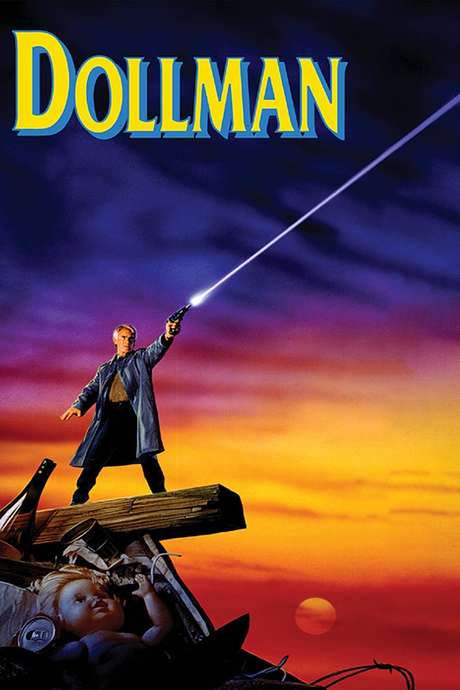
Arturus’s toughest cop, Brick Bardo, crash‑lands on Earth where he’s reduced to doll size, as are his alien foes. Though a full‑sized officer at home, he now must rely on a struggling girl and her son, while the villains recruit a local gang. When his location is exposed, Brick battles curious kids, angry gang members and the miniature enemies to safeguard the family and find a way off the planet.
Find where to stream, rent, or buy Dollman (1991) in the US with current JustWatch availability, up-to-date pricing, and platform listings for subscription, rental, and digital purchase options.
Warning: spoilers below!
Haven’t seen Dollman yet? This summary contains major spoilers. Bookmark the page, watch the movie, and come back for the full breakdown. If you're ready, scroll on and relive the story!
Read the complete plot breakdown of Dollman (1991), including all key story events, major twists, and the ending explained in detail. Discover what really happened, and what it all means.
On Arturos, a dystopian world where humans are roughly six times smaller than their Earthly counterparts, a daring heist at a laundry becomes the setting for a clash between law and chaos. A notorious criminal seizes hostages, intent on forcing a violent outcome, but the arrival of a lone cop turns the odds. The officer, Bardo, bursts in with a stubborn resolve, and his presence rattles the already tense room. He moves with a blunt efficiency, insisting on control even as the situation spirals. The hostages, oversized in his eyes, tense up as the siege unfolds, and the criminal’s threat to shoot through their bodies with a formidable weapon never quite lands as he expects—because Bardo’s blunt force and rapid reflexes scatter the plan into chaos. Although he physically saves the captives, Bardo’s methods are controversial; he’s already suspended for violence, and the mayor is quick to criticize his unorthodox approach. News reports echo the controversy, painting a stark picture of a man who defies norms in pursuit of results, sometimes at the expense of those he saves.
Bardo’s world is shaken when he is ambushed and kidnapped, waking on a desolate desert plain. The mastermind behind this latest escalation, Sprug, taunts him with an audacious plan—kill Bardo using the very weapon Bardo once wielded to subdue Sprug, a weapon now turned into a floating head when their past confrontation is recalled. The cat-and-mouse game resumes as Bardo taps into a magnetic field to reclaim his blaster and outmaneuver Sprug’s henchmen. The chase blasts through the boundaries of their planets as Sprug escapes aboard a ship, and Bardo follows, moving through an energy band that thrusts them into a new, unfamiliar environment: Earth. The shift from Arturo’s harsh, compact cityscapes to Earth’s sprawling streets injects a new energy into the pursuit, and the hunt becomes personal as old rivalries collide with new textures of danger.
On Earth’s Bronx, a rough-edged neighborhood run by a fearless gang led by Braxton Reed, life is quick, harsh, and unforgiving. Debi Alejandro, a young single mother trying to shield her world from the encroaching violence, has long wished for more protection and support from the police. Her plea is met with the cold realities of street power as Hector, Wick, and Jackson threaten her safety and test her resolve. In the ensuing chaos, Hector is wounded by Bardo, and Wick falls to Bardo’s decisive blow, clearing a path through the gang’s influence—though the victory feels morally ambiguous to Debi, who fears for what she and her son might endure. Debi’s resilience becomes a beacon in this volatile landscape, a reminder that strength can emerge from vulnerability as she confronts the men who would ruin her life.
Debi introduces Bardo to a small, precious piece of her world: her son, Kevin Alejandro. The moment marks a fragile bridge between two cultures and two kinds of danger—one rooted in survival, the other in survival’s consequences. The revelation of Kevin’s existence in Debi’s life grounds Bardo’s mission in something more intimate than a mere pursuit of justice; it anchors the arc with a human stake that reaches beyond the immediate threat. In the hideout, Braxton Reed’s temper flares when Jackson hints that Debi’s attackers deserve more fear than a doll-sized man could inspire. Braxton’s rage is volatile, and in a violent exchange, he eliminates Hector in a fit of impulsive brutality, a stark reminder that the line between protector and predator is often thin in this brutal world.
As the plot thickens, Braxton—Braxton Reed in the eyes of the local crowd—drops his guard long enough to pursue a deal with Sprug. Sprug, clinging to the hope of control, offers a bomb and a path to power in exchange for help repairing his ship. The uneasy alliance is short-lived; Braxton’s skepticism about the power of a doll-sized fighter gives way to a brutal test of nerve. He agrees to the terms, but his restraint falters as Sprug’s plans threaten to redefine the gang’s balance of power. When Sprug pushes for leadership, Braxton makes a decisive move, and the two clash in a storm of cunning and force, with Braxton emerging the stronger, more pragmatic player in a game where credibility is priced in blood.
Debi and Bardo’s fragile partnership is tested again when Debi returns home from work to find the danger chasing her family still close at hand. Braxton and Armbruiser abduct Debi, aiming to leverage her fears and secure a dangerous edge over Bardo. In a daring leap, Bardo dives from the apartment, clinging to the gang’s car as they speed away, and he races to the landing site where Sprug’s ships have touched down. The pursuit leads to an underground passage that lets Bardo spring a trap from an unexpected angle, turning the odds in his favor. A fierce shootout erupts, and Bardo methodically dismantles the gang’s vehicles in spectacular explosions, thinning the ranks with calculated precision. Debi, terrified yet steadfast, escapes the immediate threat as Braxton tests his limits in a brutal confrontation that pushes both men to their limits.
The endgame arrives quickly as Debi returns to Debi’s life with a new sense of wary hope. Braxton, though gravely injured, makes a fatal miscalculation when he tries to finish Debi and Bardo with Sprug’s device, a plan that risks a murder-suicide that could engulf them all. Debi and Bardo leap for cover, their fates briefly entwined in a shared moment of relief as the immediate danger passes. Debi’s smile at Bardo’s safety hints at something more nuanced than triumph; it hints at a fragile possibility of trust and a future where someone who operates outside the law might still fight for the vulnerable. In the quiet after the storm, Bardo asks a stark, almost surprising question about power and size—an ending that lingers in the mind, leaving audiences to wonder whether true strength is measured by force or restraint, and whether a hero can ever truly win by sheer size alone.
Last updated: November 29, 2025 at 00:47
Explore frequently asked questions about Dollman (1991) with spoiler-rich answers covering the full plot summary, major story beats, character motivations, hidden details, and ending meaning. This movie summary FAQ helps explain confusing scenes, plot twists, and narrative decisions in clear, searchable detail.
Bardo was suspended for using excessive violence during the laundry hostage crisis on Arturos. Although he successfully saved the hostages by overwhelming the criminal with blunt force, his aggressive methods drew criticism from the mayor and public. The media sensationalized the incident, claiming Bardo had killed multiple hostages, further fueling controversy around his unorthodox tactics.
Earlier scenes showed Bardo bursting into dangerous situations with little regard for collateral damage, establishing his willingness to use extreme force.
Bardo followed his nemesis Sprug through space after their confrontation on Arturos. Sprug escaped in his ship while Bardo pursued him, and both traveled through an energy band that transported them from the void between planets directly to Earth, where their chase continued in the Bronx.
The earlier chase scene showed Bardo following Sprug's ship out of Arturos and into space, establishing the pursuit that led to translocation.
Sprug specifically wanted to use Bardo's own weapon against him as a form of psychological torture and poetic justice. During their previous confrontation, Bardo had used his blaster to subdue Sprug, and Sprug kept the weapon as a trophy. When he ambushed and kidnapped Bardo on the desert plain, Sprug taunted him with the plan to kill his own captor with his captured weapon.
The floating head reference in Sprug's taunt connects to their previous confrontation where Bardo defeated him.
Braxton killed Hector in a fit of impulsive rage after Jackson hinted that the gang members who attacked Debi should fear a doll-sized man. Braxton's temper flared at the suggestion that his authority was being challenged, and he eliminated Hector on the spot to assert dominance and silence any doubt about his power within the gang.
Earlier scenes established Braxton as volatile and quick to anger, with a hair-trigger temper whenever his leadership was questioned.
Sprug offered Braxton a powerful bomb in exchange for help repairing his damaged ship. Sprug needed the gang's assistance to get his vessel flight-worthy again, while Braxton saw an opportunity to gain a deadly weapon. The alliance was uneasy, Sprug underestimated Braxton's ruthlessness, and Braxton underestimated Bardo's capabilities.
Sprug's ship was shown damaged earlier, explaining why he needed outside help to leave Earth.
Debi stopped Bardo from killing Braxton because she feared the consequences of murder. Even though Braxton had kidnapped her and endangered her son, Debi understood that killing Braxton would make Bardo no different from the violent criminals she had seen throughout her life. Her intervention showed her moral compass despite living in a brutal environment.
Debi had previously expressed fear about Bardo's violence, showing she was uncomfortable with lethal force even against her attackers.
Debi feared Bardo because his violent methods were terrifying even though he used them to help her. When Bardo wounded Hector and killed Wick during the gang confrontation, the brutal efficiency of his actions shocked Debi. She recognized that while he protected her from the gang, he was equally capable of extreme violence against anyone, including her potential enemies. This made her uneasy about relying on him.
The contrast between Bardo's small size and his lethal combat skills was established early, showing he was more dangerous than he appeared.
Bardo's final question, 'does size count?', serves as the movie's thematic resolution. Despite being缩小ed to doll size, Bardo defeated larger human gang members and alien foes through skill and determination. The question invites viewers to consider whether physical stature determines strength, or whether courage, resourcefulness, and will matter more. It also reflects Bardo's journey from relying on brute force to finding a more nuanced understanding of power.
Throughout the film, Bardo's small stature was constantly contrasted with his aggressive tactics, creating tension about whether his size would be a disadvantage.
The media sensationalized the laundry hostage crisis, reporting that Bardo had killed multiple hostages during his intervention. This was false, he had actually saved all the captives, but the news coverage amplified controversy around his violent methods. The exaggerated reports contributed to public division over Bardo's actions and intensified the mayor's criticism.
The initial crisis scene showed Bardo using extreme force, which the media could easily spin as excessive.
Bardo used a magnetic field on the desert plain to summon his blaster back to him. Sprug had taken the weapon as a trophy from their previous confrontation, but when Bardo discovered the magnetic properties of the terrain, he exploited it to yank the blaster from Sprug's floating arsenal and regain the upper hand in the fight.
The desert environment was established as having unusual properties that Bardo could exploit for survival.
Discover curated groups of movies connected by mood, themes, and story style. Browse collections built around emotion, atmosphere, and narrative focus to easily find films that match what you feel like watching right now.
Bleak, violent sci-fi stories colliding with harsh inner-city realities.If you liked the clash of sci-fi spectacle and street-level crime in Dollman, this list is for you. These movies feature similar high-intensity action, dark tones, and stories where futuristic elements are grounded in gritty, urban survival. Explore more films that blend alien tech or creatures with a brutal, realistic setting.
These narratives typically involve a 'fish out of water' scenario, where a sci-fi element—be it an alien, a technology, or a fugitive—is thrust into a dangerous urban environment. The plot is a straightforward survival story, pitting the protagonist against both human criminals and a larger, often otherworldly, threat in a series of violent confrontations.
Movies are grouped here for their unique combination of a science fiction premise with the aesthetics and pacing of a gritty action film. They share a high-intensity, fast-paced feel, a dark and cynical tone, and a focus on survival in a chaotic, violent world that feels both familiar and strange.
A hardened outsider and an ordinary person fight for survival together.Fans of the tough-cop-and-civilian dynamic in Dollman will enjoy these films. This collection features movies where a hardened fighter teams up with an unlikely partner to survive against overwhelming odds. Discover similar stories of pragmatic alliances, high-stakes action, and characters bonding through shared combat.
The narrative follows a linear survival path. A professional fighter or rogue operative, who typically works alone, is forced to rely on an inexperienced civilian. Their relationship is initially strained and transactional, but evolves through a series of life-or-death action sequences. The emotional core is the grudging respect and practical loyalty that forms under fire.
These movies share a specific character dynamic and plot structure. The similarity comes from the focus on a pragmatic, action-forged partnership, a fast pace driven by constant threats, and a medium emotional weight centered on survival rather than deep romance or tragedy.
Don't stop at just watching - explore Dollman in full detail. From the complete plot summary and scene-by-scene timeline to character breakdowns, thematic analysis, and a deep dive into the ending - every page helps you truly understand what Dollman is all about. Plus, discover what's next after the movie.
Track the full timeline of Dollman with every major event arranged chronologically. Perfect for decoding non-linear storytelling, flashbacks, or parallel narratives with a clear scene-by-scene breakdown.
Discover the characters, locations, and core themes that shape Dollman. Get insights into symbolic elements, setting significance, and deeper narrative meaning - ideal for thematic analysis and movie breakdowns.
Discover movies like Dollman that share similar genres, themes, and storytelling elements. Whether you’re drawn to the atmosphere, character arcs, or plot structure, these curated recommendations will help you explore more films you’ll love.
Dollman (1991) Scene-by-Scene Movie Timeline
Dollman (1991) Movie Characters, Themes & Settings
Dollman (1991) Spoiler-Free Summary & Key Flow
Movies Like Dollman – Similar Titles You’ll Enjoy
Repo Man (1984) Story Summary & Characters
Brick Mansions (2014) Story Summary & Characters
Darkman (1990) Film Overview & Timeline
Real Men (1987) Detailed Story Recap
Fake Doll (1991) Full Movie Breakdown
Galax Man-Doll (1984) Full Summary & Key Details
Suburban Commando (1991) Movie Recap & Themes
The Mechanical Man (1921) Detailed Story Recap
Blankman (1994) Ending Explained & Film Insights
The Man of Ganimedes (1976) Complete Plot Breakdown
Dollman vs. Demonic Toys (1993) Film Overview & Timeline
Digital Man (1995) Ending Explained & Film Insights
The Doll (1962) Plot Summary & Ending Explained
Hologram Man (1995) Detailed Story Recap
The Demolitionist (1995) Movie Recap & Themes