Plot Explained Spoilers guaranteed!
Plot Explained

Browse by genre

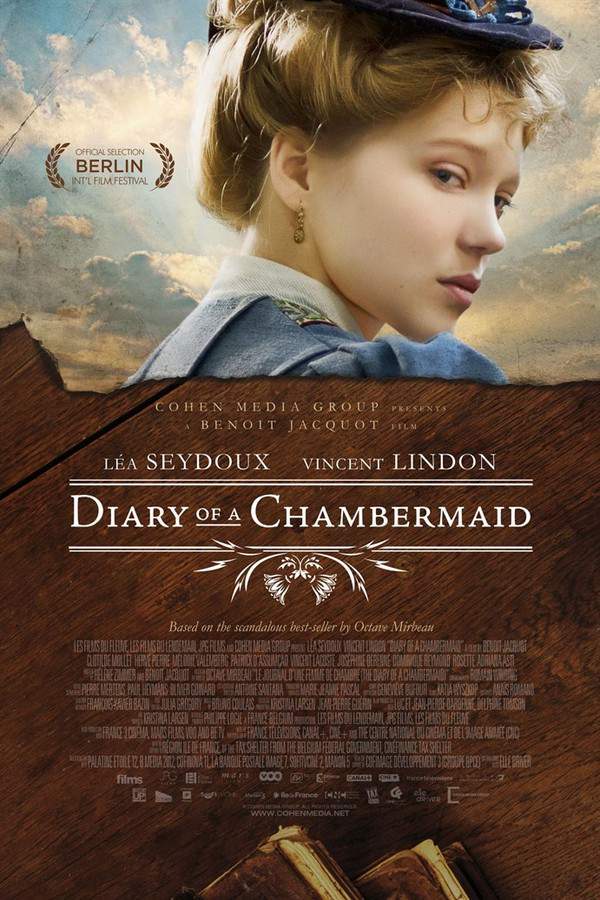
Diary of a Chambermaid (2016) movie poster

Characters & Themes

Diary of a Chambermaid (2016) Characters, Setting & Themes Explained

Release, runtime and language
2016 · 96 min · French
Loading streaming availability…
Directed by
Benoît Jacquot
Starring
Léa Seydoux, Vincent Lindon, Hervé Pierre, Clotilde Mollet
Budget
$22M

A spirited young chambermaid is sent to work in a rural estate, finding herself at odds with her demanding employer. She becomes entangled in a complicated situation involving two men: the opportunistic Monsieur and the mysterious gardener Joseph. As she navigates the challenges of her new life, she must confront her own desires and the power dynamics within the household.

On this page (9)
  1. 1 Where to watch
  2. 2 Characters explained (4)
  3. 3 Character relationship map
  4. 4 Where & when it takes place
  5. 5 Themes & meaning (2)
  6. 6 Character & meaning questions
  7. 7 The book behind the movie
  8. 8 Movie threads
  9. 9 Every angle
Loading streaming availability…

4 main characters · contains spoilers

Diary of a Chambermaid Characters Explained: Who Is Who

The main characters of Diary of a Chambermaid (2016), heroes and villains: what drives them, how they change over the course of the story and what each of them reveals about the film's bigger ideas.

  • Célestine (Léa Seydoux)

    Célestine is a beautiful and ambitious young chambermaid who navigates the complexities of her position within the Lanlaire household. She displays shrewdness, often plotting to manipulate those around her, despite the oppressive environment she works in. Her experiences shape her outlook, making her both a victim and a cunning player in her social landscape.

    • 👩‍🔧 Chambermaid
    • ✨ Ambition
    • 📉 Victim
    • 🎭 Manipulator
  • Monsieur Lanlaire (Hervé Pierre)

    Monsieur Lanlaire is the patriarch of the Lanlaire family known for his boorish behavior and predatory tendencies towards his chambermaids. His perversion establishes the dark atmosphere within the household, which Célestine must negotiate carefully. He represents the toxic masculinity and moral decay of the upper class during the era.

    • 🐷 Predatory
    • 📉 Oppressor
    • 👔 Wealthy
  • Joseph (Vincent Lindon)

    Joseph is the enigmatic groom who has his own ambitions and dark tendencies. His complex character intertwines with Célestine's life as both an attraction and a source of danger. Driven by his anti-Semitic beliefs, he embodies the societal issues of the time while drawing Célestine into a web of crime and emotional conflict.

    • 🕵️‍♂️ Groom
    • ❌ Anti-Semitic
    • 🛠️ Manipulative
  • Madame Lanlaire (Clotilde Mollet)

    Madame Lanlaire is a domineering figure, representing the oppressive nature of female authority in the household. She projects her frustrations onto Célestine and often contributes to the toxic dynamics within the home. Her character showcases the struggles women faced within a patriarchal society, even when they held positions of power.

    • 👩‍👧‍👦 Oppressor
    • ❌ Jealousy
    • 💼 Authority

Last updated: October 27, 2026 at 18:32

Was this helpful?

5 characters · 11 connections · contains spoilers

Diary of a Chambermaid Character Relationship Map

Who is connected to whom in Diary of a Chambermaid: family, love, friendships, rivalries and hidden ties, colour-coded. Pick a character to see their side of the story, or a connection to see what brings two characters together.

How much of the story to show
CCélestineLéa SeydouxMLMonsieurLanlaireHervé PierreJJosephVincent LindonMMarianneCMCaptain Mauger

Last updated: October 27, 2026 at 18:32

Was this helpful?

Setting

Where and When Does Diary of a Chambermaid Take Place?

The setting of Diary of a Chambermaid (2016): the year and time period, the places and locations, and how they shape the characters, the mood and the tension of the story.

Time period

End of the 19th century

The end of the 19th century was a period characterized by social upheaval and class distinctions, particularly in Europe. This era saw the rise of feminist movements and a questioning of traditional roles, which is reflected in Célestine's struggles and aspirations. The societal norms of the time heavily influenced the interactions and power dynamics between characters in the film.

Location

Normandy

Normandy is a region in northern France, known for its picturesque landscapes and rich history. This area is significant for its role in various historical events, including the Normandy Landings during World War II. In the context of the film, it serves as a backdrop for the complex social dynamics and class struggles of the late 19th century.

  • 🏡 Location
  • 📜 Historical

Last updated: October 27, 2026 at 18:32

Was this helpful?

2 major themes

Diary of a Chambermaid Meaning: Themes & Message Explained

What is Diary of a Chambermaid (2016) really about? The emotional, social and philosophical themes the film keeps returning to, its symbolism and the message beneath the surface.

  • Social Class

    Social class is a central theme in the film, showcasing the stark contrast between the privileged Lanlaire family and their servants. Célestine's journey highlights the struggles and limitations faced by those in lower social standings. The film critiques the oppressive nature of the class system and the ambitions of those who wish to rise above it.

  • Desire and Manipulation

    Desire and manipulation play pivotal roles in the relationships between the characters. Célestine's ambitions drive her to navigate a world filled with sexual advances and deceptions. The interplay of attraction and manipulation speaks to the broader themes of power dynamics within relationships, ultimately leading to tragic outcomes for many characters.

Last updated: October 27, 2026 at 18:32

Was this helpful?

Character & theme questions

Diary of a Chambermaid Characters & Meaning: Your Questions Answered

The questions people ask about Diary of a Chambermaid (2016): who the characters really are, their relationships, what the symbols mean, where it takes place and what the movie is really about. Each answer contains spoilers.

Q1

Where is the story set?

Diary of a Chambermaid is set in Normandy, a rural region in northern France known for its picturesque landscapes. The story unfolds primarily on a remote country estate belonging to the Lanlaire family. The pastoral surroundings contrast sharply with the toxic power dynamics inside the household, and the isolated location amplifies the sense of entrapment felt by the servants.

  • normandy
  • rural france
  • country estate
  • setting
  • location
Q2

What time period is the film set in?

The film takes place at the end of the 19th century in rural France. This era was defined by rigid social hierarchies, the early stirrings of feminist movements, and rising political extremism across Europe. These historical conditions directly shape the behavior, ambitions, and limitations of every character in Diary of a Chambermaid.

  • 19th century
  • late 1800s
  • era
  • time period
  • france
Q3

What role does social class play in the story?

Social class is the central tension in Diary of a Chambermaid, defining nearly every interaction between the Lanlaire family and their servants. The privileged employers wield unchecked power over their household staff, while those in service struggle against exploitation and humiliation. Célestine's ambition to rise above her station drives much of the conflict and exposes how the class system perpetuates abuse.

  • social class
  • class struggle
  • servants
  • upper class
  • lanlaire family
Q4

How do desire and manipulation shape the relationships?

Desire and manipulation are intertwined forces that dictate nearly every relationship in Diary of a Chambermaid. Célestine uses her attractiveness as a survival tool in a household where she is constantly vulnerable, while the men around her pursue her for sexual and personal gain. This push-and-pull of attraction and exploitation leads to deception, betrayal, and ultimately tragedy for several characters.

  • desire
  • manipulation
  • power dynamics
  • attraction
  • exploitation
Q5

Who is Célestine?

Célestine, played by Léa Seydoux, is the young chambermaid at the center of Diary of a Chambermaid. She is beautiful, ambitious, and fiercely shrewd, using manipulation to survive in a household where she is constantly exploited. Although she begins as a victim, she evolves into a calculating player who uses desire as a form of control over those around her.

  • celestine
  • chambermaid
  • lea seydoux
  • ambition
  • protagonist
Q6

Who is Joseph?

Joseph, played by Vincent Lindon, is the enigmatic groom who works on the Lanlaire estate. He is magnetic and secretive, harboring anti-Semitic ambitions and a willingness to cross moral lines for personal gain. His dangerous allure draws Célestine into an uneasy partnership that blends attraction, ideology, and crime.

  • joseph
  • vincent lindon
  • groom
  • anti-semitism
  • mystery
Q7

Who is Monsieur Lanlaire?

Monsieur Lanlaire, played by Hervé Pierre, is the boorish patriarch of the Lanlaire household. He is predatory and morally corrupt, using his position to exploit the women in his service. His behavior embodies the toxic masculinity and moral decay of the privileged class during the late 19th century.

  • monsieur lanlaire
  • herve pierre
  • patriarch
  • exploitation
  • toxic masculinity
Q8

Who is Madame Lanlaire?

Madame Lanlaire, played by Clotilde Mollet, is the domineering mistress of the Lanlaire household. Though she holds authority over the servants, her own power is constrained by the patriarchal society she lives in. She channels her frustrations onto Célestine, illustrating how women in positions of power often perpetuated the same oppressive systems they endured.

  • madame lanlaire
  • clotilde mollet
  • mistress
  • female authority
  • patriarchy
Q9

What feminist themes are explored?

Diary of a Chambermaid reflects the emerging feminist consciousness of the late 19th century, particularly through Célestine's refusal to accept her prescribed role. The film exposes how women were simultaneously victimized by male predators and constrained by other women enforcing patriarchal norms. Célestine's ambition, despite being morally ambiguous, represents a quiet rebellion against a system that denied women autonomy and dignity.

  • feminism
  • women
  • autonomy
  • gender roles
  • patriarchy
Q10

What is the overall tone of the film?

Diary of a Chambermaid carries a deliberately dark and unsettling tone throughout. The pacing is slow and atmospheric, allowing exploitation, predation, and moral ambiguity to build without relief. Psychological tension and lurking menace dominate the narrative, resulting in a heavy, disturbing viewing experience that matches the bleakness of its themes.

  • tone
  • atmosphere
  • dark
  • psychological
  • slow burn
Q11

How does historical context shape the story?

The late 19th-century French setting of Diary of a Chambermaid is essential to its meaning. Period-accurate class hierarchies, the rise of political extremism, and the early stirrings of feminist movements all inform the characters' choices and conflicts. Without this historical lens, the power dynamics and moral compromises at the heart of the film would lose much of their weight.

  • history
  • 19th century
  • france
  • social norms
  • political unrest

Movie threads

More Movies Like Diary of a Chambermaid, by Mood & Story

Curated lists built around what makes Diary of a Chambermaid tick: the same mood, the same kind of story or the same emotional payoff. Each list explains why these movies belong together.

Dark household secrets and class warfare like in Diary of a Chambermaid

Oppressive stories of servants navigating suffocating class hierarchies and dark secrets within wealthy estates. Explore movies like Diary of a Chambermaid that pull you into oppressive estates, crumbling manors, and gilded cages where servants and masters clash. These dark dramas expose class exploitation, hidden cruelties, and the moral rot lurking beneath respectable facades, perfect for fans of slow burning period tension.

  • oppressive
  • claustrophobic
  • class tension
  • morally gray
  • brooding
  • servitude
  • Tone: dark, oppressive
  • Pacing: slow, deliberate
Why these movies?

The story pattern: Stories unfold within confined domestic spaces where the boundaries between servant and master blur and corrupt. Protagonists, often women from lower social stations, must survive psychological manipulation, sexual predation, and shifting allegiances as they uncover crimes and secrets hidden behind locked doors. The household itself becomes a character, filled with whispered alliances, buried crimes, and power plays that gradually surface. Narratives often move toward ambiguous or bleak endings that refuse to offer redemption or clean resolution.

Why they belong together: These films share an atmosphere of claustrophobic domestic tension, deliberate pacing that lets dread accumulate, and a focus on power imbalances between classes. They tend to feature morally ambiguous characters who navigate ethical gray zones, period or institutionally bound settings that heighten the sense of inescapable hierarchy, and storylines where exploitation, manipulation, and dark secrets intertwine within a single household or estate.

Suffocating slow burn moral dramas like in Diary of a Chambermaid

Atmospheric dramas where oppression builds through silence, stillness, and morally impossible choices. If you loved the oppressive atmosphere of Diary of a Chambermaid, discover more films that build unbearable tension through slow, deliberate pacing. These psychological dramas prioritize mood and character over plot twists, leaving you unsettled by moral ambiguity, disturbing themes, and ambiguous endings that linger long after the credits roll.

  • slow burn
  • suffocating
  • menacing
  • morally gray
  • psychological
  • unsettling
  • Tone: bleak, morally gray
  • Pacing: slow burn, deliberate
Why these movies?

The story pattern: Narratives unfold at a glacial pace, using silence, repetition, and atmospheric detail to create a sense of mounting dread rather than overt action. Protagonists are often flawed, calculating, or trapped, making choices that reveal uncomfortable truths about power, desire, and survival. The emotional weight comes from psychological pressure and implication rather than violence, building toward endings that resist easy resolution and leave viewers questioning the characters' fates.

Why they belong together: These films share a commitment to atmospheric tension over conventional plotting, with stories that feel claustrophobic even when settings are expansive. They feature morally complex protagonists whose decisions disturb rather than satisfy, often blend trauma, desire, and exploitation in uncomfortable ways, and refuse to resolve their themes cleanly. The slow pacing amplifies rather than softens the darkness, and disturbing content is implied as much as shown, leaving emotional weight that lingers.

Every angle

Diary of a Chambermaid (2016) Explained: Plot, Timeline & Characters

Everything about Diary of a Chambermaid in one place: what happens in the plot summary, the timeline in chronological order, the characters and meaning and a spoiler-free summary. What's After the Movie adds the cast, box office and post-credit scenes.

Coming soon on iOS and Android

The Plot Explained Movie Summary App

Plot summaries, endings explained and timelines on your phone. Catch up on any movie in minutes, save your favorites and never miss a twist again.

Be the first to know when we launch. Your email stays private, always.

Learn more about the app