Plot Explained Spoilers guaranteed!
Plot Explained

Browse by genre

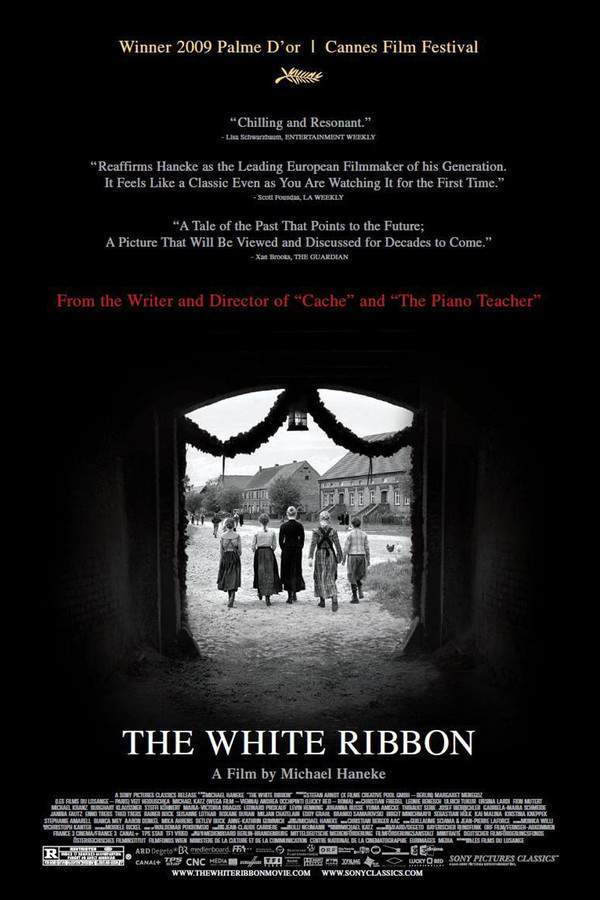
The White Ribbon (2009) movie poster

Plot Summary

The White Ribbon (2009) Plot Summary Explained

Release, runtime and language
2009 · 144 min · German
Directed by
Michael Haneke
Starring
Christian Friedel, Ernst Jacobi, Leonie Benesch
Budget
$18M

In a quiet German village just before World War I, a succession of unsettling incidents occur, seemingly linked to archaic forms of discipline. A local schoolteacher investigates these events, gradually revealing a disturbing connection between the community’s past and a growing sense of unease. His inquiries uncover a complex web of secrets and repressed tensions, prompting reflection on the societal forces that may have contributed to the impending conflict and the rise of extremism in Germany.

On this page (6)
  1. 1 Where to watch
  2. 2 What happens: full plot
  3. 3 Plot questions answered
  4. 4 Movie threads
  5. 5 Movies like The White Ribbon
  6. 6 Every angle

Where to watch

Where to Watch The White Ribbon (2009)

Where can you watch The White Ribbon? Stream, rent or buy it in the US, including on Amazon Video, Apple TV Store and Fandango At Home: current JustWatch availability with up-to-date prices.

Streaming availability powered by JustWatch

Full plot summary · contains spoilers

What Happens in The White Ribbon: Full Plot Summary

The whole story of The White Ribbon (2009) explained, from the opening scene to the final frame: every key event, every twist and what it all adds up to. Read it as a quick recap before the sequel, to check a scene you missed, or to finally understand what really happened.

The tale unfolds through the hazy memories of an elderly tailor, who reflects back on his past when he served as a village schoolteacher in the fictional Protestant village of Eichwald, Northern Germany. This story takes place between July 1913 and August 9, 1914, a time when the local powers—the pastor, doctor, and baron—exert their dominance over the village's inhabitants, including women, children, and farmers.

In this tightly-knit community, the fervent pastor punishes the youth during confirmation classes, instilling a deep sense of guilt for even the slightest misdeeds. He orders his pupils to wear white ribbons as symbols of their lost innocence and purity. A particularly harsh incident arises when his son admits to 'impure' actions; rather than understanding, the pastor reacts by binding the boy's hands to his bed each night—a cruel reminder of the strict moral code he enforces. Meanwhile, the village doctor, a widower, shows compassion towards the children he treats but subjects his housekeeper, also the local midwife with whom he is having an affair, to humiliation. Tragically, he also violates his teenage daughter, shrouding the household in shadows of abuse.

The baron, lord of the manor, sponsors harvest celebrations for the villagers, who largely work on his estate. Yet, when his young son suffers a grave injury at the hands of unknown attackers, he mindlessly separates from the devoted Eva, portrayed by Leonie Benesch, despite her unwavering support.

The schoolteacher's bond with Eva deepens, leading to a fateful visit to her family home during Christmas. He seeks her father's blessing for marriage, only to face hesitation masked as a testing period—a year-long delay before their union can be formalized.

As time passes, waves of unexplained tragedies ripple through the village. A wire strung between trees causes the doctor a devastating fall, and a farmer's wife meets a fatal accident at the sawmill due to compromised floorboards—her own son being the one responsible for vandalizing the baron's field. In an act of despair, the grieving husband eventually takes his own life. The baron's son, Sigi, disappears during the harvest festival, only to be found the next morning, bound and brutally beaten. Amidst these calamities, a barn at the baron’s estate catches fire, and the baroness confides her love for another man to her husband.

In the classroom, the pastor’s authority over his children and students leads to a humiliating instance where he punishes his daughter. She, in a rebellious act, frees the pastor's treasured parakeet—only for it to be later discovered on his desk, cruelly treated in the shape of a cross. A neighbor's daughter has foreseen dire premonitions regarding the midwife’s disabled son, who subsequently suffers a violent attack—his injuries further shrouded in mystery by a cryptic note quoting Exodus 20:5 found near the scene. Meanwhile, the steward of the baron reacts violently towards his own son for the theft of Sigi's flute.

In a desperate bid, the midwife commandeers a bicycle from the schoolteacher to reach the police, claiming her son knows the identity of his attacker. Strangely, they vanish from the narrative along with the doctor and his family, who leave behind a note announcing the closure of his practice—further deepening the shadows of suspicion and fear lingering over Eichwald.

Amidst growing doubts, the schoolteacher confronts the pastor, accusing him of shielding the truth and suggesting that his children might be behind the recent tragedies. Enraged, the pastor threatens to expose the schoolteacher's allegations to the authorities.

As the world braces for war, the film closes dramatically, capturing the somber atmosphere during Sunday church just as the narrator is about to meet Eva's father. A lingering tension pervades the peaceful village, leaving unsettling questions around the violent occurrences. The narrator is eventually drafted into the looming conflict of World War I, departing Eichwald forever, symbolizing the loss of innocence and the onset of darker times ahead.

Last updated: November 16, 2024 at 17:29

Was this helpful?

Plot questions answered

The White Ribbon Plot Explained: Your Questions Answered

The questions people ask most about The White Ribbon (2009): what happens in the confusing scenes, why the characters do what they do, the twists, hidden details and what the ending means. Each answer contains spoilers.

Q1

Why are the children forced to wear white ribbons in the village?

The pastor orders his confirmation students to wear white ribbons as symbols of their lost innocence and purity. The ribbons represent the strict moral code enforced in the village, where even the slightest perceived transgression leads to guilt and punishment. This ritual creates a climate of fear and psychological control among the children.

Foreshadowing: The white ribbons first appear during confirmation classes, establishing the oppressive moral atmosphere that defines the village's treatment of its youth.

  • white ribbons
  • confirmation
  • pastor
  • innocence
  • punishment
Q2

Who beats and绑架s the baron's son Sigi?

The film never definitively reveals who attacked Sigi. The steward of the baron reacts violently toward his own son for stealing Sigi's flute, suggesting a possible connection between the children of the estate and the violence. The mystery remains unresolved, with the schoolteacher's investigation failing to produce a clear answer.

Foreshadowing: Earlier, the steward's son is punished for stealing from Sigi, providing a possible motive rooted in class resentment.

  • Sigi
  • baron
  • beaten
  • bind
  • steward
  • attack
Q3

Why does the doctor and his family leave the village?

The doctor and his entire family abruptly vanish from Eichwald, leaving only a note announcing the closure of his practice. The departure comes after the midwife attempts to report her son's attacker to the police using a bicycle borrowed from the schoolteacher. The doctor likely fled due to the growing suspicion around the village incidents and potentially because of his own hidden crimes, including his abuse of his daughter.

Foreshadowing: Earlier scenes reveal the doctor's dark secrets, his affair with the midwife and his abuse of his teenage daughter, providing motive for his sudden disappearance.

  • doctor
  • family
  • leave
  • vanish
  • disappear
  • flee
Q4

What causes the doctor's fall from his horse?

The doctor falls from his horse when a wire is strung between two trees in the village. This appears to be a deliberate act of sabotage, one of the unexplained tragedies that plague Eichwald. The wire incident is one of several 'accidents' that suggest someone in the village is systematically targeting the elite.

Foreshadowing: The series of accidents targeting the village's powerful figures begins with this incident, establishing a pattern of violence.

  • doctor
  • horse
  • fall
  • wire
  • sabottage
  • accident
Q5

Why does the farmer kill himself after his wife's death?

The farmer's wife dies in a tragic accident at the sawmill when the floorboards are discovered to be compromised, sabotaged by her own son who vandalized the baron's field. Unable to bear his grief and guilt over his wife's death, the farmer eventually takes his own life, leaving the community further shrouded in tragedy.

Foreshadowing: Earlier, the farmer's son is caught vandalizing the baron's field, providing context for the sabatoge of the sawmill floorboards.

  • farmer
  • suicide
  • death
  • wife
  • sawmill
  • grief
Q6

What is the meaning of the Exodus 20:5 note left near the midwife's son?

The note quoting Exodus 20:5 ('I am a jealous God, visiting the iniquities of the fathers on the children') is found near the disabled son after he is attacked. This suggests the violence is connected to generational sins, possibly the abuse and corruption perpetuated by the village's authority figures. The quote implies that children suffer for their parents' transgressions, fitting the film's theme of inherited guilt and moral corruption.

Foreshadowing: The quote connects to the pastor's teachings about inherited sin and the cycle of punishment that defines the village's moral atmosphere.

  • exodus
  • bible
  • quote
  • middle
  • attack
  • midwife
  • son
Q7

Why does Eva's father delay the schoolteacher's marriage proposal?

When the schoolteacher visits Eva's family home at Christmas to ask for her father's blessing, her father hesitates and imposes a year-long testing period before their union can be formalized. This delay reflects the patriarchal control over marriage in the community and leaves both lovers in uncertainty as the village descends into chaos.

Foreshadowing: The delay occurs early in the narrative, setting up an unresolved romantic thread that remains dangling as tragedy engulfs the village.

  • eva
  • marriage
  • proposal
  • father
  • delay
  • waiting
Q8

Who is responsible for the village attacks and accidents?

The film never reveals the culprit(s) behind the string of incidents, the doctor's fall, the farmer's wife's death, Sigi's beating, and the barn fire. The schoolteacher suspects the pastor's children may be responsible, confronting the pastor about his shielding them. However, no definitive answer is provided. The pattern suggests someone resents the village's elite, possibly acting out against the abuse and oppression they inflict.

Foreshadowing: The pastor's harsh treatment of his children and the steward's violent reaction to his son provide possible motives for revenge against the powerful families.

  • attacker
  • village
  • tragedies
  • mystery
  • responsible
  • accidents
Q9

Why does the schoolteacher leave the village at the end?

The schoolteacher is drafted into World War I, forcing him to leave Eichwald forever on August 9, 1914. His departure symbolizes the loss of innocence, both his personal innocence and the village's. He leaves without marrying Eva and without resolving the mysteries of the village, suggesting the darkness he uncovered will follow him into the impending war.

Foreshadowing: The film opens with the schoolteacher reflecting on this period as an elderly tailor, already indicating he will leave and that this departure marks a definitive end to his youth.

  • schoolteacher
  • leave
  • wwi
  • drafted
  • war
  • departure
  • eichwald
Q10

What happens to the baron and his family after the tragedies?

During the period of mysterious incidents, the baron's barn catches fire, and his wife confesses her love for another man. When his son Sigi is attacked and found bound and beaten, the baron distances himself from Eva despite her unwavering support. The combination of personal betrayals and violence breaks the family, leaving the baron's household in disarray.

Foreshadowing: The baron's celebration earlier in the film establishes his position of power, making his subsequent fall from grace more impactful.

  • baron
  • baroness
  • fire
  • confession
  • attack
  • sigi
Q11

Why does the pastor's daughter release his parakeet?

In an act of rebellion against her father's oppressive authority, the pastor's daughter frees his treasured parakeet. The bird later reappears cruelly treated in the shape of a cross, a disturbing symbol that suggests either the daughter or another child is escalating their defiance. This incident highlights the psychological damage caused by the pastor's harsh moral enforcement.

Foreshadowing: The daughter has already been humiliated by her father in front of the class, establishing her growing resentment and rebellious streak.

  • pastor
  • daughter
  • parakeet
  • bird
  • cross
  • rebellion
  • defiance
Q12

How does the village's strict moral code contribute to the violence?

The village's oppressive atmosphere, enforced by the pastor's guilt-based teachings, the doctor's abuse, and the baron's economic control, creates a breeding ground for resentment and violence. Children raised under such repression act out in mysterious ways, and the lack of accountability for the elite's crimes perpetuates a cycle of hidden rage. The film's events suggest that such systemic cruelty ultimately produces tragic consequences.

Foreshadowing: The pastor's enforcement of white ribbons and his binding of his own son establish the connection between moral oppression and violence from the film's beginning.

  • village
  • moral code
  • abuse
  • oppression
  • repression
  • cycle
  • violence

Movie threads

More Movies Like The White Ribbon, by Mood & Story

Curated lists built around what makes The White Ribbon tick: the same mood, the same kind of story or the same emotional payoff. Each list explains why these movies belong together.

Movies about societal decay like The White Ribbon

Stories where a community's oppressive secrets slowly poison its soul. If you were fascinated by the slow unraveling of a repressed village in The White Ribbon, this list features similar movies. Discover other films that explore how societal rot, class conflict, and collective guilt fester in isolated communities, often with dark and psychologically complex narratives.

  • oppressive
  • sinister
  • claustrophobic
  • somber
  • unsettling
  • paranoid
  • Tone: dark, bleak, unsettling
  • Pacing: slow, methodical
Why these movies?

The story pattern: These narratives often unfold as a series of interconnected, mysterious events investigated by an outsider or a moral center within the community. The plot structure is less about solving a crime and more about peeling back layers of decorum to reveal a disturbing truth about human nature and the foundations of power.

Why they belong together: Movies are grouped here for their shared focus on a claustrophobic community setting, a slow-burn pacing that methodically builds dread, and a complex exploration of themes like authoritarianism, repression, and the dark origins of societal collapse. The overall tone is consistently dark and unsettling.

Mysterious investigations like in The White Ribbon

A protagonist's inquiry uncovers disturbing human truths, not simple answers. Fans of the schoolteacher's unsettling inquiry in The White Ribbon will appreciate these movies. This list features similar stories where an investigation into strange events reveals profound psychological abuse, disturbing themes, and a bleak perspective on human nature, rather than a neat resolution.

  • unsettling
  • sinister
  • somber
  • melancholic
  • psychological
  • bleak
  • Tone: dark, melancholic, pessimistic
  • Pacing: slow, steady
Why these movies?

The story pattern: The narrative follows a central character, often an outsider or a voice of reason, attempting to make sense of bizarre or cruel events. The investigation's structure is key, but the resolution is typically ambiguous or bleak, emphasizing the persistence of evil and the failure to achieve cathartic justice. The journey is more important than the destination.

Why they belong together: These films are linked by their use of an investigative plot to delve into heavy themes like psychological abuse and disturbing truths. They share a high emotional weight, a dark tone, and a narrative complexity that prioritizes mood and thematic exploration over clear-cut solutions. The endings often feel bleak or ambiguous.

If you liked this

Movies Like The White Ribbon

Similar movies to The White Ribbon: the same genre, themes or kind of story. Each one comes with its own plot summary, timeline and ending explained.

Browse all movie summaries

Every angle

The White Ribbon (2009) Explained: Plot, Timeline & Characters

Everything about The White Ribbon in one place: what happens in the plot summary, the timeline in chronological order, the characters and meaning and a spoiler-free summary. What's After the Movie adds the cast, box office and post-credit scenes.

Coming soon on iOS and Android

The Plot Explained Movie Summary App

Plot summaries, endings explained and timelines on your phone. Catch up on any movie in minutes, save your favorites and never miss a twist again.

Be the first to know when we launch. Your email stays private, always.

Learn more about the app