





Plot Explained Spoilers guaranteed!
Plot Explained

Browse by genre

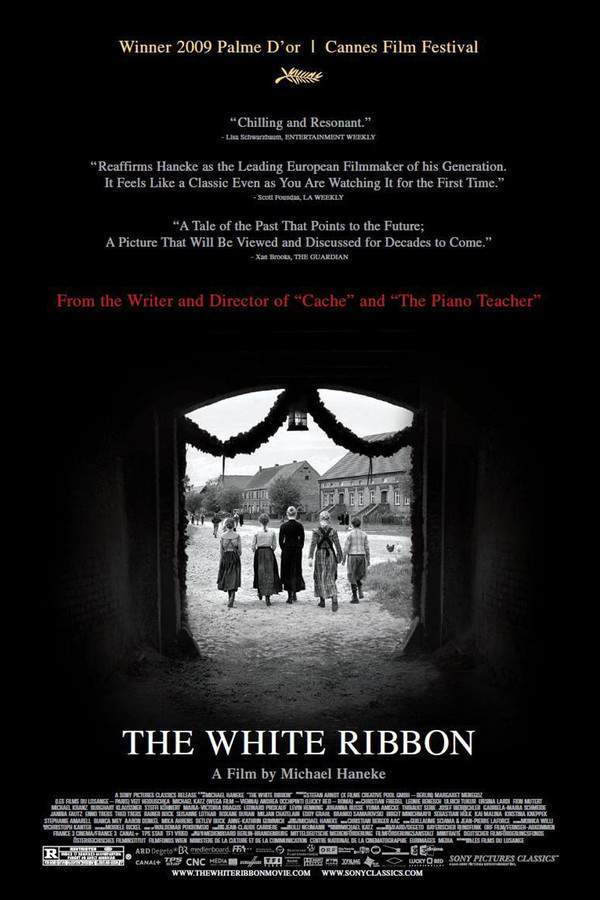
The White Ribbon (2009) movie poster

Characters & Themes

The White Ribbon (2009) Characters, Setting & Themes Explained

Release, runtime and language
2009 · 144 min · German
Directed by
Michael Haneke
Starring
Christian Friedel, Ernst Jacobi, Leonie Benesch
Budget
$18M

In a quiet German village just before World War I, a succession of unsettling incidents occur, seemingly linked to archaic forms of discipline. A local schoolteacher investigates these events, gradually revealing a disturbing connection between the community’s past and a growing sense of unease. His inquiries uncover a complex web of secrets and repressed tensions, prompting reflection on the societal forces that may have contributed to the impending conflict and the rise of extremism in Germany.

On this page (8)
  1. 1 Where to watch
  2. 2 Characters explained (3)
  3. 3 Where & when it takes place
  4. 4 Themes & meaning (3)
  5. 5 Character & meaning questions
  6. 6 Movie threads
  7. 7 Movies like The White Ribbon
  8. 8 Every angle

Where to watch

Where to Watch The White Ribbon (2009)

Where can you watch The White Ribbon? Stream, rent or buy it in the US, including on Amazon Video, Apple TV Store and Fandango At Home: current JustWatch availability with up-to-date prices.

Streaming availability powered by JustWatch

3 main characters · contains spoilers

The White Ribbon Characters Explained: Who Is Who

The main characters of The White Ribbon (2009), heroes and villains: what drives them, how they change over the course of the story and what each of them reveals about the film's bigger ideas.

  • The Schoolteacher

    played by Christian Friedel

    The schoolteacher serves as the narrator, reflecting on his past with a blend of nostalgia and sorrow. His deepening bond with Eva offers a glimpse of hope amidst the unfolding tragedies, yet his challenges against authority showcase his inner conflict. He becomes a conduit for revealing the horrors lurking beneath the village’s surface.

    • 👨‍🏫 Teacher
    • 🕰️ Reflective
  • Eva

    played by Leonie Benesch

    Eva is characterized as a strong and supportive figure caught in the societal constraints of her time. Her love for the schoolteacher highlights her desire for personal happiness amidst the oppressive atmosphere of the village. Despite the challenges, her resilience reflects the struggles faced by women in a harsh environment.

    • ❤️ Love
    • 💪 Resilience
  • The Pastor

    played by Ernst Jacobi

    The pastor represents the harsh moral authority of the village, enforcing strict rules that instill guilt in the youth. His failure to show compassion to his own son reveals a deep-seated hypocrisy. His domineering presence looms over the village, instilling fear instead of faith.

    • ⛪ Authority
    • 😠 Hypocrisy

Last updated: October 22, 2024 at 21:27

Was this helpful?

Setting

Where and When Does The White Ribbon Take Place?

The setting of The White Ribbon (2009): the year and time period, the places and locations, and how they shape the characters, the mood and the tension of the story.

Time period

July 1913 - August 1914

The film unfolds during a pivotal time just before World War I. This period is marked by an increasing sense of tension and impending conflict in Europe, which looms over the village's ordinary life. The societal norms of this era significantly influence the characters’ actions and the moral dilemmas they face.

Location

Eichwald, Northern Germany

Eichwald is a fictional Protestant village that serves as the backdrop for this tale. Known for its tightly-knit community, this village reflects a society under the rigor of strict moral codes imposed by local authorities. The pastoral setting is marred by underlying tensions and secrets that illustrate the dark side of a seemingly peaceful environment.

  • 🏡 Village
  • 📜 Fictional

Last updated: October 22, 2024 at 21:27

Was this helpful?

3 major themes

The White Ribbon Meaning: Themes & Message Explained

What is The White Ribbon (2009) really about? The emotional, social and philosophical themes the film keeps returning to, its symbolism and the message beneath the surface.

  • Innocence and Guilt

    The theme of innocence lost permeates the narrative as characters grapple with guilt instilled by their strict upbringing. The white ribbons symbolize this loss, prompting reflections on morality and societal pressures. The tragic events in Eichwald serve as a chilling reminder of how the innocent are often the victims of harsh realities.

  • Authority and Rebellion

    The struggle against authoritarian figures, such as the pastor, illustrates a clash between oppressive control and the desire for autonomy. Children and villagers alike respond rebelliously to intimidation, which adds layers to their character development. This tension reveals the precarious dynamics of power wielded by those in authority.

  • Tragedy and Trauma

    The film explores the heavy impact of tragedy on community dynamics, with numerous unfortunate events showcasing the fragility of human relationships. The psychological scars left on characters evoke deep empathy, revealing that trauma does not merely affect individuals but can alter the very fabric of a community.

Last updated: October 22, 2024 at 21:27

Was this helpful?

Character & theme questions

The White Ribbon Characters & Meaning: Your Questions Answered

The questions people ask about The White Ribbon (2009): who the characters really are, their relationships, what the symbols mean, where it takes place and what the movie is really about. Each answer contains spoilers.

Q1

What is the name of the village where the story takes place?

The story is set in Eichwald, a fictional Protestant village in Northern Germany. This tightly-knit rural community is characterized by its strict moral codes and hierarchical authority structures. The pastoral setting contrasts sharply with the dark secrets and tensions that simmer beneath its seemingly peaceful surface.

  • eichwald village
  • fictional village
  • northern germany setting
Q2

What do the white ribbons symbolize in the film?

The white ribbons represent lost innocence and the guilt instilled in children through strict religious discipline. They are worn by the children as a symbol of purity, but the film uses this motif to explore how moral rigidity can corrupt and damage young minds. The ribbons become a chilling reminder of how oppressive authority twists the concept of innocence.

  • white ribbons
  • symbolism
  • innocence lost
  • moral guilt
Q3

When does the film take place?

The film is set between July 1913 and August 1914, just before the outbreak of World War I. This pivotal historical moment creates an undercurrent of impending conflict that parallels the unfolding mysteries in the village. The pre-war tension serves as both a literal and metaphorical backdrop, suggesting that the village's moral decay mirrors the broader societal collapse about to engulf Europe.

  • 1913
  • 1914
  • world war i
  • pre-war setting
  • historical period
Q4

Who is the schoolteacher narrator in the story?

The schoolteacher, played by Christian Friedel, serves as both the story's narrator and protagonist. He is a sensitive observer who documents the strange events unfolding in Eichwald while forming a romantic relationship with Eva. His role as educator positions him as an outsider challenging the village's oppressive authority structures, and his reflections carry a tone of nostalgic sorrow as he looks back on these traumatic events.

  • schoolteacher
  • christian friedel
  • narrator
  • protagonist
Q5

What role does the pastor play in the village?

The pastor, played by Ernst Jacobi, represents the harsh moral authority that dominates Eichwald. He enforces strict religious rules that instill guilt in the village's children, particularly through his own son. His failure to show compassion or mercy reveals a deep hypocrisy at the heart of the community's religious leadership. His domineering presence creates an atmosphere of fear rather than faith, embodying the film's critique of authoritarian control.

  • pastor
  • ernst jacobi
  • moral authority
  • religious control
  • village authority
Q6

Who is Eva and what is her significance?

Eva, played by Leonie Benesch, is a young woman who becomes the object of the schoolteacher's affection. She represents the struggles of women trapped by the oppressive social codes of early 20th-century rural Germany. Despite living in a restrictive environment, Eva demonstrates resilience and a desire for personal happiness. Her relationship with the schoolteacher offers a rare glimpse of hope amidst the darkness consuming the village.

  • eva
  • leonie benesch
  • female character
  • love interest
Q7

What is the theme of authority and rebellion about?

The film explores the conflict between oppressive authority figures like the pastor and those who resist their control, including both children and adults in the village. This tension reveals how power dynamics function through intimidation and psychological control. The characters' various acts of rebellion, whether through disobedience, secret-keeping, or questioning the established order, highlight the precarious balance between submission and resistance in a restrictive society.

  • authority
  • rebellion
  • power dynamics
  • oppression
  • resistance
Q8

How does tragedy affect the community in the story?

The film depicts numerous tragic events that leave deep psychological scars on both individuals and the collective community. These tragedies expose the fragility of human relationships in a society governed by strict moral codes and hidden secrets. The psychological trauma extends beyond individual victims, altering the very fabric of community life and revealing how systemic cruelty can damage an entire social group.

  • tragedy
  • trauma
  • community
  • psychological impact
  • village secrets
Q9

Why is the village described as Protestant?

Eichwald is identified as a Protestant village, which shapes its particular form of religious conservatism and moral strictness. This Protestant setting influences the character of the pastor's authority and the community's approach to discipline and morality. The religious context provides the foundation for the rigid moral codes that govern daily life and create the conditions for the psychological tensions that unfold.

  • protestant
  • religion
  • village
  • moral codes
  • religious authority
Q10

How does the pre-WWI setting relate to the film's themes?

The timing just before World War I serves as a crucial backdrop that informs the film's exploration of societal collapse and the rise of extremism. The film suggests that the same repressive structures breeding cruelty in Eichwald were also present in German society at large, ultimately contributing to the nation's descent into fascism. The impending war represents both a literal and symbolic fulfillment of the violence and moral corruption already present in the village.

  • world war i
  • pre-war
  • german society
  • fascism
  • societal collapse

Movie threads

More Movies Like The White Ribbon, by Mood & Story

Curated lists built around what makes The White Ribbon tick: the same mood, the same kind of story or the same emotional payoff. Each list explains why these movies belong together.

Movies about societal decay like The White Ribbon

Stories where a community's oppressive secrets slowly poison its soul. If you were fascinated by the slow unraveling of a repressed village in The White Ribbon, this list features similar movies. Discover other films that explore how societal rot, class conflict, and collective guilt fester in isolated communities, often with dark and psychologically complex narratives.

  • oppressive
  • sinister
  • claustrophobic
  • somber
  • unsettling
  • paranoid
  • Tone: dark, bleak, unsettling
  • Pacing: slow, methodical
Why these movies?

The story pattern: These narratives often unfold as a series of interconnected, mysterious events investigated by an outsider or a moral center within the community. The plot structure is less about solving a crime and more about peeling back layers of decorum to reveal a disturbing truth about human nature and the foundations of power.

Why they belong together: Movies are grouped here for their shared focus on a claustrophobic community setting, a slow-burn pacing that methodically builds dread, and a complex exploration of themes like authoritarianism, repression, and the dark origins of societal collapse. The overall tone is consistently dark and unsettling.
Mysterious investigations like in The White Ribbon

A protagonist's inquiry uncovers disturbing human truths, not simple answers. Fans of the schoolteacher's unsettling inquiry in The White Ribbon will appreciate these movies. This list features similar stories where an investigation into strange events reveals profound psychological abuse, disturbing themes, and a bleak perspective on human nature, rather than a neat resolution.

  • unsettling
  • sinister
  • somber
  • melancholic
  • psychological
  • bleak
  • Tone: dark, melancholic, pessimistic
  • Pacing: slow, steady
Why these movies?

The story pattern: The narrative follows a central character, often an outsider or a voice of reason, attempting to make sense of bizarre or cruel events. The investigation's structure is key, but the resolution is typically ambiguous or bleak, emphasizing the persistence of evil and the failure to achieve cathartic justice. The journey is more important than the destination.

Why they belong together: These films are linked by their use of an investigative plot to delve into heavy themes like psychological abuse and disturbing truths. They share a high emotional weight, a dark tone, and a narrative complexity that prioritizes mood and thematic exploration over clear-cut solutions. The endings often feel bleak or ambiguous.

If you liked this

Movies Like The White Ribbon

Similar movies to The White Ribbon: the same genre, themes or kind of story. Each one comes with its own plot summary, timeline and ending explained.

Browse all movie summaries

Every angle

The White Ribbon (2009) Explained: Plot, Timeline & Characters

Everything about The White Ribbon in one place: what happens in the plot summary, the timeline in chronological order, the characters and meaning and a spoiler-free summary. What's After the Movie adds the cast, box office and post-credit scenes.

Coming soon on iOS and Android

The Plot Explained Movie Summary App

Plot summaries, endings explained and timelines on your phone. Catch up on any movie in minutes, save your favorites and never miss a twist again.

Be the first to know when we launch. Your email stays private, always.

Learn more about the app