Plot Explained Spoilers guaranteed!
Plot Explained

Browse by genre

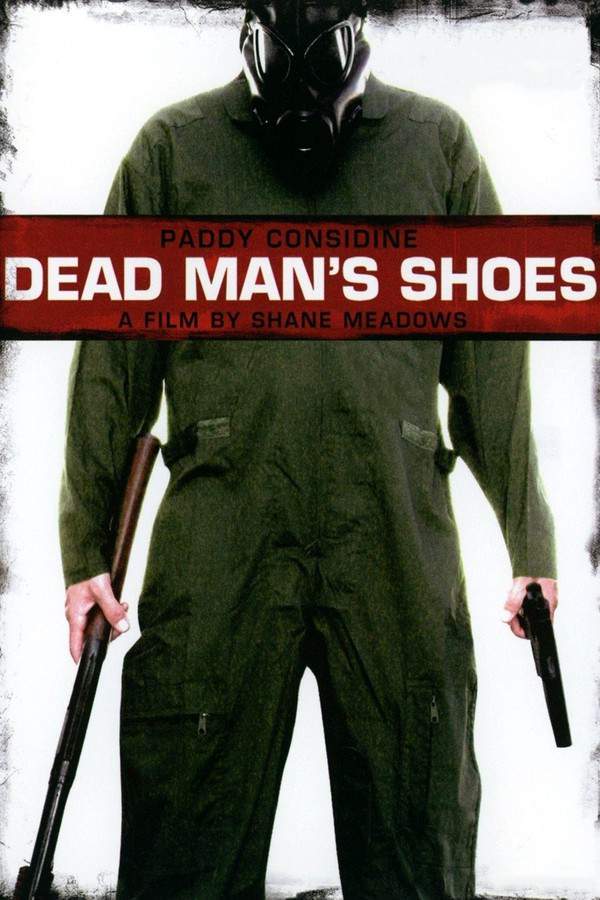
Dead Man's Shoes (2006) movie poster

Plot Summary

Dead Man's Shoes (2006) Plot Summary Explained

Release, runtime and language
2006 · 90 min · English
Loading streaming availability…
Directed by
Shane Meadows
Starring
Paddy Considine, Toby Kebbell, Gary Stretch

Following a long absence, a troubled veteran returns home seeking revenge for the mistreatment of his brother, who has an intellectual disability. Driven by a need for retribution, he confronts the group of bullies responsible, unleashing a calculated and violent campaign. As the veteran’s rage escalates, a deadly reckoning unfolds, forcing him to confront the darkness within himself and the consequences of his actions.

On this page (6)
  1. 1 Where to watch
  2. 2 What happens: full plot
  3. 3 Plot questions answered
  4. 4 Movie threads
  5. 5 Movies like Dead Man's Shoes
  6. 6 Every angle
Loading streaming availability…

Full plot summary · contains spoilers

What Happens in Dead Man's Shoes: Full Plot Summary

The whole story of Dead Man's Shoes (2006) explained, from the opening scene to the final frame: every key event, every twist and what it all adds up to. Read it as a quick recap before the sequel, to check a scene you missed, or to finally understand what really happened.

The film follows the harrowing journey of Richard (Paddy Considine), who returns to his hometown of Matlock, Derbyshire, after a stint as a paratrooper in the British Army. Accompanied by his younger brother Anthony (Toby Kebbell), who suffers from a mental impairment, they find refuge at an abandoned farm nearby. The film unfolds through flashbacks that expose the traumatic experiences Anthony faced at the hands of local drug dealers, prompting Richard's thirst for revenge.

In a tense confrontation, Richard dons a mask and confronts Herbie (Stuart Wolfenden), one of the abusers, who fails to recognize him initially. Later on, as Herbie and his cohorts Soz (Neil Bell) and Tuff (Paul Sadot) indulge in drugs at their flat, they discuss the masked intruder, with Herbie suspecting it could be Richard, Anthony's brother. When Herbie steps outside, he catches a glimpse of a military-gas-masked figure banging on the door, but the mysterious figure vanishes. Upon returning inside, they discover their place has been ransacked, drugs stolen, and the ominous words "Cheyne Stoking" spray-painted on the wall—a reference to the dying breath pattern of a human.

The following day, the gang approaches Sonny (Gary Stretch), their de facto leader, to explain their predicament. Unbeknownst to them, Sonny’s gang has also had a makeover, painting their faces, hair, and clothes. Tensions rise, especially when they realize the man from the pool hall is indeed Richard, igniting a sense of dread as they acknowledge his return.

The encounter escalates when they eventually cross paths with Richard, who boldly invites them to confront him at the farm. The gang, shaken by his fearlessness, decides to track him down. That night, Richard stealthily infiltrates their hideout, leading to a brutal murder of one gang member with an ax, leaving the chilling message "One Down" smeared in blood on the wall.

Panicked, Sonny plots to eliminate Richard. The next morning, they plan to lure him out and execute their scheme, but in a tragic twist, Sonny accidentally shoots one of his own men, Big Al (Seamus O'Neil), instead of Richard. With their plan in shambles, they retreat, leaving Richard smiling, full of confidence.

As the surviving gang members regroup at a petrol station, tensions heighten, and Tuff scampers off in fear. Later, the gang arm themselves in Sonny's home, but while they search upstairs, Richard slips into the kitchen pantry. In a bid for revenge, he poisons their kettle with the drugs he previously confiscated, leading to a chaotic scene where he takes pleasure in tormenting and killing them one by one.

After dispatching Sonny and Soz, Richard confronts Herbie, presenting him with Tuff's dead body and forcing him to divulge the whereabouts of the final gang member. After a series of cruel interactions, Richard allows himself to be killed when he binds Mark (Paul Hurstfield), the last gang member, to a confrontation over their shared past. Ultimately, it’s revealed that Richard has been alone all along, haunted by the memory of his brother.

As the emotional climax unfolds, Richard takes Mark to the very location where Anthony's tragic death unfolded, confronting the painful truth of his brother's torment. In a tragic resolution, Mark stabs Richard, ending his cycle of vengeance and despair.
Last updated: November 03, 2024 at 23:05

Was this helpful?

Plot questions answered

Dead Man's Shoes Plot Explained: Your Questions Answered

The questions people ask most about Dead Man's Shoes (2006): what happens in the confusing scenes, why the characters do what they do, the twists, hidden details and what the ending means. Each answer contains spoilers.

Q1

Why does Richard seek revenge against the gang?

Richard seeks revenge because the local drug dealers brutally mistreated his brother Anthony, who has an intellectual disability. The flashbacks reveal that Anthony was subjected to humiliating and traumatic abuse at their hands. Richard's military background and protective instincts drive him to punish those responsible for his brother's suffering.

Foreshadowing: Early scenes show Richard's fierce protectiveness over Anthony at the abandoned farm.

  • richard
  • anthony
  • revenge
  • gang
  • mistreatment
Q2

Who is the person wearing the gas mask?

The masked figure is Richard himself, wearing military-style gas mask to conceal his identity while terrorizing the gang. He uses this disguise during his initial confrontations to strike fear without revealing who he is. The gang eventually realizes the masked intruder is Anthony's brother seeking retribution.

Foreshadowing: Richard's military paratrooper background is established early in the film.

  • masked figure
  • richard
  • gas mask
  • identity
  • gang
Q3

What does the phrase 'Cheyne Stoking' spray-painted on the wall mean?

Cheyne-Stokes breathing refers to a dying breath pattern in humans, signaling that death is approaching. Richard spray-paints this ominous message to psychologically terrorize the gang members. It serves as a warning that their deaths are inevitable and methodical.

  • cheyne stokes
  • dying breath
  • warning
  • spray-paint
  • terror
Q4

How does Richard manage to infiltrate the gang's hideout?

Richard uses his military training and stealth tactics to infiltrate their hideout undetected. He exploits their drug-induced state and overconfidence to slip inside unnoticed. Once inside, he murders one member with an ax and leaves 'One Down' written in blood.

Foreshadowing: Richard's paratrooper background establishes his combat skills early.

  • richard
  • infiltrate
  • hideout
  • military training
  • stealth
Q5

Why does Sonny accidentally shoot Big Al instead of Richard?

Sonny's plan to ambush Richard backfires due to panic and confusion during the confrontation. In the chaos, he mistakes Big Al for Richard and shoots his own man accidentally. This blunder fractures the gang's morale and demonstrates Richard's psychological dominance over them.

Foreshadowing: The gang's growing fear and tension is shown throughout their meetings.

  • sonny
  • big al
  • accidental shooting
  • panic
  • ambush
Q6

How does Richard poison the gang members with drugs?

Richard steals the gang's drugs during his initial ransacking of their hideout. He later contaminates their kettle with these confiscated drugs at Sonny's home. The gang members consume the poisoned tea, leading to chaotic and fatal overdoses as Richard watches.

Foreshadowing: The drug theft is shown when 'Cheyne Stoking' is spray-painted on the wall.

  • poison
  • drugs
  • kettle
  • richard
  • overdose
Q7

What happened to Anthony that caused Richard's rage?

Anthony suffered severe physical and psychological abuse from the local drug dealers who targeted him due to his intellectual disability. The flashbacks show him being humiliated, beaten, and ultimately driven to suicide. This trauma fuels Richard's single-minded campaign of vengeance throughout the film.

Foreshadowing: Anthony's distressed behavior at the farm hints at his past trauma.

  • anthony
  • abuse
  • suicide
  • trauma
  • disability
Q8

Why does Richard boldly invite the gang to confront him at the farm?

Richard invites them to the farm to demonstrate his fearlessness and psychological control over the gang. He wants them to know exactly who is hunting them and where to find him. This bold move shatters their confidence and ignites their mixture of fear and aggression.

Foreshadowing: Richard's confidence grows after his initial masked confrontation with Herbie.

  • farm
  • confrontation
  • richard
  • fearlessness
  • gang
Q9

Is Anthony appearing as a ghost or hallucination to Richard?

Anthony appears as a hallucination rather than a supernatural ghost, reflecting Richard's guilt and trauma. The film reveals Richard has been alone throughout his revenge campaign, haunted by memories of his brother. This psychological ambiguity underscores Richard's deteriorating mental state.

Foreshadowing: Early scenes show Richard talking to Anthony who may not always be physically present.

  • anthony
  • hallucination
  • ghost
  • richard
  • guilt
Q10

Why does Richard allow Mark to kill him at the end?

Richard has completed his vengeance and finds no peace or purpose left after killing the gang members. He binds Mark to a final confrontation over their shared past, essentially seeking death to end his cycle of despair. Mark stabs Richard, terminating his relentless campaign and tragic journey.

Foreshadowing: Richard's bleak demeanor throughout suggests he seeks no survival.

  • richard
  • mark
  • death
  • vengeance
  • suicide
Q11

Where does the final confrontation between Richard and Mark take place?

Richard takes Mark to the exact location where Anthony's tragic death unfolded. This site holds painful memories of his brother's torment and abuse by the gang. Confronting Mark at this place forces Richard to face the full weight of his brother's suffering.

Foreshadowing: The abandoned farm serves as Richard's base but the final location is elsewhere.

  • final confrontation
  • mark
  • anthony
  • location
  • death
Q12

How many members of the gang does Richard kill?

Richard systematically kills all five main gang members responsible for Anthony's abuse. Herbie, Soz, Tuff, Sonny, and Big Al all die through various methods including ax attack, poisoning, and confrontation. Big Al dies accidentally from Sonny's friendly fire while the others fall to Richard's vengeance.

  • gang members
  • deaths
  • richard
  • herbie
  • sonny
Q13

What is Richard's military background that helps his revenge?

Richard served as a paratrooper in the British Army before returning to his hometown. This military training gives him combat skills, stealth tactics, and psychological resilience for his revenge campaign. His army experience enables him to outmaneuver the gang members systematically.

Foreshadowing: Richard's return from army service is mentioned in the opening.

  • richard
  • paratrooper
  • british army
  • military
  • training
Q14

Why do the gang members paint their faces and hair?

The gang paints their faces, hair, and clothes as a psychological defense mechanism against Richard's terror campaign. They attempt to disguise themselves and boost their collective morale after realizing Richard is hunting them. This desperate act demonstrates their deteriorating mental state under Richard's pressure.

Foreshadowing: The gang's fear grows after each of Richard's attacks.

  • gang
  • paint faces
  • disguise
  • fear
  • richard
Q15

What does the bleak ending say about Richard's revenge?

The ending reveals that Richard's vengeance brought him no peace, only death and despair. Both Richard and his quest end tragically, showing the destructive nature of retribution. The film emphasizes that violence begets violence, leaving no hope or redemption for the protagonist.
Foreshadowing: Richard's dark tone and single-minded focus hint at no happy resolution.

  • ending
  • richard
  • revenge
  • bleak
  • tragedy

Movie threads

More Movies Like Dead Man's Shoes, by Mood & Story

Curated lists built around what makes Dead Man's Shoes tick: the same mood, the same kind of story or the same emotional payoff. Each list explains why these movies belong together.

Movies about grim vengeance like Dead Man's Shoes

Protagonists consumed by a single-minded, violent quest for personal justice. Find more movies like Dead Man's Shoes that explore dark, personal revenge stories. These films follow characters on a violent path of retribution, driven by grief and trauma, often leading to bleak and psychologically heavy conclusions.

  • vengeful
  • grim
  • brutal
  • tense
  • melancholic
  • oppressive
  • Tone: dark, bleak
  • Pacing: steady, relentless
Why these movies?

The story pattern: Stories in this thread follow a clear, often linear path of retribution. A protagonist, typically a morally ambiguous or damaged individual, methodically pursues those who have harmed them or a loved one. The narrative structure is often straightforward, focusing on the escalation of violence and the protagonist's psychological unraveling as they achieve their goal at a great personal cost.

Why they belong together: Movies are grouped here for their shared focus on the theme of personal vengeance executed with a grim, realistic tone. They share a high intensity, a dark or bleak emotional palette, and a heavy emotional weight, creating a cohesive experience for viewers interested in uncompromising stories of retribution.

Psychological thrillers in rural settings like Dead Man's Shoes

Unsettling stories where isolated settings amplify internal turmoil and violence. If you liked the oppressive atmosphere of Dead Man's Shoes, explore similar movies set in isolated rural towns. These films use their settings to enhance psychological tension, featuring characters grappling with trauma, violence, and moral collapse away from the bustle of city life.

  • oppressive
  • tense
  • psychological
  • grim
  • claustrophobic
  • melancholic
  • Tone: oppressive, dark
  • Pacing: steady, slow burn
Why these movies?

The story pattern: The narrative pattern often involves an outsider returning to or confronting a closed-off community, disrupting its fragile order. The rural setting is not just a backdrop but an active element that contributes to a feeling of claustrophobia and inescapability. The stories unfold at a steady pace, allowing the psychological unease and impending violence to build ominously within the constrained environment.

Why they belong together: These films are linked by their powerful use of a rural or isolated setting to create an atmosphere of oppressive dread. They share a dark tone, steady pacing that builds tension, and a focus on the psychological unraveling of characters within a world that feels both vast and confining.

If you liked this

Movies Like Dead Man's Shoes

Similar movies to Dead Man's Shoes: the same genre, themes or kind of story. Each one comes with its own plot summary, timeline and ending explained.

Browse all movie summaries

Every angle

Dead Man's Shoes (2006) Explained: Plot, Timeline & Characters

Everything about Dead Man's Shoes in one place: what happens in the plot summary, the timeline in chronological order, the characters and meaning and a spoiler-free summary. What's After the Movie adds the cast, box office and post-credit scenes.

Coming soon on iOS and Android

The Plot Explained Movie Summary App

Plot summaries, endings explained and timelines on your phone. Catch up on any movie in minutes, save your favorites and never miss a twist again.

Be the first to know when we launch. Your email stays private, always.

Learn more about the app