Plot Explained Spoilers guaranteed!
Plot Explained

Browse by genre

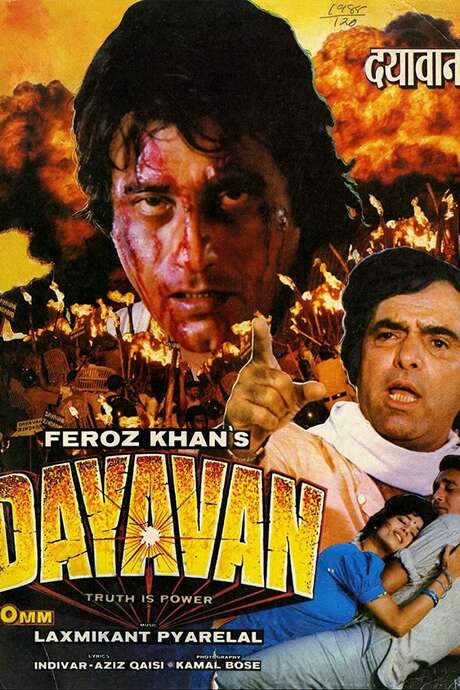
Dayavan (1988) movie poster

Plot Summary

Dayavan (1988) Plot Summary Explained

Release, runtime and language
1988 · 174 mins · Hindi
Starring
Anupam Kher, Ramya Krishnan, Tinnu Anand, Alok Nath, Madhuri Dixit, Aruna Irani

A tale of near Biblical proportions, telling the story of Dayavan, a heroic do-gooder who dedicates his life to helping those less fortunate then himself.

On this page (5)
  1. 1 What happens: full plot
  2. 2 Plot questions answered
  3. 3 Movie threads
  4. 4 Movies like Dayavan
  5. 5 Every angle

Full plot summary · contains spoilers

What Happens in Dayavan: Full Plot Summary

The whole story of Dayavan (1988) explained, from the opening scene to the final frame: every key event, every twist and what it all adds up to. Read it as a quick recap before the sequel, to check a scene you missed, or to finally understand what really happened.

Shakti Velu, also known as Dayavan, grows up amid tragedy after witnessing his father’s death at the hands of the local police, a traumatic moment that seeds a lasting distrust of law enforcement in him, a life path that is vividly brought to life by [Vinod Khanna]. He forms a close bond with another homeless boy, Shankar, and the two drift to Bombay’s sprawling slums, where they find shelter with Karim Baba, a kind-hearted Muslim man, and his daughter Shama. As they mature, the two boys drift into petty crime, eking out a precarious living on the margins of a city that never sleeps. Along the way, Shakti’s encounters with police brutality deepen, especially under the rule of a sadistic, alcoholic, and womanizing Inspector Ratan Singh, a brutality that becomes a driving force in his future.

When Karim Baba is arrested, jailed, and found hanging in police custody, Shakti’s sense of injustice erupts into a fiery vigilante moment. He hunts down Inspector Ratan Singh and kills him in broad daylight before hundreds of witnesses. A formal investigation follows, but no one comes forward to testify, and the case collapses under silence. This public act cements Shakti’s reputation as a Don with a conscience—a figure who operates outside the law yet believes his acts are justified by a personal code of kindness and fairness. His notoriety broadens his influence, and the name Dayavan begins to symbolize a new, complex kind of power in Bombay.

Shakti’s personal life follows a similar arc of contradiction. He marries Neela Velhu, a local prostitute, and together they have two children, Suraj and Sarita. With this family at his side, he ascends in the criminal underworld, aligning with other powerful dons who have long ruled Bombay. He gradually pushes aside the old guards and becomes Bombay’s sole Don, a position built on protection, loyalty, and a carefully maintained image of benevolence. He believes that his ascent will be safe because he has not harmed anyone who doesn’t deserve it, and his family appears to be his shield against the repeating cycles of violence that plague the city.

Yet the veneer of security begins to crack as the truth about the price of his generosity surfaces. The very kindness he showed to a man who seemed to deserve mercy will, in time, become the catalyst for ruin—unraveling the Velu family from within. As the city’s pulse grows louder with every bold move Dayavan makes, the plot tightens around the realization that power earned through fear and selective mercy can also be power that destroys those closest to him. The film listens to Shakti’s inner conflict, a saga of loyalty, love, and a brutal world where the line between protector and predator grows increasingly thin, leaving his family facing consequences that no amount of street-smarts or bravado can outpace.

Last updated: January 28, 2026 at 12:46

Was this helpful?

Plot questions answered

Dayavan Plot Explained: Your Questions Answered

The questions people ask most about Dayavan (1988): what happens in the confusing scenes, why the characters do what they do, the twists, hidden details and what the ending means. Each answer contains spoilers.

Q1

Why does Shakti Velu turn to crime in Dayavan?

Shakti turns to crime primarily as a survival mechanism after becoming orphaned and homeless following his father's death at the hands of the police. Growing up in Bombay's slums without family or support, he and his friend Shankar resort to petty theft to eat. However, his descent into serious crime is driven by accumulated anger from repeated police brutality and the unjust death of his mentor Karim Baba, which convinced him the system would never protect the vulnerable.

Foreshadowing: Earlier scenes show young Shakti already stealing food to survive, establishing crime as his only option from childhood.

  • shakti velu
  • crime
  • orphan
  • survival
  • police brutality
Q2

What triggers Shakti to kill Inspector Ratan Singh?

The killing is triggered by the death of Karim Baba, Shakti's mentor who was arrested and found hanging in police custody. This loss devastates Shakti and represents the final betrayal by a corrupt system. Combined with his lifelong trauma from witnessing police kill his father, Shakti hunts down the sadistic Inspector Ratan Singh and kills him publicly in broad daylight, marking his transformation into a vigilante don.

Foreshadowing: Shakti's childhood trauma of witnessing his father's murder by police establishes the deep-seated hatred that eventually erupts.

  • ratan singh
  • killing
  • karim baba
  • revenge
  • police custody
Q3

Who is Shankar in relation to Shakti Velu?

Shankar is the first friend Shakti makes after becoming orphaned - another homeless boy who befriends him and leads him to Bombay's slums. Together they grow up under the protection of Karim Baba, survive the streets through petty crime, and later rise in the criminal underworld as partners. Their bond represents the only stable relationship in Shakti's life until he marries Neela.

Foreshadowing: The film opens with Shankar's arrival as the catalyst for Shakti's journey to Bombay.

  • shankar
  • friend
  • homeless
  • partnership
  • bombay slums
Q4

How does Karim Baba's death change Shakti's path?

Karim Baba's death in police custody is the pivotal turning point that transforms Shakti from a desperate street survivor into an avenging force. As the only father figure Shakti ever knew, Karim's unjust arrest and suspicious death shatter whatever hope Shakti had in justice. This tragedy directly catalyzes his public killing of Inspector Ratan Singh and launches his career as a powerful don who operates outside corrupt laws.

Foreshadowing: Karim Baba's kindness to orphaned children foreshadows the tragic cost of his mercy.

  • karim baba
  • death
  • custody
  • catalyst
  • mentor
Q5

Why don't any witnesses come forward against Shakti for the killing?

No witnesses testify because the people of Bombay's slums fear retaliation from Shakti's growing power and genuinely view him as a protector against police brutality. Inspector Ratan Singh was widely hated for his sadistic treatment of the poor. Additionally, Shakti's reputation as a just don who only targets those who deserve it makes locals see his crime as justified vengeance rather than murder.

Foreshadowing: The film establishes Ratan Singh as universally feared and hated throughout the community.

  • witnesses
  • investigation
  • fear
  • community
  • justice
Q6

How does Dayavan rise to become Bombay's sole don?

Dayavan rises by combining violent reputation with a carefully cultivated image of benevolence. After killing Inspector Ratan Singh in public, he earns fear and respect simultaneously. He initially partners with existing dons, then gradually eliminates or marginalizes them through strategic alliances and ruthless tactics. His unique appeal - offering protection to the poor while maintaining a code of fairness - attracts loyalty that older, purely greedy dons cannot match.

Foreshadowing: His early reputation as a 'don with a good heart' sets the foundation for his ascent.

  • rise
  • power
  • dons
  • bombay underworld
  • dominance
Q7

What past kindness leads to Dayavan's family being destroyed?

The kindness that ultimately destroys Dayavan's family is his mercy toward someone who proved undeserving - though the specific person is not detailed in the provided summary, the timeline indicates it involves the mercy he showed to a man who later brought ruin to his family. This mirrors the tragic irony that his defining trait of compassion becomes the vector for his family's destruction, proving that kindness in a world of ruthless power can be exploited by those with malicious intent.

Foreshadowing: The narrative foreshadows this twist when it mentions 'the very kindness he showed to a man who seemed to deserve mercy' becoming the catalyst for ruin.

  • kindness
  • mercy
  • ruin
  • family
  • destruction
Q8

What happens to Dayavan's family by the end of Dayavan?

By the film's end, Dayavan's family suffers severe consequences as a direct result of his actions and the tragic irony of his kindness. The film concludes with the Velu family facing ruin - the very people he tried to protect through his criminal enterprise become victims of the violence and enemies he created. His belief that his family would be shielded from the cycle of violence proves tragically incorrect.

Foreshadowing: The meta notes confirm the ending is 'unambiguously SAD' with the family facing 'consequences that no amount of street-smarts or bravado can outpace.'

  • family
  • children
  • neela
  • suraj
  • sarita
  • ending
Q9

What does the title Dayavan mean?

Dayavan means 'the benevolent one' or 'merciful' in Hindi, derived from the Sanskrit word 'dayaa' meaning compassion. The title represents the central paradox of the film - Shakti adopts this name as he becomes a powerful crime lord, yet his path to power is built on murder and violence. The tragic irony is that his belief in his own mercy ultimately leads to the destruction of his own family, making the title both a description of his public image and a critique of his fatal flaw.

Foreshadowing: The title itself foreshadows the theme that mercy in a brutal world carries deadly consequences.

  • dayavan
  • title
  • meaning
  • benevolent
  • mercy
Q10

Why does Shakti Velu marry Neela the prostitute?

Shakti marries Neela because he sees in her a chance at the normal family life that was stolen from him as a child. Despite becoming a powerful don, he seeks genuine connection rather than purely transactional relationships. Neela represents redemption and stability - she becomes the mother of his children and the anchor to a respectable domestic life he desperately wants to believe protects him from becoming completely consumed by his criminal world.

Foreshadowing: This marriage represents Shakti's attempt to build the family shield he believes will protect him.

  • neela
  • marriage
  • prostitute
  • family
  • redemption
Q11

How does police brutality shape Shakti's character arc?

Police brutality is the foundational trauma that shapes Shakti's entire life trajectory. Witnessing his father's murder by police as a child plants deep mistrust of law enforcement. Repeated encounters with corrupt officers like Inspector Ratan Singh confirm his belief that the system exists only to oppress the poor. This accumulated injustice becomes the justification for his vigilante killings and his decision to operate outside laws he sees as inherently corrupt and oppressive.

Foreshadowing: The opening scene establishes that Shakti's journey is fundamentally a response to police violence.

  • police
  • brutality
  • corruption
  • trauma
  • justice system

Movie threads

More Movies Like Dayavan, by Mood & Story

Curated lists built around what makes Dayavan tick: the same mood, the same kind of story or the same emotional payoff. Each list explains why these movies belong together.

Rise and Fall Crime Tragedies like Dayavan

Stories of ambition, power, and the heavy price of a criminal ascent. If you were captivated by the tragic arc of Dayavan, explore other movies like it. These films feature protagonists who climb the criminal ladder, driven by trauma or a desire for justice, but are ultimately destroyed by their choices, resulting in bleak and emotionally heavy endings.

  • tragic
  • gritty
  • violent
  • crime epic
  • moral conflict
  • bleak
  • Tone: dark, tragic, gritty
  • Pacing: fast, episodic
Why these movies?

The story pattern: The narrative pattern is a clear, often fast-paced progression from an inciting trauma (like the loss of a parent) through a ruthless ascent in the criminal underworld. The story is fueled by revenge and moral conflict, but the protagonist's belief in their own righteousness or necessity leads to a catastrophic and sad conclusion, often involving the loss of everything they sought to protect.

Why they belong together: These movies are grouped together because they share a specific, powerful narrative arc: the tragic hero's journey in a crime context. They combine high intensity, dark tones, and a heavy emotional weight centered on themes of loss, moral ambiguity, and the inescapable consequences of a violent life.

Gritty Urban Revenge Thrillers like Dayavan

Bleak tales of vengeance born from systemic injustice and personal trauma. For viewers who appreciated the raw anger and revenge-driven plot of Dayavan, this section features similar movies. These are dark, fast-paced action dramas set in oppressive cities, where a hero's quest for justice against police brutality and corruption leads to a violent and sorrowful path.

  • grim
  • revenge
  • tense
  • police brutality
  • oppressive
  • angry
  • Tone: grim, angry, tense
  • Pacing: fast, relentless
Why these movies?

The story pattern: The narrative is typically triggered by a specific, brutal act of injustice (e.g., police brutality, murder of a loved one) that transforms the protagonist. The story follows their relentless, often angry pursuit of revenge through the gritty underworld, creating a tense atmosphere where friendship and loyalty are tested, culminating in a tragic resolution that offers little solace.

Why they belong together: These films share a cohesive vibe defined by a grim, oppressive mood, high tension, and a central theme of revenge sparked by systemic corruption. The pacing is fast, the intensity is high, and the emotional journey is overwhelmingly heavy, focusing on anger, loss, and the tragic cost of vengeance.

If you liked this

Movies Like Dayavan

Similar movies to Dayavan: the same genre, themes or kind of story. Each one comes with its own plot summary, timeline and ending explained.

Browse all movie summaries

Every angle

Dayavan (1988) Explained: Plot, Timeline & Characters

Everything about Dayavan in one place: what happens in the plot summary, the timeline in chronological order, the characters and meaning and a spoiler-free summary. What's After the Movie adds the cast, box office and post-credit scenes.

Coming soon on iOS and Android

The Plot Explained Movie Summary App

Plot summaries, endings explained and timelines on your phone. Catch up on any movie in minutes, save your favorites and never miss a twist again.

Be the first to know when we launch. Your email stays private, always.

Learn more about the app