Plot Explained Spoilers guaranteed!
Plot Explained

Browse by genre

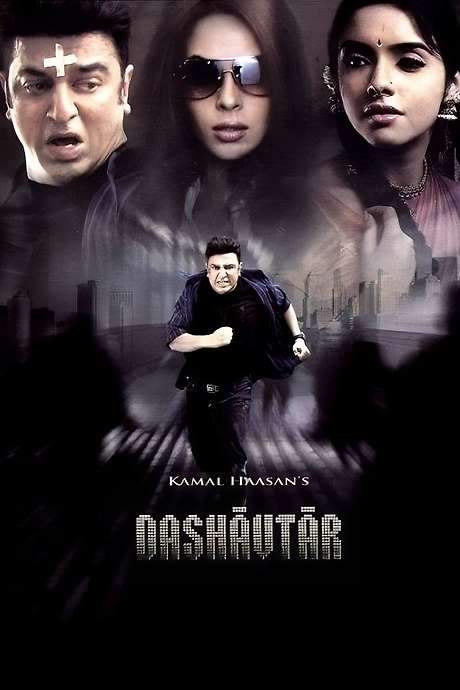
Dasavatharam (2008) movie poster

Plot Summary

Dasavatharam (2008) Plot Summary Explained

Release, runtime and language
2008 · 188 mins · Tamil
Loading streaming availability…
Directed by
K. S. Ravikumar
Starring
Chakri Toleti, Kamal Haasan, M. S. Bhaskar, P. Vasu, Vaiyapuri, Sundarrajan

Govind K. Somaiyya, a bio‑technologist, embarks on a perilous mission to India to secure a vial containing a lethal virus. Racing against time, he must keep the pathogen from an ex‑CIA operative and a cadre of assassins who seek to weaponize it.

On this page (6)
  1. 1 Where to watch
  2. 2 What happens: full plot
  3. 3 Plot questions answered
  4. 4 Movie threads
  5. 5 Movies like Dasavatharam
  6. 6 Every angle
Loading streaming availability…

Full plot summary · contains spoilers

What Happens in Dasavatharam: Full Plot Summary

The whole story of Dasavatharam (2008) explained, from the opening scene to the final frame: every key event, every twist and what it all adds up to. Read it as a quick recap before the sequel, to check a scene you missed, or to finally understand what really happened.

From a grim prologue set in the 12th century, Rangarajan Nambi [Kamal Haasan] a devout Vaishnavite, resists King Kulothunga II’s bid to desecrate a Vishnu idol, and is drowned along with the idol, a stark opening that threads faith, power, and sacred relics into the film’s core tension.

In 2004, Govindarajan Ramaswamy [Kamal Haasan], an Indian scientist working in the United States, is toiling on a dangerous project—a synthetic virus designed as a bio-weapon. When a lab monkey dies after ingesting the virus, Govind starts to grasp the magnitude of the threat he has helped create. He uncovers that his superior, Dr. Sethu, plans to sell the virus to terrorists, and in a tense escape he flees with the vial. In the scramble, the vial is accidentally shipped to India, triggering a desperate chase. An ex-CIA mercenary, Fletcher, is hired to retrieve it and leaves a bloody trail, cutting down Govind’s friends along the way. Govind’s pursuit leads him to Chidambaram, where the vial ends up in the possession of an elderly woman, Krishnaveni, who unknowingly hides it inside a Vishnu idol. Govind’s attempts to reclaim the vial are complicated by Fletcher’s relentless pursuit, local police, and Andal [Asin Thottumkal], Krishnaveni’s devout granddaughter, who views Govind as a thief rather than a savior and believes the idol must be protected.

The story broadens through a series of interwoven subplots: Fletcher’s translator-wife Jasmine [Mallika Sherawat] is killed during a tense clash involving a rogue elephant; Yukha’s brother Shingen, a skilled Japanese martial artist, arrives to avenge Yuka’s death; and RAW officer Balram Naidu keeps a watchful eye on Govind’s movements. Along the way, Govind and Andal cross paths with a spectrum of figures, including social activist Vincent Poovaraghan and a Muslim family headed by Kalifullah Mukhtaar, each adding texture to the escalating crisis. The vial is famously swapped with a medicine cooler belonging to Avatar Singh, a singer undergoing treatment for throat cancer, which further muddles the already tangled pursuit. As the stakes rise, Fletcher seizes hostages and demands the virus in exchange, dragging the tension through a dramatic sequence that culminates at Avatar’s concert, where the vial is ultimately returned to its original hiding place inside the idol.

With the danger intensifying, Govind discovers a potential way to neutralize the threat: immersing the virus in the ocean, because sodium chloride weakens it. A brutal confrontation erupts at a construction site between Govind and Fletcher, with Shingen stepping in to tilt the balance. Fletcher ultimately swallows the virus and dies as a colossal tsunami pounds the coast, erasing the immediate danger while leaving a path of devastation in its wake. Govind, Andal, and the remaining survivors endure the catastrophe, while Andal interprets the tsunami as a sign of divine intervention. Govind, however, remains a rational voice, questioning the morality of sacrificing vast lives as a solution to a single threat. In the end, the two souls find solace in each other as Govind is honored at a formal ceremony attended by world leaders, and the final image lingers on the idol’s remains washed ashore, a somber reminder of the long aftereffects of their ordeal.

Last updated: October 05, 2025 at 11:24

Was this helpful?

Plot questions answered

Dasavatharam Plot Explained: Your Questions Answered

The questions people ask most about Dasavatharam (2008): what happens in the confusing scenes, why the characters do what they do, the twists, hidden details and what the ending means. Each answer contains spoilers.

Q1

How did the virus vial end up inside the Vishnu idol?

The vial was accidentally shipped to India during Govind's escape from the US laboratory. It ended up with an elderly woman named Krishnaveni in Chidambaram, who unknowingly hid it inside a Vishnu idol she kept as a sacred object. Govind pursued it there, but his attempts to reclaim it were complicated by the idol being protected by his granddaughter Andal.

  • virus vial
  • Vishnu idol
  • Chidambaram
  • Krishnaveni
  • accidental shipping
Q2

Why does Andal think Govind is a thief?

Andal is Krishnaveni's devout granddaughter who views the Vishnu idol as a sacred religious object. When Govind arrives claiming the idol contains a dangerous virus and demands it be opened, Andal sees him as a thief attempting to steal or desecrate her grandmother's idol. Her faith-driven protection makes her a fierce obstacle in Govind's mission to retrieve the vial.

  • Andal
  • Govind
  • idol protection
  • granddaughter
  • faith
Q3

How does Govind plan to neutralize the virus?

Govind discovers that sodium chloride (salt) weakens the virus. He formulates a plan to immerse the vial in the ocean, allowing the salt water to neutralize the biological weapon. This transforms his goal from simply retrieving the vial to actively destroying the threat it poses.

  • salt
  • sodium chloride
  • ocean
  • neutralize virus
  • ocean immersion
Q4

Why does Fletcher swallow the virus vial?

During the final confrontation at the construction site, Fletcher realizes he cannot escape with the virus and decides to swallow it, intending to die with the weapon inside him rather than let anyone else have it. This act removes the virus from circulation but puts his own life at immediate risk.

  • Fletcher
  • swallow virus
  • final confrontation
  • sacrifice
Q5

Why does Andal see the tsunami as divine intervention?

Andal interprets the massive tsunami that kills Fletcher and washes away the virus as a sign of divine intervention. From her devout perspective, the natural disaster represents Krishna or Vishnu's intervention to destroy the evil (Fletcher) and save the world from the deadly weapon. This contrasts with Govind's rational, scientific worldview.

Foreshadowing: The 12th century prologue establishes the theme of divine protection of the Vishnu idol, which Andal believes continues through the tsunami.

  • Andal
  • tsunami
  • divine intervention
  • faith
  • interpretation
Q6

What is the connection between the 12th century story and the main plot?

The 12th century prologue features Rangarajan Nambi, a Vaishnavite who resists King Kulothunga II's attempt to desecrate a Vishnu idol and is drowned along with it. This ancient act of devotion and sacrifice establishes a thematic parallel to the modern story: both involve protecting a sacred Vishnu idol from those who would desecrate it. The film's end shows Nambi's idolized remains washing ashore, linking the past to the present.

  • 12th century
  • Rangarajan Nambi
  • prologue
  • Kulothunga II
  • Vishnu idol
  • thematic connection
Q7

Why does Govind question the morality of the outcome?

Although Govind succeeds in neutralizing the virus, he questions whether destroying a single threat justified the catastrophic tsunami that killed countless innocent people. As a rational scientist, he struggles with the ethics of a "solution" that caused mass destruction. This moral dilemma represents the story's bittersweet ending.

  • Govind
  • morality
  • tsunami
  • ethics
  • question
  • sacrifice
Q8

How did the virus vial get swapped with Avatar Singh's medicine cooler?

During the chaotic pursuit across Tamil Nadu, the vial was accidentally swapped with a medicine cooler belonging to singer Avatar Singh, who was undergoing treatment for throat cancer. This mix-up occurred during one of the many transfers and confrontations, delaying Govind's recovery of the vial and pulling Avatar into the dangerous situation.

  • Avatar Singh
  • medicine cooler
  • vial swap
  • confusion
Q9

Why does Shingen help Govind against Fletcher?

Shingen, a Japanese martial artist, arrives in India to avenge his sister Yuka's death. Although initially an adversary, he ultimately helps Govind during the final showdown because Fletcher is the one who killed Yuka. By opposing Fletcher, Shingen achieves his revenge while also helping prevent the virus from causing further harm.

Foreshadowing: Shingen's arrival was motivated by Yuka's death at Fletcher's hands, establishing Fletcher as his true enemy.

  • Shingen
  • Fletcher
  • Yuka
  • revenge
  • help Govind
  • martial artist
Q10

Why does Dr. Sethu want to sell the virus to terrorists?

Dr. Sethu, Govind's superior at the laboratory, plans to sell the synthetic virus to terrorists as a bio-weapon. The exact financial or ideological motivations behind this decision are not detailed in the film, but his betrayal forces Govind to flee with the vial to prevent the dangerous weapon from reaching terrorist organizations.

  • Dr. Sethu
  • sell virus
  • terrorists
  • betrayal
  • bio-weapon
Q11

How does Jasmine die in the movie?

Jasmine, Fletcher's translator and partner, is killed during a chaotic skirmish involving a rogue elephant. The incident occurs near Chidambaram when an elephant goes on a rampage, and Jasmine is caught in the chaos. Her death adds to the mounting body count and motivates Fletcher's continued pursuit of revenge.

  • Jasmine
  • Fletcher
  • elephant
  • death
  • translator
Q12

What happens to the Vishnu idol at the end of the movie?

At the film's conclusion, the idol's remains (representing Rangarajan Nambi's legacy) wash ashore after the devastating tsunami. This final image ties the ancient 12th century story to the modern crisis, serving as a somber reminder of the long-lasting impact of faith, sacrifice, and the destructive events that unfolded.

  • idol
  • washed ashore
  • ending
  • remains
  • Nambi

Movie threads

More Movies Like Dasavatharam, by Mood & Story

Curated lists built around what makes Dasavatharam tick: the same mood, the same kind of story or the same emotional payoff. Each list explains why these movies belong together.

High-Stakes Disaster Thrillers like Dasavatharam

Desperate chases to prevent a global disaster against overwhelming odds. If you liked the desperate race to contain a lethal virus in Dasavatharam, explore these movies like it. This list features similar high-stakes thrillers where characters are in a frantic chase against time to prevent a global or large-scale catastrophe.

  • high-stakes
  • tense
  • urgent
  • anxious
  • chaotic
  • epic
  • Tone: tense, desperate
  • Pacing: fast, urgent
Why these movies?

The story pattern: The narrative typically centers on a ticking clock scenario, forcing protagonists to navigate a web of obstacles, antagonists, and chaos. The journey is often frantic and action-packed, focused on logistics and survival, with the scale of the threat raising the emotional weight significantly.

Why they belong together: Movies are grouped here based on their shared core premise of a high-stakes, time-sensitive mission to avert disaster. They share a tense, urgent tone, fast pacing, and high intensity, creating a specific type of thrilling and anxious viewing experience.

Movies with Moral Dilemmas and Chaos like Dasavatharam

Stories where grand-scale events force characters to confront profound moral choices. For viewers who appreciated the ethical conflict surrounding the bio-weapon and the devastating tsunami in Dasavatharam, this list gathers similar movies like it. These stories explore complex moral choices set against a backdrop of large-scale chaos and high-stakes scenarios.

  • somber
  • thought-provoking
  • chaotic
  • high-stakes
  • philosophical
  • ethical dilemma
  • Tone: somber, thought-provoking
  • Pacing: fast, complex
Why these movies?

The story pattern: The plot often intertwines a personal or scientific conflict with an uncontrollable external event, forcing characters to make difficult choices with far-reaching consequences. The journey is complex, weaving together action and philosophy, and typically ends on a bittersweet note where victory is tempered by heavy costs.

Why they belong together: These films are connected by their focus on the intersection of high-stakes action and profound ethical questioning. They share a heavy emotional weight, complex narratives, and a bittersweet tone, appealing to viewers who enjoy thrilling stories with philosophical depth.

If you liked this

Movies Like Dasavatharam

Similar movies to Dasavatharam: the same genre, themes or kind of story. Each one comes with its own plot summary, timeline and ending explained.

Browse all movie summaries

Every angle

Dasavatharam (2008) Explained: Plot, Timeline & Characters

Everything about Dasavatharam in one place: what happens in the plot summary, the timeline in chronological order, the characters and meaning and a spoiler-free summary. What's After the Movie adds the cast, box office and post-credit scenes.

Coming soon on iOS and Android

The Plot Explained Movie Summary App

Plot summaries, endings explained and timelines on your phone. Catch up on any movie in minutes, save your favorites and never miss a twist again.

Be the first to know when we launch. Your email stays private, always.

Learn more about the app