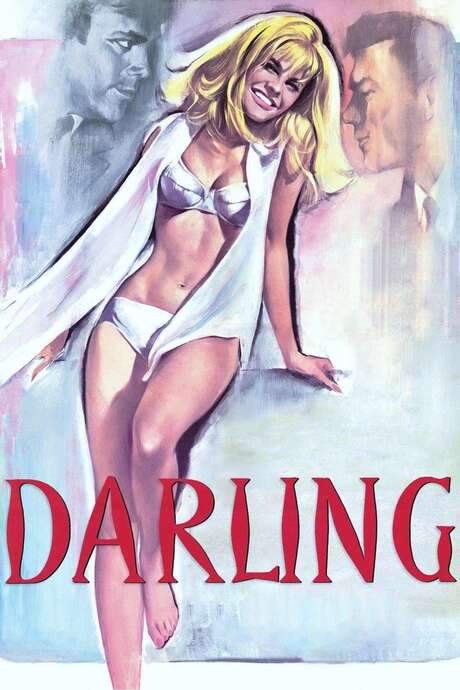
Year: 1965
Runtime: 122 mins
Language: English
She is at her best when she behaves impeccably, yet when she turns rogue she becomes irresistibly daring. Diana, a striking yet shallow model and failed actress, flits between the attentions of several men while chasing fame and fortune amid the hedonistic world of swinging London.
Warning: spoilers below!
Haven’t seen Darling yet? This summary contains major spoilers. Bookmark the page, watch the movie, and come back for the full breakdown. If you're ready, scroll on and relive the story!
Read the complete plot breakdown of Darling (1965), including all key story events, major twists, and the ending explained in detail. Discover what really happened—and what it all means.
Diana Scott, [Julie Christie], is a bored young model married to Tony Bridges [T.R. Bowen]. One day, she is spotted on the street by a roving film crew and interviewed about young people’s views on convention by Robert Gold, [Dirk Bogarde], a literary interviewer and television arts programme director. He invites her to watch the final edit in the TV studio, and there their relationship begins. After a series of liaisons in hotel rooms, they leave their spouses (and, in Robert’s case, his children) and move into a shared apartment.
As a couple they drift into the fashionable London media and arts set, where Diana’s appeal opens doors she hadn’t imagined. At first she feels a twinge of jealousy when Robert visits his wife as she sees their children, but that feeling fades as she finds herself drawn to a world built on influence, glamour, and spectacle. A pivotal figure emerges in Miles Brand, [Laurence Harvey], a powerful advertising executive at the Glass Corporation, who helps her land a part in a glossy but trashy thriller after she consents to have sex with him. Meanwhile, Robert—more bookish and seeking quiet—begins to feel increasingly jealous, then detached and lonely as the couple becomes more entwined with the industry’s social whirl.
Diana’s public life balloons when she is chosen to front a high‑class charity draw for world hunger, a event staged with giant images of famine victims that sits in stark contrast to the guests who gorge themselves. She later discovers she is pregnant and makes the painful choice to have an abortion in order to preserve her career and public image.
Her jet‑set appetite carries her to Paris with Miles, where the party scene operates like a vivid mind game—wild parties, loud music, flirtations, cross‑dressing and mind games that repulse her at first but then begin to command her respect as she taunts Miles in one of the games. On her return to London, Robert publicly brands her a whore and leaves her, while Miles casts her in a new, conspicuously glamorous advertising role as “The Happiness Girl” for a chocolate brand.
Diana then finds a different kind of companionship in Malcolm, a gay photographer who outfits her new look and helps her navigate this next phase of fame. They go shopping together, and she even indulges in a shoplifting impulse during a day out. On location at a palazzo near Rome, Diana smiles in a Medieval/Renaissance costume and completes the shoot for “The Happiness Girl.” She is enchanted by the palazzo’s beauty and the surrounding landscape, and she forms a cordial rapport with Cesare, the prince who owns the place, played by José Luis de Vilallonga.
Cesare visits in a grand launch, invites Diana and Malcolm aboard, and proposes marriage. She declines, though the door is left open. When she returns to London, she still oscillates between the allure of the Catholic church she sometimes pursues and the lure of rich, empty gaiety, but the romance with Miles has cooled and the fling with Cesare remains an option rather than a life plan.
Back in the capital, Diana hosts a party with Miles and the rest of the media crowd. Robert comes by and sees her with Miles, and he leaves, reinforcing the sense that she’s adrift between two incompatible worlds. Feeling disillusioned with the jet‑set life, Diana once again turns toward the church, then impulsively flies to Italy and marries Cesare. The marriage proves ill‑fated: Cesare treats her as a pampered mistress rather than a partner and eventually abandons her at the vast palace.
Diana returns to London to see Robert, and the two briefly rekindle a physical connection, raising hope for something lasting. But Robert reveals that he intends to leave her again and drives her to Heathrow, preparing to return her to her life as Princess of Della Romita in Rome. At the airport, the press crowd surrounds her, calling her by her royal title, and she boards the plane, accepting that her life is now a perpetual performance between two continents, two loves, and two identities.
Last Updated: October 09, 2025 at 12:41
Discover curated groups of movies connected by mood, themes, and story style. Browse collections built around emotion, atmosphere, and narrative focus to easily find films that match what you feel like watching right now.
Stories where dazzling wealth and fame hide a deep well of loneliness.Explore films like Darling that peel back the glittering surface of fame and fortune to reveal the profound loneliness and disillusionment beneath. If you were captivated by the critique of 'Swinging London' and the protagonist's search for meaning, these movies offer similar journeys through artificial worlds.
Narratives in this thread typically follow a protagonist's ascent into a glamorous world, only to discover its inherent emptiness. The central conflict shifts from external ambition to an internal crisis of identity and purpose, often culminating in a bittersweet or bleak realization that the desired life is a gilded cage.
These films are grouped by their shared tonal focus on melancholy and disillusionment, a steady pacing that allows for character introspection, and a thematic exploration of the gap between public perception and private despair. They create a cohesive experience of existential critique wrapped in a visually opulent package.
Character studies of ambitious protagonists who trade morality for status.Find films similar to Darling that follow ambitious characters navigating high society through a series of calculated relationships. If you were interested in Diana's journey through the world of 'Swinging London' and the personal costs of her ambition, these stories explore comparable themes of infidelity, social climbing, and existential payoff.
The narrative pattern involves a clear cause-and-effect chain where each step up the social ladder comes at a personal cost. The protagonist becomes increasingly detached from genuine emotion, treating people as transactional objects. The story structure is often a linear progression through a series of relationships or social circles, highlighting the cyclical nature of their dissatisfaction.
This thread connects films through a specific character archetype—the social climber—and a shared plot structure of sequential, transactional relationships. They also share a moderate complexity in exploring the psychological motivations and consequences of ambition, resulting in a consistently bittersweet or bleak emotional conclusion.
Don't stop at just watching — explore Darling in full detail. From the complete plot summary and scene-by-scene timeline to character breakdowns, thematic analysis, and a deep dive into the ending — every page helps you truly understand what Darling is all about. Plus, discover what's next after the movie.
Track the full timeline of Darling with every major event arranged chronologically. Perfect for decoding non-linear storytelling, flashbacks, or parallel narratives with a clear scene-by-scene breakdown.
Discover the characters, locations, and core themes that shape Darling. Get insights into symbolic elements, setting significance, and deeper narrative meaning — ideal for thematic analysis and movie breakdowns.
Get a quick, spoiler-free overview of Darling that covers the main plot points and key details without revealing any major twists or spoilers. Perfect for those who want to know what to expect before diving in.
Visit What's After the Movie to explore more about Darling: box office results, cast and crew info, production details, post-credit scenes, and external links — all in one place for movie fans and researchers.
Discover movies like Darling that share similar genres, themes, and storytelling elements. Whether you’re drawn to the atmosphere, character arcs, or plot structure, these curated recommendations will help you explore more films you’ll love.
Darling (1965) Scene-by-Scene Movie Timeline
Darling (1965) Movie Characters, Themes & Settings
Darling (1965) Spoiler-Free Summary & Key Flow
Movies Like Darling – Similar Titles You’ll Enjoy
Dangerous Liaisons (2022) Ending Explained & Film Insights
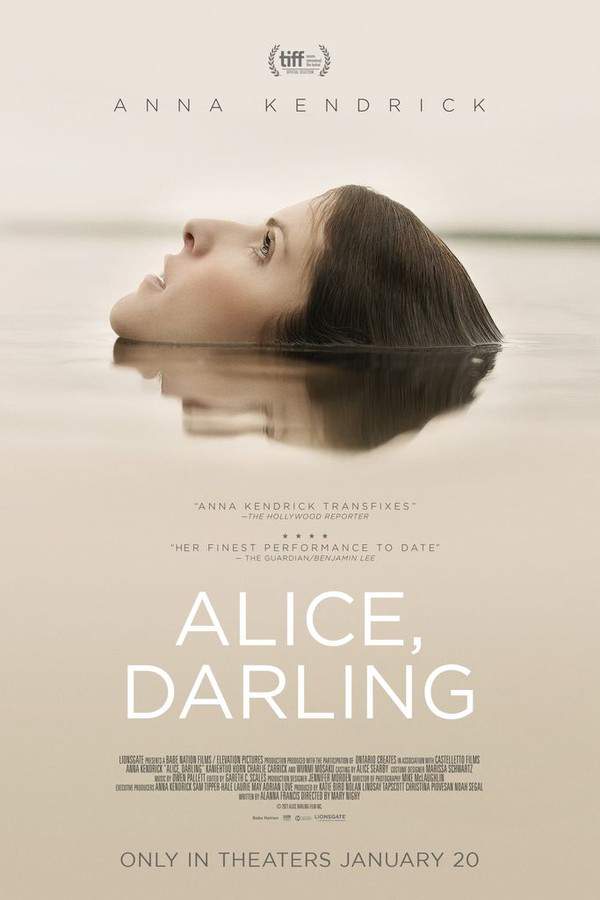
Alice, Darling (2022) Detailed Story Recap
Loverboy (2006) Plot Summary & Ending Explained
Darling Nikki (2019) Full Movie Breakdown
Darling (2007) Movie Recap & Themes
Darlings! (1984) Story Summary & Characters
Darling, Let’s Get Naked! (1984) Full Summary & Key Details
Sunday Bloody Sunday (1971) Film Overview & Timeline
The Girl in the Red Velvet Swing (1955) Film Overview & Timeline
Entangled (1993) Movie Recap & Themes
Dandy (1970) Spoiler-Packed Plot Recap
Darling Lili (1970) Plot Summary & Ending Explained
Darling, Do You Love Me? (1968) Complete Plot Breakdown
Daddy, Darling (1970) Movie Recap & Themes
Angel, Angel, Down We Go (1969) Ending Explained & Film Insights