




















Plot Explained Spoilers guaranteed!
Plot Explained

Browse by genre

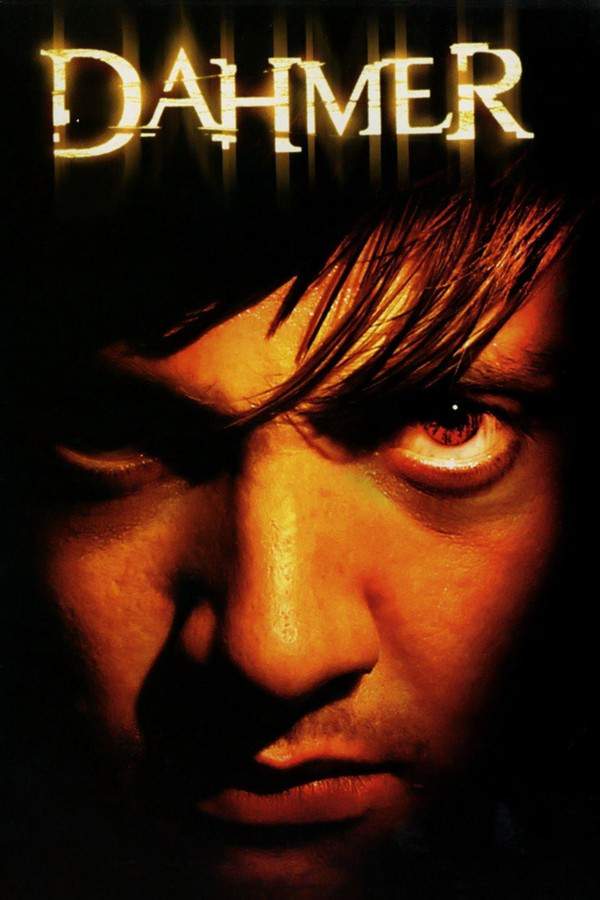
Dahmer (2002) movie poster

Timeline

Dahmer (2002) Timeline Explained – Every Event in Order

Release, runtime and language
2002 · 101 min · English
JustWatch #7,474 13
Directed by
David Jacobson
Budget
$250K

The series explores the disturbing life of Jeffrey Dahmer, delving into the origins of his horrific crimes. Through fragmented flashbacks, it reveals a troubled upbringing marked by a strained relationship with his father, a first kill that ignited a compulsion, and the unsettling environments of Milwaukee's gay nightlife where he sought his victims. The narrative examines the psychological factors that contributed to his monstrous actions.

On this page (6)
  1. 1 Where to watch
  2. 2 Events in order (11)
  3. 3 Timeline questions answered
  4. 4 Movie threads
  5. 5 Movies like Dahmer
  6. 6 Every angle

Where to watch

Where to Watch Dahmer (2002)

Where can you watch Dahmer? Stream, rent or buy it in the US, including on Amazon Prime Video, fuboTV and Fawesome: current JustWatch availability with up-to-date prices.

Streaming availability powered by JustWatch

11 events in order · contains spoilers

Dahmer Timeline: Events in Chronological Order

Every key event of Dahmer (2002) in order, scene by scene, with when and where it takes place. Use it to untangle flashbacks, time jumps and parallel storylines, to refresh your memory before the sequel or to find the exact scene you are thinking of.

  1. Dahmer's first known killing (Bath, Ohio)

    In his teenage years, Dahmer kills a hitchhiker he picked up in his hometown of Bath, Ohio. The flashback frames this act as the seed of his violent path and foreshadows the gruesome crimes to come. The memory is presented as a hinge point that informs his later behavior.

    When
    Teenage years
    Where
    Bath, Ohio
  2. Strained relationship with his father Lionel

    The film shows a tense bond with his father, Lionel, marked by his attempts to guide him and Lionel's insistence on therapy. The dynamic helps explain Dahmer's emotional distance and his later rationalizations. Alcoholism is hinted as part of his troubled coping.

    When
    Teenage years
    Where
    Family home, Bath, Ohio
  3. Milwaukee present: Dahmer rationalizes his crimes

    In the present, Dahmer rationalizes the murders by blaming his upbringing and his parents' divorce, framing his actions as a response to isolation. This mental framing anchors the brutality in personal history rather than mindless predation. The narration suggests his inner justification fuels the violence.

    When
    Present
    Where
    Milwaukee
  4. Knife shop encounter: Rodney introduced

    Dahmer meets Rodney, a charismatic young Black man, at a knife shop and invites him back to his home, signaling an intended murder. The exchange reveals a mix of charm, tension, and danger that unsettles Rodney. The shop meeting sets the stage for the rest of the evening.

    When
    Present
    Where
    Knife shop
  5. Rodney confesses romantic feelings

    During their evening together, Rodney confesses romantic feelings for Dahmer, forcing him to confront his own emotional landscape. Dahmer remains evasive, unsure how to respond and whether to engage with such affection. The moment deepens the internal conflict that threads the story.

    When
    Evening
    Where
    Dahmer's apartment
  6. Near-strangulation and Rodney's escape

    Dahmer nearly strangles Rodney with a belt, but Rodney escapes the apartment. The near-violent act exposes the volatility of Dahmer's behavior in real time. Rodney's escape interrupts the plan and underscores the danger of his impulses.

    When
    Evening
    Where
    Dahmer's apartment
  7. Dahmer's ongoing killings and experiments

    The narrative returns to Dahmer's pattern of luring victims to his home, where he conducts experiments and kills. He describes the aim as creating a living zombie who will never leave or judge him. The sequence emphasizes the chilling, procedural nature of his crimes.

    When
    Present
    Where
    Dahmer's home
  8. Therapy flashback: father urges therapy

    A flashback shows a young Dahmer attending therapy at his father's urging. Lionel tells him that he is there to listen, signaling a fragile hope for connection. The scene underscores the theme of seeking help that never fully reaches him.

    When
    Teenage years
    Where
    Therapist's office
  9. Dahmer resists therapy and walks into the woods

    In another memory, Dahmer arrives at the therapist's office but turns away from the door and walks off into the woods. The act signals a rejection of help and a turning away from intimate contact that would characterize his life. The woods scene foreshadows the loneliness that dominates his arc.

    When
    Teenage years
    Where
    Therapist's office / woods
  10. Criminal verdict hinted: at least 15 victims

    An intertitle reveals that Dahmer was found guilty of killing at least 15 men. The line anchors the scale of his violence beyond the film's flashbacks, transforming memory into a public record. It marks the narrative's shift from memory to legal consequence.

    When
    Post-crime timeline
    Where
    Intertitle
  11. Death in prison

    The final intertitle states that Dahmer was killed in prison by another inmate in 1994 after serving two years of his life sentence. The death closes the arc of his life and reinforces the horror of his crimes. The juxtaposition of memory and final fate underscores the enduring terror of his story.

    When
    1994
    Where
    Prison

Last updated: February 17, 2026 at 19:57

Was this helpful?

Timeline questions answered

Dahmer Timeline Explained: Your Questions Answered

When does it happen, and why in that order? The questions people ask about the chronology of Dahmer (2002): time jumps, flashbacks, cause and effect between scenes and the correct order of events, each answered with spoilers.

Q1

Why did Dahmer kill his first victim as a teenager?

Dahmer's first killing occurred when he was a teenager in Bath, Ohio, when he picked up a hitchhiker and killed him. This event is presented in the film as the seed of his violent path, the moment his compulsion began. The flashback frames this act as a hinge point that informs all his later behavior, establishing the origins of his need to exert control over others through death.

Foreshadowing: The hitchhiker's murder is shown early in the film and foreshadows the gruesome crimes that follow in his adult life.

  • first kill
  • hitchhiker
  • Bath Ohio
  • teenage years
  • origin of violence
Q2

Why was Dahmer's relationship with his father so strained?

The film shows a tense bond between Dahmer and his father Lionel, marked by Lionel's attempts to guide him and insist on therapy. Their relationship is characterized by emotional distance and a lack of genuine connection. Lionel's frustration and concern contrast with Dahmer's increasing detachment, creating a father-son dynamic where communication fails completely.

Foreshadowing: The strained relationship hints at Dahmer's emotional isolation, which he rationalizes as a cause for his later crimes.

  • Lionel Dahmer
  • father
  • family relationship
  • emotional distance
  • parenting
Q3

Why did Dahmer want to create a living zombie?

Dahmer's stated aim was to create a living "zombie" who would stay with him, never leave, and never judge him. This reveals his deep fear of abandonment and his desire for complete control over another person. He wanted a companion who would be completely submissive and unable to escape or reject him, reflecting his profound isolation and inability to form genuine human connections.

Foreshadowing: His fixation on keeping victims close echoes his earlier failures to maintain meaningful relationships.

  • living zombie
  • control
  • isolation
  • companion
  • experiments
Q4

Why did Rodney escape from Dahmer's apartment?

Rodney escaped after Dahmer nearly strangled him with a belt but paused or hesitated at a critical moment. This brief window of uncertainty gave Rodney the opportunity to flee the apartment. The near-strangulation scene demonstrates the volatility of Dahmer's impulses in real time, his violence is impulsive rather than purely methodical, and his plans don't always execute as intended.

Foreshadowing: The scene underscores that Dahmer's control is imperfect and that unpredictability lingers even when a plan seems solid.

  • Rodney
  • escape
  • strangulation
  • belt
  • near-killing
Q5

Why was Rodney's confession of romantic feelings significant to Dahmer?

When Rodney confessed romantic feelings for Dahmer, it forced him to confront his own emotional landscape, a rare moment of genuine human connection. Dahmer became evasive, unsure how to respond to authentic affection. This tension between his desire for connection and his inability to engage with it meaningfully deepens the film's exploration of his psychological isolation.

Foreshadowing: Rodney's confession highlights the core conflict: Dahmer seeks victims but cannot handle genuine intimacy.

  • Rodney
  • confession
  • romantic feelings
  • emotional conflict
  • intimacy
Q6

Why did Dahmer reject therapy and walk into the woods?

In the therapy flashback, Dahmer's father Lionel urged him to attend sessions and told him he was there to listen. However, Dahmer arrived at the therapist's office but turned away from the door and walked off into the woods instead. This act signals his rejection of help and his turning away from any intimate contact that might challenge his isolation. The woods represent his withdrawal from potential healing and his embrace of loneliness.

Foreshadowing: The woods scene foreshadows the complete isolation that dominates his adult life and his ultimate failure to seek redemption.

  • therapy
  • woods
  • rejection
  • Lionel
  • help
  • psychologist
Q7

How did Dahmer rationalize his crimes?

In the present timeline, Dahmer rationalizes his murders by blaming his upbringing and his parents' divorce, framing his actions as a response to isolation and emotional neglect. He uses these personal grievances to anchor his brutality in personal history rather than portraying himself as a mindless predator. The film suggests his inner justification, the belief that his suffering explains his violence, actually fuels rather than restrains his crimes.

Foreshadowing: His rationalizations echo the emotional wounds shown in the flashback sequences.

  • rationalization
  • justification
  • divorce
  • upbringing
  • blame
  • psychology
Q8

Why did the film focus so much on his parents' divorce?

The film presents the divorce of Dahmer's parents and his emotional seclusion as the quiet prelude to his more shocking impulses. This narrative choice suggests that family breakdown and emotional isolation planted the seeds for his later crimes. By showing the divorce as a backdrop to his childhood, the film implies that his fractured family life contributed to his inability to form healthy connections and his subsequent seek for control through violence.

Foreshadowing: The divorce and resulting isolation are directly referenced in his adult rationalizations for murder.

  • divorce
  • parents
  • family
  • childhood
  • emotional seclusion
Q9

Why does the film use flashbacks to tell the story?

The film employs a non-linear structure, weaving between present-day events in Milwaukee and flashbacks to Dahmer's teenage years in Ohio. This narrative technique serves to reveal the origins of his violent path while showing the consequences in the present. By interweaving past and present, the film connects his troubled upbringing to his adult crimes and helps explain the psychological factors that contributed to his monstrous actions.

Foreshadowing: The structure emphasizes how the past directly informs and shapes the present-day killings.

  • flashbacks
  • non-linear
  • structure
  • timeline
  • past present
Q10

Why did Dahmer die in prison in 1994?

The film closes with an intertitle stating that Dahmer was killed in prison by another inmate in 1994 after serving two years of a life sentence. He was found guilty of killing at least 15 men. His death in prison marks the final outcome of his crimes, violence ultimately led to his own violent end. The stark factual ending reinforces the film's bleak and pessimistic outlook, with no redemption arc and no escape from the consequences of his actions.

  • prison
  • death
  • 1994
  • sentence
  • convicted
  • inmate

Movie threads

More Movies Like Dahmer, by Mood & Story

Curated lists built around what makes Dahmer tick: the same mood, the same kind of story or the same emotional payoff. Each list explains why these movies belong together.

Psychological crime thrillers like Dahmer

Chilling explorations of serial killers and the making of monsters. For viewers who found Dahmer compelling, this section lists movies that similarly explore the psychology of serial killers through dark character studies. If you're interested in films based on true crime with heavy emotional weight and bleak atmospheres, these recommendations share that unsettling investigative approach.

  • disturbing
  • psychological
  • biographical
  • true crime
  • unsettling
  • grim
  • Tone: dark, bleak, unsettling
  • Pacing: variable, methodical
Why these movies?

The story pattern: Narratives in this thread often unfold as a gradual descent, using flashbacks and present-day events to piece together the psychological profile of a criminal. The structure focuses on cause and effect, tracing a path from childhood trauma or societal alienation to the eruption of violence.

Why they belong together: Movies are grouped here because they share a core focus on psychological realism within the true crime genre. They prioritize understanding the 'why' behind monstrous acts over simple suspense, creating a similar feeling of grim investigation and profound unease.

Claustrophobic character studies like Dahmer

Intense, slow-burn films where the main character's psyche becomes the prison. If you were drawn to the immersive and unsettling character focus of Dahmer, this section highlights other films that create a similarly oppressive and intimate viewing experience. These movies share a high-intensity, dark tone and make you feel psychologically close to a complex, disturbing protagonist.

  • claustrophobic
  • psychological
  • unsettling
  • oppressive
  • lonely
  • anxious
  • Tone: dark, tense, somber
  • Pacing: slow burn, variable
Why these movies?

The story pattern: The narrative pattern is intensely focused and character-driven, often unfolding non-linearly to reveal motivations and past trauma. The plot serves to delve deeper into the protagonist's mind, building a sense of inescapable dread and culminating in a bleak realization of their nature.

Why they belong together: These films are grouped because they create a specific, intense viewing experience defined by a claustrophobic atmosphere and deep immersion into a disturbed protagonist's world. The shared mood of dread, loneliness, and psychological decay is the primary connecting thread.

If you liked this

Movies Like Dahmer

Similar movies to Dahmer: the same genre, themes or kind of story. Each one comes with its own plot summary, timeline and ending explained.

Browse all movie summaries

Every angle

Dahmer (2002) Explained: Plot, Timeline & Characters

Everything about Dahmer in one place: what happens in the plot summary, the timeline in chronological order, the characters and meaning and a spoiler-free summary. What's After the Movie adds the cast, box office and post-credit scenes.

Coming soon on iOS and Android

The Plot Explained Movie Summary App

Plot summaries, endings explained and timelines on your phone. Catch up on any movie in minutes, save your favorites and never miss a twist again.

Be the first to know when we launch. Your email stays private, always.

Learn more about the app