Plot Explained Spoilers guaranteed!
Plot Explained

Browse by genre

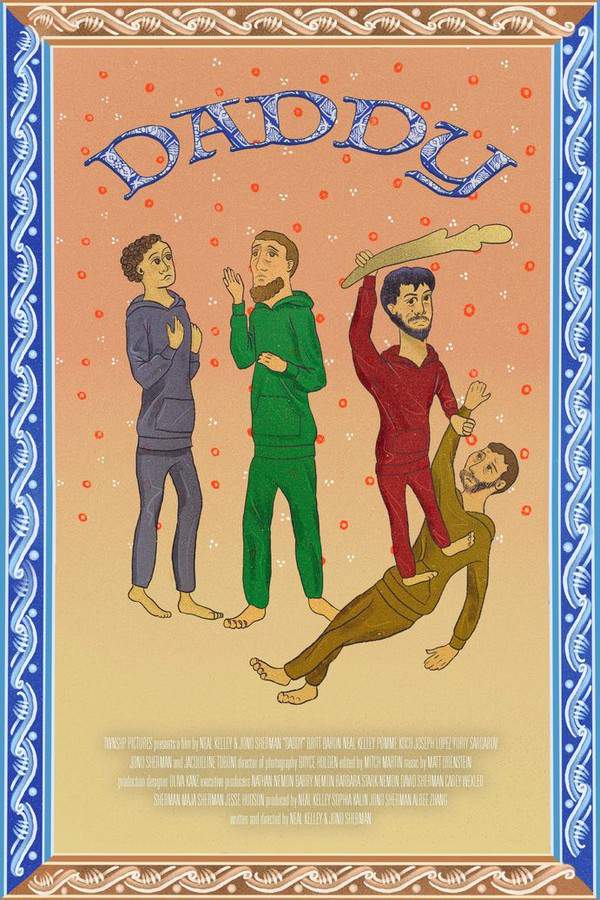
Daddy (2016) movie poster

Timeline

Daddy (2016) Timeline Explained – Every Event in Order

Release, runtime and language
2016 · 89 min · English
Loading streaming availability…
Directed by
Gerald McCullouch

A charming and confident man finds his carefully constructed world shaken when an unconventional woman enters his life. He is forced to question his values and the superficiality of his relationships as he develops feelings for her. Colin must then grapple with the consequences of his choices and the impact they have on himself and those closest to him, ultimately facing a harsh reality.

On this page (5)
  1. 1 Where to watch
  2. 2 Events in order (12)
  3. 3 Timeline questions answered
  4. 4 Movie threads
  5. 5 Every angle
Loading streaming availability…

12 events in order · contains spoilers

Daddy Timeline: Events in Chronological Order

Every key event of Daddy (2016) in order, scene by scene, with when and where it takes place. Use it to untangle flashbacks, time jumps and parallel storylines, to refresh your memory before the sequel or to find the exact scene you are thinking of.

  1. Economic collapse of Mumbai's mills pushes youth toward crime

    In the 1960s, Mumbai's textile mills shut down one after another, leaving thousands unemployed. Arun Gawli, along with friends Rama Naik and Babu Reshim, turns to matka gambling to earn quick money. They then form their own gang to protect their profits and extend their influence.

    When
    1960s
    Where
    Mumbai, India
  2. Gawli forms his first gang with Rama Naik and Babu Reshim

    From the profits of gambling, they establish a small power base in the city's underworld. They recruit friends and begin taking on rival groups. Early operations are brazen and set the tone for the gang's rise.

    When
    1960s
    Where
    Mumbai
  3. Gawli comes under the wing of Maqsood Bhai after a murder

    A murder committed by Gawli brings him to the attention of Maqsood Bhai, a seasoned gang leader. Impressed or opportunistic, Maqsood takes Gawli under his wing, offering protection and scope for expansion. The alliance widens the network and deepens the power dynamic.

    When
    Late 1960s
    Where
    Mumbai
  4. Ideological clashes spark a growing rift with Maqsood Bhai

    As they rise, Gawli and Maqsood clash over strategy and control, turning their alliance into a rift. The two factions feud over territory, money, and influence. The relationship that started with mentorship evolves into open confrontation.

    When
    Late 1960s–1970s
    Where
    Mumbai
  5. Gawli marries Zubeida Mujawar and contemplates reform

    Gawli marries his sweetheart Zubeida Mujawar, who urges him to leave crime and seek a lawful path. The marriage signals a personal turning point as he considers leaving the criminal world behind. Yet the weight of his empire pulls him back toward power.

    When
    Early 1970s
    Where
    Mumbai
  6. Rama Naik is killed in a brutal police encounter

    Rama Naik's killing in a brutal police encounter becomes a turning point for Gawli and his gang. The loss sharpens loyalties and hardens resolve within the organization. Gawli suspects Maqsood engineered Rama's death, fueling suspicions and revenge.

    When
    Late 1970s
    Where
    Mumbai
  7. Gawli takes charge of the Dagdi gang and base

    With Rama dead, Gawli seizes control of the Dagdi-based gang and positions himself as the new leader. The Dagdi Camp becomes the operational hub for their expanding activities. He consolidates power while facing his first major test of leadership.

    When
    Late 1970s
    Where
    Dagdi Camp, Mumbai
  8. Gawli suspects Maqsood engineered Rama's killing; a full-blown gang war begins

    Convinced Maqsood orchestrated Rama's killing, Gawli initiates a brutal feud as both sides mobilize crews. Violence escalates and territorial lines are redrawn as the war tightens its grip on Mumbai's underworld. The conflict reveals the ruthlessness that defines their era.

    When
    Late 1970s
    Where
    Mumbai
  9. Cop Vijaykar Nitin closes in on Gawli

    A determined cop named Vijaykar Nitin relentlessly pursues Gawli, hoping to bring him to justice. The investigation adds legality pressure and complicates gang operations. Public scrutiny rises as the net tightens around the gangster.

    When
    Late 1970s–1980s
    Where
    Mumbai
  10. Dagdi gang fights Maqsood's faction as the war widens

    The conflict expands beyond personal enmity into a wider gang war, with rival factions enlisting followers and fighting for control of territory and resources. Loyalties shift as the conflict drags on amidst continued violence. The Dagdi faction and Maqsood's group endure a period of intense confrontation.

    When
    Late 1970s–1980s
    Where
    Dagdi Camp, Mumbai
  11. Gawli's political entry and the birth of the 'Daddy' persona

    As years pass, Gawli transitions from crime to politics, leveraging his influence to win a platform of legitimacy. The move earns him the nickname 'Daddy' and reshapes his public image from gangster to politician. The lines between crime and politics blur as power shifts hands.

    When
    1990s
    Where
    Mumbai
  12. Legacy and impact: one of India's feared gangsters becomes a political figure

    The final arc shows how a feared gangster navigates a complex political landscape, leaving a controversial legacy. His journey from the Dagdi camps to the corridors of power illustrates the uneasy ties between crime and politics in Mumbai. The story underscores the enduring power of a crime boss who becomes a political force.

    When
    1990s–2000s
    Where
    Mumbai

Last updated: February 24, 2026 at 14:17

Was this helpful?

Timeline questions answered

Daddy Timeline Explained: Your Questions Answered

When does it happen, and why in that order? The questions people ask about the chronology of Daddy (2016): time jumps, flashbacks, cause and effect between scenes and the correct order of events, each answered with spoilers.

Q1

Why did Arun Gawli turn to crime instead of finding legitimate work

Arun Gawli turned to matka gambling because the economic collapse of Mumbai's textile mills in the 1960s left thousands unemployed, including Gawli and his friends. With no viable employment opportunities, they sought quick money through organized gambling to survive. What started as a desperate hustle gradually evolved into forming a gang to protect their profits and expand their influence in Mumbai's underworld.

Foreshadowing: The film opens by establishing the economic desperation that drove entire generations toward crime, setting the trajectory for Gawli's life.

  • arun gawli
  • matka gambling
  • mumbai mills
  • economic collapse
  • unemployment
Q2

Why did Rama Naik's death cause the gang war between Gawli and Maqsood Bhai

Rama Naik's killing in a brutal police encounter became the catalyst for war because Gawli believed Maqsood Bhai had orchestrated Rama's death to eliminate competition and consolidate power. This suspicion transformed their existing ideological clashes into open, violent warfare. With Rama dead, Gawli took leadership of the Dagdi gang and launched revenge attacks against Maqsood's faction, resulting in a brutal conflict that reshaped Mumbai's underworld.

Foreshadowing: Earlier timeline events show growing tensions between Gawli and Maqsood over territory and control, making the betrayal accusation feel like a natural escalation.

  • rama naik death
  • maqsood bhai
  • gang war
  • dagdi gang
  • police encounter
Q3

Why did Zubeida Mujawar want Arun Gawli to leave criminal life

Zubeida Mujawar, Gawli's wife, urged him to abandon crime because she wanted a safer, lawful life for their family. Her love for him drove her to push for reform, hoping he would pursue an honest path rather than continue risking death or imprisonment. This marriage represented a personal turning point for Gawli, creating an internal conflict between his criminal empire and the possibility of a legitimate future.

Foreshadowing: The narrative hints at reform as a possibility early in Gawli's marriage, making his ultimate choice to remain in crime feel like a tragic rejection of redemption.

  • zubeida mujawar
  • arun gawli wife
  • reform
  • marriage
  • family
Q4

How did Arun Gawli become known as 'Daddy' in Mumbai

Arun Gawli earned the moniker 'Daddy' when he transitioned from crime into politics during the 1990s. Leveraging his underworld influence and popularity in the Dagdi area, he successfully entered the political arena, winning a seat that gave him legitimacy and power. The nickname reflected both his paternalistic control over his community and his transformation from feared gangster to political figure.

Foreshadowing: The buildup shows Gawli's growing ambition beyond mere survival, hinting at his desire for societal influence that would later manifest in politics.

  • daddy nickname
  • arun gawli
  • politics
  • mumbai politician
  • dagdi camp
Q5

What caused the rift between Arun Gawli and Maqsood Bhai

The rift between Gawli and Maqsood Bhai began as ideological clashes over strategy and control as their criminal operations expanded. While Maqsood initially took Gawli under his wing after a murder, their relationship soured over disagreements about territory, money, and influence. The conflict escalated when Gawli suspected Maqsood of engineering Rama Naik's death, turning their mentorship into a deadly rivalry.

Foreshadowing: Their early alliance was built on mutual benefit rather than loyalty, making the eventual betrayal feel inevitable given the cutthroat nature of their world.

  • maqsood bhai
  • mentor
  • territory dispute
  • underworld
  • rivalry
Q6

Why did Arun Gawli decide to enter politics after a life of crime

Arun Gawli entered politics as a natural extension of his ambition for power and influence. After rising from the Dagdi camps to become one of Mumbai's most feared gangsters, he leveraged his criminal network and community connections to win political legitimacy. The move represented his evolution from survival to domination, using the same ruthlessness that defined his underworld years to reshape his public image.

Foreshadowing: The narrative traces Gawli's trajectory from simple survival in the mills' collapse to seeking greater authority, culminating in his political ascension.

  • politics
  • ambition
  • power
  • crime to politics
  • mumbai underworld
Q7

Why was Police Officer Vijaykar Nitin so determined to catch Arun Gawli

Vijaykar Nitin was a tenacious police officer who pursued Gawli with the sole aim of bringing him to justice for his criminal activities. The officer's determination added significant pressure to Gawli's operations, forcing the gang to operate more carefully while facing increasing public scrutiny. His relentless pursuit represented the legal system's attempt to hold accountable one of India's most feared gangsters.

Foreshadowing: The police pursuit intensifies alongside Gawli's criminal expansion, creating a parallel narrative of law enforcement closing in.

  • vijaykar nitin
  • police pursuit
  • law enforcement
  • arrest
  • justice
Q8

What was the significance of Dagdi Camp in Gawli's criminal empire

Dagdi Camp served as the operational headquarters for Gawli's expanding criminal activities after he took control following Rama Naik's death. The location became synonymous with his power base, allowing him to consolidate his gang and launch operations against Maqsood's faction. From this hub, Gawli built the foundation of his dominance before transitioning into politics.

Foreshadowing: The Dagdi Camp is introduced as Gawli's power base early in the timeline, positioning it as the launchpad for his future ambitions.

  • dagdi camp
  • mumbai
  • gang headquarters
  • territory
  • control
Q9

Why did Arun Gawli take leadership of the Dagdi gang after Rama Naik's death

Arun Gawli seized leadership of the Dagdi gang because Rama Naik's death left a power vacuum that Gawli was positioned to fill. As one of the original founders alongside Rama and Babu Reshim, Gawli had the respect and loyalty of the remaining members. His assumption of leadership represented both a natural succession and his willingness to embrace the violent lifestyle fully, marking his transformation from gang member to leader.

Foreshadowing: Early scenes establish Gawli as an ambitious and capable operator within the trio, making his rise to leadership a logical progression.

  • leadership
  • dagdi gang
  • rama naik succession
  • arun gawli
  • babu reshim

Movie threads

More Movies Like Daddy, by Mood & Story

Curated lists built around what makes Daddy tick: the same mood, the same kind of story or the same emotional payoff. Each list explains why these movies belong together.

Gritty Crime Sagas with Moral Descent like Daddy

Young protagonists navigate violent criminal paths and face heavy consequences. Explore movies that capture the brutal rise and moral struggles of young protagonists in the criminal underworld, with high intensity, dark tones, and heavy emotional weight.

  • gritty
  • tense
  • violent
  • moral ambiguity
  • crime saga
  • brutal descent
  • Tone: dark, tense, oppressive
  • Pacing: fast, relentless
Why these movies?

The story pattern: These stories typically unfold as a linear descent into crime, where the protagonist grapples with power, loyalty, and corruption, leading to a climax that questions their actions and leaves their fate ambiguous.

Why they belong together: Movies in this thread share a focus on the moral and emotional downfall of a young character in a gritty crime setting, driven by fast-paced narrative beats and oppressive atmospheres.
Urban Underworld Power Struggles like Daddy

Intense battles for control in the city's criminal landscape. Discover movies that delve into the tense power struggles and gang conflicts in urban settings, with dark tones and heavy emotional consequences.

  • gang war
  • urban crime
  • power struggle
  • betrayal
  • police corruption
  • criminal underworld
  • Tone: dark, gritty, tense
  • Pacing: fast, chaotic
Why these movies?

The story pattern: These narratives often follow a character's ascent through criminal ranks, involving alliances, betrayals, and violent confrontations, culminating in a mixed outcome that underscores the fragility of power.

Why they belong together: This thread groups movies that emphasize urban crime dynamics, gang rivalries, and the personal costs of ambition in a fast-paced, high-intensity environment.

Every angle

Daddy (2016) Explained: Plot, Timeline & Characters

Everything about Daddy in one place: what happens in the plot summary, the timeline in chronological order, the characters and meaning and a spoiler-free summary. What's After the Movie adds the cast, box office and post-credit scenes.

Coming soon on iOS and Android

The Plot Explained Movie Summary App

Plot summaries, endings explained and timelines on your phone. Catch up on any movie in minutes, save your favorites and never miss a twist again.

Be the first to know when we launch. Your email stays private, always.

Learn more about the app