Plot Explained Spoilers guaranteed!
Plot Explained

Browse by genre

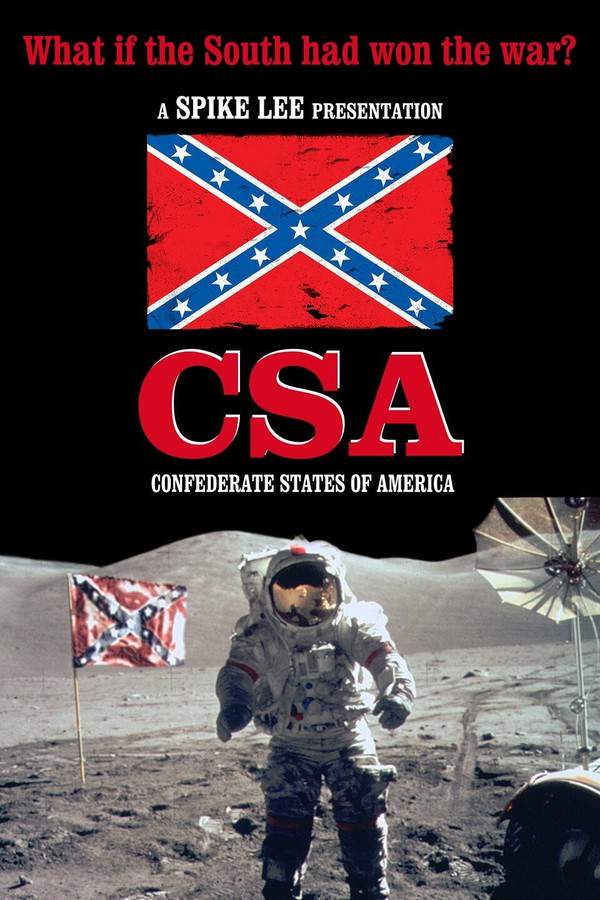
C.S.A.: The Confederate States of America (2006) movie poster

Timeline

C.S.A.: The Confederate States of America (2006) Timeline Explained – Every Event in Order

Release, runtime and language
2006 · 89 min · English
Loading streaming availability…
Directed by
Kevin Willmott

In a darkly comic alternate history where the Confederate States of America won the Civil War, a documentary film crew explores the ramifications of this victory. The film examines a nation built on the continued institution of slavery and the deeply entrenched racism that permeates society. Through interviews and archival footage, the crew uncovers a disturbing reality, revealing the complex and often unsettling consequences of a divided America.

On this page (6)
  1. 1 Where to watch
  2. 2 Events in order (14)
  3. 3 Timeline questions answered
  4. 4 Movie threads
  5. 5 Movies like C.S.A.: The Confederate States of America
  6. 6 Every angle
Loading streaming availability…

14 events in order · contains spoilers

C.S.A.: The Confederate States of America Timeline: Events in Chronological Order

Every key event of C.S.A.: The Confederate States of America (2006) in order, scene by scene, with when and where it takes place. Use it to untangle flashbacks, time jumps and parallel storylines, to refresh your memory before the sequel or to find the exact scene you are thinking of.

  1. Southern Secession

    In 1863, the Southern States attempted to secede from the Union, navigating through a poorly managed effort to break away. This critical moment laid the foundation for the future conflicts that defined the era of the Confederate States of America.

    When
    1863
  2. Victory at Gettysburg

    With the strategic support of French and British troops, the Confederacy achieved a significant victory at the Battle of Gettysburg. This turning point not only boosted Confederate morale but also shifted the balance of power in the ongoing conflict.

    Where
    Gettysburg
  3. Grant's Surrender

    Following the victory at Gettysburg, Ulysses S. Grant was forced to surrender to Robert E. Lee. This surrender marked a significant moment in the war, as it symbolized the Confederacy's growing strength in the face of Northern resistance.

  4. Lincoln’s Flight

    As the tide turned against the Union, President Abraham Lincoln was compelled to flee to Canada for his safety. This dramatic escape illustrated the dire situation faced by the Union leadership during this tumultuous period.

    Where
    Canada
  5. Northern States Absorbed

    The Northern States ultimately fell victim to Confederate expansion, resulting in their absorption into the Confederacy. This marked a historic transformation, as the United States as known previously was facing a drastic alteration in its structure and identity.

  6. Destruction of Major Cities

    With the Confederacy's growing dominance, the major Northern cities of Boston and New York faced devastating destruction. The loss of these cities not only impacted the Union's ability to fight back but also highlighted the brutality of the ongoing conflict.

    Where
    Boston, New York
  7. Constitutional Changes

    The right to own slaves became firmly enshrined in the newly formed Constitution of the Confederacy. This constitutional amendment deepened the societal divide and solidified the institution of slavery as a central tenet of the CSA.

  8. Conflict With Spain

    The CSA established itself as a formidable nation by engaging in and dominating conflicts with both Spain and various Latin American countries. This expansionist policy not only showcased the Confederacy's military prowess but also its ambition on the world stage.

  9. Alliance with Hitler

    In a controversial move, the CSA formed an unlikely partnership with Adolph Hitler to maintain its global supremacy. This alliance, driven by shared interests, further complicated the international landscape during World War II.

  10. Contemporary Scrutiny

    In modern times, the CSA faces increasing scrutiny, particularly from neighboring Canada and the Muslim Nation, regarding its continued reliance on slavery. The growing dissent highlights the moral and ethical challenges posed by such an institution in the contemporary world.

  11. Economic Backbone of CSA

    Despite the moral implications, slavery has become the economic backbone of the CSA, providing a labor force that fuels its economy. Leaders in the Confederacy have integrated slavery into their broader vision, overlooking its inhumane aspects.

  12. Revelations from Slavery

    A long-time slave of John Fauntroy, a prominent politician, brings forth shocking revelations that threaten to upend the political landscape of the CSA. These revelations promise to expose the hidden truths of the regime and challenge its status quo.

  13. Rupture of the CSA's Political Structure

    The implications of the new revelations create an atmosphere of uncertainty within the CSA's political structure. As tensions rise, there is a palpable sense that the foundations of this regime may soon face a significant rupture, leading to potential shifts in power.

  14. Fight for Human Dignity

    The ongoing struggle against slavery within the CSA highlights the fight for human dignity and justice among the oppressed. This narrative not only reflects the historical context but also resonates with contemporary movements advocating for civil rights.

Last updated: November 03, 2024 at 12:33

Was this helpful?

Timeline questions answered

C.S.A.: The Confederate States of America Timeline Explained: Your Questions Answered

When does it happen, and why in that order? The questions people ask about the chronology of C.S.A.: The Confederate States of America (2006): time jumps, flashbacks, cause and effect between scenes and the correct order of events, each answered with spoilers.

Q1

How did the Confederacy win the Civil War in the film?

The Confederacy won because France and Britain strategically intervened at the Battle of Gettysburg. Their military support turned the tide of the war, forcing Ulysses S. Grant to surrender to Robert E. Lee and causing Lincoln to flee to Canada for his safety.

  • gettysburg
  • civil war
  • france
  • britain
  • confederate victory
Q2

What happened to Abraham Lincoln after the Confederacy won?

After the Confederacy's victory at Gettysburg, President Abraham Lincoln was forced to flee to Canada for his safety as the Union collapsed. He never returned, and the Northern States were eventually absorbed into the Confederacy.

  • abraham lincoln
  • canada
  • union collapse
  • president
Q3

Why were Boston and New York burned in the movie?

With the Confederacy's growing dominance after winning the war, Northern cities faced devastating destruction as part of the Confederate campaign to fully subdue the Union. Boston and New York were burned as the Confederacy consolidated power over the absorbed Northern States.

  • boston
  • new york
  • destruction
  • burning
  • northern cities
Q4

Why did the CSA ally with Adolf Hitler?

The CSA formed an alliance with Hitler to maintain its global supremacy, driven by shared interests in maintaining power and opposition to similar ideological enemies. This controversial partnership positioned the Confederacy as a major world power during World War II.

  • hitler
  • alliance
  • world war
  • supremacy
  • germany
Q5

Who is John Fauntroy and why is his slave's revelation important?

John Fauntroy is a prominent CSA politician and great-grandson of one of Lincoln's chief opponents. His long-time slave brings forth shocking revelations that threaten to upend the political structure of the CSA, hinting at potential systemic corruption or secrets about the regime's foundations.

  • john fauntroy
  • slave
  • revelations
  • political
  • upend
Q6

How did slavery become the economic backbone of the CSA?

After winning the war, CSA leaders integrated slavery into their broader national vision despite its dehumanizing effects. It became the primary labor force fueling the economy, with the government overlooking its inhumane aspects in favor of economic productivity and maintaining the social order.

  • slavery
  • economy
  • labor
  • csa leaders
  • integration
Q7

Why does the modern CSA face scrutiny from Canada and the Muslim Nation?

In contemporary times, the CSA faces increasing international pressure from Canada and the Muslim Nation regarding its continued reliance on slavery. These external forces represent growing global opposition to the institution of slavery that still defines the Confederacy.

  • canada
  • muslim nation
  • scrutiny
  • slavery
  • international pressure
Q8

How did slavery become legally protected in the CSA constitution?

After the Confederacy defeated the Union, they amended their constitution to firmly enshrine the right to own slaves. This constitutional change deepened the societal divide and solidified slavery as a central legal tenet of the CSA.

  • constitution
  • slavery
  • legal
  • amendment
  • rights
Q9

How did the CSA become a dominant world power?

The CSA expanded its military dominance through conflicts with Spain and several Latin American countries, establishing itself as a formidable nation. This expansionist policy showcased the Confederacy's military prowess and global ambitions beyond the former United States.

  • expansion
  • spain
  • latin america
  • military
  • world power
Q10

What do the shocking revelations mean for the CSA's future?

The revelations brought forth by Fauntroy's slave create uncertainty within the CSA's political structure, suggesting potential rupture and upheaval. The ending remains ambiguous, hinting at possible collapse of the regime but not guaranteeing a positive resolution for the oppressed.

Foreshadowing: The film builds tension throughout, suggesting the political foundation may not be as stable as it appears.

  • ending
  • revelation
  • rupture
  • political
  • future
  • ambiguous

Movie threads

More Movies Like C.S.A.: The Confederate States of America, by Mood & Story

Curated lists built around what makes C.S.A.: The Confederate States of America tick: the same mood, the same kind of story or the same emotional payoff. Each list explains why these movies belong together.

Satirical Alternate History Movies like C.S.A.: The Confederate States of America

Films that critique society by creating a darkly plausible alternate reality. If you enjoyed the provocative premise of C.S.A., explore more movies that imagine a different past to comment on the present. These films use dark humor and a documentary-like style to create thought-provoking stories about power, society, and what could have been.

  • satirical
  • thought-provoking
  • unsettling
  • dystopian
  • darkly comic
  • critical
  • Tone: dark, satirical, unsettling
  • Pacing: steady, methodical
Why these movies?

The story pattern: Stories in this thread are often structured as investigations or exposés, presenting their fictional world with a straight-faced, analytical tone that makes the underlying horror or absurdity more potent. The narrative unfolds through the accumulation of fictional evidence, interviews, and world-building details, leading to a critique of a real-world issue.

Why they belong together: Movies are grouped here for their shared approach to storytelling: using satire and the formal structure of a documentary to explore serious themes. They create a unique blend of intellectual engagement and visceral discomfort, making the audience both think and feel deeply about the subject matter.
Movies with Heavy Social Commentary like C.S.A.: The Confederate States of America

Stories that confront difficult truths with a steady, emotionally challenging pace. For viewers who appreciated the heavy emotional and intellectual weight of C.S.A., this section features films with similarly powerful social commentary. These movies are steady-paced, complex, and leave a lasting impact by forcing audiences to confront uncomfortable realities.

  • thought-provoking
  • heavy
  • disturbing
  • anxious
  • oppressive
  • serious
  • Tone: dark, heavy, serious
  • Pacing: steady, deliberate
Why these movies?

The story pattern: The narrative journey in these films is less about traditional plot twists and more about the gradual, often painful, revelation of a systemic truth or moral dilemma. Characters may serve as conduits for exploring the central theme, and the ending is frequently ambiguous or bleak, reflecting the complexity of the issues presented.

Why they belong together: These films are grouped together because they share a commitment to exploring weighty themes with seriousness and depth. They prioritize intellectual and emotional impact over light entertainment, creating a cohesive experience for viewers seeking challenging and meaningful cinema.

If you liked this

Movies Like C.S.A.: The Confederate States of America

Similar movies to C.S.A.: The Confederate States of America: the same genre, themes or kind of story. Each one comes with its own plot summary, timeline and ending explained.

Browse all movie summaries

Every angle

C.S.A.: The Confederate States of America (2006) Explained: Plot, Timeline & Characters

Everything about C.S.A.: The Confederate States of America in one place: what happens in the plot summary, the timeline in chronological order, the characters and meaning and a spoiler-free summary. What's After the Movie adds the cast, box office and post-credit scenes.

Coming soon on iOS and Android

The Plot Explained Movie Summary App

Plot summaries, endings explained and timelines on your phone. Catch up on any movie in minutes, save your favorites and never miss a twist again.

Be the first to know when we launch. Your email stays private, always.

Learn more about the app