Plot Explained Spoilers guaranteed!
Plot Explained

Browse by genre

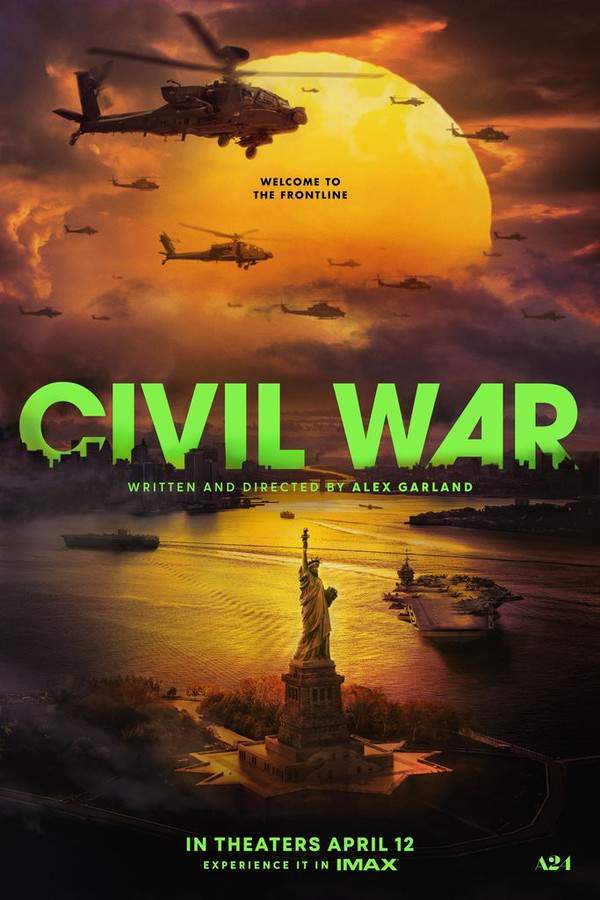
Civil War (2024) movie poster

Plot Summary

Civil War (2024) Plot Summary & Ending Explained

Release, runtime and language
2024 · 1 h 49 m · English
Echo score 69
Directed by
Alex Garland
Starring
Kirsten Dunst, Nick Offerman, Nelson Lee, Wagner Moura, Alexa Mansour, Cailee Spaeny
Budget
$50M

Amidst a fractured and war-torn America, a group of seasoned journalists joins a military convoy on a dangerous mission to reach Washington D.C. They race against time, navigating a nation embroiled in a brutal civil war and facing relentless rebel forces advancing toward the White House.

On this page (7)
  1. 1 Where to watch
  2. 2 What happens: full plot
  3. 3 Plot questions answered
  4. 4 How it ends
  5. 5 Movie threads
  6. 6 Movies like Civil War
  7. 7 Every angle

Where to watch

Where to Watch Civil War (2024)

Where can you watch Civil War? Stream, rent or buy it in the US, including on YouTube Free, Amazon Video and Apple TV Store: current JustWatch availability with up-to-date prices.

Streaming availability powered by JustWatch

Full plot summary · contains spoilers

What Happens in Civil War: Full Plot Summary

The whole story of Civil War (2024) explained, from the opening scene to the final frame: every key event, every twist and what it all adds up to. Read it as a quick recap before the sequel, to check a scene you missed, or to finally understand what really happened.

In a dystopian near-future, the United States finds itself engulfed in a brutal civil war, led by an authoritarian federal government under the three-time president, Nick Offerman. As secessionist movements gain ground, Washington, D.C. braces for an impending assault from the "Western Forces" (WF) composed of rebels from Texas and California. The president, whose leadership has been marred by drastic choices—such as disbanding the FBI and initiating airstrikes against civilians—clings to the belief that victory is within reach. Meanwhile, the US dollar collapses in value, with the Canadian dollar now holding sway.

After narrowly escaping a suicide bombing in New York City, jaded war photographer Lee Smith teams up with her journalist colleague Joel to share a daring plan with their mentor, Sammy: to interview the isolated president. Lee is resolute in her determination to reach D.C. before anyone else.

Upon hearing their intentions, Sammy initially tries to discourage them but ultimately decides to accompany them to the frontline in Charlottesville, Virginia. Joel believes that the WF's momentum is faltering due to lost supply lines. However, the threat looms as they speculate a possible assault on the capital by the Fourth of July.

Lee grapples with her experiences, haunted by the horrific realities of war—she has witnessed unimaginable suffering, including people set ablaze. This violence has left her feeling numb, indifferent to human pain. The next day, Lee discovers that Joel has invited a budding photojournalist, Jessie Collin, to join their ranks. Before the bombing, Jessica had faced violence herself, being struck by a police baton while trying to document the secessionists’ clash with law enforcement.

They begin their journey, now 857 miles from D.C., with Lee agreeing to bring Jessie along, albeit limiting their travels to Charlottesville. En route, the group stops at a gas station under heavy guard. Here, Jessie ventures out only to stumble upon a horrifying scene where men torture two individuals accused of looting. After Lee captures a photograph that diffuses the tension, Jessie wrestles with feelings of inadequacy for not being brave enough to document the event.

Lee warns her that pursuing a career in photojournalism is dangerous and that if Jessie ever finds herself in harm’s way, she would be left to fend for herself. After a night spent near the front lines, the group witnesses a successful attack by secessionist militiamen on a loyalist stronghold. Lee begins to see the potential in Jessie and starts mentoring her as a war photographer, even as Jessie photographs brutal executions.

Their journey takes them to a refugee camp, where they meet traumatized civilians trying to maintain an illusion of normal life despite the ongoing conflict. Jessie is inspired by Lee’s past achievements, having taken the iconic photo during the Antifa massacre in college, while also dreaming of her own future.

As they journey closer to the heart of the conflict, they become embroiled in a sniper battle in the ruins of a Christmas fair. Lee and her group are forced into hiding as snipers taunt each other about their motives. During this intense situation, Jessie’s confidence burgeons as she continues to capture the chaos around her. At one point, she even asks if Lee would take a photo of her death, to which Lee concedes.

Their path crosses with two familiar foreign reporters, Tony and Bohai, leading to a dramatic switch of vehicles. However, this moment quickly turns dire as a militia ambushes them, executing both of their friends. In a desperate act, Sammy sacrifices himself to save them, leading to his critical injury.

With heavy hearts, the trio arrives at the WF base in Charlottesville, only to find that most loyalists have surrendered, leaving D.C. to be protected only by fanatical remnants of the armed forces and Secret Service. As Lee and Jessie mourn Sammy, they wrestle with the trauma of violence and loss. Lee, unable to document Sammy's demise, deletes the photograph she took of his lifeless body.

In the midst of chaos, the group embeds with the WF as they launch an assault on D.C. Jessie, emboldened yet reckless, continually endangers herself to capture the unfolding battle. When they breach the White House's defenses, the chaos escalates as the presidential limousine makes a desperate attempt to flee, resulting in the occupants' deaths.

Inside the White House, the remaining Secret Service agents make a futile attempt to negotiate with the president, resulting in a fierce firefight. In a moment of desperation, Jessie steps into the line of fire to take photographs of the unfolding chaos, ultimately witnessing Lee’s death as she pushes Jessie to safety. In the frantic aftermath, Jessie walks into the Oval Office, where chaos reigns as soldiers drag the president from his hiding spot, preparing to execute him. Just before this final act, Joel captures the president's plea, >"Don't let them kill me."

After everything, as soldiers pose with the president's corpse, Jessie stands there, documenting the very end of a tragic chapter in American history, forever marked by the bloodshed she sought to capture through her lens.

Last updated: October 24, 2024 at 08:43

Was this helpful?

Plot questions answered

Civil War Plot Explained: Your Questions Answered

The questions people ask most about Civil War (2024): what happens in the confusing scenes, why the characters do what they do, the twists, hidden details and what the ending means. Each answer contains spoilers.

Q1

Why does Lee want to interview the president?

Lee, a seasoned war photographer, is driven by a commitment to documenting the truth. After surviving a suicide bombing in New York, she becomes determined to reach the president before anyone else to capture his perspective on the civil war. She believes this interview could provide critical insights into the chaotic situation and show the world what's happening.

  • lee smith
  • president interview
  • war photographer
  • documentary
Q2

Why does Sammy sacrifice himself?

Sammy sacrifices himself during a militia ambush to save Lee and Jessie. When the militia executes their two foreign reporter friends and corners the group, Sammy acts heroically to give them a chance to escape, resulting in his critical injury.

Foreshadowing: Earlier, Sammy had warned the group about the dangers of their journey but chose to accompany them anyway, showing his dedication to his mentees.

  • sammy sacrifice
  • militia ambush
  • death
Q3

Why does Jessie ask Lee to photograph her death?

Jessie's request reveals her reckless dedication to war photography. During the sniper battle at the Christmas fair ruins, she's willing to die for the perfect shot, viewing her own death as potentially iconic. This moment showcases how the war has normalized mortality for these journalists.

  • jessie death photo
  • reckless
  • war photography
Q4

Why does Lee delete the photograph of Sammy's dead body?

Lee cannot bring herself to document Sammy's death. After he dies saving her and Jessie, she takes a photo of his lifeless body but then deletes it, an emotional moment where she chooses humanity over her role as a photographer.

  • lee deletes photo
  • sammy death
  • emotional moment
Q5

Why does Jessie step into the line of fire at the White House?

Jessie's reckless pursuit of the perfect photograph leads her into danger during the final assault. Despite Lee's warnings throughout the journey about the dangers of war photography, Jessie prioritizes capturing the historic moment over her own safety, ultimately leading to Lee's death.

Foreshadowing: Earlier, Lee had warned Jessie that if she ever found herself in harm's way, she would be left to fend for herself.

  • jessie white house
  • line of fire
  • reckless
Q6

Why does Lee die pushing Jessie to safety?

Lee dies protecting Jessie during the White House assault. As Jessie steps into the line of fire to capture the chaos, Lee pushes her to safety but is fatally shot in the process, sacrificing herself for the younger photographer she mentored.

Foreshadowing: Throughout the journey, Lee mentors Jessie and begins seeing her potential as a war photographer.

  • lee death
  • jessie safety
  • sacrifice
Q7

What happens to the president in the end?

The president is executed by the Western Forces. After the White House is breached and the presidential limousine occupants are killed during a flee attempt, soldiers drag the president from his hiding spot. Joel captures his final plea, 'Don't let them kill me,' before soldiers execute him and pose with his corpse.

  • president execution
  • white house
  • western forces
Q8

Why are the Western Forces able to capture Washington D.C.?

The Western Forces gain momentum as they advance toward D.C., with many loyalists surrendering by the time Lee's group reaches the WF base in Charlottesville. Joel speculates earlier that the WF's momentum might be faltering due to lost supply lines, but the assault succeeds anyway, leaving only fanatical remnants of armed forces and Secret Service to defend the capital.

Foreshadowing: Joel initially believes the WF might be losing momentum, creating uncertainty about whether they'll actually attack.

  • western forces
  • washington d.c.
  • assault
  • victory
Q9

Why is Lee desensitized to violence?

Lee has spent years as a war photographer witnessing horrific realities, people set ablaze, atrocities, and constant death. This repeated exposure has left her feeling numb and indifferent to human pain. She admits to being haunted by what she's seen, which explains her calm demeanor throughout the dangerous journey.

  • lee desensitization
  • trauma
  • war photographer
Q10

Why does Lee agree to bring Jessie along?

Lee initially resists bringing Jessie but eventually agrees after seeing her potential. When Jessie witnesses the torture scene at the gas station and feels inadequate for not documenting it, Lee sees her capacity for growth. Lee begins mentoring her as a war photographer, recognizing Jessie's determination despite her inexperience.

  • jessie joins
  • lee mentorship
  • photojournalism
Q11

Why does the president's leadership lead to civil war?

The three-time president, Nick Offerman, leads an authoritarian federal government that makes drastic choices fueling the conflict. He disbanded the FBI and initiated airstrikes against civilians, driving secessionist movements across the country. These actions, combined with economic collapse, push the nation into brutal civil war.

  • president nick offerman
  • fbi disbanded
  • civil war cause
Q12

Why does Jessie feel inadequate at the gas station?

Jessie feels inadequate because she froze during a traumatic event. When she stumbles upon men torturing suspected looters, she's too scared to document it, while Lee calmly captures a photograph that diffuses the tension. Jessie sees this as a failure to live up to the bravery required of war photographers.

  • jessie gas station
  • inadequacy
  • torture scene

Ending explained

What Happens at the End of Civil War?

How Civil War (2024) ends, in short: the final scene, the last twist and what it means for the characters. The full ending explained, with every spoiler, lives on its own page.

Read the full ending explained

In the final moments of Civil War, Jessie witnesses Lee’s sacrifice to save her life during the chaos at the White House. As they push through the deadly crossfire, Lee’s experience and calmness enable her to shield Jessie from harm—yet she herself falls victim to a fatal explosion. This act of self-sacrifice highlights Lee’s growth as a mentor and protector, embodying the theme that sometimes true bravery means risking oneself for others. Jessie, overwhelmed and traumatized, captures Lee’s death with her camera, fulfilling Lee’s earlier lesson about documenting reality without moral judgment. This act cements Jessie’s transformation from a naive rookie to a seasoned war photographer, learning that her duty is to record history, even when it involves capturing the final moments of someone who has been her guide.

Meanwhile, the climax reveals the brutal truth of the American civil war—how the Federal President is killed by the insurrectionists after trying to surrender. The scene underscores that those in power who cause division often meet violent ends, illustrating the chaos and the cost of political failure. Jessie’s powerful photograph of the President’s death becomes a historic record, a haunting symbol of the destructive consequences of political corruption and denial. With the President’s demise, the militant faction secures their victory, and the country’s deep fractures remain visible through the images Jessie captures, leaving viewers with a stark reflection on disorder, sacrifice, and the relentless search for truth amid chaos. The film closes with Jessie carrying these images forward, her journey rooted in the harsh reality of war—where every shot taken is also a voice in the ongoing narrative of a fractured nation.

Civil War ending explained in full

Movie threads

More Movies Like Civil War, by Mood & Story

Curated lists built around what makes Civil War tick: the same mood, the same kind of story or the same emotional payoff. Each list explains why these movies belong together.

Gritty war journalism movies like Civil War

Embedded journalists document the grim reality of conflict from the front lines. For viewers who liked the documentary-style realism of Civil War, this list features movies about journalists in conflict zones. These films share a tense, gritty atmosphere and explore the moral dilemmas of reporting from the front lines of societal collapse.

  • gritty
  • harrowing
  • urgent
  • documentary-style
  • morally complex
  • desensitized
  • Tone: tense, bleak, journalistic
  • Pacing: steady, urgent
Why these movies?

The story pattern: These stories often follow a linear, mission-based structure as the protagonists travel deeper into a war-torn landscape. The narrative revolves around their attempts to remain objective while being confronted with escalating horror, leading to a loss of innocence and profound trauma.

Why they belong together: They are grouped by their shared focus on journalism as a central plot device, a tense and gritty tone, and the exploration of themes like moral desensitization and the power—and limits—of bearing witness.

Bleak apocalyptic journey movies like Civil War

A harrowing trek across a fractured landscape where survival is the only goal. If you liked the tense, ground-level view of societal breakdown in Civil War, this thread collects films about harrowing journeys through dystopian settings. These movies share a steady, oppressive pacing and a focus on survival against overwhelming odds.

  • tense
  • oppressive
  • dread-filled
  • harrowing
  • numb
  • survivalist
  • Tone: bleak, oppressive, tense
  • Pacing: steady, relentless
Why these movies?

The story pattern: The plot is a straightforward progression from one dangerous point to another, with each leg of the journey revealing more about the depth of the collapse. Character arcs are defined by their hardening resolve or breaking point, culminating in a conclusion that offers little to no hope.

Why they belong together: They share a core narrative structure of a dangerous pilgrimage, a consistently high-tension and bleak atmosphere, and a theme of navigating a world that has irrevocably descended into chaos.

If you liked this

Movies Like Civil War

Similar movies to Civil War: the same genre, themes or kind of story. Each one comes with its own plot summary, timeline and ending explained.

Browse all movie summaries

Every angle

Civil War (2024) Explained: Plot, Ending, Timeline & Characters

Everything about Civil War in one place: what happens in the plot summary, the timeline in chronological order, the characters and meaning, the ending explained and a spoiler-free summary. What's After the Movie adds the cast, box office and post-credit scenes.

Coming soon on iOS and Android

The Plot Explained Movie Summary App

Plot summaries, endings explained and timelines on your phone. Catch up on any movie in minutes, save your favorites and never miss a twist again.

Be the first to know when we launch. Your email stays private, always.

Learn more about the app