Plot Explained Spoilers guaranteed!
Plot Explained

Browse by genre

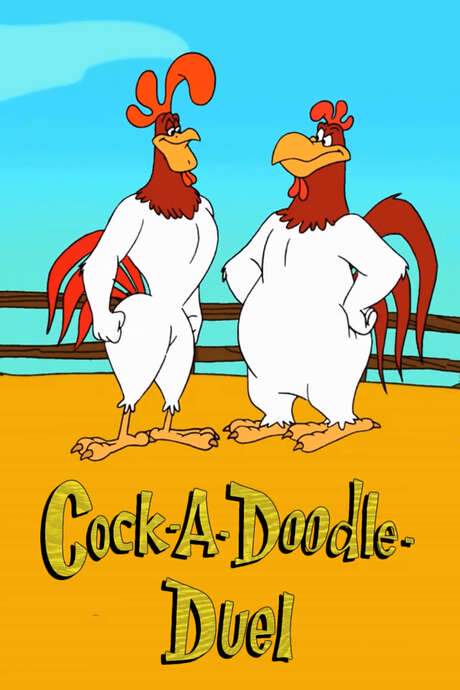
Crockett-Doodle-Do (1960) movie poster

Plot Summary

Crockett-Doodle-Do (1960) Plot Summary Explained

Release, runtime and language
1960 · 6 mins · English
Directed by
Robert McKimson
Starring
Mel Blanc

Foghorn Leghorn decides to whisk an egg‑head, genius chick away to the forest, hoping to pull the youngster away from his long‑haired atomic‑science tomes and teach him practical skills such as scouting and woodcraft. Instead, the chick proves even more knowledgeable than Foghorn in those very areas, turning the lesson into a comical showdown.

On this page (5)
  1. 1 What happens: full plot
  2. 2 Plot questions answered
  3. 3 Movie threads
  4. 4 Movies like Crockett-Doodle-Do
  5. 5 Every angle

Full plot summary · contains spoilers

What Happens in Crockett-Doodle-Do: Full Plot Summary

The whole story of Crockett-Doodle-Do (1960) explained, from the opening scene to the final frame: every key event, every twist and what it all adds up to. Read it as a quick recap before the sequel, to check a scene you missed, or to finally understand what really happened.

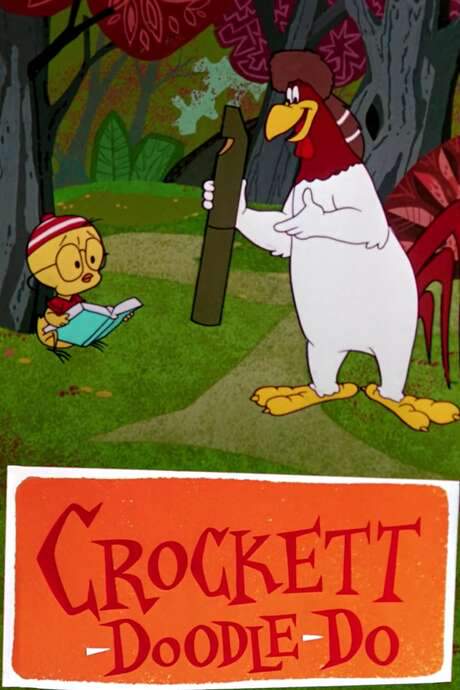
In this woodland caper, Foghorn Leghorn invites Egghead Jr. to a hands-on lesson in scouting and woodcraft, turning a simple hike into a cinematic classroom where curiosity clashes with comical chaos. Egghead, deeply engrossed in Basic Research in the Physical Sciences by Prof. Newt Ronn, sets the intellectual pace while Foghorn aims to teach by action, and the forest becomes a stage for a flurry of misadventures that highlights their contrasting personalities.

The lesson begins with a classic test of skill: lighting a friction fire using a spindle drill. Egghead quietly observes, then unexpectedly breaks off a twig and, striking it like a match against his own body, lights the flame for them both. Foghorn insists that the feat is impossible, yet when he tries to replicate the maneuver, his overconfident attempt backfires in spectacular fashion, leaving his tail singed and his pride thoughtfully smoldering. The scene blends slapstick timing with a playful nod to experimentation, inviting the audience to savor the escalating rivalry between impulse and intellect.

When Egghead returns to his book, the rooster shifts gears and carves a duck call. The moment he blows, a pig bursts onto the scene, barreling into Foghorn and sending him tumbling into a nearby tree. Not to be outdone, Egghead fashions his own call, and a trio of bobbysoxer ducks swoop in, clearly enchanted by Egghead’s quiet ingenuity and stage presence, much to Foghorn’s exasperation and envy.

Foghorn then attempts to communicate with smoke signals, burning a hole right through his blanket in the process. Egghead responds from a distance with a neatly typed and signed message carried aloft by the rising column of smoke, turning a primitive signal into a surprisingly formal exchange. The clash between rustic showmanship and methodical precision deepens, revealing how each character’s strength can be both an asset and a handicap.

The woodland bellows a new trick when Foghorn rigs a watering can in a tree to stage what he calls an Indian rain dance. Egghead counters with a different forecast: he folds a paper airplane, uses it to seed a cloud with dry ice, and conjures actual rain. Lightning cracks down, leaving Foghorn feathers weathered and scattered by the storm, a vivid reminder that nature responds to even the most elaborate schemes with dramatic gusto.

A knowledge contest escalates into a practical contest of traps. Foghorn introduces a box trap as a demonstration of his experience, but Egghead counters with a snare trap of his own design. The exchange quickly spirals into a Rube Goldberg–style cascade of mishaps: a misfired mechanism launches the rooster skyward, he bounces off a tree branch, careens through a chute, and slides down into a hollow tree before landing back at the snare, which bites back and suspends Foghorn upside-down by his feet. The sequence weaves physical comedy with clever contraptions, turning every step into another reminder of how underestimating the other’s craft can lead to spectacular consequences.

Defeated but not deterred, Foghorn asks Egghead if he has any more of those “long-haired books.” The question lingers as the forest settles back into its quiet, leaving the audience amused by the stubborn blend of bravado and brains that defines their unusual partnership. > "those long-haired books."
Last updated: March 05, 2026 at 18:41

Was this helpful?

Plot questions answered

Crockett-Doodle-Do Plot Explained: Your Questions Answered

The questions people ask most about Crockett-Doodle-Do (1960): what happens in the confusing scenes, why the characters do what they do, the twists, hidden details and what the ending means. Each answer contains spoilers.

Q1

How does Egghead light the fire by striking a twig on his body?

Egghead breaks off a twig and strikes it against his own body, using friction to ignite it like a match. The cartoon plays with exaggerated cartoon physics where everyday objects behave in impossible ways. Foghorn declares the feat impossible, but when he attempts to replicate it, he accidentally sets his tail on fire instead, emphasizing the contrast between Egghead's effortless skill and Foghorn's clumsy failure.

  • egghead
  • fire starting
  • foghorn leghorn
  • cartoon physics
  • friction
Q2

Why does Foghorn's duck call attract a pig instead of ducks?

Foghorn carves a crude duck call and blows it, but instead of attracting ducks, a pig comes running and knocks him into a tree. This is played for absurdist humor, the animal call backfires in the most unexpected way, demonstrating the unpredictable nature of the woodland setting and setting up the contrast with Egghead's more refined versions.

  • duck call
  • pig
  • foghorn leghorn
  • comedy
  • animal
Q3

Why does Egghead's duck call attract the bobbysoxer ducks?

Egghead carves his own duck call, which attracts three bobbysoxer ducks (teenage female ducks) who swoon over him. The scene humorously contrasts Egghead's quiet ingenuity and stage presence with Foghorn's clumsy attempts. The ducks' attraction suggests Egghead's refined approach appeals to others, while Foghorn's rough methods consistently fail.

  • egghead
  • bobbysoxer ducks
  • duck call
  • foghorn leghorn
  • attraction
Q4

How does Egghead create actual rain with dry ice?

Egghead folds a paper airplane, attaches dry ice to it, and uses the plane to seed a small cloud. This causes actual rain to form, followed by a lightning strike that leaves Foghorn feathers weathered and scattered. The scene demonstrates that Egghead's scientific knowledge actually works, while Foghorn's showmanship (the rain dance) fails spectacularly.

  • dry ice
  • rain
  • egghead
  • science
  • lightning
  • foghorn leghorn
Q5

Why does the trap launch Foghorn into the air and leave him upside-down?

Foghorn demonstrates a box trap, but Egghead counters with a snare trap. When Foghorn mocks the snare, a Rube Goldberg-style chain reaction triggers: the mechanism misfires, launches Foghorn upward, bounces him off a tree branch, shoots him through a chute, and tumbles him down a hollow tree back to the snare, which tightens and hangs him upside-down by his feet. The elaborate sequence punishes Foghorn's overconfidence and underestimation of Egghead's engineering skills.

  • trap
  • snare
  • foghorn leghorn
  • rube goldberg
  • comedy physics
Q6

What does Foghorn mean when he asks about the 'long-haired books'?

At the end of the cartoon, Foghorn, defeated and hanging upside-down, asks Egghead if he has any more of those 'long-haired books.' This references Egghead's earlier reading material, 'Basic Research in the Physical Sciences' by Prof. Newt Ronn, which had long-haired authors (a visual gag implying intellectual depth). Foghorn's request signifies his reluctant acknowledgment that Egghead's book smarts have proven superior to his practical skills, ending the film on a humorous note of defeat disguised as curiosity.

  • long-haired books
  • foghorn leghorn
  • egghead
  • prof newt ronn
  • defeat
Q7

Why does Egghead respond to the smoke signal with a typed message?

Foghorn attempts to send a smoke signal but burns a hole through his blanket instead. Egghead responds from a distance with a neatly typed and signed message carried aloft by the rising column of smoke. This moment highlights the core contrast between the characters: Foghorn relies on crude, rustic methods while Egghead applies scientific precision to everything, even responding to primitive communication with modern technology.

  • smoke signal
  • typed message
  • foghorn leghorn
  • egghead
  • contrast
Q8

Why does Foghorn want to teach Egghead scouting and woodcraft?

Foghorn spots Egghead deeply engrossed in a scientific book ('Basic Research in the Physical Sciences by Prof. Newt Ronn') and decides to whisk him away for a hands-on lesson in scouting and woodcraft. Foghorn's motivation is to pull the 'egg-head' away from his 'long-haired atomic-science tomes' and teach him practical outdoor skills. However, the joke is that Egghead already possesses superior knowledge in these areas, turning Foghorn's teaching mission into a comedic failure at every turn.

  • foghorn leghorn
  • egghead
  • scouting
  • woodcraft
  • teaching
  • books
Q9

Why does Foghorn's rain dance fail while Egghead's rain trick works?

Foghorn rigs a watering can in a tree and performs an Indian rain dance, attempting to conjure rain through showmanship and folklore. Egghead counters with a scientific approach: he seeds a cloud with dry ice using a paper airplane, which actually produces rain and lightning. The contrast illustrates the film's theme that scientific knowledge outweighs showy theatrics, Foghorn's performative approach consistently fails while Egghead's methodical science succeeds.

  • rain dance
  • foghorn leghorn
  • dry ice
  • egghead
  • rain
  • science vs showmanship

Movie threads

More Movies Like Crockett-Doodle-Do, by Mood & Story

Curated lists built around what makes Crockett-Doodle-Do tick: the same mood, the same kind of story or the same emotional payoff. Each list explains why these movies belong together.

Movies with mentor and prodigy rivalries like Crockett-Doodle-Do

Humorous clashes where a veteran's methods are hilariously overturned by a clever newcomer. If you enjoyed the playful battle of wits in Crockett-Doodle-Do, you'll love these movies featuring humorous mentor and prodigy dynamics. This collection highlights stories where eager students turn the tables on their teachers with cleverness and wit, all in a lighthearted spirit.

  • playful
  • mischievous
  • lighthearted
  • whimsical
  • absurd
  • energetic
  • Tone: whimsical, playful
  • Pacing: fast, gag-driven
Why these movies?

The story pattern: The narrative follows a simple, repetitive pattern of challenge and reversal. A seasoned character attempts to demonstrate their superiority or teach a lesson to a seemingly inexperienced younger character. Instead of a standard lesson, the prodigy responds with superior knowledge or a clever trick, turning the tables and creating a comedic outcome. This cycle repeats, escalating the absurdity and the mentor's frustration in a good-natured way.

Why they belong together: Movies are grouped here because they share a core comedic structure built on role reversal and intellectual one-upmanship. They feature a consistent tone of whimsical mischief, fast pacing driven by a sequence of gags, and a complete lack of genuine stakes or emotional weight, focusing purely on the fun of the dynamic.

Fast-paced cartoon comedies with absurd chaos like Crockett-Doodle-Do

Rapid-fire animated shorts where logic is optional and the gags never stop. Fans of the quick-witted, rapid-fire gags in Crockett-Doodle-Do will enjoy this selection of fast-paced cartoon comedies. These movies and shorts feature absurd humor, playful characters, and a continuous stream of lighthearted, chaotic fun.

  • energetic
  • absurd
  • cartoonish
  • whimsical
  • lighthearted
  • playful
  • Tone: whimsical, absurd
  • Pacing: fast, relentless
Why these movies?

The story pattern: Narratives in this thread are often simple frameworks designed to string together a rapid succession of distinct comedic set pieces. Character goals are basic, but the journey is filled with unexpected, logic-defying obstacles and solutions. The structure is episodic within a short runtime, with each scene introducing a new opportunity for a visual or situational gag.

Why they belong together: These films are united by their primary goal: to deliver constant, lighthearted amusement through a specific style of comedy. They share a fast pacing that keeps the energy high, a whimsical tone that embraces the absurd, and a low-intensity, straightforward approach that ensures the viewing experience is purely fun and undemanding.

If you liked this

Movies Like Crockett-Doodle-Do

Similar movies to Crockett-Doodle-Do: the same genre, themes or kind of story. Each one comes with its own plot summary, timeline and ending explained.

Browse all movie summaries

Every angle

Crockett-Doodle-Do (1960) Explained: Plot, Timeline & Characters

Everything about Crockett-Doodle-Do in one place: what happens in the plot summary, the timeline in chronological order, the characters and meaning and a spoiler-free summary. What's After the Movie adds the cast, box office and post-credit scenes.

Coming soon on iOS and Android

The Plot Explained Movie Summary App

Plot summaries, endings explained and timelines on your phone. Catch up on any movie in minutes, save your favorites and never miss a twist again.

Be the first to know when we launch. Your email stays private, always.

Learn more about the app