








Plot Explained Spoilers guaranteed!
Plot Explained

Browse by genre

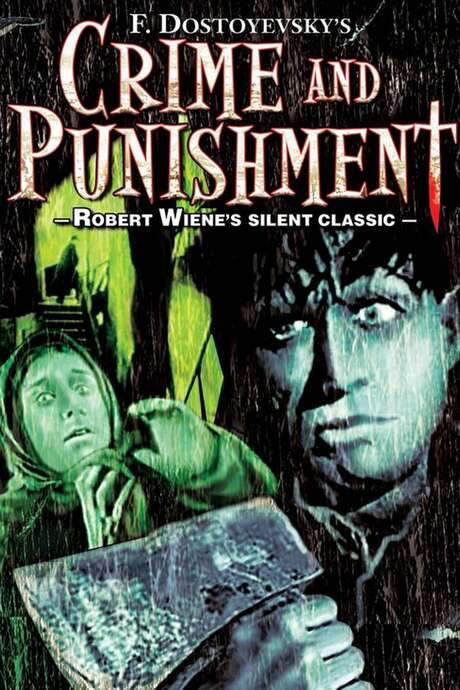
Crime and Punishment (1970) movie poster

Timeline

Crime and Punishment (1970) Timeline Explained – Every Event in Order

Release, runtime and language
1970 · 221 mins · Russian
Directed by
Lev Kulidzhanov
Starring
Innokentiy Smoktunovskiy, Evgeniy Lazarev, Georgi Taratorkin, Yuri Medvedev, Inna Makarova, Lyubov Sokolova

Raskolnikov, a former law student, murders a pawnbroker and her sister, driven by greed and a belief in his superiority. The police link him to the victim as a client, and his behavior makes him Porfiry’s prime suspect. His mother and sister arrive in St. Petersburg, and he meets Sonia, a prostitute who urges him to confess and promises to share exile.

On this page (6)
  1. 1 Where to watch
  2. 2 Events in order (14)
  3. 3 Timeline questions answered
  4. 4 Movie threads
  5. 5 Movies like Crime and Punishment
  6. 6 Every angle

Where to watch

Where to Watch Crime and Punishment (1970)

Where can you watch Crime and Punishment? Stream, rent or buy it in the US, including on Amazon Prime Video, fuboTV and MGM Plus: current JustWatch availability with up-to-date prices.

Streaming availability powered by JustWatch

14 events in order · contains spoilers

Crime and Punishment Timeline: Events in Chronological Order

Every key event of Crime and Punishment (1970) in order, scene by scene, with when and where it takes place. Use it to untangle flashbacks, time jumps and parallel storylines, to refresh your memory before the sequel or to find the exact scene you are thinking of.

  1. Raskolnikov contemplates crime and a theory

    Rodion Raskolnikov, a poor former law student, contemplates murdering the old pawnbroker to gain money and test his theory that extraordinary men are above conventional morality. He weighs the potential benefits against the moral costs, setting the plan in motion. The seeds of the crime are planted in his desperate mind.

    Where
    St. Petersburg, Raskolnikov's apartment
  2. Pawnbroker and sister murdered

    Raskolnikov carries out the killings of the pawnbroker and her innocent sister, Lizaveta, in their shared apartment. The double murder is brutal and shatters his sense of safety. He takes money and attempts to slip away, hoping the crime will be undetected.

    Where
    Pawnbroker's apartment, St. Petersburg
  3. Aftermath and concealment

    The killer experiences a mix of relief and panic as he pockets cash and tries to erase evidence. He wrestles with his conscience and fear of discovery, all while hiding among his acquaintances. The weight of the crime begins to press on him.

    Where
    St. Petersburg
  4. Investigation begins; suspicion grows

    Despite his attempts to appear normal, Raskolnikov becomes a person of interest as the police harden their case against the unknown killer. His regular visits to the victim's shop mark him as a potential suspect in the minds of investigators. The case tightens around him as clues accumulate.

    Where
    St. Petersburg
  5. Porfiry Petrovich's questioning

    Detective Porfiry Petrovich engages Raskolnikov in a tense exchange, using sharp questions and psychological games. Raskolnikov's defensive outbursts betray his anxiety and push the investigation in his direction. The cat-and-mouse dynamic reveals the detective's keen intuition.

    Where
    St. Petersburg
  6. Family arrival and new pressures

    Raskolnikov's mother and sister arrive in the city, bringing emotional strain and new expectations. The family visits and fears about Dunya's future heighten the tension around the crime. The home atmosphere grows crowded and unsettled as loyalties collide.

    Where
    St. Petersburg
  7. Dunya’s suitors arrive

    Two older suitors for Dunya—Luzhin and Svidrigailov—arrive, vying for her hand in marriage. The competition adds social pressure on Raskolnikov and complicates family dynamics. The looming choices for Dunya highlight the consequences of the crime.

    Where
    St. Petersburg
  8. Marmeladov's tragedy and Sonia's life

    Raskolnikov meets Marmeladov, a drunken clerk, whose death affects the family. Sonia, Marmeladov's daughter, becomes a symbol of hardship and virtue, forced into prostitution to support her family. The encounter deepens Raskolnikov's empathy and sets Sonia on a pivotal role.

    Where
    City streets and Marmeladov’s surroundings
  9. Sonia becomes a lifeline

    Sonia offers kindness, faith, and moral support to Raskolnikov, giving him a glimmer of redemption amidst guilt. He begins to see her as a path to moral rescue rather than simply a burden. Her steadfast compassion provides a rare anchor in his turbulent life.

    Where
    Sonia's quarters and streets of St. Petersburg
  10. Guilt and paranoia deepen

    Raskolnikov's mental state deteriorates under guilt and fear. He experiences feverish moments, shifting loyalties, and a growing sense of isolation from society. The inner turmoil hardens into a resolve to face the truth.

    Where
    St. Petersburg
  11. Sonia urges confession

    Facing mounting inner turmoil, Sonia pushes him toward confession, insisting that truth and faith offer a route to salvation. She promises to stand by him even if exile awaits. Her influence reframes his understanding of dignity and responsibility.

    Where
    Raskolnikov's spaces and Sonia's room
  12. Confession to the authorities

    Overwhelmed by fear and moral conflict, Raskolnikov finally admits his crime to the police. The act marks a turning point as he chooses confession over continued deception. The walls close in as the legal consequences loom.

    Where
    Police station in St. Petersburg
  13. Exile to Siberia begins

    Raskolnikov's confession leads to his arrest and exile to Siberia, with Sonia at his side as a beacon of hope for spiritual salvation.

    Where
    Siberia
  14. Hope and redemption with Sonia

    In exile, Sonia remains by his side, offering faith and love that promise a path to redemption. The story closes with a glimmer of spiritual salvation as they navigate a harsh new life together.

    Where
    Siberia

Last updated: February 24, 2026 at 13:51

Was this helpful?

Timeline questions answered

Crime and Punishment Timeline Explained: Your Questions Answered

When does it happen, and why in that order? The questions people ask about the chronology of Crime and Punishment (1970): time jumps, flashbacks, cause and effect between scenes and the correct order of events, each answered with spoilers.

Q1

Why did Raskolnikov kill Lizaveta, the pawnbroker's sister?

Lizaveta was an unintended victim. Raskolnikov murdered her simply because she unexpectedly returned home during the crime. He had not planned to kill her, but she caught him in the act, forcing him to eliminate her to avoid being identified. This accidental killing haunts him far more than the planned murder of the pawnbroker.

Foreshadowing: Earlier, Raskolnikov overhears Lizaveta mentioning she visits the pawnbroker every Saturday, showing the cruel irony of his timing.

  • lizaveta
  • accidental murder
  • pawnbroker sister
  • unplanned killing
Q2

What was Raskolnikov's theory about extraordinary people?

Raskolnikov believed that certain exceptional individuals are above conventional moral laws. He theorized that extraordinary men have the right to transgress ethical boundaries if their actions serve a greater purpose. He used this philosophy to justify murdering the pawnbroker, viewing her as a worthless parasite whose death could fund many others. The murder was essentially a test of whether he could be one of these superior beings.

Foreshadowing: The film opens with Raskolnikov contemplating this theory in his cramped apartment, showing his ideological preparation for the crime.

  • extraordinary men
  • theory
  • moral justification
  • superior man doctrine
Q3

How did Porfiry Petrovich identify Raskolnikov as the suspect?

Porfiry suspected Raskolnikov primarily because Raskolnikov was a known regular customer at the pawnbroker's shop, making him a natural person of interest. Additionally, Raskolnikov's bizarre behavior during interrogations, his nervous laughter, contradictory statements, and sudden emotional outbursts, betrayed his guilt. Porfiry, a masterful psychologist, used these psychological slips to build his case rather than relying on physical evidence.

Foreshadowing: Early in the investigation, Porfiry notes how the killer's behavior seemed strange, foreshadowing his focus on psychological detection.

  • porfiry Petrovich
  • investigation
  • suspect
  • psychological detection
Q4

Why did Sonia urge Raskolnikov to confess?

Sonia believed that confession was the only path to Raskolnikov's spiritual salvation. Having suffered greatly herself by entering prostitution to support her family, she understood shame but also believed in redemption through suffering and truth. She told Raskolnikov that hiding his crime would destroy his soul entirely, while confession would allow him to begin earning genuine forgiveness. Her faith taught her that bearing one's guilt openly was morally necessary.

Foreshadowing: Sonia's own life of sacrifice foreshadows her insistence that Raskolnikov must also face suffering openly to find peace.

  • sonia
  • confession
  • redemption
  • spiritual salvation
  • moral redemption
Q5

Why did Raskolnikov confess even though Porfiry had no physical evidence?

Raskolnikov confessed because his psychological torment became unbearable. The guilt consumed him daily, manifesting as fever, paranoia, and isolation. While Porfiry could not prove the crime legally, Raskolnikov could no longer live with the internal weight. Additionally, Sonia's influence convinced him that true freedom lay in accepting responsibility rather than continuing to live a lie. His confession was driven more by mental anguish than fear of legal consequences.

Foreshadowing: His mental state deteriorates visibly throughout the film, with sleepless nights and erratic behavior setting the stage for his breakdown.

  • confession
  • guilt
  • psychological torment
  • mental breakdown
Q6

Why did Raskolnikov take so little money from the pawnbroker?

Raskolnikov took only a small amount of money because the murder was never truly about greed. His primary motive was testing his theory about being an extraordinary man capable of transgression. The minimal theft underscores that the crime was philosophical rather than financial, he wanted to prove he could commit such an act, not enrich himself. Much of the money he did take was also dropped or abandoned during his panicked escape.

Foreshadowing: His poverty is established early, yet he shows little interest in the pawnbroker's wealth when he visits before the murder.

  • money
  • theft
  • pawnbroker
  • minimal loot
  • murder motive
Q7

Why was Sonia forced into prostitution?

Sonia became a prostitute because her father Marmeladov drank away all family money, leaving his children hungry. When Marmeladov died in a street accident, Sonia had no way to support her stepmother and younger siblings except through prostitution. She accepted this path voluntarily out of desperate love for her family, viewing her suffering as a personal sacrifice similar to Christian redemption.

Foreshadowing: Marmeladov's drunken rambling about his family's poverty early in the film hints at the desperation that drives Sonia's choice.

  • sonia
  • prostitution
  • marmeladov
  • family sacrifice
  • poverty
Q8

How does Raskolnikov's confession change his life?

After confessing, Raskolnikov is arrested and sentenced to exile in Siberia. However, this legal punishment brings him unexpected peace, his-paranoia and guilt begin to lift. Sonia accompanies him to Siberia, continuing her support. The ending suggests spiritual redemption is possible through honest suffering, as Raskolnikov's soul appears lighter despite his harsh circumstances. He has traded legal freedom for moral freedom.

Foreshadowing: Sonia promises early to follow him anywhere, foreshadowing her presence in exile.

  • exile
  • siberia
  • confession consequences
  • new life
  • spiritual redemption

Movie threads

More Movies Like Crime and Punishment, by Mood & Story

Curated lists built around what makes Crime and Punishment tick: the same mood, the same kind of story or the same emotional payoff. Each list explains why these movies belong together.

Slow burn psychological torment like in Crime and Punishment

A murderer's mind fractures under the slow, crushing weight of their own actions. If you enjoyed the deep dive into Raskolnikov's guilt-ridden psyche in Crime and Punishment, you'll find similar films here. These movies focus on the intense internal struggle and psychological unraveling that follows a crime, often with a slow, deliberate pace and dark, oppressive tone.

  • guilt-ridden
  • paranoid
  • claustrophobic
  • melancholic
  • psychological
  • slow burn
  • Tone: dark, oppressive, paranoid
  • Pacing: slow, deliberate, psychological
Why these movies?

The story pattern: The narrative follows a character who commits a significant transgression, usually a murder, and then charts their debilitating descent into guilt, paranoia, and psychological isolation. The primary conflict is internal, as the character battles their conscience while the outside world slowly closes in, not through thrilling chases but through quiet suspicion and mounting dread.

Why they belong together: These movies are grouped by their shared focus on the mental and moral decay following a violent act. They prioritize psychological realism over action, use a slow pace to amplify internal tension, and create an atmosphere of profound unease that mirrors the protagonist's fractured state of mind.
Bleak redemption stories like Crime and Punishment

A deeply flawed character finds a glimmer of hope amidst profound suffering and moral failure. Viewers who appreciated the harsh yet hopeful path to salvation in Crime and Punishment will find similar narratives here. These films explore characters at their lowest point, facing the consequences of their moral failings and embarking on a difficult, often bleak, journey toward possible redemption.

  • redemptive
  • somber
  • philosophical
  • melancholic
  • oppressive
  • bittersweet
  • Tone: dark, somber, bittersweet
  • Pacing: slow, contemplative
Why these movies?

The story pattern: The story arc begins with a character who has succumbed to their worst instincts, leading to a catastrophic moral failure. The bulk of the narrative depicts their profound suffering and isolation. Redemption is introduced not as a simple escape, but through an encounter with an unlikely source of grace—often a character who represents pure faith or sacrifice—leading to a painful but necessary confession and a bittersweet resolution that emphasizes spiritual renewal over worldly happiness.

Why they belong together: These films share a core theme of finding light in the darkest of places. They combine a dark, heavy tone with a complex moral landscape, where redemption is earned through immense suffering and personal sacrifice, resulting in an ending that is both sad and strangely hopeful.

If you liked this

Movies Like Crime and Punishment

Similar movies to Crime and Punishment: the same genre, themes or kind of story. Each one comes with its own plot summary, timeline and ending explained.

Browse all movie summaries

Every angle

Crime and Punishment (1970) Explained: Plot, Timeline & Characters

Everything about Crime and Punishment in one place: what happens in the plot summary, the timeline in chronological order, the characters and meaning and a spoiler-free summary. What's After the Movie adds the cast, box office and post-credit scenes.

Coming soon on iOS and Android

The Plot Explained Movie Summary App

Plot summaries, endings explained and timelines on your phone. Catch up on any movie in minutes, save your favorites and never miss a twist again.

Be the first to know when we launch. Your email stays private, always.

Learn more about the app