Plot Explained Spoilers guaranteed!
Plot Explained

Browse by genre

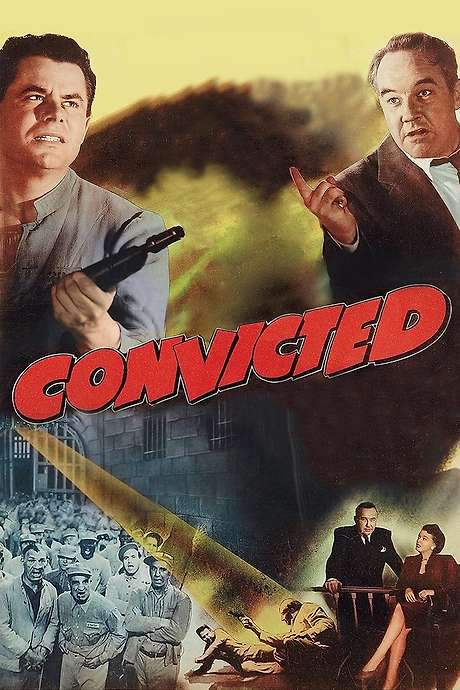
Convicts 4 (1962) movie poster

Timeline

Convicts 4 (1962) Timeline Explained – Every Event in Order

Release, runtime and language
1962 · 105 mins · English
Directed by
Millard Kaufman
Starring
Rod Steiger, Stuart Whitman, Vincent Price, Jack Kruschen, Broderick Crawford, Warren J. Kemmerling

After his death sentence is reduced to life, John Resko is moved from Sing‑Sing to Dannemora. With the assistance of a compassionate guard, he finds purpose behind bars, transforms into a rehabilitated inmate and discovers a talent for painting, eventually becoming a successful artist.

On this page (5)
  1. 1 Events in order (11)
  2. 2 Timeline questions answered
  3. 3 Movie threads
  4. 4 Movies like Convicts 4
  5. 5 Every angle

11 events in order · contains spoilers

Convicts 4 Timeline: Events in Chronological Order

Every key event of Convicts 4 (1962) in order, scene by scene, with when and where it takes place. Use it to untangle flashbacks, time jumps and parallel storylines, to refresh your memory before the sequel or to find the exact scene you are thinking of.

  1. Christmas 1931: A desperate attempt for a teddy bear

    John Resko, penniless, enters a shop to buy a teddy bear for his newborn daughter. He pleads with the shopkeeper to let him pay later, hoping to make a Christmas miracle possible. When the shopkeeper refuses, Resko grabs a gun from the till and points it at him, leading to a fatal confrontation where the shopkeeper is shot. The moment marks the descent from desperation to irreversible crime.

    When
    Christmas 1931
    Where
    shop
  2. Death sentence issued

    The murder of the shopkeeper lands Resko in serious trouble as the court convicts him for the killing. He is sentenced to the electric chair at the age of eighteen, a punishment that looms over his head. The ruling reflects the harsh justice of the time and his precarious future. The fate of a man in his youth is sealed by a single, violent act.

    When
    1931
    Where
    courtroom
  3. Governor's pardon reframe: life imprisonment

    At the last minute, the governor grants a pardon that spoils him from the electric chair. Instead, Resko receives a life imprisonment sentence. The dramatic reversal keeps him locked away but under a different, prolonged captivity. The legal drama marks the start of a new chapter behind bars.

    When
    1931-1932
    Where
    state penitentiary
  4. Prison life and personal losses

    Resko struggles to adjust to the brutal routine of confinement. While he grapples with isolation, he learns that his wife has left him, compounding his sense of loss. His father dies heroically while rescuing a drowning child to atone for the life that was taken, deepening the tragedy. The emotional toll becomes a constant companion in prison.

    When
    1930s-1940s
    Where
    prison
  5. First escape attempt

    Resko makes a bold bid to escape from the prison walls, testing his nerve and resolve. The plan is risky and fraught with danger, reflecting his unwillingness to surrender to a life behind bars. The attempt ends in failure, but it plants the seed for a second, more determined effort. The experience hardens him and shapes his subsequent choices.

    When
    mid-1930s
    Where
    prison
  6. Second escape attempt

    Undeterred by the first failure, Resko makes a second escape attempt, pushing the limits of custody and control. He remains focused on reclaiming his freedom, even as guards tighten security. The unsuccessful bid underscores the brutality of the system and his resilience. The cycle of confinement continues to define his early years in prison.

    When
    late-1930s
    Where
    prison
  7. Friendships and a support network

    In the harsh routine of prison life, Resko is befriended by fellow inmates like Iggy and Wino. They help him pass the long, monotonous days and offer glimpses of camaraderie amid hardship. These bonds become a crucial emotional lifeline as he navigates confinement. The friendships illustrate how people survive prison together.

    When
    1930s-1940s
    Where
    prison
  8. Art as a lifeline

    Resko discovers art as a hobby, using drawing and painting to cope with incarceration. His work begins to carry a quiet dignity that contrasts with his grim surroundings. The act of creation gives him a sense of purpose beyond survival. The artistic outlet becomes a pathway to recognition even within the prison walls.

    When
    late-1940s
    Where
    prison workshop
  9. Carl Carmer sees promise

    An art critic, Carl Carmer, encounters Resko's drawings and recognizes real promise in his talent. Carmer's interest provides validation that his art could transcend confinement. The praise offers hope and motivation for continued work behind bars. It marks the rare moment when prison art enters the realm of public appreciation.

    When
    late-1940s
    Where
    prison workshop
  10. Release after 18 years

    In 1949, after serving 18 years, Resko is released from prison. The moment of freedom is charged with emotion as years of confinement finally give way to a new beginning. He steps into the world with the weight of his past yet the possibility of rebuilding his life. The long road outside begins at the prison gates.

    When
    1949
    Where
    prison gates
  11. Family reunion at last

    Resko is greeted by his daughter and granddaughter as he steps into the outside world. The reunion provides a poignant contrast to his years of isolation. Their presence signals the start of healing and the possibility of a new family life. The film closes on the hope of rebuilding what was lost.

    When
    1949
    Where
    prison gates / outside

Last updated: March 05, 2026 at 18:41

Was this helpful?

Timeline questions answered

Convicts 4 Timeline Explained: Your Questions Answered

When does it happen, and why in that order? The questions people ask about the chronology of Convicts 4 (1962): time jumps, flashbacks, cause and effect between scenes and the correct order of events, each answered with spoilers.

Q1

Why did John Resko kill the shopkeeper?

John Resko killed the shopkeeper during a desperate attempt to get a teddy bear for his newborn daughter on Christmas 1931. With no money, he begged the shopkeeper to let him pay later, but when the man refused, Resko grabbed a gun from the till and pointed it at him. During the confrontation, the shopkeeper lunged and a shot was fired, killing him. It was a moment of desperation that turned irreversible.

  • john resko
  • shopkeeper
  • teddy bear
  • christmas
  • murder
Q2

Why was John Resko's death sentence changed to life imprisonment?

At the last minute, the governor intervened and commuted Resko's death sentence to life imprisonment. This dramatic reversal saved him from the electric chair, which he was facing at age 18 for the murder of the shopkeeper. The governor's pardon allowed Resko to remain alive but kept him incarcerated for decades.

  • death sentence
  • electric chair
  • governor pardon
  • life imprisonment
Q3

What happened to Resko's wife and father while he was in prison?

While Resko was in prison, his wife left him, and his father died heroically. His father drowned while rescuing a child who was in danger, an act he performed to atone for the life that was taken during the shopkeeper shooting. Both losses added to Resko's emotional burden during his incarceration.

  • wife left
  • father died
  • drowning child
  • atonement
Q4

Why did John Resko try to escape from prison?

John Resko made two escape attempts because he could not accept a life behind bars, especially after learning his wife had left him and his father had died. The brutal routine of confinement and his youth drove him to risk dangerous escape bids, though both attempts ultimately failed.

  • escape attempts
  • prison
  • freedom
  • desperation
Q5

How did John Resko discover his talent for painting?

During his long incarceration, Resko took up art as a hobby to pass the time and cope with the isolation of prison life. His drawings and paintings in the prison workshop caught the attention of art critic Carl Carmer, who recognized genuine talent in Resko's work and believed in his potential.

  • painting
  • art
  • prison workshop
  • carl carmer
  • talent
Q6

Who was Carl Carmer and what was his role in Resko's story?

Carl Carmer was an art critic who encountered Resko's paintings in the prison workshop and recognized his artistic promise. Carmer's validation and belief in Resko's talent provided the prisoner with hope and motivation during his final years behind bars, marking the rare moment when prison art received public recognition.

  • carl carmer
  • art critic
  • painting
  • validation
  • recognition
Q7

How long was John Resko in prison?

John Resko spent 18 years in prison, from 1931 until his release in 1949. He was originally sentenced to death at age 18, which was commuted to life imprisonment, and eventually freed after nearly two decades behind bars.

  • 18 years
  • release
  • 1949
  • prison sentence
Q8

Did John Resko reunite with his daughter after release?

Yes, when Resko was released from prison in 1949, his daughter and granddaughter were waiting for him at the prison gates. The reunion provided an emotional conclusion to his story, representing the possibility of rebuilding what was lost during his years of incarceration.

  • daughter
  • granddaughter
  • reunion
  • release
  • family
Q9

Why was the teddy bear so important to John Resko?

The teddy bear represented Resko's desperate attempt to provide for his newborn daughter despite being penniless. On Christmas 1931, he wanted to give her a gift but had no money, which drove him to enter the shop and ultimately commit the crime that changed his life forever.

  • teddy bear
  • christmas
  • daughter
  • desperation
  • poverty
Q10

Who were Iggy and Wino in the movie?

Iggy and Wino were fellow inmates who befriended Resko during his time in prison. They helped him cope with the harsh reality of incarceration by offering companionship and helping pass the long, monotonous days. These friendships became crucial emotional support as Resko navigated life behind bars.

  • iggy
  • wino
  • fellow inmates
  • friendship
  • prison life
Q11

What was prison life like for Resko in Dannemora?

Resko struggled to adjust to the brutal routine of confinement in prison. He endured long stretches in solitary confinement following his escape attempts and faced the emotional toll of isolation, personal losses, and the constant struggle for survival. Despite the hardships, he found moments of camaraderie through friendships with other inmates.

  • dannemora
  • solitary confinement
  • prison routine
  • hardship

Movie threads

More Movies Like Convicts 4, by Mood & Story

Curated lists built around what makes Convicts 4 tick: the same mood, the same kind of story or the same emotional payoff. Each list explains why these movies belong together.

Movies about artistic redemption like Convicts 4

Characters find salvation and a new identity through creative expression. If you enjoyed Convicts 4, explore more movies where characters find salvation and a new purpose through art. These films share a hopeful tone and focus on rehabilitation, showcasing similar journeys of self-discovery and creative triumph over adversity.

  • redemptive
  • hopeful
  • reflective
  • inspiring
  • somber
  • transformative
  • Tone: hopeful, reflective
  • Pacing: steady, character-driven
Why these movies?

The story pattern: The narrative follows a character at their lowest point who discovers an artistic outlet. Through mentorship and personal struggle, they channel their pain into creation, leading to personal growth, recognition, and ultimately, a form of redemption that changes the course of their life.

Why they belong together: These films are grouped by their central theme of art as a catalyst for personal salvation. They share a hopeful, reflective mood, a steady pacing that allows for character growth, and a focus on the transformative power of creativity within a constrained or difficult environment.

Gritty prison rehabilitation dramas similar to Convicts 4

Stories of inmates seeking a second chance and personal transformation behind bars. Fans of Convicts 4 will appreciate these similar movies about life in prison focused on rehabilitation and second chances. Discover more gritty but hopeful dramas that explore the justice system and an inmate's difficult journey toward a better life.

  • gritty
  • hopeful
  • somber
  • redemptive
  • isolated
  • dramatic
  • Tone: hopeful, somber
  • Pacing: steady
Why these movies?

The story pattern: The plot centers on a convicted individual navigating the brutal prison environment. A key relationship, often with a guard or mentor, helps them find a constructive path. The story chronicles their internal struggle, small victories, and ultimate rehabilitation, challenging the notion that people cannot change.

Why they belong together: These movies share a specific world (the prison system) and a core thematic focus on redemption and the possibility of change. They typically balance a gritty, somber atmosphere with a steady, hopeful narrative about overcoming one's past.

If you liked this

Movies Like Convicts 4

Similar movies to Convicts 4: the same genre, themes or kind of story. Each one comes with its own plot summary, timeline and ending explained.

Browse all movie summaries

Every angle

Convicts 4 (1962) Explained: Plot, Timeline & Characters

Everything about Convicts 4 in one place: what happens in the plot summary, the timeline in chronological order, the characters and meaning and a spoiler-free summary. What's After the Movie adds the cast, box office and post-credit scenes.

Coming soon on iOS and Android

The Plot Explained Movie Summary App

Plot summaries, endings explained and timelines on your phone. Catch up on any movie in minutes, save your favorites and never miss a twist again.

Be the first to know when we launch. Your email stays private, always.

Learn more about the app