Year: 2021
Runtime: 134 min
Language: English
Director: Andrei Konchalovsky
Echo Score: 84Budget: $2M
In 16th century Florence, the renowned sculptor Michelangelo Buonarroti faces a complex journey as he strives for artistic and financial stability. The biographical drama explores the challenges he encounters while working on significant commissions, navigating the intricacies of family relationships, and dealing with the influence of the papacy. Michelangelo's unwavering pursuit of his creative vision clashes with the demands of his patrons and the pressures of his personal life, forcing him to question his own moral boundaries.
Warning: spoilers below!
Haven’t seen Sin yet? This summary contains major spoilers. Bookmark the page, watch the movie, and come back for the full breakdown. If you're ready, scroll on and relive the story!
Read the complete plot breakdown of Sin (2021), including all key story events, major twists, and the ending explained in detail. Discover what really happened—and what it all means.
Participating in a small theater group comprised of fellow inmates provides Divine G, who is serving time at Sing Sing Correctional Facility for a crime he didn’t commit, with a renewed sense of purpose. The group is working on an original production titled Breakin’ the Mummy’s Code, created through the Rehabilitation Through the Arts (RTA) program, which harnesses the power of theater as a method for rehabilitation. Under the guidance of theater director Brent Buell, Divine G, recognized for his incredible acting talent and emotional depth, takes on the roles of both lead playwright and performer. He is driven by a fervent desire to prove his innocence and reclaim his freedom while nurturing his love for the performing arts.
As preparations for the upcoming production commence, Divine G becomes involved in recruiting new members for their theater group, which includes Divine Eye, a tough and combative inmate with a challenging demeanor. Initially, Divine Eye scoffs at the idea of acting, dismissing it as a trivial and deceitful pursuit. However, Divine G views theater as a transformative process that enables individuals to connect with their inner selves. A conflict arises between the two men when they cannot agree on what genre their next play should take; Divine G leans towards a more dramatic approach to showcase his acting skills, while Divine Eye pushes for a lighthearted comedy, garnering support from the majority of the prisoners. The rivalry is further complicated when Divine Eye auditions for the sole dramatic part in the comedy, which deeply frustrates Divine G, who struggles to understand this apparent hypocrisy.
As the weeks pass, the inmates engage in various acting exercises led by Buell, aimed at helping them tap into their emotions. Divine G excels in these activities, demonstrating vulnerability that inspires his peers, while Divine Eye grapples with connecting to his emotions or fully embracing the art of acting. A pivotal moment occurs when the two have a heart-to-heart discussion about their personal lives, allowing Divine Eye to slowly begin taking the program seriously. His acting ability improves significantly, earning him the respect of his peers, including Divine G and Buell.
Eventually, the RTA group presents a draft of their play to the prison’s board of executives to seek approval for their production. Against their expectations, the board greenlights the play despite a somewhat chaotic and inconsistent performance. However, tragedy strikes when Mike Mike, a fellow inmate with whom Divine G shares a close bond, unexpectedly passes away, leaving him grieving deeply. During his subsequent parole hearing, Divine G delivers a heartfelt monologue about the transformative impact of acting in his life, only to be caught off guard when the interviewer questions whether he is merely performing at that moment. While Divine Eye’s parole is approved, Divine G’s request is denied.
As the dress rehearsal approaches, tensions within the group escalate, leading Divine G to have a breakdown. Frustrated and disillusioned by what he perceives as a lack of commitment from his fellow prisoners, he harshly criticizes their efforts and storms out, effectively distancing himself from the group. In the following days, Divine G retreats inwardly, until Divine Eye reaches out, fostering reconciliation. After a sincere apology from Divine G for his earlier outburst, Divine Eye assures him that he’s always welcome back into the fold. Soon after, Divine Eye is released from the facility.
A year later, Divine G finally passes his parole hearing and is welcomed outside the prison by Divine Eye, marking a poignant reunion filled with hope and optimism for the future. The film concludes with actual footage from the RTA program at Sing Sing, featuring the real actors who portrayed themselves in the film performing in prior productions during their imprisonment. This powerful ending underscores the profound effect that the theater, and their shared experiences, have had on their journeys of redemption and self-discovery.

Last Updated: February 12, 2025 at 12:12
Discover curated groups of movies connected by mood, themes, and story style. Browse collections built around emotion, atmosphere, and narrative focus to easily find films that match what you feel like watching right now.
Stories where creative expression becomes a powerful force for personal transformation.If you enjoyed the uplifting story of personal growth through art in Sin, explore more movies like it. This collection features inspiring dramas and biopics where characters use creativity as a tool for healing, proving that art can be a powerful force for redemption and change.
Stories in this thread follow a character facing significant hardship—be it incarceration, grief, or personal crisis—who discovers an artistic outlet. The narrative focuses on their struggle to master the craft, the relationships formed through this process, and how creating art ultimately leads to their emotional or physical liberation, often culminating in a public demonstration of their talent that symbolizes their inner change.
These films are grouped together because they share a core belief in the transformative power of art. They balance emotional weight with a hopeful, inspiring tone, focusing on character-driven growth rather than external conflict. The pacing is typically steady, allowing the audience to invest in the protagonist's journey toward catharsis.
Unlikely bonds form in restrictive settings, offering solace and strength.Looking for more stories about friendship and community like in Sin? This selection highlights films where characters in challenging, confined settings form a found family. These movies focus on the power of human connection to provide hope and strength against the odds, perfect for fans of character-driven ensemble dramas.
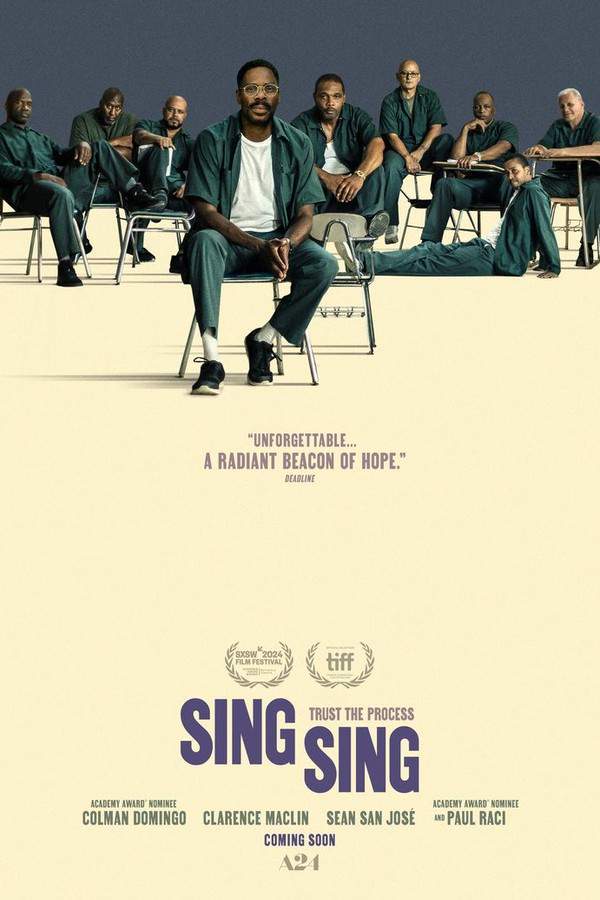

The narrative pattern centers on a closed community where a new activity or a charismatic figure brings a diverse group together. Initial conflicts and personal struggles give way to collaboration and mutual understanding. The central drama often revolves around protecting this fragile community from external pressures or internal betrayals, with the core theme being that the bonds formed are as vital as any tangible goal.
These movies are connected by their focus on the dynamics of a found family within a high-stakes, confined setting. They share a mix of melancholic and hopeful tones, balancing the grimness of the environment with the warmth of human connection. The emotional journey is typically medium to heavy, with a steady pacing that allows relationships to develop authentically.
Don't stop at just watching — explore Sin in full detail. From the complete plot summary and scene-by-scene timeline to character breakdowns, thematic analysis, and a deep dive into the ending — every page helps you truly understand what Sin is all about. Plus, discover what's next after the movie.
Track the full timeline of Sin with every major event arranged chronologically. Perfect for decoding non-linear storytelling, flashbacks, or parallel narratives with a clear scene-by-scene breakdown.
Discover the characters, locations, and core themes that shape Sin. Get insights into symbolic elements, setting significance, and deeper narrative meaning — ideal for thematic analysis and movie breakdowns.
Get a quick, spoiler-free overview of Sin that covers the main plot points and key details without revealing any major twists or spoilers. Perfect for those who want to know what to expect before diving in.
Visit What's After the Movie to explore more about Sin: box office results, cast and crew info, production details, post-credit scenes, and external links — all in one place for movie fans and researchers.
Discover movies like Sin that share similar genres, themes, and storytelling elements. Whether you’re drawn to the atmosphere, character arcs, or plot structure, these curated recommendations will help you explore more films you’ll love.
Sin (2021) Scene-by-Scene Movie Timeline
Sin (2021) Movie Characters, Themes & Settings
Sin (2021) Spoiler-Free Summary & Key Flow
Movies Like Sin – Similar Titles You’ll Enjoy
Pasolini (2019) Complete Plot Breakdown
Strictly Sinatra (2001) Spoiler-Packed Plot Recap
Sing Sing (2024) Full Movie Breakdown
Tainted Souls (2017) Movie Recap & Themes
Sin (2019) Film Overview & Timeline
Sin (2003) Full Summary & Key Details
Sinners (2002) Story Summary & Characters
Sinners (1990) Detailed Story Recap
Caravaggio (1986) Spoiler-Packed Plot Recap
He Who Is Without Sin (2020) Story Summary & Characters
Brother Sun, Sister Moon (1972) Ending Explained & Film Insights
The Sin of Madelon Claudet (1931) Full Summary & Key Details
Man, Woman and Sin (1927) Full Movie Breakdown
Souls of Sin (1949) Story Summary & Characters
The Agony and the Ecstasy (1965) Spoiler-Packed Plot Recap