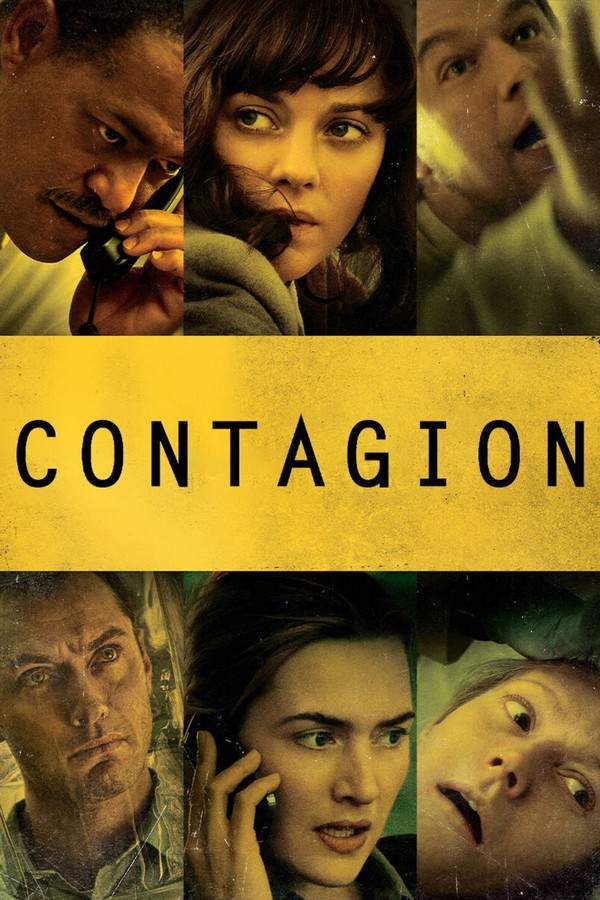
In a world that feels both hyper-connected and painfully vulnerable, a routine business trip becomes the catalyst for a crisis that sweeps across continents. When a returning traveler falls ill with an inexplicable fever, the subtle threat of an unseen pathogen quickly erupts into a global health emergency. The film unfolds against a backdrop of crowded airports, bustling city streets, and sterile laboratories, all rendered with a stark, documentary-like realism that makes the impending danger feel eerily plausible. The tone is urgent yet methodical, balancing the cold precision of scientific investigation with the raw anxiety rippling through everyday life.
Beth Emhoff is the first person we meet grappling with the mysterious symptoms, and her experience pulls her family into the unfolding nightmare. Mitch, her husband, is forced to confront an unimaginable reality as he strives to protect his teenage daughter while navigating the bewildering scramble of authorities. Parallel to the personal turmoil, Dr. Ellis Cheever leads a team at the Centers for Disease Control, orchestrating a frantic race to identify the virus and its transmission routes. Meanwhile, Dr. Erin Mears is dispatched to a hotspot, representing the front-line medical response that must balance hope with harsh, often heartbreaking constraints. Across the ocean, Dr. Leonora Orantes of the World Health Organization coordinates an international effort, highlighting the fragile cooperation between nations when faced with a common, invisible enemy.
Adding another layer to the crisis is Allen, a conspiracy-theorist turned blogger whose online musings amplify public fear and spread misinformation. His presence underscores how, in the modern age, panic can travel as swiftly as any pathogen, turning ordinary conversations into sources of doubt and distrust. The film captures the chaotic information overload, where official briefings clash with sensational rumors, creating a landscape where truth is as hard to pin down as the virus itself.
Through interwoven personal stories and a meticulously crafted, almost clinical visual style, the narrative explores humanity’s vulnerability and resilience. It asks what it means to confront a threat that knows no borders, to maintain empathy amid isolation, and to rebuild trust when the very foundations of society tremble. The result is a tense, thought-provoking meditation on the delicate balance between scientific rigor and human emotion in the face of an unprecedented outbreak.