Year: 2012
Runtime: 78 mins
Language: English
Director: Neil Jones
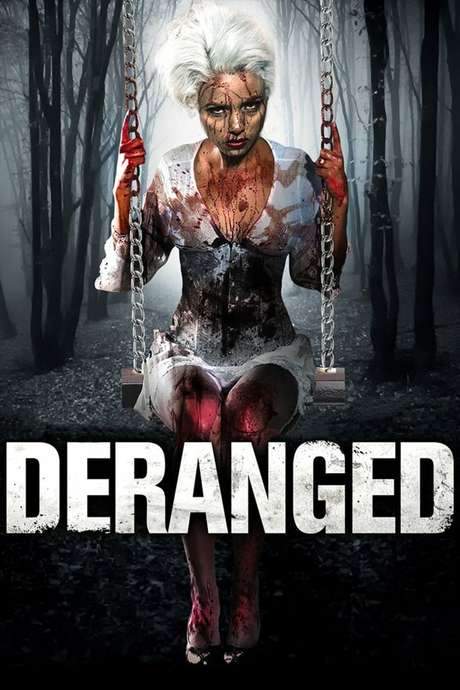
Four friends embark on a bachelorette party weekend to a remote country house in rural Spain. What begins as a celebratory getaway quickly turns sinister when the host is attacked, and the guests find themselves in escalating danger. As one by one, they become targets, the friends must uncover the killer's identity and fight for their survival, realizing that the weekend will be much more perilous than they could have imagined.
Find where to stream, rent, or buy Deranged (2012) in the US with current JustWatch availability, up-to-date pricing, and platform listings for subscription, rental, and digital purchase options.
Warning: spoilers below!
Haven’t seen Deranged yet? This summary contains major spoilers. Bookmark the page, watch the movie, and come back for the full breakdown. If you're ready, scroll on and relive the story!
Read the complete plot breakdown of Deranged (2012), including all key story events, major twists, and the ending explained in detail. Discover what really happened, and what it all means.
In a tense national crisis, the life of Jae-hyuk, a former professor with a PhD in biochemistry who now works as a pharmaceutical sales representative after a devastating financial loss, spirals into a race against time. His brother Jae-pil, a detective who carries guilt over how he squandered Jae-hyuk’s savings, teams up with him as a deadly outbreak unfolds. Across Seoul and beyond, a string of mysterious deaths tied to a brutal hunger and thirst drives the story forward as the Han River becomes a haunting backdrop for a far-reaching biological nightmare: a fungus-like parasite named Yeongasi that can manipulate the human brain.
The trouble begins with the discovery of bodies washing up along rivers nationwide. Victims appear malnourished and incongruously gaunt, yet their bodies surface with no obvious external injuries—until the parasitic worms are seen, sometimes swimming near the corpses, revealing a horrifying mutation that allows these horsehair-like organisms to infect humans. As the Ministry of Health identifies the culprits, the public gaze shifts to a potential solution in the form of a drug called Windazole, rumored to cure those infected. However, the use of any anthelmintic prescription proves perilous, intensifying pain and ultimately leading to death for many who seek relief.
In the scramble to save lives, the government appeals to ChoA Pharmaceuticals, the company at the center of Windazole’s creation. Yet the tale of the medicine is tangled in corporate mismanagement since the company’s acquisition by an investment group. Officials demand transparency about the drug’s composition, but the CEO resists, citing stockholders who refuse to disclose the recipe. As the outbreak worsens—more people rush to hospitals, pharmacies overflow with desperate customers, and rivers become seemingly endless corridors of panic—the investigation digs deeper into the seed of the crisis.
A pivotal shift arrives when Jae-pil uncovers evidence pointing to the workers at ChoA who engineered the crisis as a calculated stock manipulation scheme. He tracks down a former member of the research team and forces a confession: years earlier, ChoA’s researchers studied Yeongasi to unlock the protein that could control the brain, hoping to unlock cures for diseases like Alzheimer’s. They developed a mutant version using mammals as hosts, but the company’s sale scattered the team. Disaffected researchers reunite to unleash the parasite, artificially inflating demand by staging a public display of treatment, while stock is bought up and profits soar. The plan—to store thousands of doses and pressure governments into accepting windfall deals—works until a confrontation in a hidden storage facility.
When Jae-hyuk and Jae-pil finally secure access to the remaining drugs, a fatal turn occurs: the door to the storage is sealed and the building is set ablaze. The two survive, but their informant is murdered by a mysterious figure who later reveals himself to be the head of the research team in disguise, exposing the core betrayal. With the drug burned and the conspirators scattered overseas, the Prime Minister confronts an almost unstoppable temptation: a government purchase of ChoA that would reveal the drug’s recipe and allow mass production. The offer, priced at an exorbitant sum, is rejected by most officials, yet perilous pressures linger.
In the midst of the chaos, Jae-hyuk’s scientific instincts kick in. He identifies that, even without Windazole itself, a drug containing the same active ingredient could treat the infected. This realization prompts a broader collective effort: pharmaceutical companies rush to synthesize an effective remedy, leveraging chemistry to combat a crisis that had seemed almost unsalvageable. The country begins a slow transition from panic to a coordinated medical response as new treatments emerge and save countless lives.
The film closes on a personal note. Jae-hyuk and his family find a moment of respite at an amusement park, where he muses about vacationing overseas—an attempt to escape a world where Yeongasi might surface anywhere. His wife teases whether distant countries harbor the same threat, and he offers a tense, cautious smile. The moment is shattered by a sudden focus on a dead body floating in New York Harbor, a chilling reminder that the consequences of the outbreak may extend beyond national borders and that the fight against Yeongasi could be far from over.
The production features a supporting cast that lends additional texture to the story, including Anthony Craig Fairbrass and Silvia Victoria Broom in secondary roles, enriching the human dimension of a thriller built around fear, ethics, and resilience. The narrative remains grounded in its neutral, investigative tone, presenting a multilayered portrait of a society pushed to the brink by a deliberate manipulation of science and medicine, and it ultimately centers on the ingenuity of individuals who refuse to surrender to a hidden, calculated catastrophe.
Last updated: October 09, 2025 at 16:10
Explore frequently asked questions about Deranged (2012) with spoiler-rich answers covering the full plot summary, major story beats, character motivations, hidden details, and ending meaning. This movie summary FAQ helps explain confusing scenes, plot twists, and narrative decisions in clear, searchable detail.
Yeongasi is a parasitic worm that can hijack the human brain. When the parasite matures inside a host, it triggers extreme hunger and thirst, driving victims to jump into water to release the worms. The parasites essentially manipulate the brain's signals to force hosts to seek water, where the worms can then emerge and spread to new victims.
Early scenes of victims found near rivers with no external injuries hint at the parasite's water-related life cycle.
ChoA Pharmaceuticals workers orchestrated the outbreak as a stock manipulation scheme. The original research team had discovered Yeongasi's brain-control protein while studying ways to treat diseases like Alzheimer's. When the company was sold, disaffected researchers reunited to unleash a mutant version of the parasite, artificially inflating demand for their treatment drug. They bought up stock before the outbreak and planned to profit by selling thousands of doses to governments at inflated prices.
The rush to hospitals and pharmacies for Windazole is shown as suspiciously coordinated early in the film.
Windazole was an anthelmintic drug developed by ChoA Pharmaceuticals that could supposedly cure Yeongasi infection. However, the company had deliberately created a shortage, only a limited supply existed because production equipment was mismanaged after the company was acquired. When patients took other anthelmintic drugs, they experienced extreme pain and often died, making Windazole seem like the only hope.
The government's demand for the drug's chemical composition hints that ChoA was withholding a cure they possessed.
Jae-hyuk realized that pharmaceutical companies could synthesize a drug using the same active ingredient as Windazole without needing the original formula. His scientific background in biochemistry allowed him to identify that an alternative compound with identical effects could be created. This breakthrough enabled other pharmaceutical companies to rapidly develop treatments, saving countless lives even without access to the limited Windazole supply.
His background as a former biochemistry professor is established early, giving him the expertise needed for this realization.
With the outbreak spiraling out of control and the conspiracy about to be exposed, the CEO proposed a government buyout worth 5 billion won to reveal Windazole's recipe. This was a desperate attempt to maintain control over the drug's formula while profiting from the crisis. Most officials refused the exorbitant price, but the Prime Minister was about to sign before the truth of the scam was fully exposed.
The CEO's refusal to disclose the formula during public hearings foreshadows his later desperation to control the outcome.
Other anthelmintic drugs caused agonizing deaths rather than cures because they killed the mature Yeongasi parasites inside patients, but the dying worms released toxins that proved fatal. Windazole worked differently, it apparently eliminated the parasites without triggering this lethal reaction, though the exact mechanism was never fully disclosed since the company kept the formula secret.
The first patient who claimed Windazole cured him sparks the national frenzy, but his survival remains mysterious.
When the brothers gained access to the storage facility where Windazole was kept, someone set the building on fire and sealed the door to trap them inside. They managed to escape the flames, but their informant, a former researcher who helped them, was murdered by the head of the original research team in disguise. The brothers survived through sheer determination and quick thinking despite being cornered.
The investigation has been building toward a confrontation at the storage facility throughout the second act.
The final scene reveals a body floating in New York Harbor, implying that Yeongasi has spread beyond Korea to the United States. This chilling image suggests the parasite is now a global threat and that the危机 is far from over. The brothers' hope for an overseas vacation is undercut by the realization that nowhere is safe from the parasite.
The family's discussion about vacationing overseas and whether foreign countries have the same drugstores plants the seeds for this ominous revelation.
Jae-pil investigated the deaths connected to ChoA Pharmaceuticals and discovered evidence linking company workers to the outbreak. He tracked down a former researcher who confessed that the original team had engineered Yeongasi to manipulate stock prices. This confession revealed the entire scheme: the researchers deliberately released the parasite to create demand for their treatment drug.
Jae-pil's guilt over losing his brother's savings in a bad investment drives his determination to investigate.
The murdered researcher who helped Jae-pil was revealed to be the head of the original Yeongasi research team and a close associate of the ChoA CEO. The CEO had worked with these researchers before the company was sold and was complicit in the stock manipulation scheme. When the conspiracy unraveled, the CEO tried to profit by offering the government a buyout, essentially monetizing the crisis he helped create.
The CEO's reluctance to disclose Windazole's formula during hearings hints at his deeper involvement.
Discover curated groups of movies connected by mood, themes, and story style. Browse collections built around emotion, atmosphere, and narrative focus to easily find films that match what you feel like watching right now.
Trapped in isolation, friends must fight an unknown threat to survive.If you liked the tense isolation and fight for survival in Deranged, these movies feature groups trapped in remote settings. Discover similar horror stories where secluded getaways turn into nightmares, perfect for fans of paranoid, survival-focused thrillers.
These narratives typically begin with a group seeking relaxation or celebration in an isolated location, only to have their escape turn into a trap. The story unfolds as an external threat emerges, forcing the characters to rely on each other and uncover secrets while their numbers dwindle.
They are grouped by the core experience of paranoia and vulnerability that comes from being cut off from help. The shared mood is one of claustrophobic dread, investigative desperation, and the tension of a group dynamic under extreme stress.
Uncovering a sinister corporate plot leads to a sobering, bittersweet victory.For viewers who enjoyed the complex corporate mystery and sobering conclusion of Deranged. These movies feature similar investigations into sinister corporate plots, blending scientific ethics with high-stakes survival for a gripping and thought-provoking experience.
The plot follows investigators or victims piecing together clues that point to a large, powerful entity covering up a dangerous truth. The journey is one of frantic discovery against a faceless opponent, culminating in a resolution that stops the immediate threat but often reveals the problem is far larger than initially thought.
They share a narrative structure of unraveling a complex conspiracy, a tone of serious investigative tension, and an ending that feels bittersweet or pyrrhic. The emotional weight comes from confronting systemic betrayal and the fragility of trust.
Don't stop at just watching - explore Deranged in full detail. From the complete plot summary and scene-by-scene timeline to character breakdowns, thematic analysis, and a deep dive into the ending - every page helps you truly understand what Deranged is all about. Plus, discover what's next after the movie.
Track the full timeline of Deranged with every major event arranged chronologically. Perfect for decoding non-linear storytelling, flashbacks, or parallel narratives with a clear scene-by-scene breakdown.
Discover the characters, locations, and core themes that shape Deranged. Get insights into symbolic elements, setting significance, and deeper narrative meaning - ideal for thematic analysis and movie breakdowns.