Plot Explained Spoilers guaranteed!
Plot Explained

Browse by genre

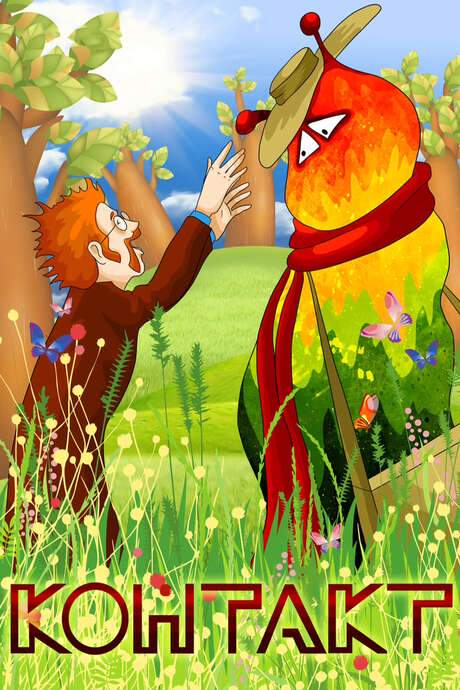
Contact (1978) movie poster

Plot Summary

Contact (1978) Plot Summary Explained

Release, runtime and language
1978 · 10 mins · Russian
Loading streaming availability…
Directed by
Vladimir Tarasov
Starring
Leonid Chizhik

A man walking on the fields encounters an alien visitor from outer space.

On this page (7)
  1. 1 Where to watch
  2. 2 What happens: full plot
  3. 3 Plot questions answered
  4. 4 Movie threads
  5. 5 Movies like Contact
  6. 6 Categories
  7. 7 Every angle
Loading streaming availability…

Full plot summary · contains spoilers

What Happens in Contact: Full Plot Summary

The whole story of Contact (1978) explained, from the opening scene to the final frame: every key event, every twist and what it all adds up to. Read it as a quick recap before the sequel, to check a scene you missed, or to finally understand what really happened.

On a bright summer day, the painter Leonid Chizhik wanders the rolling countryside, taking in the world with a gentle curiosity. He pauses before a delicate butterfly, contemplating the cruelty of some people who might trap such a creature for a collection, but he chooses mercy instead, letting it drift on the warm breeze. A moment later, he watches a bird with the same quiet respect, refraining from pursuit and simply letting it fly free. As he climbs over a gentle hill, he discovers a pond so picturesque that he is overcome with joy and hurries toward the water to rest in its serene surroundings.

While he sits on the grass, softly humming a tune that will echo through the film’s silent language, a large spaceship lands nearby. An alien steps onto the scene, carefully observing the surroundings and trying to communicate by altering his appearance to resemble nearby animals and objects, and by making physical contact. The painter is frightened, and the fear intensifies as he loses his belongings one by one—boots, hat, scarf, smoking pipe, and paints—while he tries to flee. A fall from a cliff injures his leg, leaving him unable to move forward. The alien retrieves the scattered items as if to return them, yet the painter imagines the worst—that he might be caged or subjected to harm, much as some humans treat animals.

Unable to escape due to the injury, the painter shields his face, bracing for an ominous fate. The alien approaches and attempts to hum the same melody the painter sang earlier, though with several imperfect notes. Realizing that the visitor is not a threat, the painter bravely engages, and a tentative collaboration begins as he teaches the alien how to hum the tune. The two figures walk away together, hand in hand, their bond formed through shared touch, patience, and music.

This film unfolds without any spoken language; every exchange relies on music, gestures, and glances, while the alien also communicates through shapeshifting. Director Vladimir Tarasov uses this lack of dialogue to explore a theme of universal communication, presenting animation as “the Esperanto of all mankind.” The result is a quiet, contemplative journey that invites viewers to listen with more than their ears and to seek connection across differences. Through its serene pace and thoughtful imagery, the movie invites reflection on mercy, curiosity, and the ways we reach out to others beyond words.
Last updated: October 05, 2025 at 11:34

Was this helpful?

Plot questions answered

Contact Plot Explained: Your Questions Answered

The questions people ask most about Contact (1978): what happens in the confusing scenes, why the characters do what they do, the twists, hidden details and what the ending means. Each answer contains spoilers.

Q1

Why does the painter run away from the alien?

The painter runs because he is frightened by the alien's strange appearance and unpredictable behavior. The alien keeps shapeshifting into different forms, resembling animals and objects, and makes physical contact, which the painter interprets as threatening. His fear escalates when he loses his belongings during the chase, and he ultimately falls from a cliff edge, injuring his leg.

Foreshadowing: Earlier, the painter reflects on the cruelty of people who trap creatures for collections, setting up his expectation that the alien might harm him similarly.

  • fear
  • flight
  • alien encounter
  • communication failure
Q2

Why does the alien collect the painter's lost items?

The alien gathers the items, not to keep them, but to return them to the painter. This is later revealed when the alien approaches the injured painter with the belongings, showing an intention to restore what was lost rather than steal. The painter initially misreads this gesture as threatening, fearing he will be caged like a collected specimen.

  • alien intent
  • belongings
  • misunderstanding
  • return items
Q3

How do the painter and alien communicate without language?

They communicate through a combination of humming, gestures, physical touch, and the alien's ability to shapeshift. When the alien attempts to hum the same melody the painter was humming earlier, it creates a bridge for understanding. The painter then teaches the alien the correct notes, and they form a connection through shared music and gentle touch.

Foreshadowing: The painter's earlier humming establishes the musical theme that becomes the foundation for their communication.

  • communication
  • humming
  • shapeshifting
  • gestures
  • music
  • connection
Q4

Why does the alien try to hum the painter's tune?

The alien hums the melody as a peace offering and a way to connect. After observing the painter humming earlier, the alien attempts to mirror this sound to show familiarity and friendliness. Though the notes are imperfect, the attempt demonstrates effort to meet the painter on his own terms rather than forcing communication.

Foreshadowing: The painter hums softly while resting by the pond, establishing the tune that becomes their shared language.

  • melody
  • peace offering
  • imperfect attempt
  • connection
Q5

What causes the painter to overcome his fear of the alien?

The painter overcomes his fear when he realizes the alien is not a threat. After injuring his leg and being unable to flee, he watches the alien approach while attempting to hum his melody. The alien's imperfect but earnest attempt at the tune, borrowed from the painter's own moment of peaceful contemplation, signals genuine intent to connect rather than harm. This moment of musical vulnerability breaks through the painter's fear.

Foreshadowing: The painter's choice to spare the butterfly and bird demonstrates his capacity for mercy, which later allows him to extend that same grace to the alien.

  • trust
  • overcoming fear
  • musical connection
  • vulnerability
Q6

What is the significance of the butterfly and bird scenes at the beginning?

The butterfly and bird scenes establish the painter's character and his philosophy of mercy toward living creatures. He chooses not to capture either one, instead letting them go free. This sets up a thematic parallel: the painter fears the alien will treat him the way humans treat collected specimens, but he himself practices kindness. His capacity for mercy ultimately allows him to trust the alien when the creature reciprocates with gentle intent.

  • mercy
  • kindness
  • nature
  • character establishment
  • parallel
Q7

Why does the painter fall and injure his leg?

The painter falls during his panicked retreat because he is running blindly in fear while trying to escape. As he scrambles up a hill and toward a cliff edge, he loses his footing and slips, injuring his leg. This injury prevents him from continuing his escape, forcing him to confront the alien instead of running away.

Foreshadowing: The chase progresses from losing boots to hat to scarf, each loss marking a step closer to the cliff edge where the fall occurs.

  • injury
  • chase
  • cliff fall
  • escape attempt
Q8

Why does the alien keep changing its appearance?

The alien shapeshifts as an attempt to communicate with the painter. Since they share no common language, the alien tries to make itself understood by transforming into forms the painter recognizes, resembling nearby animals and objects. The shapeshifting is meant as a visual language, though the painter initially finds it frightening rather than communicative.

  • shapeshifting
  • communication attempt
  • visual language
  • alien methods
Q9

What does the ending signify with the painter and alien walking away together?

The ending signifies the successful establishment of universal communication and connection beyond words. By overcoming initial fear and misunderstanding, the painter and alien form a bond through shared music and touch. Walking hand in hand represents equality, trust, and the film's central theme: that connection is possible between any beings, regardless of their differences.
  • ending
  • connection
  • unity
  • universal communication
  • trust
Q10

Why does the alien approach instead of leaving when the painter is injured?

The alien approaches because it genuinely wants to help and connect, not harm. Despite the painter's earlier attempts to flee and his fearful reaction, the alien persists in its efforts to communicate. When it gathers the lost items and approaches the injured painter, it shows the alien's patience and determination to form a bond rather than take advantage of vulnerability.

  • patience
  • help
  • approach
  • no harm
Q11

Why does Contact have no spoken dialogue?

The film has no spoken dialogue as a deliberate creative choice to explore universal communication. Director Vladimir Tarasov uses animation as what he describes as "the Esperanto of all mankind," creating a visual, musical, and gestural narrative. Without words, the film relies on music, humming, facial expressions, and shapeshifting to tell its story, emphasizing that connection can transcend language barriers.

  • no dialogue
  • silent film
  • visual storytelling
  • universal language
  • directorial choice
Q12

What happens after the painter teaches the alien to hum correctly?

After the painter teaches the alien to hum in harmony, their communication shifts from tentative to collaborative. The alien's imperfect attempt breaks the ice, and the painter responds by guiding the alien through the melody. This act of teaching creates a mutual exchange, the painter offers knowledge, and the alien receives it willingly. This moment of shared music builds trust and marks the turning point where fear transforms into connection.

  • teaching
  • humming lesson
  • trust building
  • musical bond
Q13

Why does the painter imagine the alien will cage or harm him?

The painter imagines the worst because his only reference for the alien's behavior is how humans sometimes treat animals, capturing them, caging them, collecting them. Earlier in the film, he reflects on the cruelty of people who trap butterflies for collections. When the alien gathers his belongings, the painter projects this fear onto the encounter, assuming he will be trapped or harmed, not realizing the alien intends to return his items.

  • projection
  • fear of capture
  • misunderstanding
  • human-animal parallel

Movie threads

More Movies Like Contact, by Mood & Story

Curated lists built around what makes Contact tick: the same mood, the same kind of story or the same emotional payoff. Each list explains why these movies belong together.

Peaceful first contact movies like Contact

Stories about non-hostile meetings with extraterrestrials that inspire wonder. Explore more movies like Contact that depict gentle, awe-inspiring alien encounters. If you enjoyed the serene and hopeful approach to first contact in Contact, you'll find similar stories here focusing on wonder, curiosity, and nonverbal communication with extraterrestrial beings.

  • wondrous
  • contemplative
  • hopeful
  • serene
  • curious
  • awe-inspiring
  • Tone: hopeful, wondrous, contemplative
  • Pacing: slow, deliberate
Why these movies?

The story pattern: Stories in this thread typically begin with a discovery or arrival, moving from initial apprehension to a profound sense of connection. The narrative arc resolves fear into mutual understanding, often through shared experiences like music, art, or simple gestures, culminating in a hopeful resolution.

Why they belong together: Movies are grouped here for their shared focus on peaceful, non-aggressive alien interactions. They share a tone of hopeful curiosity, a deliberate pacing that allows for contemplation, and a central theme of bridging cosmic divides through empathy rather than force.

Meditative nonverbal storytelling movies like Contact

Films that rely on imagery and music to tell a gentle, emotional story. Find more films like Contact that use minimal dialogue and focus on visual and musical storytelling. If you liked the quiet, contemplative, and gentle narrative style of Contact, this collection offers similar movies where the story is conveyed through imagery, atmosphere, and emotion.

  • meditative
  • quiet
  • visual
  • serene
  • contemplative
  • atmospheric
  • Tone: serene, contemplative, gentle
  • Pacing: slow, atmospheric
Why these movies?

The story pattern: Narratives in this thread unfold through a series of evocative images and sensory details. The plot is often straightforward, allowing the mood and visual metaphors to carry the emotional weight. Character journeys are internal and expressed through action and observation, leading to quiet but impactful resolutions.

Why they belong together: These films are united by their expressive, non-verbal approach to narrative. They share a slow, deliberate pacing, a light emotional weight, and a contemplative mood. The focus is on creating a specific, serene atmosphere that resonates on an emotional and sensory level.

If you liked this

Movies Like Contact

Similar movies to Contact: the same genre, themes or kind of story. Each one comes with its own plot summary, timeline and ending explained.

Browse all movie summaries

Categories

Movie Lists Featuring Contact

Contact appears in these hand-built movie categories. Each one groups movies by a specific mood, theme or story type, with their plot summaries and endings explained.

View all movie categories

Every angle

Contact (1978) Explained: Plot, Timeline & Characters

Everything about Contact in one place: what happens in the plot summary, the timeline in chronological order, the characters and meaning and a spoiler-free summary. What's After the Movie adds the cast, box office and post-credit scenes.

Coming soon on iOS and Android

The Plot Explained Movie Summary App

Plot summaries, endings explained and timelines on your phone. Catch up on any movie in minutes, save your favorites and never miss a twist again.

Be the first to know when we launch. Your email stays private, always.

Learn more about the app