Plot Explained Spoilers guaranteed!
Plot Explained

Browse by genre

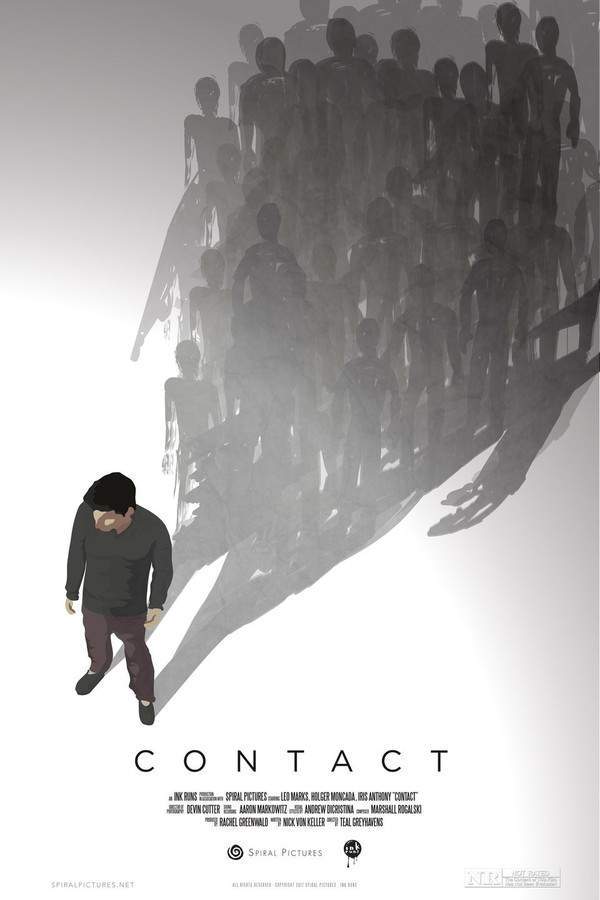
Contact (1997) movie poster

Plot Summary

Contact (1997) Plot Summary Explained

Release, runtime and language
1997 · 150 min · English
Directed by
Robert Zemeckis
Starring
Jodie Foster, Matthew McConaughey
Budget
$90M

Jason finds his world unraveling when his loved one vanishes without a trace. Driven by desperation, he embarks on a relentless search for answers. As he investigates, the lines between reality and illusion become increasingly blurred, forcing him to question everything he thought he knew. The search plunges him into a bewildering journey where the familiar transforms into the unknown.

On this page (7)
  1. 1 Where to watch
  2. 2 What happens: full plot
  3. 3 Plot questions answered
  4. 4 The book behind the movie
  5. 5 Movie threads
  6. 6 Movies like Contact
  7. 7 Every angle

Where to watch

Where to Watch Contact (1997)

Where can you watch Contact? Stream, rent or buy it in the US, including on Amazon Video, Apple TV Store and Fandango At Home: current JustWatch availability with up-to-date prices.

Streaming availability powered by JustWatch

Full plot summary · contains spoilers

What Happens in Contact: Full Plot Summary

The whole story of Contact (1997) explained, from the opening scene to the final frame: every key event, every twist and what it all adds up to. Read it as a quick recap before the sequel, to check a scene you missed, or to finally understand what really happened.

Dr. Ellie Arroway, played by Jodie Foster, is a dedicated researcher for the SETI program stationed at the Arecibo Observatory in Puerto Rico. Inspired by her deceased father Theodore's passion for science and communication, Ellie uses her expertise to listen for radio signals from the cosmos, driven by the hope of discovering extraterrestrial life. Alongside her colleague, Kent Clarke, who is visually impaired yet shares her enthusiasm for the pursuit of the unknown, Ellie navigates the challenges of her mission with the assistance of research assistant Fisher.

In her personal life, Ellie finds herself in a relationship with Christian philosopher Palmer Joss, portrayed by Matthew McConaughey. During their time together, Ellie opens up about her atheism and the complexities of her fears and thoughts. Palmer, a part-priest writing about technology's impact on disadvantaged communities, brings a different perspective to Ellie's logical worldview. However, their relationship becomes strained when serious topics arise, forcing Ellie to distance herself.

Challenges emerge as David Drumlin, the president's science advisor, decides to withdraw funding from SETI, deeming it a pointless effort. Fortunately, Ellie secures support from the enigmatic billionaire S. R. Hadden, allowing her team to continue their groundbreaking work at the Very Large Array in New Mexico. Fast forward four years to 1996, Ellie finally detects a signal featuring a sequence of prime numbers from the Vega star system, about 26 light-years away. Just when hope arises, Drumlin and National Security Council advisor Michael Kitz attempt to seize control of her findings, causing turmoil within the project.

The signal not only reveals the prime numbers but also a historical video—Adolf Hitler's inaugural address from the 1936 Olympics—hinting at the first signal strong enough to reach another star and signal back to Earth. As the project garners intense global interest, Ellie finds a trove of over 63,000 pages of indecipherable data among the signal. Hadden clandestinely meets with Ellie to discuss the cutting-edge designs for a mysterious machine meant for a single occupant, aiming to decode its purpose.

Initially met with skepticism, the government's position shifts when Palmer reenters the conversation, advocating for the construction of the machine. Public pressure results in the creation of this transport at the Kennedy Space Center, where an international committee convenes to select a candidate for the historic journey. Despite Ellie being a prime candidate, her atheism leads Palmer to express doubts, ultimately favoring Drumlin for the mission to represent humanity better.

An unexpected tragedy strikes when a religious extremist targets the new machine, claiming several lives, including that of Drumlin. However, amid despair, a dying Hadden reveals the existence of a second machine in Japan, allowing Ellie to seize the chance to be humanity's representative. In an emotional reunion, Palmer expresses his previous reluctance to support her candidacy due to his feelings for her.

As Ellie prepares for the journey, she enters the machine, which propels her into a whirlwind of interstellar travel through a series of wormholes. She witnesses a radio-like structure at Vega and encounters an advanced civilization. In an astonishing twist, she finds herself on a beach reminiscent of her childhood drawings, where she meets a figure taking the form of her father. This alien explains that their appearance and setting were intentionally chosen to ease communication with Ellie, marking the beginning of humanity's fate among cosmic beings.

Upon returning, Ellie is met with skepticism as she recounts her incredible experience. The mission control team insists that her journey lasted only moments, contradicting her assertion that she was gone for roughly 18 hours. This discrepancy raises doubts, and a Congressional Committee forms to challenge her claims, speculating on the possibility of a ruse. In an ironic twist, Ellie appeals to the committee to embrace her truth based on faith, reflecting an almost spiritual conviction about her experience.

As the dust settles, Kitz and White House aide Rachel Constantine privately ponder the implications of Ellie's testimony, which recorded nearly an entire day's worth of static despite the chaos. Finally, Ellie and Palmer reunite, finding solace and renewed purpose as she continues her work at the Very Large Array.

Last updated: November 03, 2024 at 12:29

Was this helpful?

Plot questions answered

Contact Plot Explained: Your Questions Answered

The questions people ask most about Contact (1997): what happens in the confusing scenes, why the characters do what they do, the twists, hidden details and what the ending means. Each answer contains spoilers.

Q1

Why did the aliens appear as Ellie's father during her journey?

The alien taking her father's form was a deliberate communication strategy. The beings understood that appearing as a trusted, familiar figure would help ease Ellie's transition into their environment and make her more receptive to their message about humanity's place in the universe.

Foreshadowing: Early scenes show Ellie's deep emotional connection to her deceased father and the childhood beach drawings she made with him.

  • alien encounter
  • father figure
  • communication
  • vega
  • first contact
Q2

Why did the alien signal contain Hitler's 1936 Olympics address?

The signal included Hitler's speech because it was the first sufficiently strong radio transmission from Earth powerful enough to reach another star system. The aliens were simply sending back what they received, proving they had picked up humanity's broadcast and were responding to it.

Foreshadowing: The timeline notes mention the signal contained footage from the 1936 Olympics, the first event broadcast with enough power to reach deep space.

  • hitler
  • signal
  • vega
  • 1936
  • olympics
  • broadcast
Q3

Why did the machine record only seconds when Ellie experienced 18 hours?

The machine's instruments recorded approximately 18 seconds of static, not moments as commonly stated. This discrepancy occurs because Ellie traveled through wormholes, where time operates differently than in normal space. What felt like 18 hours to her was barely moments in Earth time due to relativistic effects.

Foreshadowing: The machine's journey involved traveling through wormholes, a concept introduced when Hadden describes the transportation mechanism.

  • wormhole
  • time dilation
  • 18 hours
  • static
  • seconds
  • journey
Q4

Why was Drumlin chosen as the first candidate for the mission instead of Ellie?

Despite Ellie being the scientist who discovered the signal, Palmer Joss recommended Drumlin as the first candidate. Palmer believed Ellie, as an atheist, would not represent humanity's spiritual side well to the aliens. This political decision prioritized how the world might perceive the mission's representation of human belief systems.

Foreshadowing: Earlier conversations between Ellie and Palmer reveal their conflicting views on faith, with Ellie openly stating her atheism.

  • drumlin
  • palmer
  • candidate
  • atheism
  • mission
  • selection
Q5

What was the 63,000 pages of data contained in the alien signal?

The massive amount of indecipherable data embedded in the signal was the technical blueprints for building the wormhole machine. Once constructed, the machine could decode and process this data to function properly.

Foreshadowing: Hadden privately meets with Ellie to discuss designs for a machine that can utilize the signal's contents.

  • blueprint
  • data
  • machine
  • signal
  • plans
  • construction
Q6

Why did Hadden secretly build a second machine in Japan?

Hadden built a second machine as a contingency, knowing the project faced political risks and potential sabotage. His resources and foresight allowed him to fund and construct the backup device, which became humanity's only option after the Kennedy Space Center machine was destroyed.

Foreshadowing: Hadden's wealth and secretive nature are established early, with him providing funding when others withdrew support.

  • hadden
  • japan
  • machine
  • backup
  • construction
  • second machine
Q7

Why did the religious extremist attack the machine at Kennedy Space Center?

The extremist believed that making contact with alien life would challenge or undermine religious faith on Earth. His attack reflected the deep philosophical conflict between those who saw the mission as humanity's greatest achievement and those who viewed it as a spiritual abomination.

Foreshadowing: The film establishes tension between scientific exploration and religious opposition throughout the narrative.

  • attack
  • extremist
  • religion
  • kennedy space center
  • drumlin death
Q8

Why did Ellie appeal to faith instead of scientific evidence at the Congressional hearing?

Ellie appealed to faith because the machine recorded only static during her journey, providing no empirical proof of her experience. Unable to present physical evidence, she argued that her profound personal transformation and the meaning she derived from the encounter were valid grounds for belief, even without scientific verification.

Foreshadowing: The machine's instruments showed no data, yet Ellie insists she experienced 18 hours of contact.

  • faith
  • committee
  • evidence
  • congress
  • testimony
  • belief
Q9

What happened to the 18 hours of static recorded during Ellie's journey?

Despite the machine showing Ellie was only gone for moments on Earth, the recording captured nearly a full day's worth of static. This confirmed something did occur during the journey, though the data remained unintelligible to the scientific team.

Foreshadowing: Kitz and Constantine note at the end that the recording contained nearly an entire day of static, leaving ambiguity about what truly happened.

  • static
  • recording
  • 18 hours
  • data
  • evidence
  • congress
Q10

What caused the strain between Ellie and Palmer during the signal crisis?

Their relationship suffered because their fundamental worldviews clashed. Ellie's atheism conflicted with Palmer's Christian philosophy, and when the mission became globally significant, Palmer chose his public role as an advocate over supporting Ellie personally, leading to emotional distance.

Foreshadowing: Early conversations reveal Ellie sharing her fears and atheism with Palmer, showing vulnerability in their relationship.

  • palmer
  • relationship
  • atheism
  • faith
  • conflict
  • strain
Q11

Why did David Drumlin oppose Ellie's work and then try to take control of the signal?

Drumlin, as presidential science advisor, initially viewed SETI as a waste of public funds. When the signal was detected, he sought to control the discovery for political gain and influence, attempting to seize control of the findings despite having previously tried to eliminate the program.

Foreshadowing: Drumlin's funding cut to SETI establishes his skeptical, politically motivated character early in the film.

  • drumlin
  • politics
  • signal
  • control
  • funding
  • opposition

Movie threads

More Movies Like Contact, by Mood & Story

Curated lists built around what makes Contact tick: the same mood, the same kind of story or the same emotional payoff. Each list explains why these movies belong together.

Movies about science and faith like Contact

Stories where the quest for cosmic truth collides with personal conviction. If you liked Contact's exploration of science vs. religion and the search for meaning in the cosmos, you'll appreciate these similar sci-fi dramas. These movies blend intellectual rigor with deep questions of belief, featuring characters on transformative journeys of discovery.

  • intellectual
  • faith-based
  • contemplative
  • awe-inspiring
  • existential
  • hopeful
  • Tone: hopeful, contemplative, awe-inspiring
  • Pacing: steady, methodical
Why these movies?

The story pattern: Narratives in this thread typically center on a discovery or event that challenges the established understanding of reality. The protagonist, often a scientist or skeptic, embarks on a quest that pits empirical evidence against intuitive or spiritual truths, leading to a crisis of belief and a redefinition of what it means to know something.

Why they belong together: Movies are grouped here because they share a core thematic conflict between science and faith, a contemplative and awe-inspiring tone, and a focus on intellectual and emotional discovery. They appeal to viewers who enjoy thought-provoking stories about humanity's place in the universe.

Movies about isolated truth-seekers like Contact

A solitary protagonist's transformative discovery is met with public doubt and isolation. Fans of Contact's story about Ellie Arroway's lonely quest will find similar themes in these films. Discover other movies featuring protagonists who hold a difficult truth that isolates them, focusing on the emotional weight of being the sole witness to a paradigm-shifting event.

  • lonely
  • melancholic
  • tense
  • bittersweet
  • intellectual
  • quest for truth
  • Tone: melancholic, bittersweet, tense
  • Pacing: steady build
Why these movies?

The story pattern: The narrative follows a dedicated individual who uncovers a truth that is difficult, dangerous, or impossible to verify. Their struggle shifts from the initial discovery to the psychological and social battle of being disbelieved, forcing them to stand alone in their conviction, often leading to a bittersweet victory.

Why they belong together: These movies are united by the powerful emotional arc of a protagonist whose world-altering experience is met with skepticism. They share a tone of melancholy and intellectual loneliness, a steady pacing that builds to a personal crisis of faith, and a bittersweet resolution where truth is personal, not public.

If you liked this

Movies Like Contact

Similar movies to Contact: the same genre, themes or kind of story. Each one comes with its own plot summary, timeline and ending explained.

Browse all movie summaries

Every angle

Contact (1997) Explained: Plot, Timeline & Characters

Everything about Contact in one place: what happens in the plot summary, the timeline in chronological order, the characters and meaning and a spoiler-free summary. What's After the Movie adds the cast, box office and post-credit scenes.

Coming soon on iOS and Android

The Plot Explained Movie Summary App

Plot summaries, endings explained and timelines on your phone. Catch up on any movie in minutes, save your favorites and never miss a twist again.

Be the first to know when we launch. Your email stays private, always.

Learn more about the app