Year: 1950
Runtime: 97 mins
Language: Russian
Director: Mikhail Kalatozov
Set in an unnamed Eastern European nation, the film depicts a fierce political battle as the government and its opponents clash over whether to accept Marshall Plan assistance from the West or to seal a cooperation treaty with the Soviet Union. The struggle exposes deep ideological divides and the high stakes of choosing the country's future direction.
Warning: spoilers below!
Haven’t seen Conspiracy of the Doomed yet? This summary contains major spoilers. Bookmark the page, watch the movie, and come back for the full breakdown. If you're ready, scroll on and relive the story!
Explore the full timeline and setting of Conspiracy of the Doomed (1950). Follow every major event in chronological order and see how the environment shapes the story, characters, and dramatic tension.
Last updated: October 05, 2025 at 08:31
Meet the key characters of Conspiracy of the Doomed (1950), with detailed profiles, motivations, and roles in the plot. Understand their emotional journeys and what they reveal about the film’s deeper themes.
Last updated: October 05, 2025 at 08:31
Explore the central themes of Conspiracy of the Doomed (1950), from psychological, social, and emotional dimensions to philosophical messages. Understand what the film is really saying beneath the surface.
Last updated: October 05, 2025 at 08:31
Browse frequently asked questions about Conspiracy of the Doomed (1950) focused on characters, relationships, themes, symbols, setting, and story context. This movie info FAQ gives spoiler-aware explanations for character arcs, world details, and thematic interpretation so readers can better understand what the film is really about.
The film takes place in an unnamed Eastern European country during the late 1940s, shortly after World War II. The story centers on Parliament Square as the focal point for political debates and demonstrations, with the country maintaining connections to Moscow and Yugoslavia throughout the narrative.
The events unfold in the immediate post-World War II era, during the late 1940s and the early Cold War. This period is characterized by debates over foreign aid, including the Marshall Plan, and the struggle between Western and Soviet influence over the country's future direction.
The film explores three interconnected themes: Sovereignty Under Threat, which examines how external powers manipulate crises to reshape a nation's political landscape; Propaganda and Manipulation, showing how humanitarian aid can be weaponized to conceal political motives; and Unity and Resistance, depicting how ordinary citizens mobilize to defend national independence against imperialistic pressure.
Maks Venta is a Communist Party activist and the key leader of the resistance movement. He coordinates the mobilization of workers and peasants to thwart the coup attempt. He is portrayed as steadfast, strategic, and serves as the moral compass of the anti-conspiracy movement fighting to preserve national sovereignty.
Mak-Hill is the United States Ambassador to the country. He orchestrates a covert blockade and uses economic and political threats to turn the nation into a client state. He is portrayed as calculating and relentlessly ambitious, employing imperialistic tactics to advance American interests in the region.
Kristina Padera serves as the Minister of Food and is a central conspirator in the plot. She leverages scarcity and aid narratives to destabilize the nation, using the manufactured hunger crisis to justify coercive measures. She is depicted as pragmatic and politically savvy, willing to align with foreign interests to secure control over resources.
The film depicts a fierce political battle between the government and its opponents over whether to accept Marshall Plan assistance from the West or to seal a cooperation treaty with the Soviet Union. The struggle exposes deep ideological divides, with the US Ambassador orchestrating a blockade while Soviet-aligned activists resist imperialistic pressure, representing the broader Cold War struggle over Eastern Europe's future.
Propaganda is central to the film's narrative. The conspirators rely on a manufactured hunger crisis and a veneer of charitable aid to conceal their real motives. Media and political rhetoric are used to mislead the public and justify coercive measures. A Chicago journalist named Kyra Rachel also channels favorable narratives abroad to serve imperialist interests, illustrating how information becomes a tool in political warfare.
Hanna Lichta is a left-wing activist and vital member of the resistance movement. She mobilizes demonstrations and rallies to oppose the conspirators. She is portrayed as passionate, sharp-witted, and unafraid to challenge powerful interests, working alongside Maks Venta to coordinate popular resistance against the coup.
Cardinal Birnch is a Vatican agent who uses religious authority to influence political outcomes within the country. He operates within the shadows of the state, combining spiritual influence with political maneuvering to further the conspiracy against the government. He represents the intersection of religious and political power in the film.
The film presents sovereignty as vulnerable to external manipulation during times of crisis. A foreign-backed conspiracy seeks to erode national independence by combining aid, blockade, and military intervention. The resistance, led by Communist activists, fights to preserve autonomy against imperialist pressure, ultimately achieving victory and reshaping the nation's future direction toward alignment with the Soviet Union.
The film is set in the context of postwar reconstruction following World War II. The recently liberated Eastern European nation faces pressure from both sides of the emerging Cold War divide. The debate over whether to accept Western aid or align with the Soviet Union represents the difficult choices faced by nations emerging from WWII occupation while navigating competing imperialistic powers.
Discover curated groups of movies connected by mood, themes, and story style. Browse collections built around emotion, atmosphere, and narrative focus to easily find films that match what you feel like watching right now.
Nations caught in a geopolitical tug-of-war, fighting for their future.If you liked the tense geopolitical struggle in Conspiracy of the Doomed, explore other movies about nations fighting for their independence. These films capture the anxious mood and high stakes of the Cold War, featuring political conspiracies and ideological conflicts in similar historical settings.
Stories in this thread typically follow a nation or its leaders as they navigate a fragile political situation, often involving a conspiracy or external pressure from larger powers. The narrative arc involves uncovering plots, parliamentary battles, and the mobilization of grassroots resistance to preserve national independence against overwhelming odds.
These films are grouped together because they share a specific historical context (the Cold War), a focus on national-scale political conflict, and a tense, urgent mood. They explore similar themes of sovereignty, intervention, and the moral weight of choosing a country's path.
Gripping political dramas where tension builds to a hopeful resolution.Fans of Conspiracy of the Doomed who enjoyed its tense atmosphere and ultimately hopeful ending will find similar movies here. These stories balance heavy political subject matter with a final victory for the protagonists, offering a satisfying and uplifting conclusion after a suspenseful journey.
The narrative pattern involves a gradual build-up of high-stakes tension, often through a conspiracy or systemic threat. The protagonists face significant opposition and dire consequences, creating an oppressive and anxious mood. The climax resolves the central conflict, defeating the antagonist forces and resulting in a happy or hopeful ending that feels earned after the heavy emotional journey.
This thread connects movies based on a specific emotional mix: a consistently tense tone and heavy emotional weight paired with a happy ending. This combination creates a unique viewing experience where the audience endures significant suspense but is rewarded with a cathartic and optimistic conclusion.
Don't stop at just watching - explore Conspiracy of the Doomed in full detail. From the complete plot summary and scene-by-scene timeline to character breakdowns, thematic analysis, and a deep dive into the ending - every page helps you truly understand what Conspiracy of the Doomed is all about. Plus, discover what's next after the movie.
Read a complete plot summary of Conspiracy of the Doomed, including all key story points, character arcs, and turning points. This in-depth recap is ideal for understanding the narrative structure or reviewing what happened in the movie.
Track the full timeline of Conspiracy of the Doomed with every major event arranged chronologically. Perfect for decoding non-linear storytelling, flashbacks, or parallel narratives with a clear scene-by-scene breakdown.
Discover movies like Conspiracy of the Doomed that share similar genres, themes, and storytelling elements. Whether you’re drawn to the atmosphere, character arcs, or plot structure, these curated recommendations will help you explore more films you’ll love.
Conspiracy of the Doomed (1950) Plot Summary & Movie Recap
Conspiracy of the Doomed (1950) Scene-by-Scene Movie Timeline
Conspiracy of the Doomed (1950) Spoiler-Free Summary & Key Flow
Movies Like Conspiracy of the Doomed – Similar Titles You’ll Enjoy
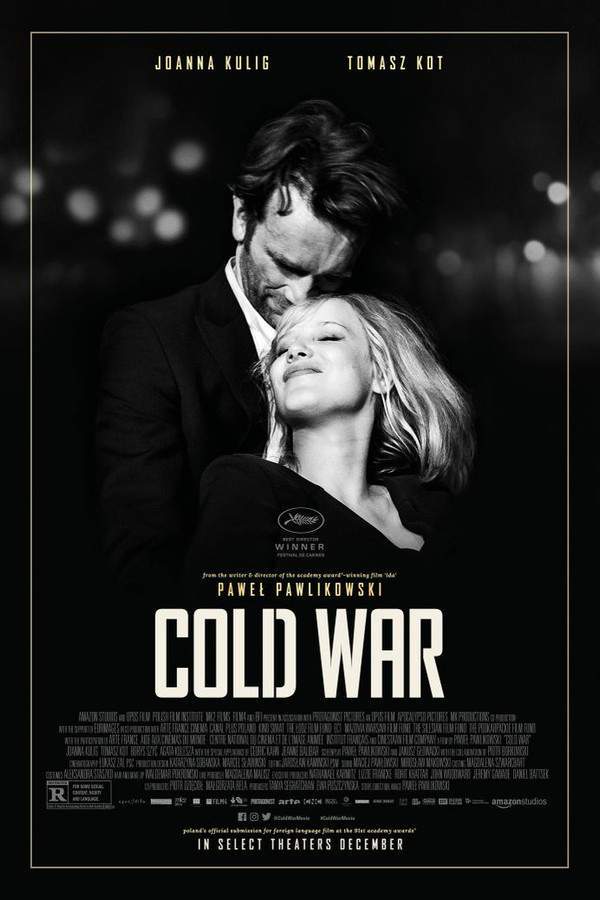
Cold War (2018) Detailed Story Recap
The Concert (2010) Spoiler-Packed Plot Recap
By Dawn’s Early Light (1990) Full Summary & Key Details
Conspiracy (2001) Film Overview & Timeline
Oratorio for Prague (1968) Film Overview & Timeline
The Conspirators (1944) Detailed Story Recap
The Concert (1954) Ending Explained & Film Insights
Man on a Tightrope (1953) Detailed Story Recap
The Organ (1965) Film Overview & Timeline
Forbidden Songs (1947) Film Overview & Timeline
Song of Russia (1944) Plot Summary & Ending Explained
The Confrontation (1969) Detailed Story Recap
The Concert (1962) Film Overview & Timeline
The Confession (1970) Detailed Story Recap
Conscience (1968) Movie Recap & Themes