Plot Explained Spoilers guaranteed!
Plot Explained

Browse by genre

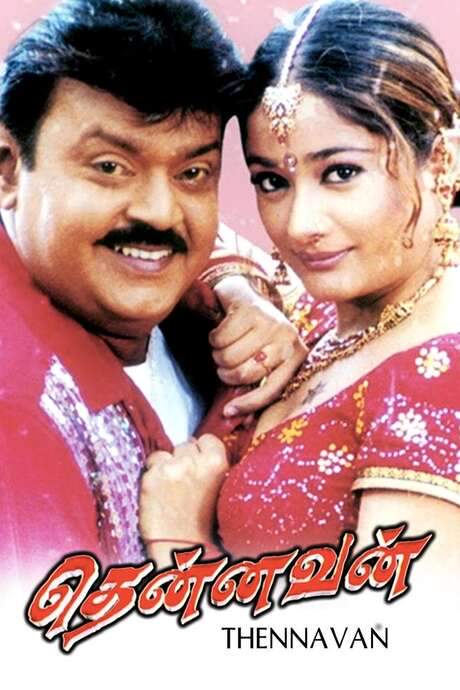
Thennavan (2003) movie poster

Plot Summary

Thennavan (2003) Plot Summary Explained

Release, runtime and language
2003 · 146 mins · Tamil
Loading streaming availability…
Directed by
Nandhakumaran M
Starring
Mansoor Ali Khan, Nassar, Thalaivasal Vijay, Ponnambalam, Kiran Rathod, Sriman

Thennavan, a highly regarded bureaucrat, is hand‑picked by the Prime Minister to serve as the nation’s Chief Election Commissioner. Determined to overhaul a corrupt electoral system, he devises a sweeping, radical reform. However, his ambitious scheme backfires, triggering unforeseen political turmoil and threatening process he sought to protect.

On this page (5)
  1. 1 Where to watch
  2. 2 What happens: full plot
  3. 3 Plot questions answered
  4. 4 Movie threads
  5. 5 Every angle
Loading streaming availability…

Full plot summary · contains spoilers

What Happens in Thennavan: Full Plot Summary

The whole story of Thennavan (2003) explained, from the opening scene to the final frame: every key event, every twist and what it all adds up to. Read it as a quick recap before the sequel, to check a scene you missed, or to finally understand what really happened.

Thennavan, Vijayakanth, is an honest and upright IAS officer who is handpicked by the Prime Minister of India to serve as the Chief Election Commissioner. His first duty in this role is to oversee the general election in Tamil Nadu, where he argues for a set of five laws to reform the electoral process and curb corruption. His principled stance quickly wins him widespread public support, setting him up as a beacon of integrity in a charged political landscape.

Ilanthiraiyan, Nassar, the current Chief Minister, is depicted as a corrupt and greedy politician who will do anything to stay in power. He uses his influence to convince the Prime Minister to block the proposed five laws, positioning himself as the more practical choice in the eyes of many voters. In the midst of this political chessboard, Divya, Kiran Rathod, falls in love with Thennavan and makes a bold bid to win his hand in marriage, hoping to align her future with his reformist vision.

To secure victory in the election, Ilanthiraiyan enlists Mustafa, Thalaivasal Vijay, to orchestrate a devastating attack by planting a bomb at a public rally. The explosion claims many innocent lives, and Ilanthiraiyan wastes no time in blaming his enemies, hoping to rally sympathy and votes from a grieving public. The tragedy becomes a turning point that intensifies the political drama and tests Thennavan’s resolve.

As the electoral process proceeds, Thennavan detects the sham behind the tragedy and halts the vote counting to prevent a manipulated outcome. Enraged, Ilanthiraiyan takes the fight to the courtroom, where Thennavan presents solid, uncontested evidence. The case leads to the sentencing of the culprits, including Ilanthiraiyan, to life imprisonment, signaling a hard-won victory against entrenched corruption. Divya’s allegiance to Thennavan is solidified as she marries him, uniting personal and political loyalties in the face of intimidation.

With Ilanthiraiyan behind bars, his naive wife Pushpalatha, Urvashi, steps into the role of chief minister and even secures her husband’s release. Thennavan is briefly detained, but public pressure pushes for his release, underscoring the power of popular opinion in a democracy. After a tense clash, Pushpalatha resigns, and the governor moves to dismiss her government, removing a potential source of further instability.

As the campaign resumes, Thennavan chooses a radical, principle-driven path: he resigns from his position and calls on voters to boycott the election to safeguard the country from corrupt politicians and to resist attempts to rig the process. His bold stand resonates with many citizens, who respond by staying away from the polls, a remarkable act of civic protest.

In the end, the day of the election arrives with no votes cast, a testament to the public’s faith in Thennavan’s vision and his insistence on clean, fair governance. The Prime Minister publicly commends Thennavan for his steadfast commitment, signaling a willingness to pass the five reform laws and to pursue a healthier, more transparent electoral system.
Last updated: October 09, 2025 at 15:22

Was this helpful?

Plot questions answered

Thennavan Plot Explained: Your Questions Answered

The questions people ask most about Thennavan (2003): what happens in the confusing scenes, why the characters do what they do, the twists, hidden details and what the ending means. Each answer contains spoilers.

Q1

Why does Thennavan resign and ask voters to boycott the election?

After Pushpalatha's government falls and new elections are called, Thennavan realizes that even with corrupt politicians removed, the system remains fundamentally broken. He believes participating in an election controlled by self-serving politicians would legitimize the very corruption he fought against. By resigning and urging a boycott, he makes a moral statement that voters should refuse to participate in a rigged system, forcing the government to address his proposed five reform laws.

Foreshadowing: Earlier in the film, Thennavan consistently prioritizes integrity over procedural victories, foreshadowing his willingness to take an unconventional stand.

  • resignation
  • voter boycott
  • electoral reform
  • political protest
  • civic duty
Q2

How does Thennavan prove Ilanthiraiyan's involvement in the bombing?

Thennavan uncovers the conspiracy during his investigation of the election irregularities. He gathers solid, uncontested evidence that links Ilanthiraiyan to Mustafa, the terrorist who planted the bomb. The evidence is so conclusive that in court, Ilanthiraiyan and his associates have no defense. The courtroom testimony results in life imprisonment for all the culprits, including the Chief Minister.

Foreshadowing: The timeline shows Thennavan halts vote counting specifically to expose the sham, indicating he already has evidence of wrongdoing.

  • bombing trial
  • evidence
  • court case
  • Ilanthiraiyan conviction
  • justice
Q3

Why does Ilanthiraiyan order the bombing at the public rally?

Ilanthiraiyan orchestrates the bombing to manipulate public sympathy and gain political advantage. By blaming his political enemies for the attack, he hopes to rally grieving voters to his side. The attack is designed to create chaos that benefits his election campaign, demonstrating how far he will go to maintain power.

Foreshadowing: Ilanthiraiyan's character is established early as corrupt and willing to do anything to stay in power, making this betrayal of public trust consistent with his nature.

  • terror attack
  • political manipulation
  • voter sympathy
  • Ilanthiraiyan scheme
Q4

What happens to Ilanthiraiyan after being convicted in court?

After the court delivers its verdict, Ilanthiraiyan is sentenced to life imprisonment along with his associates. However, his wife Pushpalatha later becomes Chief Minister and uses her position to secure his release from prison. This turn of events creates further political turmoil before she eventually resigns and her government is dismissed.

Foreshadowing: The corruption network is shown to be deeply entrenched, with Ilanthiraiyan's wife willing to abuse power to protect him.

  • life imprisonment
  • bail
  • Pushpalatha
  • political corruption
  • consequences
Q5

Why does Pushpalatha become Chief Minister after Ilanthiraiyan's conviction?

After Ilanthiraiyan is imprisoned, his wife Pushpalatha steps into the role of Chief Minister. Though portrayed as naive, she wields the political power her husband accumulated. Her ascension demonstrates how corruption persists through family networks, and she uses her position to bail out Ilanthiraiyan, showing loyalty to her husband over democratic principles.

Foreshadowing: The timeline establishes Pushpalatha's loyalty to her husband early, making her willingness to abuse power for his release consistent with her character.

  • Chief Minister
  • Pushpalatha
  • political dynasty
  • power transfer
Q6

Why does the Prime Minister agree to pass the electoral reforms after the voter boycott?

The zero-vote election demonstrates that citizens fully support Thennavan's stance and reject the political establishment. This unprecedented public response creates enormous political pressure on the Prime Minister. Recognizing the widespread demand for reform and the failure of the electoral process without public participation, the Prime Minister publicly commits to passing the five reform laws Thennavan proposed.

Foreshadowing: The boycott campaign gains momentum because Thennavan has already earned public trust through his earlier actions.

  • Prime Minister
  • five laws
  • electoral reform
  • public pressure
  • political change
Q7

How does Thennavan discover the election fraud on voting day?

Thennavan detects irregularities during the vote counting process. Acting as Chief Election Commissioner, he has access to the election data and notices patterns indicating manipulation. Rather than allow a fraudulent result to stand, he halts the vote counting to prevent the election from being stolen, prioritizing the integrity of the democratic process over political convenience.

Foreshadowing: Thennavan's earlier proposal of five laws to fix systemic weaknesses shows he anticipated such irregularities.

  • vote counting fraud
  • election manipulation
  • irregularities
  • integrity
Q8

What motivates Divya to pursue marriage with Thennavan?

Divya falls in love with Thennavan because she believes in his reformist vision and admires his integrity. She sees his political fight as representing the kind of leadership the country needs. Her proposal to win his hand reflects her alignment with his values, and she ultimately marries him after his victory in court, choosing to stand with him through both political battles and personal challenges.

Foreshadowing: Divya's interest in Thennavan develops during the campaign, coinciding with his rise as a public figure fighting corruption.

  • Divya
  • love
  • marriage
  • reformist values
  • support
Q9

Why does Thennavan halt the vote counting during the election?

Thennavan stops the vote counting because he uncovers evidence of widespread fraud and manipulation. Rather than allow a tainted result to be certified, he takes a stand to expose the sham election. His action protects the democratic process from being subverted, even though it angers Ilanthiraiyan and delays the electoral outcome.

Foreshadowing: His earlier proposal for electoral reforms directly addresses the vulnerabilities he later discovers.

  • vote counting
  • election fraud
  • democratic integrity
  • process halt
Q10

What is the significance of no votes being cast on election day?

The zero-vote result is a powerful collective statement by voters who chose to stay home in response to Thennavan's boycott call. It demonstrates unprecedented public faith in his vision and rejection of corrupt politicians. This dramatic outcome forces the Prime Minister to acknowledge the demand for reform and agree to implement Thennavan's five proposed laws, achieving the electoral reform Thennavan fought for.

Foreshadowing: Thennavan's earlier public support and the public's growing disillusionment with political corruption set the stage for this unprecedented response.

  • election boycott
  • zero votes
  • public protest
  • democratic reform
  • mass movement

Movie threads

More Movies Like Thennavan, by Mood & Story

Curated lists built around what makes Thennavan tick: the same mood, the same kind of story or the same emotional payoff. Each list explains why these movies belong together.

High-Stakes Political Thrillers like Thennavan

Incorruptible heroes wage tense, urgent battles against systemic political corruption. If you liked the tense, fast-paced battle against corruption in Thennavan, explore these other movies. They feature principled protagonists in high-stakes political dramas, fighting systemic injustice with gripping intensity and a hopeful, emotionally heavy journey.

  • tense
  • urgent
  • gripping
  • principled
  • dramatic
  • hopeful
  • Tone: tense, urgent, hopeful
  • Pacing: fast, relentless
Why these movies?

The story pattern: Stories in this thread typically follow an upright protagonist appointed to a position of power, who immediately identifies a deep-rooted systemic flaw. Their radical reform efforts trigger fierce backlash from entrenched interests, leading to a series of escalating conflicts, personal dangers, and public upheavals, ultimately resolved through a combination of moral conviction and public support.

Why they belong together: These movies are grouped together because they share a core narrative of moral integrity clashing with political corruption. They deliver a consistent experience of high tension, fast-paced plotting, and heavy emotional stakes, all while maintaining a thread of hope that change is possible, making them perfect for viewers who enjoy urgent, principled dramas.

Movies about Idealists Challenging the System like Thennavan

Dramas where a single person's unwavering morals challenge a corrupt establishment. Fans of Thennavan's story about an idealistic bureaucrat taking on corruption will find similar themes here. These movies feature protagonists whose moral conviction drives them to confront powerful systems, resulting in dramatic, tense, and emotionally heavy narratives with impactful conclusions.

  • principled
  • dramatic
  • tense
  • righteous
  • anxious
  • hopeful
  • Tone: dramatic, tense, principled
  • Pacing: steady, building to crescendo
Why these movies?

The story pattern: The narrative pattern involves a protagonist defined by their integrity entering a compromised system. Their refusal to compromise sparks a major conflict, testing their resolve through personal and professional attacks. The journey is less about subtle strategy and more about the dramatic, public spectacle of their unwavering stand, which often inspires broader change.

Why they belong together: These films are united by the central archetype of the unbending idealist and the thematic focus on institutional corruption. They share a heavy emotional weight and a tense, dramatic tone, creating a cohesive vibe of righteous struggle that resonates with viewers seeking stories about conviction and impact.

Every angle

Thennavan (2003) Explained: Plot, Timeline & Characters

Everything about Thennavan in one place: what happens in the plot summary, the timeline in chronological order, the characters and meaning and a spoiler-free summary. What's After the Movie adds the cast, box office and post-credit scenes.

Coming soon on iOS and Android

The Plot Explained Movie Summary App

Plot summaries, endings explained and timelines on your phone. Catch up on any movie in minutes, save your favorites and never miss a twist again.

Be the first to know when we launch. Your email stays private, always.

Learn more about the app