Plot Explained Spoilers guaranteed!
Plot Explained

Browse by genre

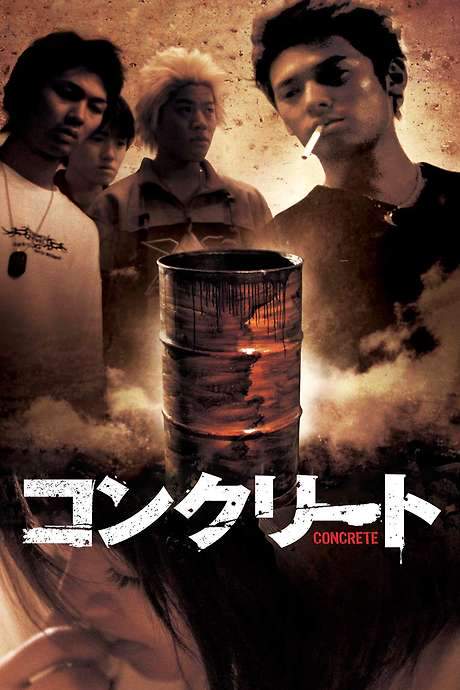
Concrete (2004) movie poster

Timeline

Concrete (2004) Timeline Explained – Every Event in Order

Release, runtime and language
2004 · 113 mins · Japanese
Loading streaming availability…
Directed by
Taku Nakamura
Starring
Katsuya Kobayashi, Sousuke Takaoka, Toshiya Nagasawa, Masanori Machida, Mika Mifune, Kensuke Mano

On 25 November 1988, high‑schooler Jun Furuta was abducted by four youths and held for 41 days. She was repeatedly raped, beaten and tortured. After losing a mahjong game, they beat her with an iron dumbbell, doused her with lighter fluid and set her on fire. She died from shock; her body was encased in concrete and dumped in Koto, Tokyo.

On this page (6)
  1. 1 Where to watch
  2. 2 Events in order (15)
  3. 3 Timeline questions answered
  4. 4 Movie threads
  5. 5 Movies like Concrete
  6. 6 Every angle
Loading streaming availability…

15 events in order · contains spoilers

Concrete Timeline: Events in Chronological Order

Every key event of Concrete (2004) in order, scene by scene, with when and where it takes place. Use it to untangle flashbacks, time jumps and parallel storylines, to refresh your memory before the sequel or to find the exact scene you are thinking of.

  1. Tatsuo joins the Ryujin gang

    Driven by burnout from his low-paying jobs, Tatsuo joins the yakuza to raise money for his future marriage to Kayoko Matsuyama. He forms the Ryujin gang as a vehicle for crime and influence. He begins recruiting friends to carry out robberies and other offenses to prove himself.

    When
    early in the story
    Where
    City outskirts / Tatsuo's neighborhood
  2. Criminal activities escalate to robbery and coercion

    The gang tightens its grip as they commit robberies to fund their operations and status. Tatsuo grows more confident in enforcing the gang's will and begins orchestrating violent acts to please their seniors. The line between petty crime and brutal abuse becomes increasingly blurred.

    When
    early in the story
    Where
    Urban streets and hideouts
  3. Misaki is spotted and targeted

    One night, Misaki, a high school student, is seen riding home on her bike and is knocked over by one of the boys. Tatsuo pretends to help her but reveals his predatory intent, setting the stage for what follows. The encounter marks Misaki as the gang’s next target.

    When
    one night
    Where
    City streets
  4. Misaki is taken to Takao Matsuyama's house

    Misaki is brought to the home of Takao Matsuyama, a friend and Kayoko's brother, where the gang's coercion and control over her begins in earnest. The setting shifts from the street to a private residence, increasing the sense of confinement. The plan to subdue her becomes more organized.

    When
    shortly after abduction
    Where
    Takao Matsuyama's house
  5. Horrific abuse and forced deception

    Inside Takao's house, the boys commit brutal acts, including inserting foreign objects and beating Misaki. They force her to lie to her parents that she is staying at a friend's house, showing a calculated attempt to erase her track. The cruelty marks a turning point in the violence.

    When
    night of the incident
    Where
    Takao's house
  6. Misaki escapes, aided by Takao's mother

    Misaki manages to escape the house twice, the second time with help from Takao's mother. Each attempt underscores her resilience but also deepens the gang’s resolve to control her fate. The escape attempts heighten the peril surrounding Misaki.

    When
    following days
    Where
    Takao's house / surrounding area
  7. Punishments escalate after escape attempts

    The gang tightens its grip further as Misaki is punished after capture, including having her leg doused in lighter fluid and burned. Tatsuo also punishes Takao's mother and warns the others not to show any sympathy or assist Misaki. The violence becomes more systematic and cruel.

    When
    immediately after escapes
    Where
    Takao's house
  8. Misaki endures ongoing abuse and deprivation

    Misaki endures repeated abuses that leave her incontinent and dehydrated. She pleads for water, but is taunted by the gang, revealing a chilling erosion of empathy. The brutality continues with little to no mercy.

    When
    late in the sequence
    Where
    Takao's house
  9. Tatsuo fatally injures Misaki

    In a final, brutal act, Tatsuo beats Misaki further and drops a barbell on her stomach, fatally wounding her. The gang briefly shifts focus as they process the killing. The murder marks a definitive collapse of any remaining veneer of control.

    When
    final moment of abuse
    Where
    Takao's house
  10. The gang retreats to a sauna after the murder

    The members leave the house to relax at a sauna, momentarily disconnecting from the atrocity they have committed. Misaki lies dying or already gone ahead of them, and her last wish is to stay strong. The contrast between their detachment and her suffering is stark.

    When
    after the murder
    Where
    Sauna
  11. Misaki dies and the cover-up begins

    Returning from the sauna, Misaki becomes unresponsive as Tatsuo tests a cigarette near her nose and she does not respond. The group decides to conceal the murder, signaling the onset of their attempt to erase the crime. The atmosphere thickens with the weight of what they have done.

    When
    soon after sauna
    Where
    Takao's house
  12. Disposal of Misaki's body in a concrete drum

    Tatsuo arranges a cover-up by retrieving a concrete drum from his old job and burying Misaki's body in it. The drum is then placed in an open field, an attempt to hide the evidence from the world. The grim practicality of the disposal underscores the cold calculation behind the act.

    When
    after murder
    Where
    Open fields
  13. Arrests and the demon seed rebuke

    Eventually all of the boys are arrested. A detective who had previously met Tatsuo angrily calls him a demon seed for minimizing his role, insisting that he killed at least one person. The interrogation lays bare the moral indictment of Tatsuo’s actions.

    When
    after disposal
    Where
    Police station
  14. Gravesite and Misaki's plea about life

    The site where Misaki's body is found becomes a gravesite as her voiceover asks, through the audience, whether people realize how precious life is. The moment frames the entire tragedy with a poignant, existential echo. It leaves a haunting reminder of the cost of violence.

    When
    after discovery
    Where
    Grave site / fields
  15. Ending: Tatsuo's empty remorse

    The film ends with an image of Tatsuo crying in a dark room, unable to make a mangled bird fly from his hand. The closure suggests his failed attempt at self-justification or redemption. It leaves the audience with a stark, unresolved sense of guilt.

    When
    end
    Where
    Dark room

Last updated: October 09, 2025 at 15:21

Was this helpful?

Timeline questions answered

Concrete Timeline Explained: Your Questions Answered

When does it happen, and why in that order? The questions people ask about the chronology of Concrete (2004): time jumps, flashbacks, cause and effect between scenes and the correct order of events, each answered with spoilers.

Q1

Why does Tatsuo join the Ryujin gang?

Tatsuo joins the Ryujin gang because he feels stuck in a downward spiral after his parents' divorce and his mother's neglect. He works low-paying jobs and feels burnout, so he sees joining the yakuza as a way to raise money for his future marriage to Kayoko Matsuyama and gain purpose and power.

Foreshadowing: The gang leader offers Tatsuo a chance to lead a small group early on, hinting at his growing influence.

  • tatsuo
  • ryujin gang
  • yakuza
  • motivation
  • marriage
  • kayoko
Q2

Why does Tatsuo target Misaki?

Tatsuo spots Misaki, a high school student, cycling home one night and knocks her down with his bike. He pretends to help her but reveals his predatory intent when she tries to leave. The gang marks her as their next target, though the exact reason for selecting her specifically is not explained in the film.

Foreshadowing: This encounter happens early in the gang's escalation of violence, showing their shift from robbery to targeting individuals.

  • tatsuo
  • misaki
  • kidnapping
  • target
  • high school student
Q3

Why is Misaki brought to Takao Matsuyama's house?

Misaki is brought to Takao Matsuyama's house because Takao is friends with the gang members and is Kayoko's brother. The house provides a private, controlled location where the gang can hold and abuse her away from public view, making it easier to prevent her escape and maintain control.

Foreshadowing: Takao's connection to Kayoko establishes his willingness to facilitate the gang's crimes despite any personal relationships.

  • misaki
  • takao matsuyama
  • house
  • captivity
  • abuse location
Q4

Why does Misaki escape twice and what happens each time?

Misaki escapes twice while being held at Takao's house, demonstrating her resilience. The first escape is not detailed, but the second time she receives help from Takao's mother. Both times she is caught, and the gang punishes her severely, including burning her leg with lighter fluid after the second capture.

Foreshadowing: Takao's mother's decision to help Misaki foreshadows her later assault by Tatsuo.

  • misaki
  • escape
  • takao mother
  • punishment
  • lighter fluid
Q5

How does Misaki die in the film?

Tatsuo beats Misaki further and drops a barbell on her stomach, fatally wounding her. When the gang returns from a sauna, they find her unresponsive. Tatsuo tests by holding a cigarette near her nose, and when she doesn't react, they confirm she has died from her injuries.

Foreshadowing: The gang's decision to go to the sauna immediately after the most brutal attack shows their detachment from the violence.

  • misaki
  • death
  • tatsuo
  • barbell
  • murder
  • cause of death
Q6

Why is Misaki's body disposed of in a concrete drum?

After confirming Misaki is dead, Tatsuo arranges to hide the murder by retrieving a concrete drum from his old job. He places her body inside and buries the drum in an open field. The concrete serves to both conceal the body and prevent discovery, using Tatsuo's prior employment as a literal tool for disposal.

Foreshadowing: Tatsuo's history of working with concrete directly enables the method of disposal, connecting his past job to the final crime.

  • concrete drum
  • body disposal
  • murder cover-up
  • tatsuo
Q7

What happens when Tatsuo is arrested and interrogated?

All the boys are eventually arrested. During interrogation, a detective who knew Tatsuo previously becomes angry and calls him a demon seed. The detective insists that Tatsuo did more than he claims, specifically that he killed at least one person, rejecting Tatsuo's attempts to minimize his role in Misaki's murder.

Foreshadowing: The detective's personal connection to Tatsuo adds weight to his moral condemnation.

  • tatsuo
  • arrest
  • interrogation
  • demon seed
  • detective
Q8

What does the ending scene with the bird symbolize?

The film ends with Tatsuo crying alone in a dark room, trying to coax a mangled bird to fly from his hand. This image suggests his failed attempt at redemption or self-justification. The broken bird represents the destroyed innocence and life he cannot restore, leaving him with unresolved guilt.

Foreshadowing: Earlier, Misaki's final wish to stay strong contrasts with Tatsuo's inability to bring anything back to life.

  • tatsuo
  • bird
  • ending
  • symbolism
  • guilt
  • remorse
Q9

Why does Takao's mother help Misaki escape?

Takao's mother helps Misaki escape because she witnesses the abuse and feels sympathy for the girl. This act of compassion leads to her being assaulted by Tatsuo as punishment, demonstrating how the gang eliminates any display of sympathy to maintain control.

Foreshadowing: This violent retaliation warns other members against showing mercy.

  • takao mother
  • compassion
  • escape
  • punishment
  • tatsuo
Q10

How long is Misaki held captive before she dies?

Based on the real-life case the film is inspired by, Misaki is held for 41 days. During this time, she is repeatedly raped, beaten, and tortured. The timeline shows the gradual escalation of abuse until her death, depicting the prolonged nature of her suffering.

Foreshadowing: The extended captivity allows the violence to escalate systematically over time.

  • misaki
  • 41 days
  • captivity
  • duration
  • torture

Movie threads

More Movies Like Concrete, by Mood & Story

Curated lists built around what makes Concrete tick: the same mood, the same kind of story or the same emotional payoff. Each list explains why these movies belong together.

Stories of moral decay like Concrete

Stories that depict a harrowing and relentless slide into cruelty and violence. Movies like Concrete that explore a brutal descent into evil. If you are looking for similar films about systemic abuse, juvenile delinquency, and the complete loss of innocence, this thread features true crime and fictional stories with a heavy emotional weight and bleak endings.

  • harrowing
  • brutal
  • grim
  • unsettling
  • punishing
  • desperate
  • Tone: dark, bleak
  • Pacing: steady, relentless
Why these movies?

The story pattern: The narrative typically follows a linear, straightforward path into increasingly sadistic acts. The downward spiral is often triggered by a minor transgression that escalates into extreme violence, with characters becoming more detached and cruel as the story progresses, leading to an inevitable and horrific conclusion.

Why they belong together: These films are grouped by their shared focus on the process of dehumanization, both of the victim and the perpetrator. They share a dark tone, high intensity, and a heavy emotional weight, creating a cohesive experience for viewers interested in challenging, morally complex stories about the nature of evil.

Brutal true crime movies like Concrete

Grim cinematic accounts of real-life atrocities and systemic violence. If you were affected by the harrowing true story in Concrete, this thread collects similar films based on real cases of extreme violence and captivity. These movies share a steady pacing, straightforward narrative, and a commitment to depicting the grim reality of crime.

  • harrowing
  • grim
  • brutal
  • true story
  • disturbing
  • draining
  • Tone: dark, harrowing
  • Pacing: steady, procedural
Why these movies?

The story pattern: Narratives in this thread are often chronological and fact-based, documenting the events of a crime from inception to its devastating conclusion. The structure is straightforward, prioritizing a clear, unsettling account over complex plotting, and often concludes with a sense of profound loss and injustice.

Why they belong together: These films are united by their source material—real, horrific events—and their unflinching approach to depicting them. They share a dark tone, a steady, procedural pacing, and a high intensity derived from the knowledge that the events actually occurred, creating a uniquely disturbing and impactful vibe.

If you liked this

Movies Like Concrete

Similar movies to Concrete: the same genre, themes or kind of story. Each one comes with its own plot summary, timeline and ending explained.

Browse all movie summaries

Every angle

Concrete (2004) Explained: Plot, Timeline & Characters

Everything about Concrete in one place: what happens in the plot summary, the timeline in chronological order, the characters and meaning and a spoiler-free summary. What's After the Movie adds the cast, box office and post-credit scenes.

Coming soon on iOS and Android

The Plot Explained Movie Summary App

Plot summaries, endings explained and timelines on your phone. Catch up on any movie in minutes, save your favorites and never miss a twist again.

Be the first to know when we launch. Your email stays private, always.

Learn more about the app