Plot Explained Spoilers guaranteed!
Plot Explained

Browse by genre

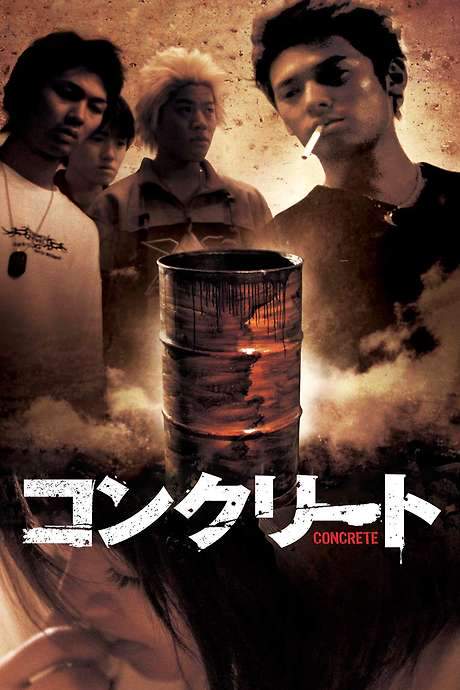
Concrete (2004) movie poster

Characters & Themes

Concrete (2004) Characters, Setting & Themes Explained

Release, runtime and language
2004 · 113 mins · Japanese
Loading streaming availability…
Directed by
Taku Nakamura
Starring
Katsuya Kobayashi, Sousuke Takaoka, Toshiya Nagasawa, Masanori Machida, Mika Mifune, Kensuke Mano

On 25 November 1988, high‑schooler Jun Furuta was abducted by four youths and held for 41 days. She was repeatedly raped, beaten and tortured. After losing a mahjong game, they beat her with an iron dumbbell, doused her with lighter fluid and set her on fire. She died from shock; her body was encased in concrete and dumped in Koto, Tokyo.

On this page (8)
  1. 1 Where to watch
  2. 2 Characters explained (4)
  3. 3 Where & when it takes place
  4. 4 Themes & meaning (3)
  5. 5 Character & meaning questions
  6. 6 Movie threads
  7. 7 Movies like Concrete
  8. 8 Every angle
Loading streaming availability…

4 main characters · contains spoilers

Concrete Characters Explained: Who Is Who

The main characters of Concrete (2004), heroes and villains: what drives them, how they change over the course of the story and what each of them reveals about the film's bigger ideas.

  • Tatsuo Oosugi

    A troubled working-class teenager who turns to the yakuza to fund a hoped-for marriage. He forms the Ryujin gang, then enforces fear and obedience through brutal acts, including sexual violence, to please his seniors. His drive for money and status blinds him to the consequences of his crimes, leaving him morally hollow by the end.

    • 😈 Criminal
    • 💰 Money-minded
    • 🗡️ Violent
  • Misaki

    A high school student who is violently targeted by Tatsuo and the gang. She endures captivity, manipulation, and repeated abuse while trying to find a way home. Misaki's resilience shines through her attempts to escape, but she is ultimately overpowered, making her death a stark indictment of violence.

    • 🌸 Innocence
    • 💔 Vulnerable
    • 🛡️ Resilient
  • Takao Matsuyama

    A friend of Tatsuo and Kayoko's brother who becomes part of the gang's activities. He participates in the crimes, yet the narrative hints at inner conflict and moments of weakness. The gang's actions are supported by surrounding family ties and loyalty, amplifying the sense of inevitability.

    • 🤝 Complicity
    • 🧭 Peer pressure
    • 🏚️ Family ties
  • Kayoko Matsuyama

    Tatsuo's love interest and Kayoko's brother's sister, whose relationship with Tatsuo drives his desire to secure a future. She serves as a social anchor within the group, illustrating how personal relationships intersect with crime. Her presence helps illuminate the human costs behind the gang's ambitions.

    • 💞 Love
    • 👥 Social pressures
    • 🔗 Relationship

Last updated: October 04, 2025 at 12:02

Was this helpful?

Setting

Where and When Does Concrete Take Place?

The setting of Concrete (2004): the year and time period, the places and locations, and how they shape the characters, the mood and the tension of the story.

Time period

Location

Japan

The story unfolds across contemporary Japan, following the criminal underworld within urban neighborhoods and the domestic spaces where its victims are held. Key locations include a cramped family home, a hotel used for assaults, a friend's house, a sauna, and remote fields where bodies are hidden. The settings ground a gritty, realistic portrayal of crime and its consequences in everyday environments.

  • 🏙️ Urban crime
  • 🇯🇵 Japan setting
  • 🗝️ Underworld

Last updated: October 04, 2025 at 12:02

Was this helpful?

3 major themes

Concrete Meaning: Themes & Message Explained

What is Concrete (2004) really about? The emotional, social and philosophical themes the film keeps returning to, its symbolism and the message beneath the surface.

  • Abuse

    The film centers on systemic violence and sexual assault, showing how power is exerted through fear, domination, and coercion. Tatsuo and the gang use intimidation to control victims and suppress dissent. The narrative exposes how cruelty becomes normalized within a criminal organization, culminating in a brutal murder. The quiet aftermath—police investigations and a mournful voiceover—casts a harsh light on the value of life and the damage inflicted on all involved.

  • Consequences

    Power and accountability are foregrounded as the story follows the detectives' outrage and Tatsuo's mounting guilt. The murder triggers investigations and social repercussions for everyone involved. The site of Misaki's death becomes a gravesite that haunts the attackers, while a detective emphasizes that there is no easy denial of responsibility. The ending suggests that crime carries an inescapable moral price.

  • Loss of Innocence

    Misaki's vulnerability and attempts to escape lay bare the fragility of youth facing predatory crowds. The gang's violence shatters her safety, dignity, and future, transforming a high-school life into a nightmare. Even as Misaki fights for water and a moment of mercy, the brutality erases her innocence. The film frames her death as a warning about how easily innocence can be crushed by cruel power.

Last updated: October 04, 2025 at 12:02

Was this helpful?

Character & theme questions

Concrete Characters & Meaning: Your Questions Answered

The questions people ask about Concrete (2004): who the characters really are, their relationships, what the symbols mean, where it takes place and what the movie is really about. Each answer contains spoilers.

Q1

Where does the story take place?

The movie is set in contemporary Japan, primarily in urban neighborhoods within Tokyo. Key locations include a cramped family home where victims are held, a hotel used for assaults, a friend's house, a sauna, and remote fields where the aftermath unfolds. These everyday environments ground the story in realism, showing how crime operates within familiar spaces.

  • japan setting
  • tokyo locations
  • urban crime
  • crime settings
Q2

When is the movie set?

The story takes place in late 1980s Japan, specifically around November 1988. This contemporary setting anchors the film in a specific era, adding realism to its portrayal of urban crime and juvenile delinquency during that period.

  • 1980s japan
  • time period
  • 1988
  • contemporary setting
Q3

What themes does the film explore?

Concrete explores several interconnected themes including systemic abuse and sexual violence, the consequences of crime, and the loss of innocence. The film focuses on how power is exerted through fear and domination within criminal organizations, showing how cruelty becomes normalized. It also examines how these crimes affect everyone involved, from victims to perpetrators.

  • abuse theme
  • violence
  • power
  • domination
  • sexual assault
Q4

How does the movie address consequences?

The film foregrounds accountability and moral price. As the story progresses, detectives investigate the murder and social repercussions unfold. The site of Misaki's death becomes a gravesite that haunts the attackers. A detective emphasizes there is no easy denial of responsibility, suggesting that crime carries an inescapable moral price.

  • consequences
  • accountability
  • moral price
  • crime consequences
Q5

What does the film say about loss of innocence?

The loss of innocence theme centers on Misaki, a high school student whose life is shattered by violence. Her vulnerability and attempts to escape lay bare the fragility of youth facing predatory forces. The film frames her death as a stark warning about how easily innocence can be crushed by cruel power, transforming an ordinary life into a nightmare.

  • loss of innocence
  • youth
  • vulnerability
  • victimization
Q6

Who is Tatsuo Oosugi?

Tatsuo Oosugi is a troubled working-class teenager who turns to the yakuza to fund a hoped-for marriage. He forms the Ryujin gang and enforces fear and obedience through brutal acts, including sexual violence, to please his seniors. His drive for money and status blinds him to the consequences of his crimes, leaving him morally hollow by the end.

  • tatsuo osugi
  • gang leader
  • protagonist
  • yakuza
Q7

Who is Misaki in the story?

Misaki is a high school student who becomes the target of Tatsuo and the gang. She endures captivity, manipulation, and repeated abuse while trying to find a way home. Her resilience shines through her attempts to escape, but she is ultimately overpowered, making her death a stark indictment of violence against women.

  • misaki
  • victim
  • high school student
  • captive
Q8

What is the Ryujin gang?

The Ryujin gang is a juvenile criminal organization formed by Tatsuo Oosugi. The group operates within Japan's urban underworld, using intimidation to control victims and suppress dissent. The gang's structure illustrates how young people become entangled in organized crime, with members participating in assaults and other violent acts to gain status within the group.

  • ryujin gang
  • juvenile gang
  • organized crime
  • underworld
Q9

How does the movie portray Japanese urban crime?

Concrete portrays Japanese urban crime as embedded within everyday environments rather than exoticized settings. The story unfolds in domestic spaces, hotels, and saunas, locations that feel ordinary until violence occurs. This approach emphasizes how crime infiltrates normal life, grounding the narrative in a gritty, realistic depiction of juvenile delinquency and criminal organization in contemporary Japan.

  • japanese crime
  • urban crime
  • juvenile delinquency
  • crime portrayal
Q10

Who is Kayoko Matsuyama?

Kayoko Matsuyama is Tatsuo's love interest and the sister of his friend Takao. Her relationship with Tatsuo drives his desire to secure a future and accumulate money. She serves as a social anchor within the group, illustrating how personal relationships intersect with criminal ambitions and how love can motivate both legitimate aspirations and destructive behavior.

  • kayoko matsuyama
  • love interest
  • relationship
  • motivation
Q11

Who is Takao Matsuyama?

Takao Matsuyama is a friend of Tatsuo and Kayoko's brother who becomes involved in the gang's activities. He participates in the crimes while the narrative hints at inner conflict and moments of weakness. His connection to the group through family ties and loyalty amplifies the sense of inevitability surrounding the criminal descent.

  • takao matsuyama
  • gang member
  • friend
  • loyalty

Movie threads

More Movies Like Concrete, by Mood & Story

Curated lists built around what makes Concrete tick: the same mood, the same kind of story or the same emotional payoff. Each list explains why these movies belong together.

Stories of moral decay like Concrete

Stories that depict a harrowing and relentless slide into cruelty and violence. Movies like Concrete that explore a brutal descent into evil. If you are looking for similar films about systemic abuse, juvenile delinquency, and the complete loss of innocence, this thread features true crime and fictional stories with a heavy emotional weight and bleak endings.

  • harrowing
  • brutal
  • grim
  • unsettling
  • punishing
  • desperate
  • Tone: dark, bleak
  • Pacing: steady, relentless
Why these movies?

The story pattern: The narrative typically follows a linear, straightforward path into increasingly sadistic acts. The downward spiral is often triggered by a minor transgression that escalates into extreme violence, with characters becoming more detached and cruel as the story progresses, leading to an inevitable and horrific conclusion.

Why they belong together: These films are grouped by their shared focus on the process of dehumanization, both of the victim and the perpetrator. They share a dark tone, high intensity, and a heavy emotional weight, creating a cohesive experience for viewers interested in challenging, morally complex stories about the nature of evil.

Brutal true crime movies like Concrete

Grim cinematic accounts of real-life atrocities and systemic violence. If you were affected by the harrowing true story in Concrete, this thread collects similar films based on real cases of extreme violence and captivity. These movies share a steady pacing, straightforward narrative, and a commitment to depicting the grim reality of crime.

  • harrowing
  • grim
  • brutal
  • true story
  • disturbing
  • draining
  • Tone: dark, harrowing
  • Pacing: steady, procedural
Why these movies?

The story pattern: Narratives in this thread are often chronological and fact-based, documenting the events of a crime from inception to its devastating conclusion. The structure is straightforward, prioritizing a clear, unsettling account over complex plotting, and often concludes with a sense of profound loss and injustice.

Why they belong together: These films are united by their source material—real, horrific events—and their unflinching approach to depicting them. They share a dark tone, a steady, procedural pacing, and a high intensity derived from the knowledge that the events actually occurred, creating a uniquely disturbing and impactful vibe.

If you liked this

Movies Like Concrete

Similar movies to Concrete: the same genre, themes or kind of story. Each one comes with its own plot summary, timeline and ending explained.

Browse all movie summaries

Every angle

Concrete (2004) Explained: Plot, Timeline & Characters

Everything about Concrete in one place: what happens in the plot summary, the timeline in chronological order, the characters and meaning and a spoiler-free summary. What's After the Movie adds the cast, box office and post-credit scenes.

Coming soon on iOS and Android

The Plot Explained Movie Summary App

Plot summaries, endings explained and timelines on your phone. Catch up on any movie in minutes, save your favorites and never miss a twist again.

Be the first to know when we launch. Your email stays private, always.

Learn more about the app