Plot Explained Spoilers guaranteed!
Plot Explained

Browse by genre

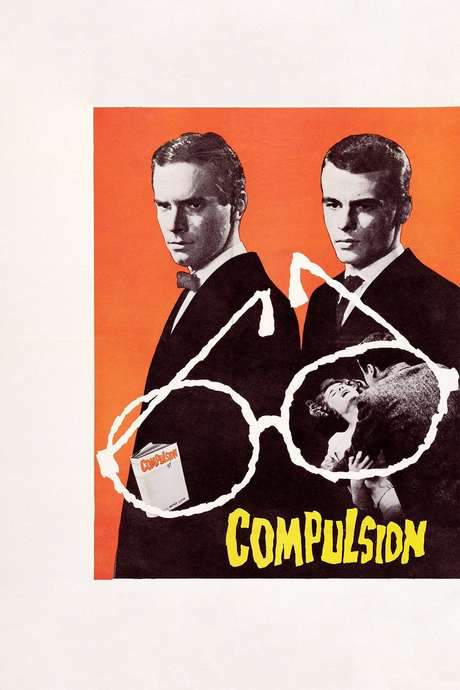
Compulsion (1959) movie poster

Characters & Themes

Compulsion (1959) Characters, Setting & Themes Explained

Release, runtime and language
1959 · 103 mins · English
Loading streaming availability…
Directed by
Richard Fleischer
Starring
Orson Welles, Dean Stockwell, Edward Binns, Richard Anderson, Bradford Dillman, Martin Milner

Believing they could pull off the perfect crime, two teenage friends meticulously plan a daring thrill‑seeking caper. Overconfident, they think they’ve eliminated every trace, but a single oversight—leaving a pair of glasses at the scene—shatters their scheme and triggers a shocking fallout.

On this page (9)
  1. 1 Where to watch
  2. 2 Characters explained (9)
  3. 3 Where & when it takes place
  4. 4 Themes & meaning (3)
  5. 5 Character & meaning questions
  6. 6 The book behind the movie
  7. 7 Movie threads
  8. 8 Movies like Compulsion
  9. 9 Every angle
Loading streaming availability…

9 main characters · contains spoilers

Compulsion Characters Explained: Who Is Who

The main characters of Compulsion (1959), heroes and villains: what drives them, how they change over the course of the story and what each of them reveals about the film's bigger ideas.

  • Judd Steiner (Dean Stockwell)

    A brilliant but impressionable law student who seeks to prove his superiority, yet remains vulnerable to Artie’s coercive influence. His commitment to Nietzschean notions wanes as guilt and fear surface, revealing a conflicted psyche.

    • 🧠 Ambition
    • ⚖️ Legal mind
    • 🌀 Influence
  • Artie Straus (Bradford Dillman)

    Charismatic and domineering, Artie pushes them toward criminal actions to demonstrate their supposed superiority. He manipulates Judd, crafts the ransom plan, and ultimately breaks under interrogation.

    • 🎭 Charisma
    • 🧭 Manipulation
    • 🧩 Recklessness
  • Jonathan Wilk (Orson Welles)

    A renowned attorney who defends the defendants and argues against capital punishment in a powerful closing. He embodies persuasive courtroom rhetoric and strategic moral framing.

    • ⚖️ Legal brilliance
    • 🗣️ Oratory
    • 🎯 Strategy
  • Sid Brooks (Martin Milner)

    A classmate and aspiring journalist who probes the murder case, offering a critical, ground-level view of events. He connects investigative details to the broader social context and the consequences of the crime.

    • 📰 Journalism
    • 🕵️‍♂️ Investigation
    • 📚 Curiosity
  • Paulie Kessler

    A neighbor and the victim whose murder catalyzes the investigation. His death exposes the criminals’ arrogance and triggers the unraveling of their alibis.

    • 🧒 Victim
    • 🚔 Catalyst
    • 🕯️ Tragedy
  • Mr. Steiner (Judd’s father)

    played by Wilton Graff

    A member of a wealthy, socially prominent family whose status anchors Judd’s world. He represents the environment that shapes Judd’s upbringing and sense of entitlement.

    • 💼 Wealth
    • 🏛️ Influence
    • 👨‍👦 Family
  • Charles Straus (Artie’s father)

    played by Robert Burton

    Another pillar of high society, his presence underscores the Straus's social standing and the expectations placed on Artie. His character adds perspective on the privilege driving the narrative.

    • 💼 Wealth
    • 🏛️ Privilege
    • 👨‍👦 Family
  • District Attorney Harold Horn

    played by E.G. Marshall

    The public prosecutor who leads the case against the defendants and triggers the courtroom drama that tests the limits of the legal system.

    • ⚖️ Prosecution
    • 🗣️ Authority
    • 🕵️‍♂️ Courtroom
  • Padua (Horn's Assistant)

    played by Gavin MacLeod

    A courtroom aide who supports the prosecution, adding a sense of procedural tension to the trial and its many moving parts.

    • 🗂️ Assistant
    • 🗳️ Courtroom
    • 🧩 Detail

Last updated: October 04, 2025 at 19:16

Was this helpful?

Setting

Where and When Does Compulsion Take Place?

The setting of Compulsion (1959): the year and time period, the places and locations, and how they shape the characters, the mood and the tension of the story.

Time period

Location

Chicago, University of Chicago campus, fraternity house, city park

The story unfolds in Chicago, centering on the University of Chicago campus and nearby neighborhoods. Key scenes take place inside a fraternity house and during drives through the city streets, reflecting the era's affluent social circles. The setting juxtaposes academic life with a crime-ridden city landscape, underscoring the contrast between intellect and moral failure.

  • 🏙️ Urban
  • 🏛️ University setting
  • 🗺️ Chicago

Last updated: October 04, 2025 at 19:16

Was this helpful?

3 major themes

Compulsion Meaning: Themes & Message Explained

What is Compulsion (1959) really about? The emotional, social and philosophical themes the film keeps returning to, its symbolism and the message beneath the surface.

  • Law vs. Morality

    Powerful young students convinced of their superiority challenge tribal and legal codes. The murder and subsequent trial probe whether intellect can override ethical responsibility, or if the law remains the ultimate equalizer.

  • Intellectual Pride

    Judd and Artie fuse philosophy with criminal action, using Nietzschean notions of the Übermensch to justify their crimes. The film examines how ideas can corrupt judgment when detached from empathy and consequences.

  • Justice & Capital Punishment

    The defense by a famed attorney reframes the case into a debate about capital punishment. The narrative questions whether the state has the right to end lives, even for brutal crime, and at what cost.

Last updated: October 04, 2025 at 19:16

Was this helpful?

Character & theme questions

Compulsion Characters & Meaning: Your Questions Answered

The questions people ask about Compulsion (1959): who the characters really are, their relationships, what the symbols mean, where it takes place and what the movie is really about. Each answer contains spoilers.

Q1

Where does the story take place?

The story unfolds in Chicago, primarily centered on the University of Chicago campus and nearby neighborhoods. Key scenes take place inside a fraternity house and during drives through city streets, reflecting the affluent social circles of the era. The setting juxtaposes academic life with the gritty urban landscape, underscoring the contrast between intellect and moral failure.

  • chicago
  • university of chicago
  • fraternity house
  • setting
  • urban
Q2

What are the main themes explored in the film?

The film explores three interconnected themes: Law vs. Morality, which examines whether intellect can override ethical responsibility; Intellectual Pride, focusing on how Nietzschean ideas can corrupt judgment when detached from empathy; and Justice & Capital Punishment, which questions whether the state has the right to end lives, even for brutal crimes.

  • themes
  • law
  • morality
  • intellectual pride
  • capital punishment
  • justice
Q3

Who is Judd Steiner?

Judd Steiner is a brilliant but impressionable law student portrayed by Dean Stockwell. He seeks to prove his intellectual superiority and becomes entangled in Artie's criminal scheme. Initially committed to Nietzschean notions of the Übermensch, Judd's confidence wanes as guilt and fear surface, revealing a conflicted psyche torn between ambition and conscience.

  • judd steiner
  • dean stockwell
  • character
  • law student
  • nietzsche
Q4

Who is Artie Straus?

Artie Straus, played by Bradford Dillman, is a charismatic and domineering character who pushes Judd toward criminal actions to demonstrate their supposed superiority. He manipulates Judd, crafts the ransom plan, and ultimately breaks under interrogation. His arrogance and leadership in the crime drive much of the film's tension.

  • artie straus
  • bradford dillman
  • character
  • manipulator
  • criminal
Q5

Who is Jonathan Wilk and what is his role?

Jonathan Wilk, portrayed by Orson Welles, is a renowned attorney who defends the defendants in court. He argues against capital punishment in a powerful closing statement, embodying persuasive courtroom rhetoric and strategic moral framing. His defense transforms the trial into a philosophical debate about justice, privilege, and the state's right to punish.

  • jonathan wilk
  • orson welles
  • attorney
  • defense lawyer
  • trial
Q6

What does the Intellectual Pride theme mean?

The theme of Intellectual Pride explores how Judd and Artie fuse philosophy with criminal action, using Nietzschean concepts of the Übermensch to justify their crimes. The film examines how ideas can corrupt judgment when detached from empathy and consequences, showing the dangerous results of believing intellect supersedes morality.

  • intellectual pride
  • nietzsche
  • übermensch
  • philosophy
  • corruption
Q7

What does the Law vs. Morality theme explore?

The Law vs. Morality theme examines how powerful young students, convinced of their superiority, challenge both tribal and legal codes. The murder and subsequent trial probe whether intellect can override ethical responsibility, or if the law remains the ultimate equalizer, asking if some people believe they are above consequences.

  • law
  • morality
  • ethics
  • responsibility
  • superiority
Q8

Is the movie based on a true story?

Yes, Compulsion is inspired by the notorious 1924 Leopold and Loeb murder case in Chicago. Like the fictional characters, Richard Loeb and Nathan Leopold murdered a young boy in what they believed was the perfect crime, driven by intellectual arrogance and philosophical justifications. The film parallels the real case closely.

  • true story
  • leopold and loeb
  • real case
  • chicago murder
  • inspiration
Q9

Who is Sid Brooks?

Sid Brooks, played by Martin Milner, is Judd's classmate and an aspiring journalist who probes the murder case. He offers a critical, ground-level view of events, connecting investigative details to the broader social context and the consequences of the crime. Sid represents the outside world's reaction to the killing.

  • sid brooks
  • martin milner
  • journalist
  • investigator
  • witness
Q10

What time period is the movie set in?

While the film was released in 1959, the story is set in 1924, matching the era of the real Leopold and Loeb case that inspired it. The 1920s setting reflects the affluent social circles and academic environment of the era, as well as the jazz age context surrounding the crime.

  • 1920s
  • time period
  • era
  • setting
  • 1924
Q11

What is the Justice and Capital Punishment theme about?

The Justice & Capital Punishment theme centers on the defense by attorney Jonathan Wilk, which reframes the case into a debate about whether the state has the right to end lives, even for brutal crime. The narrative questions the morality of execution and at what cost justice is pursued, adding philosophical weight to the courtroom drama.

  • capital punishment
  • death penalty
  • justice
  • execution
  • trial

Movie threads

More Movies Like Compulsion, by Mood & Story

Curated lists built around what makes Compulsion tick: the same mood, the same kind of story or the same emotional payoff. Each list explains why these movies belong together.

Movies about intellectual arrogance unraveled like in Compulsion

Stories where intellectual hubris is meticulously dismantled by inescapable evidence. Explore a collection of movies like Compulsion, where overconfident characters meet their match through a methodical investigation. If you enjoyed watching a flawless crime scheme collapse under the weight of a single mistake, you'll find similar stories of forensic downfall here.

  • forensic
  • arrogant
  • chilling
  • oppressive
  • methodical
  • judgment
  • Tone: dark, clinical, grim
  • Pacing: steady, methodical
Why these movies?

The story pattern: The narrative pattern follows brilliant but morally bankrupt protagonists who commit a perfect crime, only to have their confidence shattered by a painstaking investigation that exposes a fatal flaw. The journey is one of increasing tension as their illusion of control is stripped away, leading to a courtroom climax or moral collapse.

Why they belong together: These movies share a core thematic focus on intellectual hubris and its consequences. They create a cohesive experience through a dark tone, steady pacing that builds tension methodically, and a heavy emotional weight derived from watching a tragic, self-inflicted downfall.
Grim crime procedurals and courtroom dramas like Compulsion

Methodical films that dissect a shocking crime and its heavy legal aftermath. This collection features tense, character-driven dramas like Compulsion that meticulously detail a crime and its legal fallout. If you appreciate a steady pace, dark tone, and a focus on the grim realities of the judicial system, you'll find compelling similar stories here.

  • tense
  • grim
  • procedural
  • courtroom
  • oppressive
  • forensic
  • Tone: dark, tense, grim
  • Pacing: steady, procedural
Why these movies?

The story pattern: Stories in this thread typically unfold in a linear, steady fashion, moving from the planning of a crime to its execution, the forensic investigation, and finally the tense courtroom battle. The emotional journey is heavy, often exploring themes of privilege, nihilism, and the cold mechanics of justice, culminating in a sad or bleak conclusion.

Why they belong together: These films are grouped by their shared vibe: a dark, tense atmosphere built on a steady, procedural narrative structure. They are united by a high intensity derived from serious subject matter, a heavy emotional weight, and a compelling but grim focus on crime and punishment.

If you liked this

Movies Like Compulsion

Similar movies to Compulsion: the same genre, themes or kind of story. Each one comes with its own plot summary, timeline and ending explained.

Browse all movie summaries

Every angle

Compulsion (1959) Explained: Plot, Timeline & Characters

Everything about Compulsion in one place: what happens in the plot summary, the timeline in chronological order, the characters and meaning and a spoiler-free summary. What's After the Movie adds the cast, box office and post-credit scenes.

Coming soon on iOS and Android

The Plot Explained Movie Summary App

Plot summaries, endings explained and timelines on your phone. Catch up on any movie in minutes, save your favorites and never miss a twist again.

Be the first to know when we launch. Your email stays private, always.

Learn more about the app