Plot Explained Spoilers guaranteed!
Plot Explained

Browse by genre

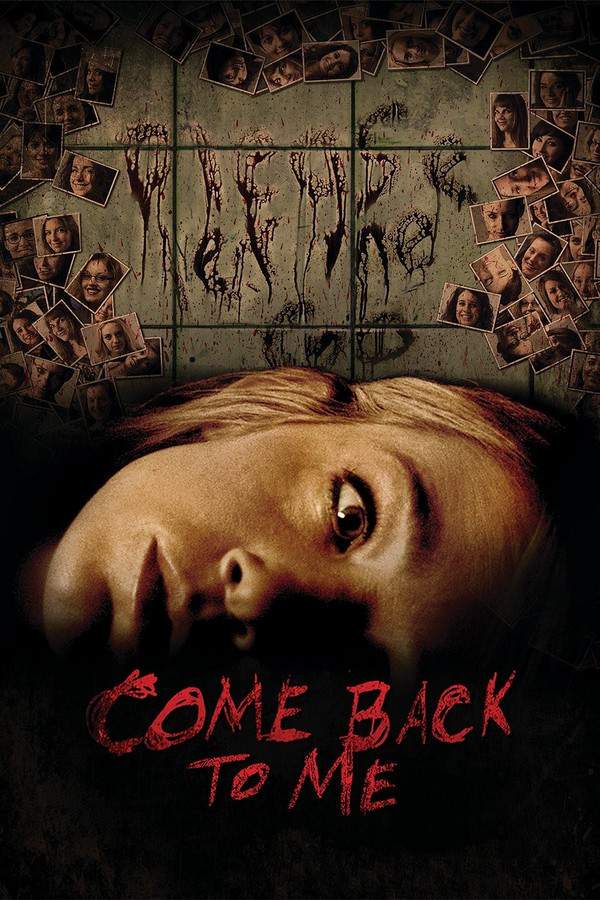
Come Back to Me (2014) movie poster

Plot Summary

Come Back to Me (2014) Plot Summary Explained

Release, runtime and language
2014 · 90 min · English
Directed by
Paul Leyden

A woman experiences unsettling blackouts and struggles to recall lost time. Determined to find answers, she begins recording her home, hoping to shed light on the gaps in her memory. Her investigation leads her to a disturbing discovery about her neighbor, forcing her to question her perception of reality and her own mental state. The unsettling truth she uncovers puts her safety and sanity at risk.

On this page (5)
  1. 1 What happens: full plot
  2. 2 Plot questions answered
  3. 3 Movie threads
  4. 4 Movies like Come Back to Me
  5. 5 Every angle

Full plot summary · contains spoilers

What Happens in Come Back to Me: Full Plot Summary

The whole story of Come Back to Me (2014) explained, from the opening scene to the final frame: every key event, every twist and what it all adds up to. Read it as a quick recap before the sequel, to check a scene you missed, or to finally understand what really happened.

Dale’s early years are shadowed by a brutal, double tragedy: as a teenager he watches his mother, Eileen, fall victim to what appears to be his meth-addicted father’s violence. The scene ends when the police arrive and shoot the father, but the moment is seared into Dale’s memory. The officer who discovers Eileen runs from the house in shock, while Dale re-enters to tell his mother that everything will be all right, a quiet, stubborn hope clinging to him even as the chaos around him intensifies.

Years later in Las Vegas, Dale’s life intersects with a new kind of ordinary—neighbors who bring over cookies and try to be friendly. Across the street live Sarah and Josh, a married couple where Josh works as a croupier and Sarah is a graduate student researching the effects of pornography for her dissertation. When Dale is questioned by Sarah about why she seems to haunt his gaze, he bluntly admits that she reminds him of someone—someone he has lost touch with, someone who resonates with the memory of his mother.

As Josh holds down extra shifts at work, Sarah is suddenly fractured by a series of unsettling events. She experiences a highly vivid, almost cinematic dream in which she is murdered. The dream is so tangible that, upon waking, she discovers a different outfit on her body and a room that has been cleaned for her. A blood-stained shirt appears in the laundry, confirming how real the dream feels to her. Her friend Leslie, a pregnant doctor, becomes a touchstone of rational explanation, diagnosing night terrors and prescribing a hypnotic to ease the fear. Yet one clue persists: a striking scar she once wore has disappeared, a change that even Leslie cannot explain away.

Seeking relief, Josh calls in a favor and arranges a luxurious vacation for the couple. In the hotel’s opulence, Sarah finally sleeps without the night terrors that had plagued her. But once they return home, the terror returns with a vengeance, now accompanied by new symptoms, including nausea. Dale notices that Sarah looks unwell and presses her for answers about where she has been. When he leaves for work, Sarah sneaks into his house and uncovers a disturbing collection: photographs of people in states that resemble death, including herself. She also finds a hidden key replica—evidence that Dale had been delivering groceries to her home. Dale returns and, in a shocking moment, seems to kill her with a blow to the head. Yet Sarah awakens in her own bed, breathless, suspecting that what she experienced was another night terror rather than a real threat.

At Leslie’s house, a pregnancy test reveals the truth that had been eluding Sarah: she is pregnant. Leslie promises to schedule more tests to monitor the pregnancy, the night terrors, and the blackouts that have plagued Sarah. Unknown to her, Josh is sterile, a revelation that spirals into a painful insecurity when he learns of the pregnancy and abruptly leaves.

Left to face everything alone, Sarah installs hidden cameras around her home to capture the phenomena she has endured, hoping to understand the night terrors once and for all. The footage lays bare a chilling cycle: Dale enters the house, rapes and murders her, and then resurrects her, erasing portions of her memory in the process. The more she watches, the deeper she dives into a web of fear and memory, realizing that Dale has a long history of abducting and reviving neighbors. A disturbing conversation with Eileen, who has herself been institutionalized, reveals that Dale’s pattern is not random but a dark, repetitive compulsion. Eileen admits she placed herself in an institution to escape him, only to be resurrected by Dale after she committed suicide, and she pleads with Sarah to kill Dale, a request she could never fulfill herself.

As Leslie gives birth, the newborn’s appearance unsettles everyone who sees the child, not resembling either possible father, and the looming memory of Sarah’s video confrontation with Dale hints at a deeper truth. Meanwhile, Josh returns, encouraged by a friend to give Sarah another chance. But fear and mistrust drive Sarah to shoot at him when she mistakes him for Dale, a desperate act born of paranoia and pain. In a fragile, twisted moment, she begs Dale to resurrect Josh, hoping to undo the harm she has caused; Dale, unmoved, refuses. Desperate, Sarah attempts to coerce Dale by seducing him, hoping to manipulate the resurrection to save Josh. He revives Josh, who then helps pull Sarah back from the edge of ruin. Yet the violence catches up with them all: Sarah shoots Dale dead, ending his cycle of murder and resurrection.

In a final, tragic Chinese fire drill of consequences, the victims who had been murdered and resurrected—Dale’s former victims, including Sarah, Josh, and Leslie—collapse from their wounds all at once, as if the cycle has exhausted itself. The film closes on a quiet, haunting image: a close-up of Leslie’s child, the quiet continuation of life that lingers after so much violence and fear have burned away the old patterns.

The story moves with a methodical, unsettling tempo, tracing how past traumas echo into the lives of new neighbors, how fear can blur the lines between nightmare and waking life, and how the willingness to believe in a second chance can still lead to devastating endings. Through Dale’s relentless, uncanny pattern and Sarah’s determined search for truth, the film explores the fragile boundary between memory and reality, and the price of confronting a danger that cannot be easily killed or forgotten.
Last updated: October 09, 2025 at 16:16

Was this helpful?

Plot questions answered

Come Back to Me Plot Explained: Your Questions Answered

The questions people ask most about Come Back to Me (2014): what happens in the confusing scenes, why the characters do what they do, the twists, hidden details and what the ending means. Each answer contains spoilers.

Q1

Why does Dale stare at Sarah and what does she remind him of?

Dale stares at Sarah because she reminds him of his mother, Eileen. This connection is established early in their acquaintance when Sarah directly asks Dale why he watches her. His explanation establishes the psychological foundation for why he targets her specifically, seeing his mother's face in Sarah triggers his predatory pattern.

Foreshadowing: This detail foreshadows the later revelation that Dale has been resurrecting neighbors for years, mirroring a compulsive cycle tied to his traumatic past.

  • dale
  • sarah
  • mother eileen
  • obsession
  • neighbor
Q2

How does Dale resurrect people after killing them?

The film never fully explains the supernatural mechanism behind Dale's resurrection ability. What is established is that he has a documented history of killing neighbors and then bringing them back, which allows him to manipulate their memories. The process appears to leave victims with gaps in their memory, as Sarah experiences blackouts and cannot recall being murdered and resurrected multiple times.

Foreshadowing: Eileen's revelation that Dale resurrected her after she committed suicide confirms this is a long-standing pattern, not a recent development.

  • resurrection
  • supernatural
  • dale
  • murder
  • memory loss
Q3

Why does Sarah's scar disappear?

Sarah's scar disappears because Dale has been killing and resurrecting her repeatedly. Each resurrection appears to restore her body to a previous state, erasing physical evidence like the scar. This is one of the first concrete signs that something is wrong beyond simple nightmares, her body is literally being reset between the night terrors.

Foreshadowing: The missing scar directly connects to the later camera footage showing Dale's repeated cycles of murder and resurrection.

  • scar
  • resurrection
  • physical evidence
  • body changes
Q4

Why does Josh leave Sarah after learning about the pregnancy?

Josh leaves because he is sterile and knows he cannot be the father of Sarah's child. When Sarah reveals her pregnancy, Josh's immediate assumption is that she was unfaithful. Rather than confront the situation, he simply abandons her, leaving Sarah isolated at a critical moment when she is already experiencing terrifying blackouts and paranoid episodes.

Foreshadowing: This abandonment drives Sarah deeper into investigating Dale alone and ultimately leads to her desperate attempt to get Dale to resurrect Josh after she shoots him.

  • josh
  • pregnancy
  • sterile
  • abandonment
  • leaves
Q5

What does the hidden camera footage reveal about Dale?

The hidden camera footage reveals Dale's complete pattern: he enters Sarah's home while she sleeps, rapes and murders her, then resurrects her. After resurrection, Sarah loses portions of her memory, which explains why she cannot recall these attacks. The footage confirms she has been trapped in this deadly cycle repeatedly, with each iteration leaving her more traumatized and confused.

Foreshadowing: This discovery validates Sarah's suspicions and connects to the broader pattern Eileen describes, Dale has been doing this to neighbors for years.

  • hidden cameras
  • footage
  • rape
  • murder
  • resurrection
  • cycle
Q6

Why do all the victims die at the end after Dale is killed?

When Sarah kills Dale, all his previous victims, Sarah herself, Josh, and Leslie, collapse simultaneously from the wounds they sustained during their murders. The resurrection power was sustaining them; once Dale dies, the link is broken and their bodies finally succumb to the damage Dale inflicted. This creates a bittersweet ending where defeating the monster still costs lives.

Foreshadowing: Eileen mentioned she placed herself in an institution to escape Dale's resurrection cycle, implying the power has conditions and limits tied to Dale's life force.

  • dale death
  • victims die
  • resurrection ends
  • final scene
  • casualties
Q7

What is Dale's backstory with his mother Eileen?

As a teenager, Dale witnessed his meth-addicted father murder his mother Eileen. When police arrived, they shot and killed Dale's father. The traumatic moment stayed with Dale, specifically, the image of his mother dying while an officer ran away in shock. Dale re-entered the house to reassure her everything would be all right, showing even then his twisted connection to death and resurrection.

Foreshadowing: This childhood trauma directly informs Dale's adult pattern of killing women who resemble his mother and then bringing them back, as if trying to save Eileen.

  • dale
  • eileen
  • mother
  • childhood trauma
  • father
  • murder
Q8

Why does the hotel stay temporarily stop Sarah's symptoms?

The luxurious hotel stay breaks Dale's cycle of access to Sarah. With Sarah in a different location, Dale cannot enter her home to carry out his attacks. This brief respite proves the night terrors are not psychological hallucinations but real events, Sarah feels safe because she genuinely is away from Dale, and once they return home, the attacks resume immediately.

Foreshadowing: This directly confirms that Dale is physically reaching Sarah during her blackouts, not just appearing in her dreams.

  • hotel
  • symptoms stop
  • night terrors
  • location
  • safety
Q9

Why does Leslie's baby not resemble either possible father?

Leslie's baby does not resemble Josh (her husband) or the other man because Dale is likely the biological father. This is hinted at when Leslie recalls seeing Sarah's video evidence of being raped by Dale and remembers his pattern of intrusion into their homes. The baby represents the extendsion of Dale's reach into every aspect of their lives, suggesting he victimized Leslie as well.

Foreshadowing: The unusual birth connects to the broader theme of Dale's predatory behavior affecting all the neighbors, not just Sarah.

  • leslie baby
  • paternity
  • dale father
  • not resemble
  • birth
Q10

Why does Sarah seduce Dale to resurrect Josh?

After accidentally shooting Josh (mistaking him for Dale), Sarah desperately wants to undo the harm she caused. She believes Dale's only value is his resurrection power, so she manipulates him sexually to force him to bring Josh back. This reflects her desperation and twisted priorities, willing to use her body to save the man she loves, even knowing Dale is a monster.

Foreshadowing: This act of manipulation ultimately works; Dale resurrects Josh, who then helps save Sarah from Dale's ongoing threat.

  • sarah seduces dale
  • resurrect josh
  • manipulation
  • desperation
  • saves josh

Movie threads

More Movies Like Come Back to Me, by Mood & Story

Curated lists built around what makes Come Back to Me tick: the same mood, the same kind of story or the same emotional payoff. Each list explains why these movies belong together.

Movies about psychological unraveling and gaslighting like Come Back to Me

Stories where characters question their sanity while facing a hidden threat. If you liked the psychological terror and gaslighting in Come Back to Me, this list features similar horror and thriller movies where characters fight to prove their sanity against a manipulative and hidden threat. Discover more stories that blur the lines between nightmare and reality.

  • paranoid
  • claustrophobic
  • unsettling
  • tense
  • disturbing
  • psychological
  • Tone: dark, tense, paranoid
  • Pacing: steady, methodical
Why these movies?

The story pattern: The narrative follows a protagonist, typically isolated or vulnerable, who begins to experience unsettling events. An external force, often someone close or a neighbor, manipulates the situation to make them doubt their own mind. The story is a tense investigation where the character must uncover the truth before they lose their sanity or become a victim.

Why they belong together: These movies are grouped by their core focus on psychological manipulation and the theme of gaslighting. They share a heavy emotional weight, a dark tone, and a steady pacing that builds dread as the protagonist's reality crumbles.

Domestic nightmare and suburban horror movies similar to Come Back to Me

Horror that invades the safety of home and neighborhood. Fans of the suburban horror in Come Back to Me will find more terrifying stories where the threat lurks next door. This list features horror movies about neighbors with dark secrets and homes that become prisons, perfect for viewers who like their horror close to home.

  • unsettling
  • claustrophobic
  • tense
  • disturbing
  • nightmarish
  • bleak
  • Tone: dark, bleak, unsettling
  • Pacing: steady, building dread
Why these movies?

The story pattern: The narrative structure often begins with a character or family moving into a new home or becoming suspicious of their neighbors. The invasion is slow and insidious, starting with small anomalies that escalate into full-blown terror. The conflict is deeply personal, involving home invasion, violation of privacy, and the discovery of horrific secrets hidden behind a facade of normalcy.

Why they belong together: Movies in this thread share a common setting—the home and its immediate surroundings—as the primary source of horror. They leverage the anxiety of proximity and the betrayal of trust to create a deeply unsettling and claustrophobic experience.

If you liked this

Movies Like Come Back to Me

Similar movies to Come Back to Me: the same genre, themes or kind of story. Each one comes with its own plot summary, timeline and ending explained.

Browse all movie summaries

Every angle

Come Back to Me (2014) Explained: Plot, Timeline & Characters

Everything about Come Back to Me in one place: what happens in the plot summary, the timeline in chronological order, the characters and meaning and a spoiler-free summary. What's After the Movie adds the cast, box office and post-credit scenes.

Coming soon on iOS and Android

The Plot Explained Movie Summary App

Plot summaries, endings explained and timelines on your phone. Catch up on any movie in minutes, save your favorites and never miss a twist again.

Be the first to know when we launch. Your email stays private, always.

Learn more about the app