Plot Explained Spoilers guaranteed!
Plot Explained

Browse by genre

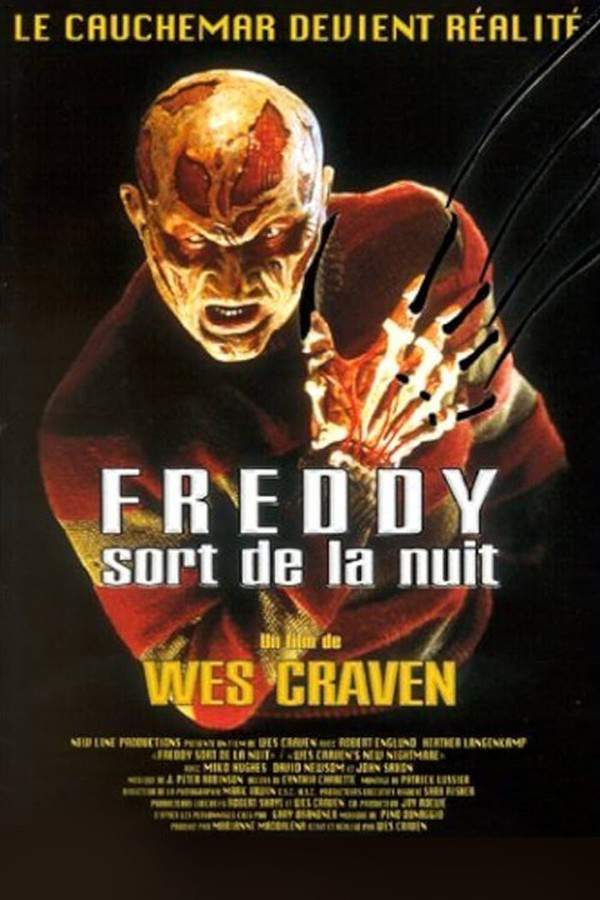
Wes Craven's New Nightmare (1994) movie poster

Plot Summary

Wes Craven's New Nightmare (1994) Plot Summary Explained

Release, runtime and language
1994 · 112 min · English
Directed by
Wes Craven
Starring
Robert Englund, Miko Hughes, Heather Langenkamp, David Newsom, Gretchen Oehler, Jeff Davis

Reality and nightmare intertwine in this unsettling film where director Wes Craven and the cast confront the iconic Freddy Krueger. When Heather Langenkamp's son is threatened by Freddy's influence, she and Robert Englund must face the horror directly. The film explores the terrifying implications of a world where the boundaries between the fictional and the real dissolve, forcing them to battle a demonic presence that has entered their own lives.

On this page (6)
  1. 1 Where to watch
  2. 2 What happens: full plot
  3. 3 Plot questions answered
  4. 4 Movie threads
  5. 5 Movies like Wes Craven's New Nightmare
  6. 6 Every angle

Where to watch

Where to Watch Wes Craven's New Nightmare (1994)

Where can you watch Wes Craven's New Nightmare? Stream, rent or buy it in the US, including on Amazon Video, Apple TV Store and Fandango At Home: current JustWatch availability with up-to-date prices.

Streaming availability powered by JustWatch

Full plot summary · contains spoilers

What Happens in Wes Craven's New Nightmare: Full Plot Summary

The whole story of Wes Craven's New Nightmare (1994) explained, from the opening scene to the final frame: every key event, every twist and what it all adds up to. Read it as a quick recap before the sequel, to check a scene you missed, or to finally understand what really happened.

Just as the original Nightmare on Elm Street began with the creation of Freddy's notorious glove, New Nightmare opens with a more modern and ominous version being forged. As the creator appears to sever his own hand to attach the claws, the crew flinches while the director, Wes Craven, urges the special effects team to add more blood to the scene. Soon after, he commands, > "Cut! Print that, Gretchen Oehler!"

We are introduced to Heather Langenkamp, her husband Chase, and their son Dylan as they wander through the film set of the latest Nightmare on Elm Street. However, the prop claw suddenly comes to life, wreaking havoc and claiming the lives of the special effects team. Just as it turns to mutilate Chase, Heather screams, jolting awake in her own bed amidst an earthquake shaking Los Angeles. Once things calm down, Chase shows minor scratches that resemble those he had sustained in the nightmare, prompting Heather to wonder about their true origin.

That very day, Heather appears on a morning talk show to commemorate the 10th anniversary of the Nightmare franchise. During the broadcast, Robert Englund surprises her by bursting onto the set in full Freddy costume, which leaves Heather feeling unsettled. Following the show, producer Bob Shaye invites Heather to his office at New Line Cinema. He reveals that Wes is working on a new and final script, inviting Heather to reprise her iconic role as Nancy. However, Heather declines, troubled by her unsettling dreams, mysterious phone calls, and her son's alarming behavioral changes. Bob also informs her that her husband is involved in the production and has developed a terrifying new glove for Freddy, much to Heather's consternation.

Upon returning home, she finds Dylan in the throes of a disturbing episode, ominously warning her, "Never sleep again!" Alarmed, Heather implores Chase to return, but he tragically falls asleep at the wheel and dies in what appears to be a car accident. When Heather identifies his body, she notices troubling claw-like marks on his chest, adding to her growing suspicions. Meanwhile, Dylan's odd behaviors intensify due to the grief of losing his father.

Desperate for answers, Heather seeks out Wes Craven for clarity on the strange events unfolding around her. Wes confesses that he shares the same confusion, having been writing down vivid dreams that suggest pure evil can be temporarily encapsulated within art, allowing it a means of expression. He explains that Freddy Krueger embodies this malevolence, viewing Heather as the gatekeeper due to her character Nancy's past victory over him. This time, however, Freddy is intent on breaking Heather down before facing her directly.

After taking a brief nap in Dylan's room, Heather awakens to find her son missing. Descending the stairs, she stumbles upon him in another trance-like episode. In a frantic attempt to protect him, Heather brings Dylan to the hospital. There, she learns that her son's troubling actions include mimicking Freddy and singing his infamous theme song. Amidst rising tensions, a babysitter named Julie enters the scene, revealing her own nightmare involving Dylan. While the medical staff prepares to sedate him, they are interrupted by Julie, who protects Dylan at all costs—even resorting to violence against hospital staff.

As chaos erupts, Freddy makes his grand return by brutally attacking Julie in a manner reminiscent of Tina Gray's death in the original film. The nurses discover the horrifying scene, but Heather becomes increasingly concerned about Dylan's whereabouts. She recalls their home being close by and rushes there, only to find Freddy dangling Dylan over traffic. Upon arriving, she realizes that Freddy is distorting reality, forcing her back into her role as Nancy and transforming her home into that of Elm Street itself.

In a final confrontation within a nightmarish landscape, Heather takes sleeping pills to enter a lucid dream where she attempts to rescue Dylan. Together they face off against Freddy, who attempts to overpower Heather. In a desperate moment, Dylan uses a knife to free his mother, and together they manage to trap Freddy in a furnace, a fiery end reminiscent of the tale of Hansel and Gretel. As the flames consume Freddy, his true form is revealed while Heather and Dylan escape back to reality, where they discover the script that Wes has been working on.

Dylan, eager for reassurance, asks his mother to read from it: "We open on an old wooden bench. There's fire and tools, and a man's grimy hands building what's soon revealed as a gleaming set of claws. And the claws are moving now as if awakening from a long and unwanted sleep...."

Last updated: October 27, 2024 at 16:59

Was this helpful?

Plot questions answered

Wes Craven's New Nightmare Plot Explained: Your Questions Answered

The questions people ask most about Wes Craven's New Nightmare (1994): what happens in the confusing scenes, why the characters do what they do, the twists, hidden details and what the ending means. Each answer contains spoilers.

Q1

Why does Freddy target Heather Langenkamp specifically?

Freddy targets Heather because she played Nancy in the original films, and Nancy was the one who successfully defeated him. Wes Craven explains that Heather functions as the 'gatekeeper' - her character Nancy's past victory over Freddy created a connection that Freddy wants to break. By destroying Heather psychologically before facing her, Freddy hopes to eliminate the threat she represents.

Foreshadowing: Early in the film, Heather's unsettling dreams and mysterious phone calls hint that Freddy has fixated on her.

  • freddy krueger
  • heather langenkamp
  • nancy
  • gatekeeper
  • motivation
Q2

How does Freddy escape from the movies into real life?

Wes Craven reveals he has been having vivid dreams that suggest pure evil can be temporarily encapsulated within art, giving it a means of expression. Freddy Krueger embodies this malevolence. As long as he existed only in films, he was contained. When Wes began writing a new script that would 'finalize' Freddy's story, the evil recognized an opportunity to break free from its fictional prison and enter the real world.

Foreshadowing: The opening scene showing the creation of a new, more ominous claw foreshadows Freddy's renewed threat.

  • freddy krueger
  • reality
  • escape
  • metafiction
  • wes craven
  • art containment
Q3

Why does Heather's husband Chase die?

Chase falls asleep at the wheel and dies in a car accident. However, the claw-like marks found on his body after death suggest Freddy's supernatural involvement - he may have influenced Chase into sleep or manipulated events to cause the accident. This establishes that Freddy can affect the real world even before his full manifestation.

Foreshadowing: Heather notices scratches on Chase that match injuries from her nightmare, proving Freddy's growing reach.

  • chase
  • death
  • car accident
  • freddy
  • supernatural
Q4

Why is Dylan behaving strangely and warning Heather 'never sleep again'?

Dylan becomes Freddy's target because he represents Heather's vulnerability. Freddy influences Dylan psychologically, causing him to mimic Freddy's mannerisms, sing his theme song, and deliver warning messages. This is part of Freddy's strategy to break Heather down - using her own child against her. The phrase 'never sleep again' is both a threat and a manipulation tactic.

Foreshadowing: Dylan's disturbing episode occurs right after Heather declines to reprise her role as Nancy, signaling Freddy's personal vendetta.

  • dylan
  • behavior
  • freddy influence
  • psychological torment
  • child endangerment
Q5

Why does Heather take sleeping pills to fight Freddy?

Heather intentionally takes sleeping pills to enter a lucid dream state where she can confront Freddy on his own turf and rescue Dylan. Since Freddy's power is absolute within dreams, she must face him there rather than in the waking world. This is the only way to reach Dylan, who has been pulled into the nightmare realm. The sleeping pills are a calculated sacrifice to enter the dreamscape willingly.

Foreshadowing: Throughout the film, the boundary between waking life and dreams progressively blurs, making this final plunge inevitable.

  • heather
  • sleeping pills
  • lucid dream
  • confrontation
  • dylan rescue
Q6

Why is Freddy trapped in a furnace in the final battle?

Heather and Dylan trap Freddy in a furnace as a callback to the fairy tale of Hansel and Gretel, where children escape a witch by pushing her into the oven. This mirrors their strategy - using the furnace's fire against Freddy, who had previously used fire to kill victims in the original Elm Street. The fairy tale reference emphasizes themes of childhood innocence defeating predatory evil.

Foreshadowing: The film's recurring use of childhood imagery and fairy tale motifs sets up this specific defeat method.

  • freddy
  • furnace
  • hansel and gretel
  • final battle
  • fire
Q7

Why does Freddy attack Julie at the hospital?

Freddy attacks Julie as part of his pattern of recreating deaths from the original film. Julie's attack mirrors the death of Tina Gray in the first Nightmare on Elm Street - both victims are attacked in beds while others watch helplessly. This isn't random; Freddy is deliberately echoing his film history while breaking into reality, blending his fictional kills with his new real-world victims.

Foreshadowing: Robert Englund's surprise appearance on the talk show in full Freddy costume foreshadows this merging of fiction and reality.

  • julie
  • hospital attack
  • tina gray
  • original film
  • kill recreation
Q8

What is the significance of the final scene with the script?

The final scene reveals that Wes has been writing a script throughout the events viewers just witnessed. When Heather reads the opening - describing an old wooden bench with fire and tools building a set of claws 'awakening from a long and unwanted sleep' - it mirrors the film's opening. This implies the cycle is repeating: Freddy will return, and Heather (or future actors) will face him again. The ending suggests evil encapsulated in art can never truly be destroyed, only contained.

Foreshadowing: Wes mentions early that he believes evil can be 'temporarily encapsulated within art,' confirming this cyclical nature.

  • script
  • ending
  • cycle
  • freddy return
  • metafiction
  • wes craven
Q9

Why does Robert Englund appear as Freddy on the talk show?

Robert Englund's surprise appearance on the morning talk show represents the first major crack between fiction and reality. The actor who played Freddy for a decade physically appears in costume, unsettling Heather. This moment establishes that Freddy's presence is seeping from the films into the actors' real lives, and Robert's appearance serves as a warning or foreshadowing of the danger to come.

Foreshadowing: This is the first explicit moment where the film's metafictional premise becomes undeniable.

  • robert englund
  • talk show
  • freddy costume
  • metafiction
  • actor
Q10

What is the connection between the scratches on Chase and Heather's nightmare?

Heather dreams of the prop claw attacking Chase on the film set, and the next morning she discovers similar scratches on his body. This proves Freddy's ability to affect reality through dreams - injuries inflicted in the nightmare manifest physically in the waking world. The scratches are the first concrete evidence that Freddy is crossing the boundary between fiction and reality.

Foreshadowing: The prop claw coming to life during the opening sequence establishes this supernatural crossover potential.

  • scratches
  • chase
  • nightmare
  • dream invasion
  • reality crossover
Q11

What is the purpose of the film's metafictional structure?

The film blurs the line between actors and characters to explore how fictional evil can feel real and persistent. By casting Wes Craven, Heather Langenkamp, and Robert Englund as themselves, the film asks whether stories - especially horror stories - can influence reality. The metafiction serves the theme that art containing pure evil (Freddy) takes on a life of its own and can escape its creator's intentions.

Foreshadowing: The opening scene directly mirrors how the original Nightmare on Elm Street began, establishing the fictional framework.

  • metafiction
  • blurring reality
  • actors
  • wes craven
  • nightmare franchise

Movie threads

More Movies Like Wes Craven's New Nightmare, by Mood & Story

Curated lists built around what makes Wes Craven's New Nightmare tick: the same mood, the same kind of story or the same emotional payoff. Each list explains why these movies belong together.

Fiction invades reality horror movies like Wes Craven's New Nightmare

Stories where fiction invades reality with unsettling psychological horror. If you enjoyed the meta-horror of Wes Craven's New Nightmare, explore more movies where the line between fiction and reality dissolves. Discover films featuring demonic forces from stories coming to life, haunted fictional characters, and other mind-bending horror that blurs the boundaries of reality.

  • meta-horror
  • unsettling
  • psychological
  • paranoid
  • dreamlike
  • claustrophobic
  • Tone: dark, unsettling, paranoid
  • Pacing: steady, methodical build
Why these movies?

The story pattern: The narrative pattern follows characters who are intimately connected to a fictional work—be it a film, book, or legend—that begins to manifest in their lives. The conflict escalates as they are forced to confront an evil they believed was imaginary, using the 'rules' of the fiction itself as their only weapon. The journey often explores themes of creativity, obsession, and the power of belief.

Why they belong together: Movies are grouped here because they share a core premise where the fabricated world of art or story violently intrudes upon the real world. They create a unique brand of horror that is intellectual, self-referential, and deeply unsettling, focusing on psychological dread over simple jump scares.

Supernatural maternal horror films like Wes Craven's New Nightmare

A mother's fierce protection against an insidious supernatural threat. For viewers who liked the theme of motherhood under threat in Wes Craven's New Nightmare, this thread features similar stories of mothers fighting supernatural evils. Find recommendations for tense, emotional horror movies where a parent's love is the last line of defense against demonic forces and psychological terror.

  • claustrophobic
  • desperate
  • protective
  • unsettling
  • anxious
  • tense
  • Tone: dark, heavy, desperate
  • Pacing: steady, relentless dread
Why these movies?

The story pattern: The narrative follows a mother who becomes the sole guardian against a supernatural entity targeting her child. The threat often exploits the child's vulnerability through dreams, possession, or psychological manipulation. The mother's journey is one of escalating terror and resourcefulness, as she must unravel the mystery of the threat while shielding her child, culminating in a direct and brutal confrontation.

Why they belong together: These movies are linked by their powerful focus on the maternal bond as the central emotional engine of the horror. The antagonist is not just a monster, but a direct challenge to the protagonist's role as a protector, creating a uniquely potent and emotionally draining viewing experience.

If you liked this

Movies Like Wes Craven's New Nightmare

Similar movies to Wes Craven's New Nightmare: the same genre, themes or kind of story. Each one comes with its own plot summary, timeline and ending explained.

Browse all movie summaries

Every angle

Wes Craven's New Nightmare (1994) Explained: Plot, Timeline & Characters

Everything about Wes Craven's New Nightmare in one place: what happens in the plot summary, the timeline in chronological order, the characters and meaning and a spoiler-free summary. What's After the Movie adds the cast, box office and post-credit scenes.

Coming soon on iOS and Android

The Plot Explained Movie Summary App

Plot summaries, endings explained and timelines on your phone. Catch up on any movie in minutes, save your favorites and never miss a twist again.

Be the first to know when we launch. Your email stays private, always.

Learn more about the app