










Plot Explained Spoilers guaranteed!
Plot Explained

Browse by genre

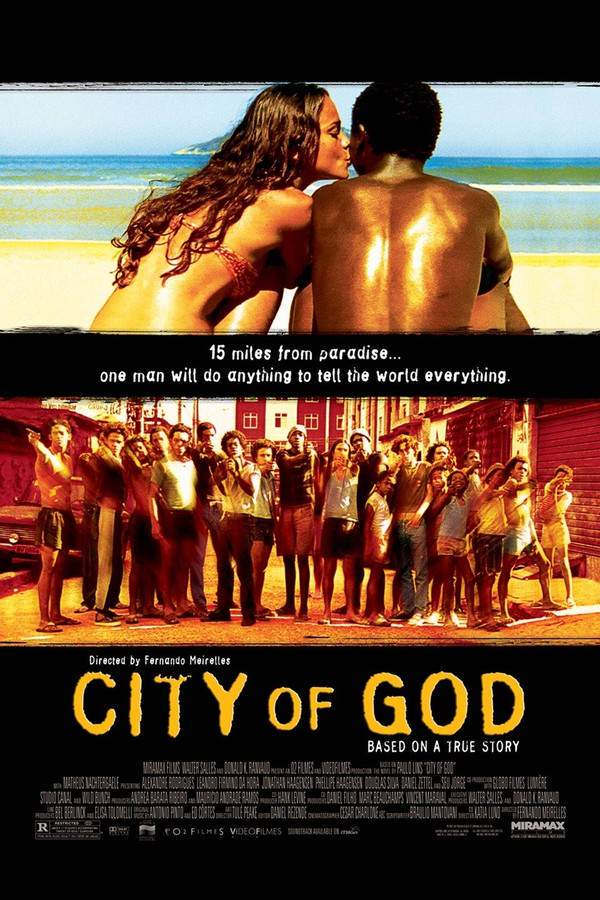
City of God (2003) movie poster

Characters & Themes

City of God (2003) Characters, Setting & Themes Explained

Release, runtime and language
2003 · 130 min · Portuguese
JustWatch #417 27
Directed by
Fernando Meirelles, Kátia Lund
Starring
Matheus Nachtergaele, Alexandre Rodrigues

Amidst the brutal poverty and drug-fueled violence of Rio de Janeiro’s City of God, a young man seeks a way out. He begins documenting his surroundings with a camera, using photography as a means of survival and a path towards escape. The film chronicles his experiences and the lives of those around him, revealing a desperate struggle for survival in a community where hope is scarce and danger is ever-present.

On this page (9)
  1. 1 Where to watch
  2. 2 Characters explained (5)
  3. 3 Where & when it takes place
  4. 4 Themes & meaning (3)
  5. 5 Character & meaning questions
  6. 6 The book behind the movie
  7. 7 Movie threads
  8. 8 Movies like City of God
  9. 9 Every angle

Where to watch

Where to Watch City of God (2003)

Where can you watch City of God? Stream, rent or buy it in the US, including on Paramount Plus Essential, Hoopla and Kanopy: current JustWatch availability with up-to-date prices.

Streaming availability powered by JustWatch

5 main characters · contains spoilers

City of God Characters Explained: Who Is Who

The main characters of City of God (2003), heroes and villains: what drives them, how they change over the course of the story and what each of them reveals about the film's bigger ideas.

  • Rocket (Alexandre Rodrigues)

    Rocket is an aspiring photographer who navigates the dangerous terrain of Cidade De Deus. Initially a bystander to the gang violence around him, he finds his passion for photography as a means to document the chaos. His moral journey reflects his struggle between documenting truth and seeking fame.

    • 📸 Photographer
    • 🌟 Aspirational
  • Li'L Zé (Leandro Firmino Da Hora)

    Li'L Zé starts as Li'L Dice, an ambitious youth drawn into a life of crime that transforms him into a feared drug lord. His rise reflects the brutal realities of the favela, showcasing a character that grapples with power and moral decay. Ultimately, his tyrannical control leads to his own downfall.

    • 👑 Drug Lord
    • 🔫 Ruthless
  • Benny (Phellipe Haagensen)

    Benny is a charismatic character and Li'L Zé’s closest ally, attempting to navigate the treacherous world of crime with some semblance of morality. His friendship with Rocket offers a glimpse into the possibility of yearning for a better life. However, his tragic demise serves as a catalyst for the film's escalating violence.

    • 👥 Loyal
    • 💔 Tragic
  • Carrot (Matheus Nachtergaele)

    Carrot is a rival drug dealer who becomes one of Li'L Zé's principal adversaries. His character reflects the complexity of loyalty and survival within the ruthless drug trade landscape. Carrot's struggle to maintain his territory illustrates the fierce competition inherent in the favela’s criminal underworld.

    • 🏴‍☠️ Rival
    • ⚔️ Defiant
  • Knockout Ned (Seu Jorge)

    Knockout Ned is a victim of violence who transforms from a vulnerable character into a figure driven by revenge against Li'L Zé. His story embodies themes of loss and retaliation, highlighting how personal tragedies can kindle cycles of retaliation within the favela.

    • 🥊 Vengeful
    • 🔥 Resilient

Last updated: October 22, 2024 at 19:31

Was this helpful?

Setting

Where and When Does City of God Take Place?

The setting of City of God (2003): the year and time period, the places and locations, and how they shape the characters, the mood and the tension of the story.

Time period

Late 1960s to 1970s

The story unfolds from the late 1960s into the 1970s, a tumultuous time in Brazil marked by social inequality and burgeoning crime. During this period, the favela's residents faced severe challenges, lacking basic necessities and struggling against systemic poverty while witnessing the rise of drug trafficking.

Location

Cidade De Deus, Rio De Janeiro

Cidade De Deus, or City of God, is a notorious favela located in the outskirts of Rio De Janeiro. Initially a housing project, it has become emblematic of poverty and violence, known for its vibrant yet dangerous culture. The community relies on informal economies while grappling with issues related to crime and law enforcement.

  • 🏙️ Location
  • 🌆 Urban

Last updated: October 22, 2024 at 19:31

Was this helpful?

3 major themes

City of God Meaning: Themes & Message Explained

What is City of God (2003) really about? The emotional, social and philosophical themes the film keeps returning to, its symbolism and the message beneath the surface.

  • Violence

    The film grapples with the theme of violence that permeates life in the favela. This cycle of aggression is depicted through the struggles between rival gangs and the impact of crime on the community. It serves as a stark reminder of how violence can shape lives and destinies.

  • Crime

    Crime serves as a central theme in City of God, portraying how desperation can lead individuals into a world of theft and drug trade. The film highlights the complex moral landscapes navigated by its characters, illustrating both the allure of crime and its devastating consequences.

  • Surveillance

    The theme of surveillance is explored through Rocket's role as a photographer, capturing the violent realities of the favela. His perspective serves to both document the struggles of his community and thrust them into the public eye, raising questions about the ethics of observation and representation.

Last updated: October 22, 2024 at 19:31

Was this helpful?

Character & theme questions

City of God Characters & Meaning: Your Questions Answered

The questions people ask about City of God (2003): who the characters really are, their relationships, what the symbols mean, where it takes place and what the movie is really about. Each answer contains spoilers.

Q1

Where is the City of God favela located?

City of God is set in the Cidade De Deus favela, a notorious housing project located in the outskirts of Rio de Janeiro, Brazil. Originally designed as a public housing initiative, the favela became synonymous with extreme poverty and violence, yet retains a vibrant cultural identity despite its dangerous reputation.

  • cidade de dios
  • rio de janeiro
  • favela
  • brazil
  • location
  • setting
Q2

What time period does City of God take place in?

The film unfolds from the late 1960s through the 1970s, a period in Brazil characterized by deep social inequality and the emergence of organized drug trafficking. This era saw the favela's transformation as residents faced severe poverty, inadequate public services, and the rise of criminal networks.

  • 1960s
  • 1970s
  • brazil
  • time period
  • era
  • historical context
Q3

What is the Cidade De Deus favela like?

Cidade De Deus is depicted as a harsh urban environment where poverty and crime intersect daily. The community operates largely through informal economies while constantly grappling with gang violence and minimal law enforcement presence. Despite the danger, the favela has a vibrant cultural life that contrasts with its brutal realities.

  • favela
  • poverty
  • urban
  • community
  • crime
  • informal economy
Q4

What are the main themes in City of God?

City of God explores several interconnected themes including persistent violence, the seduction and consequences of crime, and the role of surveillance through photography. The film examines how these elements shape the lives of favela residents and create cyclical patterns of desperation and destruction.

  • themes
  • violence
  • crime
  • surveillance
  • poverty
  • social issues
Q5

How does violence shape life in City of God?

Violence in City of God is depicted as an ever-present force that defines daily existence in the favela. The film shows how cycles of aggression between rival gangs and the impact of crime on the community shape residents' decisions, relationships, and futures. This pervasive violence creates a survival mentality where even children must choose sides.

  • violence
  • gang warfare
  • survival
  • community impact
  • cyclical violence
Q6

What role does crime play in City of God?

Crime serves as the central driving force in the film, portraying how desperation pushes people toward theft and drug trafficking. The narrative illustrates the moral complexity of characters who turn to crime for survival, showing both the immediate allure of power and money and the devastating long-term consequences of criminal life.

  • drug trafficking
  • crime
  • poverty
  • moral decay
  • criminal underworld
  • desperation
Q7

Why is photography important in City of God?

Photography functions as both a survival tool and a form of witness in the film through Rocket's camera. His documentation of the favela's violent realities serves to expose the community's struggles to the outside world while raising ethical questions about observation, representation, and whether documenting tragedy rather than intervening is a moral choice.

  • rocket
  • photography
  • camera
  • documentation
  • surveillance
  • witness
  • media
Q8

Who is Rocket in City of God?

Rocket is the film's protagonist, an aspiring photographer who grows up in the favela and uses his camera as a means of survival and potential escape. His moral journey involves balancing his desire to document the truth with his aspirations for fame, ultimately achieving a form of escape through his photography while remaining entangled in the violence around him.

  • rocket
  • alexandre rodrigues
  • protagonist
  • photographer
  • narrator
  • escape
Q9

Who is Li'L Zé in City of God?

Li'L Zé begins as a young boy drawn into crime and rises to become a powerful and ruthless drug lord controlling the favela. His transformation showcases the brutal realities of the criminal underworld, illustrating how power and moral decay go hand in hand. His tyrannical reign ultimately leads to his violent downfall.

  • lil zé
  • drug lord
  • villain
  • crime boss
  • power
  • corruption
  • rise and fall
Q10

Who are the main characters in City of God?

The film features several key characters including Rocket, the photographer seeking escape; Li'L Zé, the feared drug lord; Benny, Li'L Zé's more moral-minded friend; Carrot, a rival dealer competing for territory; and Knockout Ned, a revenge-driven figure transformed by violence. These characters represent different paths within the favela's brutal ecosystem.

  • rocket
  • lil zé
  • benny
  • carrot
  • knock-out ned
  • main characters
  • cast
Q11

What does City of God say about poverty?

City of God presents poverty as a systemic condition that traps residents in cycles of crime and violence. The film depicts how lack of opportunity and basic necessities drive people toward illegal economies, while also showing the resilience and cultural richness that exists alongside deprivation. Poverty is portrayed as both a cause and consequence of the favela's criminal landscape.

  • poverty
  • social inequality
  • systemic issues
  • economic desperation
  • opportunity
  • survival
Q12

What is the social context of City of God?

The film is set against Brazil's historical period of military rule and extreme social stratification. During the late 1960s and 1970s, favelas like Cidade De Deus grew rapidly with minimal government support, becoming hotbeds for both community life and criminal enterprise. The narrative reflects broader issues of institutional neglect, racial inequality, and the failure of urban policy.

  • brazil
  • military regime
  • social inequality
  • urban policy
  • racial inequality
  • institutional neglect
  • historical context

Movie threads

More Movies Like City of God, by Mood & Story

Curated lists built around what makes City of God tick: the same mood, the same kind of story or the same emotional payoff. Each list explains why these movies belong together.

Bleak urban crime movies like City of God

Movies that follow the inescapable cycle of violence and poverty in a ruthless world. If you were captivated by the raw intensity of City of God, this thread finds similar movies that explore the brutal cycles of crime and survival in impoverished settings. These films share a fast pace, dark tone, and heavy emotional weight, often featuring young protagonists navigating ruthless environments with bleak outcomes.

  • gritty
  • violent
  • desperate
  • brutal
  • oppressive
  • anxious
  • Tone: dark, bleak
  • Pacing: fast, chaotic
Why these movies?

The story pattern: Narratives in this thread typically unfold over years, tracing the rise and fall of characters within a criminal ecosystem. They often feature a large ensemble cast and a structure that shows how violence begets violence, with hopeful characters gradually corrupted or crushed by their surroundings. The journey is marked by betrayals, power shifts, and the tragic loss of innocence.

Why they belong together: Movies are grouped here because they share a specific, intense vibe: a fast-paced, high-intensity descent into desperate worlds defined by poverty and gang violence. They possess a dark, bleak tone and a heavy emotional weight, creating a cohesive experience for viewers seeking this particular brand of gritty realism.

Gritty realism chronicles like City of God

Stories that use a observer's lens to capture the brutal truth of a community. For viewers who appreciated the documentary-like feel and the photographer protagonist of City of God, this thread finds movies that use a similar observational framework. These films immerse you in a harsh reality through the eyes of a character documenting events, creating a sense of urgent, authentic storytelling.

  • gritty
  • documentary-style
  • raw
  • anxious
  • oppressive
  • journalistic
  • Tone: dark, realistic
  • Pacing: fast, urgent
Why these movies?

The story pattern: The narrative pattern involves a protagonist who is often an aspirational figure trying to rise above or make sense of their chaotic environment. Their tool for escape or understanding—a camera, a pen, or their own memory—becomes the vehicle for the story. The plot is frequently episodic, structured around key events that the observer captures, leading to a climax where their detachment is challenged.

Why they belong together: These films are grouped by their shared approach to storytelling: a fast-paced, intense, and dark-toned narrative delivered with a quasi-documentary aesthetic. The central theme of witnessing and documenting trauma, combined with a heavy emotional weight and bleak outlook, creates a distinct and powerful viewing experience.

If you liked this

Movies Like City of God

Similar movies to City of God: the same genre, themes or kind of story. Each one comes with its own plot summary, timeline and ending explained.

Browse all movie summaries

Every angle

City of God (2003) Explained: Plot, Timeline & Characters

Everything about City of God in one place: what happens in the plot summary, the timeline in chronological order, the characters and meaning and a spoiler-free summary. What's After the Movie adds the cast, box office and post-credit scenes.

Coming soon on iOS and Android

The Plot Explained Movie Summary App

Plot summaries, endings explained and timelines on your phone. Catch up on any movie in minutes, save your favorites and never miss a twist again.

Be the first to know when we launch. Your email stays private, always.

Learn more about the app