Plot Explained Spoilers guaranteed!
Plot Explained

Browse by genre

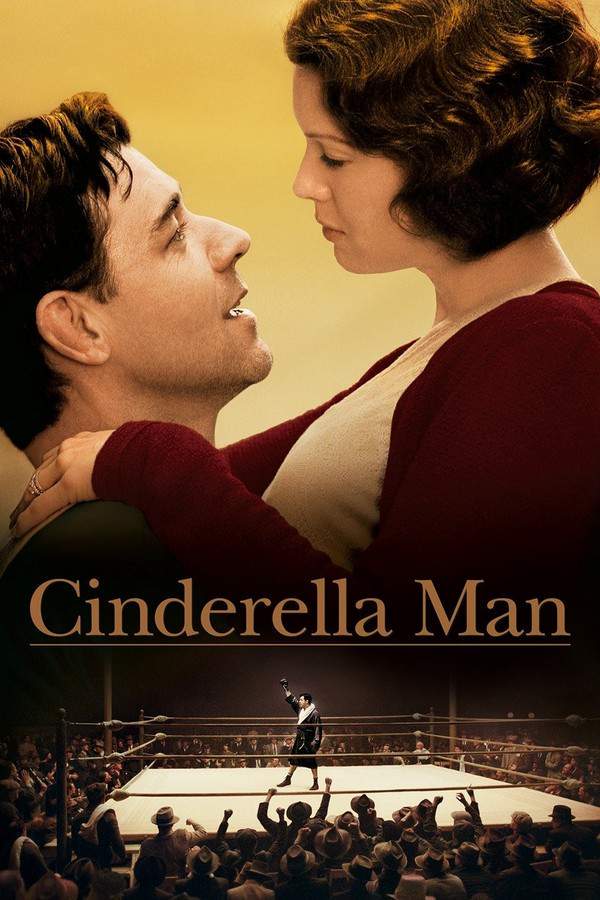
Cinderella Man (2005) movie poster

Plot Summary

Cinderella Man (2005) Plot Summary Explained

Release, runtime and language
2005 · 144 min · English
JustWatch #1,563 13
Directed by
Ron Howard
Starring
Craig Bierko, Renée Zellweger, Russell Crowe
Budget
$88M

Facing financial ruin during the Great Depression, former boxer James J. Braddock struggles to feed his family. He reluctantly returns to the ring, battling poverty and prejudice while fighting for a chance at redemption. His unlikely comeback captures the spirit of a nation yearning for hope amidst hardship, as he fights against all odds to reclaim his former glory and provide a better future for his loved ones.

On this page (6)
  1. 1 Where to watch
  2. 2 What happens: full plot
  3. 3 Plot questions answered
  4. 4 Movie threads
  5. 5 Movies like Cinderella Man
  6. 6 Every angle

Where to watch

Where to Watch Cinderella Man (2005)

Where can you watch Cinderella Man? Stream, rent or buy it in the US, including on Netflix, Netflix Standard and Amazon Video: current JustWatch availability with up-to-date prices.

Streaming availability powered by JustWatch

Full plot summary · contains spoilers

What Happens in Cinderella Man: Full Plot Summary

The whole story of Cinderella Man (2005) explained, from the opening scene to the final frame: every key event, every twist and what it all adds up to. Read it as a quick recap before the sequel, to check a scene you missed, or to finally understand what really happened.

James J. Braddock, portrayed by Russell Crowe, is a determined Irish-American boxer hailing from New Jersey. Once considered a light heavyweight contender, he finds himself compelled to abandon the ring after suffering a severe hand injury. This situation brings a mix of relief and concern for his wife, Renée Zellweger. Mae, his supportive spouse, is deeply pained by the brutality of his profession, yet she realizes that their financial situation heavily relies on his boxing career.

As the Great Depression wreaks havoc across the nation, Braddock takes on physically demanding work as a longshoreman, struggling to provide for his family despite his injured hand. Daily work is far from guaranteed. However, fate intervenes when Braddock's loyal manager and friend, Joe Gould, offers him a last-minute opportunity to fight due to a cancellation by another boxer. This fight pits him against the formidable Corn Griffin, the number-two contender in the world.

Against all expectations, Braddock astonishes both experts and fans alike with a remarkable third-round knockout victory over Griffin. He comes to realize that while his right hand may be broken, his left hand has effectively improved, enhancing his skills in the ring. Ignoring Mae’s concerns, Braddock decides to seize the opportunity to return to boxing. Initially, Mae is skeptical of Gould's intentions, viewing it as an exploitative effort to capitalize on Braddock's perilous career. However, her perspective shifts when she learns that Gould and his wife also face significant hardships.

As Braddock continues on his winning streak, a shot at the heavyweight championship held by Max Baer becomes a tantalizing possibility. Demonstrating immense pride, Braddock dedicates a portion of his earnings to repay the government for unemployment assistance they had received during difficult times. His remarkable rise from adversity captures the public's imagination, leading sportswriter Damon Runyon to label him "The Cinderella Man," symbolizing the aspirations of countless Americans grappling with the Depression.

An impending title fight against Baer places Braddock in the role of a 10-to-1 underdog. Mae is understandably fearful of facing the cruel champion, who has a notorious reputation for causing serious injury in the ring, including the deaths of at least two opponents. To prepare them for the daunting challenge, the promoter, James Johnston, insists that both Braddock and Gould watch a film of Baer in action, highlighting the dangers that lie ahead.

Despite the intimidation tactics employed by the arrogant Baer, who even goes so far as to provoke Mae by suggesting her husband might not survive the upcoming fight, Braddock remains unfazed. Mae's distress escalates to the point where she cannot bear to attend the fight at Madison Square Garden or listen to its radio broadcast.

On June 13, 1935, in a defining moment for boxing history, Braddock triumphs over the seemingly unbeatable Baer, claiming the title of heavyweight champion of the world. The film concludes by revealing that Braddock later contributed to the construction of the Verrazano Bridge and operated heavy machinery at the docks, where he had once worked during the hardships of the Depression. Ultimately, he and Mae used their winnings to purchase a home, enjoying a life together filled with lasting memories.
Last updated: November 16, 2024 at 16:55

Was this helpful?

Plot questions answered

Cinderella Man Plot Explained: Your Questions Answered

The questions people ask most about Cinderella Man (2005): what happens in the confusing scenes, why the characters do what they do, the twists, hidden details and what the ending means. Each answer contains spoilers.

Q1

Why does James Braddock decide to return to boxing after his hand injury?

Braddock returns to boxing because his family is facing severe financial hardship during the Great Depression. As a longshoreman with an injured hand, he cannot earn enough to feed his family. When his manager Joe Gould offers him a last-minute fight against Corn Griffin after another boxer cancels, Braddock sees it as the only viable option to provide for his wife Mae and their children. The financial desperation, combined with the unexpected opportunity, compels him back into the ring despite the risks.

Foreshadowing: Earlier scenes show Braddock struggling to find work and worrying about how to feed his family, establishing the desperate financial circumstances that drive his decision.

  • james braddock
  • boxing return
  • hand injury
  • great depression
  • financial hardship
  • family support
Q2

How does Braddock manage to defeat Corn Griffin despite his injured hand?

Braddock defeats Corn Griffin, the number-two contender in the world, through an unexpected improvement in his left hand. While his right hand remains injured from his previous career, Braddock discovers that his left hand has become his strength in the ring. He utilizes this advantage effectively, delivering a remarkable third-round knockout that shocks both experts and fans. This victory proves that despite his physical limitations, Braddock's determination and adapted fighting style allow him to overcome a seemingly superior opponent.

Foreshadowing: The film establishes that Braddock was once a promising light heavyweight contender, suggesting he still possesses fundamental boxing skills that he can adapt.

  • corn griffin
  • knockout victory
  • left hand
  • injured hand
  • boxing match
  • underdog win
Q3

Why does Mae initially object to Braddock returning to boxing?

Mae opposes Braddock's return to boxing because she has always been deeply pained by the brutality of the sport. She fears for his safety and worries about the physical toll that boxing takes on him. Additionally, she is skeptical of manager Joe Gould's intentions, suspecting he is exploiting Braddock's desperation for financial gain. However, her perspective shifts when she learns that Gould and his wife are also facing significant hardships during the Depression, helping her see that his motivations are more sympathetic than she initially believed.

Foreshadowing: The opening scenes show Mae's mixed feelings about Braddock's boxing career - relief that he quit due to injury, but concern about their financial situation.

  • mae braddock
  • joe gould
  • opposition
  • boxing dangers
  • marriage
  • support
Q4

Why does Braddock choose to repay his unemployment assistance?

Braddock decides to repay the unemployment assistance his family received because he wants to demonstrate his pride and integrity despite his circumstances. Even while struggling to survive, he feels a strong moral obligation to give back to the system that helped him during the worst periods of the Depression. This act of repaying the government reflects his character and desire to stand on his own terms, distinguishing him from those who might simply accept assistance without gratitude or responsibility.

Foreshadowing: Earlier scenes depict Braddock's pride in providing for his family, showing a man who defines himself through hard work and self-reliance.

  • unemployment benefits
  • repayment
  • pride
  • character
  • integrity
  • government assistance
Q5

Why is Max Baer portrayed as such a dangerous opponent?

Max Baer is presented as dangerous because he has a notorious reputation for causing serious injury in the ring. The film notes that at least two of his opponents died as a result of fights with him. Baer is arrogant and uses psychological intimidation tactics, even going so far as to taunt Mae about the possibility that her husband might not survive their fight. He is the reigning heavyweight champion and Braddock faces him as a 10-to-1 underdog, making the odds of victory seem nearly impossible.

Foreshadowing: Promoter James Johnston insists that Braddock and Gould watch a film of Baer in action to understand the dangers ahead, building tension for the championship bout.

  • max baer
  • dangerous opponent
  • champion
  • boxing deaths
  • intimidation
  • heavyweight title
Q6

Why does Mae refuse to attend or listen to the fight against Max Baer?

Mae cannot bear to watch the fight because her fear for Braddock's safety is overwhelming. Baer's intimidation tactics, including his cruel suggestion that her husband might not survive the bout, have deeply affected her. The psychological warfare has escalated her distress to the point where she feels she would rather not know the outcome than face the possibility of witnessing her husband being seriously injured or killed in the ring. Her absence from Madison Square Garden and the radio broadcast reflects the immense emotional toll that Braddock's boxing career has taken on her throughout their marriage.

Foreshadowing: Baer's direct provocation of Mae during the pre-fight build-up intensifies her existing fears about the sport's violence.

  • mae braddock
  • fear
  • attendance
  • max baer
  • radio broadcast
  • emotional distress
Q7

How does Braddock earn the nickname "The Cinderella Man"?

Sportswriter Damon Runyon dubs Braddock "The Cinderella Man" because his remarkable comeback from poverty and obscurity captures the public's imagination during the Great Depression. Like the fairy tale Cinderella, Braddock rises from humble origins and difficult circumstances to achieve improbable success. His journey from a struggling longshoreman with an injured hand to a championship contender becomes a symbol of hope for millions of Americans facing their own hardships. The nickname perfectly encapsulates the rags-to-riches narrative that inspires a nation yearning for hope amidst economic devastation.

Foreshadowing: The film's steady progression from Braddock's desperation as a longshoreman to his surprising victories establishes the underdog narrative that makes the nickname fitting.

  • cinderella man
  • nickname
  • damon runyon
  • symbol
  • hope
  • great depression
  • underdog
Q8

What motivates Braddock to fight for the heavyweight championship against Max Baer?

Braddock fights Max Baer for the heavyweight championship because his continued winning streak has made a title shot possible, and the opportunity represents the culmination of his improbable comeback. Beyond personal glory, the fight becomes about proving himself against the best and providing a better future for his family. Braddock is motivated by the chance to show that an ordinary man can overcome extraordinary odds. As a 10-to-1 underdog, he has little to lose and everything to gain, making the championship bout the ultimate test of his determination and skill.

Foreshadowing: Braddock's decision to keep fighting after his initial victory against Griffin shows his ambition to continue rising through the ranks.

  • heavyweight championship
  • max baer
  • title fight
  • motivation
  • future
  • proof
  • underdog
Q9

What does Braddock do after winning the heavyweight championship?

After defeating Max Baer on June 13, 1935, Braddock uses his championship earnings to purchase a home for his family, providing them with the stability they lacked during the Depression. He also contributes to the construction of the Verrazano Bridge, transitioning from professional boxer to working-class hero. Rather than living a lavish lifestyle, Braddock returns to honest labor, operating heavy machinery at the docks where he once worked during his darkest days. He and Mae enjoy a contented life together, building lasting memories after overcoming their struggles.

Foreshadowing: The film establishes Braddock's identity as a hard worker who finds meaning through labor, making his post-boxing career choice consistent with his character.

  • verrazano bridge
  • post-championship
  • home purchase
  • docks
  • life after boxing
  • family future
Q10

Why does Braddock's story resonate with so many Americans during the Depression?

Braddock's story resonates with Americans because his journey from desperate poverty to world champion embodies the hope that the American Dream still exists during the Great Depression. Millions of viewers see their own struggles reflected in his fight to feed his family and maintain his dignity. His victory over seemingly insurmountable odds provides a morale boost to a nation suffering from economic collapse and widespread unemployment. Braddock becomes more than a boxer - he represents the possibility that ordinary people can triumph over extraordinary hardship through perseverance and determination.

Foreshadowing: The film's consistent focus on Braddock's financial struggles and the widespread poverty of the Depression establishes the broader social context that makes his success meaningful.

  • american dream
  • depression era
  • public impact
  • symbol of hope
  • moralebattles
  • resilience

Movie threads

More Movies Like Cinderella Man, by Mood & Story

Curated lists built around what makes Cinderella Man tick: the same mood, the same kind of story or the same emotional payoff. Each list explains why these movies belong together.

Underdog Redemption Stories Similar to Cinderella Man

Ordinary people pushed to their limits, fighting back against overwhelming odds. Discover movies like Cinderella Man that center on an underdog's triumphant comeback. These stories feature characters battling poverty, societal challenges, or personal demons, culminating in a hard-fought victory that feels earned and deeply satisfying for audiences who love tales of resilience.

  • underdog
  • motivational
  • tense
  • hopeful
  • redemptive
  • desperate
  • Tone: hopeful, tense, redemptive
  • Pacing: steady, building
Why these movies?

The story pattern: The narrative follows a linear rise-from-the-ashes structure, beginning with profound hardship and despair. The protagonist, often a fallen figure, is presented with a difficult path to redemption. The central conflict is as much about internal resilience and integrity as it is about the external opponent, building steadily towards a climactic test that solidifies their comeback.

Why they belong together: Movies are grouped here for their shared focus on the emotional power of a comeback. They blend high-stakes tension with a fundamentally hopeful tone, creating a cathartic viewing experience where the audience roots for a tangible, well-deserved victory against all odds.

Gritty Period Survival Dramas Like Cinderella Man

Stories grounded in harsh historical realities, where everyday survival is the central conflict. If you appreciated the stark depiction of the Great Depression in Cinderella Man, explore these similar movies. They are grounded, emotionally heavy dramas that authentically portray the fight for survival during difficult historical eras, emphasizing family bonds and integrity amidst widespread societal hardship.
  • desperate
  • anxious
  • tense
  • hopeful
  • period piece
  • economic hardship
  • Tone: hopeful, bleak, tense
  • Pacing: steady, methodical
Why these movies?

The story pattern: These narratives use a specific historical setting not just as backdrop but as an active antagonist—poverty, class struggle, and societal collapse create the central conflict. The plot often revolves around a family unit struggling to stay together, with the protagonist's external journey (like boxing) serving as a metaphor for the larger battle against an oppressive system or era.

Why they belong together: These films are connected by their immersive, often bleak historical settings and the high emotional weight placed on depicting the raw struggle for basic needs. They share a steady, methodical pacing that builds tension from the constant threat of failure, creating a deeply empathetic and sobering viewer experience.

If you liked this

Movies Like Cinderella Man

Similar movies to Cinderella Man: the same genre, themes or kind of story. Each one comes with its own plot summary, timeline and ending explained.

Browse all movie summaries

Every angle

Cinderella Man (2005) Explained: Plot, Timeline & Characters

Everything about Cinderella Man in one place: what happens in the plot summary, the timeline in chronological order, the characters and meaning and a spoiler-free summary. What's After the Movie adds the cast, box office and post-credit scenes.

Coming soon on iOS and Android

The Plot Explained Movie Summary App

Plot summaries, endings explained and timelines on your phone. Catch up on any movie in minutes, save your favorites and never miss a twist again.

Be the first to know when we launch. Your email stays private, always.

Learn more about the app