Plot Explained Spoilers guaranteed!
Plot Explained

Browse by genre

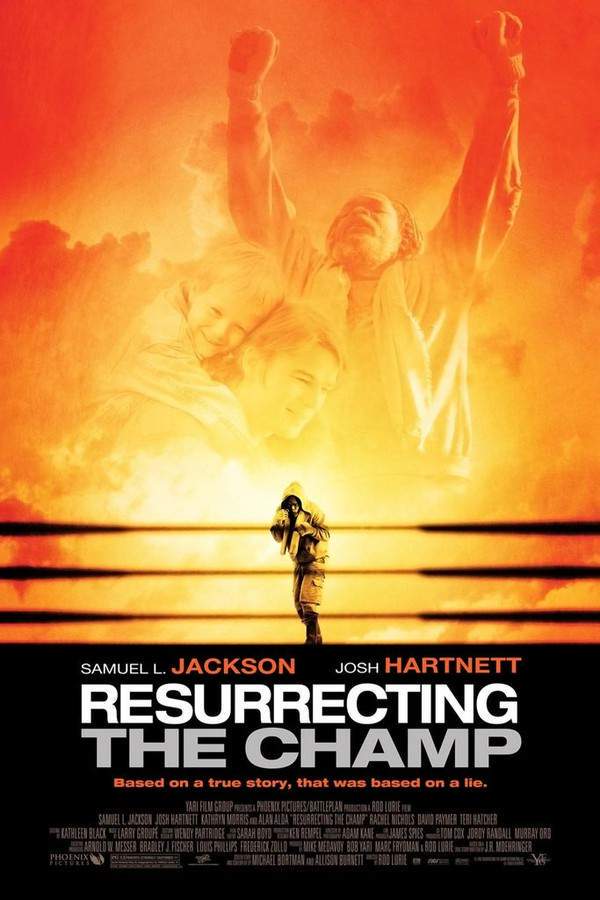
Resurrecting the Champ (2007) movie poster

Plot Summary

Resurrecting the Champ (2007) Plot Summary Explained

Release, runtime and language
2007 · 112 min · English
JustWatch #24,045 4
Directed by
Rod Lurie
Starring
Samuel L. Jackson, Josh Hartnett

A sports reporter discovers a homeless man who bears a striking resemblance to a legendary, previously presumed deceased, heavyweight boxer. As the journalist investigates, he uncovers the truth behind "The Champ's" disappearance and the tragic circumstances that led to his downfall. The story explores themes of resilience, redemption, and the enduring power of the human spirit, following the boxer's journey through hardship and a surprising opportunity for a comeback.

On this page (6)
  1. 1 Where to watch
  2. 2 What happens: full plot
  3. 3 Plot questions answered
  4. 4 Movie threads
  5. 5 Movies like Resurrecting the Champ
  6. 6 Every angle

Where to watch

Where to Watch Resurrecting the Champ (2007)

Where can you watch Resurrecting the Champ? Stream, rent or buy it in the US, including on Amazon Prime Video, Hoopla and The CW: current JustWatch availability with up-to-date prices.

Streaming availability powered by JustWatch

Full plot summary · contains spoilers

What Happens in Resurrecting the Champ: Full Plot Summary

The whole story of Resurrecting the Champ (2007) explained, from the opening scene to the final frame: every key event, every twist and what it all adds up to. Read it as a quick recap before the sequel, to check a scene you missed, or to finally understand what really happened.

Erik Kernan Jr. (Josh Hartnett), a young sports journalist employed by a prominent Denver newspaper, finds himself frustrated as his editor, Ralph Metz (Alan Alda), often dismisses his sports articles for lacking excitement and personality. This critique stings, especially since Erik's late father was a celebrated sports broadcaster whose legacy casts a long shadow over Erik's career. In an effort to elevate his stature, Erik has misled his young son about his connections to famous athletes, a facade intended to make him appear more significant in his child's eyes.

One fateful day, while leaving a sporting event, Erik witnesses an altercation in a parking lot involving a homeless man who calls himself "Champ" and claims to have been a professional boxer. Despite the surrounding crowd's ridicule, Champ, portrayed by Samuel L. Jackson, demonstrates his boxing skills, revealing that he is indeed a former contender named Bob Satterfield, once respected in the ring and thought to be long dead.

Seizing the opportunity for a compelling story, Erik pitches a feature on Champ's life and career to a weekly magazine during a job interview, hoping it will secure him a writing position. With the help of research assistant Polly (Rachel Nichols), Erik digs into old records, uncovering Satterfield's past while keeping his investigation under wraps from his boss. As Erik spends more time with Champ, he grows increasingly impressed by his boxing insights, especially when Champ accurately predicts a minor fight outcome.

During his research, Erik contacts several individuals from Satterfield's past who are astonished to learn he is alive, but when he reaches out to Satterfield’s son, he is met with hostility and suspicion. Despite the mixed reactions, the article Erik eventually publishes garners widespread acclaim and catches national media attention, with some suggesting it be considered for a Pulitzer Prize.

However, the subsequent spotlight reveals that Champ is not Bob Satterfield after all, but rather a lesser fighter who had been defeated by Satterfield. Faced with a moral dilemma, Erik initially indulges in the fleeting joy of his success, but the satisfaction he hoped for eludes him. As consequences unfold, he learns that Satterfield’s son is suing him, claiming Erik failed to verify Champ's authenticity and wrongly stated their relationship.

In a bid to rectify his mistake, Erik offers to write a follow-up piece that includes the truth about Bob Satterfield, fulfilling his son’s desire for definitive acknowledgment of his father’s legacy. Ultimately, Erik discovers that even without the fame he tried to fabricate, his young son can still take pride in him, bringing a sense of fulfillment to his otherwise tumultuous journey.
Last updated: November 03, 2024 at 23:28

Was this helpful?

Plot questions answered

Resurrecting the Champ Plot Explained: Your Questions Answered

The questions people ask most about Resurrecting the Champ (2007): what happens in the confusing scenes, why the characters do what they do, the twists, hidden details and what the ending means. Each answer contains spoilers.

Q1

Why did Erik publish the story about Champ without verifying his identity first?

Erik was desperate for a breakthrough story that could prove himself as a journalist and escape his editor's criticism. He saw Champ as his opportunity to write something compelling enough to land a better job. Additionally, Champ's boxing skills and the mystery surrounding his identity made for an irresistible story, and Erik chose to pursue the narrative momentum rather than wait for verification, ultimately prioritizing career success over journalistic rigor.

Foreshadowing: Earlier in the film, Erik's editor criticizes his articles for lacking excitement and personality, setting up his willingness to take risks with a dramatic story.

  • journalistic integrity
  • verification
  • career desperation
  • bob satterfield
Q2

Who is Champ really? Is he actually Bob Satterfield?

Champ is not Bob Satterfield. He is revealed to be a lesser-known fighter who was once defeated by Satterfield in the ring. This explains why he possessed genuine boxing skills and knowledge, he had actually fought the legendary boxer. However, he chose to assume Satterfield's identity while living homeless, possibly seeking the respect and recognition that came with the famous name.

Foreshadowing: Champ's ability to accurately predict fight outcomes and his deep boxing insights hint at his real experience as a fighter, just not the famous one he claimed to be.

  • champ identity
  • bob satterfield
  • impostor
  • boxing career
Q3

Why does Erik lie to his son about knowing famous athletes?

Erik feels inadequate because his late father was a celebrated sports broadcaster, and he struggles to measure up to that legacy. He creates a facade of connections with famous athletes to appear more significant in his son's eyes, wanting to be the father his child can be proud of. This lie stems from his insecurity about his own career achievements and his desire to provide his son with a sense of pride in his father.

Foreshadowing: The film establishes early on that Erik's father left a large shadow over his career, making Erik desperate to prove himself worthy of that legacy.

  • father legacy
  • erik son relationship
  • sports journalism
  • pride
Q4

What happens to Erik after the truth about Champ is revealed?

After the truth surfaces, Erik experiences a swift downfall in his professional standing. Most significantly, Bob Satterfield's son sues Erik, claiming he failed to verify Champ's authenticity and wrongly described their relationship in the article. The Pulitzer Prize consideration becomes irrelevant as Erik must face the legal and moral consequences of his rushed reporting.

Foreshadowing: Earlier, when Erik contacts Satterfield's son, he receives a hostile and suspicious response, foreshadowing the legal action to come.

  • lawsuit
  • professional downfall
  • satterfield son
  • consequences
Q5

Why does Bob Satterfield's son sue Erik?

Satterfield's son sues Erik because the article incorrectly portrayed his father's legacy and implied a relationship between them that didn't exist. The lawsuit represents his son protecting his father's tarnished reputation and seeking accountability for what he sees as Erik's failure to properly verify Champ's claims before publishing a widely-read story that misrepresented the real Bob Satterfield.

Foreshadowing: When Erik first contacts Satterfield's son, the son is hostile and suspicious, clearly protective of his father's legacy.

  • lawsuit
  • satterfield son
  • reputation
  • journalism ethics
Q6

How does Erik's late father influence his career decisions?

Erik's father was a celebrated sports broadcaster whose legacy creates immense pressure on Erik to succeed in journalism. This shadow drives much of Erik's behavior throughout the film, including his desperation for a big story and his need to appear successful to his own son. The father's success becomes both a motivation and a source of insecurity for Erik.

Foreshadowing: The film opens by establishing Erik's struggle to escape his father's shadow, which explains his willingness to take journalistic risks.

  • father legacy
  • broadcaster
  • career pressure
  • journalism
Q7

What happens to Erik's article about Champ?

Erik's article about Champ receives widespread acclaim and catches national media attention. The story is so compelling that discussions arise about it being considered for a Pulitzer Prize, representing the peak of Erik's career success. However, this success is short-lived once the truth about Champ's identity is revealed.

Foreshadowing: Erik's pitch to the magazine during the job interview positions this story as his chance at major professional recognition.

  • pulitzer prize
  • article success
  • media attention
  • journalism career
Q8

Why does Erik decide to write a follow-up piece about the real Bob Satterfield?

Erik decides to write the follow-up piece as an attempt at redemption. He recognizes that his son wants definitive acknowledgment of his father's legacy, and he also feels a moral obligation to set the record straight about the real Bob Satterfield. This act represents Erik choosing journalistic integrity over personal glory.

Foreshadowing: Erik's growing bond with Champ and his realization that he compromised his ethics set up his need for redemption.

  • redemption
  • follow-up article
  • truth
  • journalism ethics
Q9

How does the ending resolve Erik's relationship with his son?

In the ending, Erik discovers that his son can still feel pride in him even without the fabricated fame and connections Erik had lied about. By choosing to tell the truth and write the follow-up piece, Erik shows his son what it means to be honest and accountable. This honest approach to fatherhood brings Erik greater fulfillment than any Pulitzer recognition ever could.

Foreshadowing: Erik's earlier lying to his son creates the arc that needs resolution, and his choice to be truthful becomes the key to their reconciliation.

  • father son bond
  • pride
  • redemption
  • family
  • fulfillment
Q10

What happened to the real Bob Satterfield?

Bob Satterfield was a formerly respected heavyweight boxer who was presumed dead or had simply disappeared from public life. When Erik researches his past, he finds that people from Satterfield's past are surprised to learn he is still alive, indicating Satterfield had withdrawn from the world long ago. The film leaves the exact details of his later life somewhat ambiguous, but he clearly fell from grace and lost contact with his family.

Foreshadowing: The initial discovery that Champ claims to be Satterfield works because Satterfield was thought to be long gone, making the story compelling.

  • bob satterfield boxer
  • presumed dead
  • fallen champion
Q11

Why does Champ pretend to be Bob Satterfield instead of being honest about who he is?

As a lesser fighter who was defeated by Satterfield, Champ likely assumed the famous boxer's identity to reclaim some of the respect and recognition he lost in his own boxing career. Living homeless with no family or support, adopting Satterfield's identity gave him a sense of importance and dignity that his current circumstances could not provide.

Foreshadowing: Champ's demonstration of real boxing skills in the parking lot shows he has genuine fight experience, just not at the championship level he claims.

  • champ impersonation
  • identity
  • fallen boxer
  • dignity

Movie threads

More Movies Like Resurrecting the Champ, by Mood & Story

Curated lists built around what makes Resurrecting the Champ tick: the same mood, the same kind of story or the same emotional payoff. Each list explains why these movies belong together.

Investigative journalism movies with moral dilemmas like Resurrecting the Champ

Journalists uncover deeper truths that challenge their own ethics and identity. Find more movies like Resurrecting the Champ, where journalists are tested by the stories they pursue. These character-driven dramas explore the ethical complexities of reporting, often leading to personal growth and a bittersweet victory of integrity over acclaim.

  • investigative
  • ethical dilemma
  • introspective
  • searching
  • deceptive
  • redemptive
  • Tone: bittersweet, reflective
  • Pacing: steady, investigative
Why these movies?

The story pattern: The narrative follows a journalist following a lead that promises career advancement. As the investigation deepens, it reveals uncomfortable truths and presents significant ethical dilemmas. The protagonist's pursuit of the story often clashes with their personal conscience, culminating in a choice between professional success and personal integrity.

Why they belong together: These movies are grouped together because they share a core focus on journalistic ethics, the search for truth, and the personal transformation of the protagonist. They typically feature a steady, linear investigative pace, medium emotional intensity from moral conflict, and a bittersweet tone where professional consequences are balanced against personal redemption.

Movies about fallen heroes seeking redemption like Resurrecting the Champ

A broken-down figure finds a glimmer of hope and dignity through an unlikely connection. If you liked the story of the fallen boxer in Resurrecting the Champ, you'll enjoy these movies about faded legends and their bittersweet paths to redemption. These dramas explore themes of legacy, resilience, and the quiet victories found in dignity and human connection.

  • melancholic
  • hopeful
  • redemptive
  • reflective
  • fallen hero
  • living legacy
  • Tone: bittersweet, melancholic, hopeful
  • Pacing: steady, reflective
Why these movies?

The story pattern: The narrative revolves around a character living in the shadow of their former greatness, now facing difficult circumstances. A new relationship or opportunity allows them to confront their past and share their story. The journey leads to a form of redemption that is often internal—finding peace, closure, or a renewed sense of purpose—rather than a full public restoration.

Why they belong together: This thread connects movies through the powerful emotional arc of a fallen hero. They share a melancholic yet hopeful mood, a steady pacing that allows for character reflection, and a consistently bittersweet tone. The emotional weight comes from the contrast between past glory and present reality, culminating in an ending that blends loss with a quiet, dignified victory.

If you liked this

Movies Like Resurrecting the Champ

Similar movies to Resurrecting the Champ: the same genre, themes or kind of story. Each one comes with its own plot summary, timeline and ending explained.

Browse all movie summaries

Every angle

Resurrecting the Champ (2007) Explained: Plot, Timeline & Characters

Everything about Resurrecting the Champ in one place: what happens in the plot summary, the timeline in chronological order, the characters and meaning and a spoiler-free summary. What's After the Movie adds the cast, box office and post-credit scenes.

Coming soon on iOS and Android

The Plot Explained Movie Summary App

Plot summaries, endings explained and timelines on your phone. Catch up on any movie in minutes, save your favorites and never miss a twist again.

Be the first to know when we launch. Your email stays private, always.

Learn more about the app