Plot Explained Spoilers guaranteed!
Plot Explained

Browse by genre

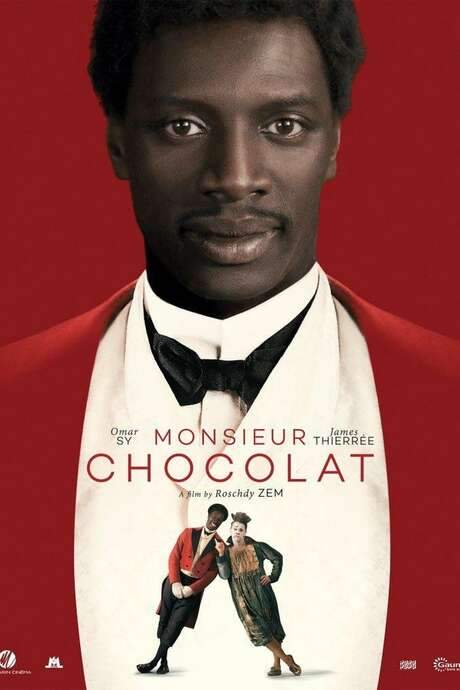
Chocolat (2016) movie poster

Timeline

Chocolat (2016) Timeline Explained – Every Event in Order

Release, runtime and language
2016 · 119 mins · French
Loading streaming availability…
Directed by
Roschdy Zem
Starring
Olivier Gourmet, Stéphane Varupenne, Michèle Clément, Alex Descas, Bruno Podalydès, Xavier Beauvois

The story follows Chocolat, the first Black stage performer in France, as he rises from obscurity to become a celebrated figure during the Belle Époque in Paris. Forming an innovative duo with Footit, he achieves great popularity and financial success. However, the pressures of newfound wealth, gambling, and the challenges of racial discrimination ultimately strain his friendship with Footit and threaten his career.

On this page (5)
  1. 1 Where to watch
  2. 2 Events in order (12)
  3. 3 Timeline questions answered
  4. 4 Movie threads
  5. 5 Every angle
Loading streaming availability…

12 events in order · contains spoilers

Chocolat Timeline: Events in Chronological Order

Every key event of Chocolat (2016) in order, scene by scene, with when and where it takes place. Use it to untangle flashbacks, time jumps and parallel storylines, to refresh your memory before the sequel or to find the exact scene you are thinking of.

  1. Foottit's assignment: Kananga act

    In 1897, Delvaux's modest circus asks Foottit to develop a new routine around the captive Black performer Kananga. Foottit and Chocolat create a duo: a white, authoritarian clown and a black scapegoat. The idea is provocative, blending circus spectacle with social caricature and sparking curiosity among audiences.

    When
    1897
    Where
    Delvaux Circus, France
  2. The Kananga act debuts and travels through France

    The Kananga-inspired act debuts at Delvaux's circuit and is well received by audiences. News of the performance travels across France, drawing bigger crowds and wider attention. The controversial dynamic begins to challenge prevailing racial norms in the circus world.

    When
    late 1890s
    Where
    Delvaux Circus, France
  3. Invitation to Nouveau Cirque

    Fame grows as word reaches Joseph Oller, director of Nouveau Cirque, who invites Foottit and Chocolat to Paris. The invitation promises a grander stage and a broader audience. The move marks a turning point from small circuses to a premier Parisian venue.

    When
    late 1890s
    Where
    Nouveau Cirque, Paris
  4. Chocolat becomes a famous Black clown

    Chocolat becomes the first famous Black clown on the Nouveau Cirque stage. Audiences respond with fascination and support, boosting Chocolat's public profile. The Foottit-Chocolat partnership becomes a defining image of the French circus.

    When
    late 1890s
    Where
    Nouveau Cirque, Paris
  5. Envy and denunciation by employer's wife

    Chocolat's rising fame stirs envy in his former employer's wife, who denounces him for being in France illegally. The accusation underscores the precarious legal and social status of Black performers in a cosmopolitan city. Police scrutiny and public suspicion threaten the act.

    When
    late 1890s
    Where
    Paris, France
  6. Arrest and torture by police

    Chocolat is arrested and tortured by the police, dramatizing the brutality of the era. The encounter makes him realize the policing system treats him as a perpetual outsider. Despite release, the experience stains his career and morale.

    When
    late 1890s
    Where
    Paris
  7. Racism reflected in the show posters

    The posters for the show cast Chocolat as a Black stereotype, revealing the hypocrisy of French society. On stage he is celebrated, but the imagery reduces him to a caricature. This tension between adulation and denigration fuels his inner conflict.

    When
    late 1890s
    Where
    Paris
  8. Descent into gambling, drugs, and women

    Growing personal strain leads Chocolat toward self-destructive coping: gambling, drugs, and women. The social racism and the pressures of fame erode his private life. The act's earlier success contrasts with his deteriorating personal life.

    When
    late 1890s to early 1900s
    Where
    France
  9. Attempt to branch into Othello ends badly

    An attempt to pivot the act toward Shakespeare's Othello ends poorly, with part of the audience booing the premiere. The rejection emphasizes the limits of mainstream acceptance for a Black clown in this era. The failed venture accelerates the decline of Chocolat's public standing.

    When
    early 1900s
    Where
    France
  10. Loss of relevance and fall into obscurity

    As years pass, Chocolat slips into obscurity, his once-groundbreaking work fading from memory. He struggles to adapt as tastes change and prejudice remains. The circus world continues to remember him for the barriers he broke, even as his fame wanes.

    When
    early 1900s
    Where
    France
  11. Death by consumption

    Chocolat dies of consumption, bringing an end to a turbulent life. His death epitomizes the personal cost of pursuing fame in a prejudiced society. Historians and fans look back on him as a pioneer who opened doors for future Black performers.

    When
    early 20th century
    Where
    France
  12. Legacy as a pioneer of Black clowning

    Chocolat leaves a lasting legacy as the first famous Black clown in France. His courage in the face of systemic racism inspires future generations of performers. His story remains a cautionary tale about glamour, racism, and resilience in the world of circus.

    When
    early 20th century
    Where
    France

Last updated: February 24, 2026 at 14:17

Was this helpful?

Timeline questions answered

Chocolat Timeline Explained: Your Questions Answered

When does it happen, and why in that order? The questions people ask about the chronology of Chocolat (2016): time jumps, flashbacks, cause and effect between scenes and the correct order of events, each answered with spoilers.

Q1

Why did Chocolat and Foottit's comedy act become so popular?

The duo paired an authoritarian white clown with a Black scapegoat character, creating a provocative dynamic that fascinated audiences. This format was novel for the time, blending circus spectacle with social commentary in a way that challenged prevailing racial norms while entertaining crowds across France.

Foreshadowing: The act's controversial dynamic was already visible in its early circus performances, setting the stage for both fame and backlash.

  • foottit
  • chocolat duo
  • circus act
  • comedy partnership
  • paris nouveau cirque
Q2

Why was Chocolat arrested and tortured by police?

Chocolat was denounced by his former employer's wife for being in France illegally, leading to his arrest. While in custody, he was tortured by police, who treated him as a perpetual outsider despite his celebrity status. The police commander explicitly told him that "a negro always remains a negro," highlighting the systemic racism he faced.

Foreshadowing: Earlier events had already shown the precarious legal status of Black performers in France.

  • chocolat arrest
  • police torture
  • racism france
  • illegal immigration 1890s
Q3

Why did Chocolat's Othello performance fail?

Chocolat attempted to pivot from his clown act to Shakespeare's Othello in hopes of being taken seriously as a performer. However, part of the audience booed the premiere, demonstrating the limits of mainstream acceptance for a Black artist in early 20th-century France. The rejection showed that audiences wanted him in his caricatured clown role, not as a serious dramatic actor.

Foreshadowing: The posters and promotional materials had already reduced Chocolat to a stereotype, foreshadowing audience rejection of his serious work.

  • chocolat othello
  • shakespeare失败
  • racial barriers performer
  • chocolat career decline
Q4

Why did Chocolat's career decline after his initial success?

Multiple factors contributed to Chocolat's downfall: the constant grind of racism despite his fame, the failed Othello experiment, and his personal descent into gambling, drugs, and women. As tastes changed and prejudice remained entrenched, he became unable to adapt or sustain his earlier success, leading to obscurity.

Foreshadowing: The tension between his public adulation and private degradation was visible throughout his rise.

  • chocolat decline
  • obscurity
  • addiction
  • gambling
  • career end
Q5

Why was Chocolat both celebrated and discriminated against?

Chocolat achieved genuine fame as the first Black clown in France, performing at prestigious venues like Nouveau Cirque. However, French society simultaneously celebrated and dehumanized him, he was a star on stage but reduced to a racial stereotype in posters and treated as a perpetual outsider by authorities. This contradiction between public acclaim and personal degradation defined his experience.

Foreshadowing: The police commander's statement about Black people foreshadowed the limits of his acceptance.

  • chocolat racism
  • celebrated Black performer
  • french society hypocrisy
  • dual identity performer
Q6

Why did Chocolat and Footit's friendship strain over time?

As Chocolat's fame grew, the dynamic between the partners shifted. The act's success was built on their contrasting roles, but the pressures of wealth, gambling, and the racial dynamics of their relationship created tension. Footit represented the white authoritarian figure who benefited more from their partnership, while Chocolat bore the burden of being the target of both humor and prejudice.

Foreshadowing: The original power imbalance in their act, with Footit as the authority figure, planted seeds for future conflict.

  • foottit chocolat
  • partnership tension
  • friendship ended
  • clown duo conflict
Q7

What caused Chocolat's death?

Chocolat died of consumption (tuberculosis) in the early 20th century after years of personal struggle. His health deteriorated from the combined effects of poverty, addiction, and the physical and emotional toll of his experiences. He died in obscurity, his groundbreaking achievements largely forgotten by the public that had once celebrated him.

Foreshadowing: His descent into gambling, drugs, and women had already weakened his body and spirit.

  • chocolat death
  • consumption
  • tuberculosis
  • obscure death
  • tragic end
Q8

Why did the show posters portray Chocolat as a stereotype?

The promotional posters depicted Chocolat as a Black caricature, reflecting the broader societal racism of Belle Époque France. While audiences flocked to see him perform, the entertainment industry still reduced Black performers to offensive stereotypes in marketing. This hypocrisy, celebrating him on stage while degrading him in imagery, exemplified the contradictions Chocolat navigated throughout his career.

Foreshadowing: The posters foreshadowed the audience's later rejection of his serious theatrical ambitions.

  • chocolat poster
  • racist stereotypes
  • paris circus posters
  • blackface imagery
Q9

Why is Chocolat considered a pioneer for Black performers?

Chocolat was the first Black clown to achieve genuine fame in France, breaking barriers in a segregated entertainment industry. Despite being cast in a degrading scapegoat role, his talent and charisma made him a star at Nouveau Cirque. His courage in facing systemic racism while performing opened doors for future Black artists, even though he himself died in obscurity.

Foreshadowing: His invitation to Nouveau Cirque marked the beginning of his groundbreaking status.

  • first Black clown
  • pioneer black performer
  • chocolat legacy
  • french circus history
Q10

Why did Chocolat turn to gambling and substance use?

The constant pressure of racism, combined with the emotional toll of performing a degrading caricature, led Chocolat to seek escape through self-destructive behaviors. Gambling, drugs, and women became coping mechanisms as he struggled with the psychological weight of his circumstances. These habits accelerated his personal decline while contrasting sharply with his earlier professional success.

Foreshadowing: The psychological toll of being both adored and denigrated was visible from early in his career.

  • chocolat addiction
  • gambling
  • substance use
  • self-destruction
  • racism mental health
Q11

Why did Joseph Oller invite Chocolat to Nouveau Cirque?

Joseph Oller, director of Nouveau Cirque, heard about the buzz surrounding Foottit and Chocolat's act and recognized its potential for drawing crowds to his Parisian venue. Their controversial dynamic had already generated excitement across France, making them an attractive booking for a venue seeking new and provocative entertainment. This invitation launched Chocolat into true Parisian celebrity.

Foreshadowing: Their act's rapid spread through France had already caught industry attention.

  • joseph oller
  • nouveau cirque
  • paris venue
  • fame invitation

Movie threads

More Movies Like Chocolat, by Mood & Story

Curated lists built around what makes Chocolat tick: the same mood, the same kind of story or the same emotional payoff. Each list explains why these movies belong together.

Movies about groundbreaking artists like Chocolat

Stories of pioneering artists whose success is shadowed by prejudice and personal demons. Discover movies like Chocolat that portray the bittersweet journeys of pioneering figures, exploring the intersection of artistic genius, societal prejudice, and the personal toll of fame.

  • historical
  • tragic
  • triumphant yet tragic
  • oppressive
  • reflective
  • struggling
  • Tone: bittersweet, melancholic
  • Pacing: steady, chronological
Why these movies?

The story pattern: These narratives typically follow a clear biographical arc, beginning with immense talent and ambition leading to public acclaim. However, the path is fraught with the constant friction of societal barriers (like racism or classism), which often leads to internal conflict, addiction, or a tragic downfall, questioning the true cost of success.

Why they belong together: Movies in this thread share a focus on the bittersweet reality of being first. They blend the exhilaration of artistic triumph with the melancholic weight of carrying a burden no one else understands, resulting in emotionally heavy stories with a steady pace and a predominantly tragic or sad ending feel.
Bittersweet biographical dramas like Chocolat

Character-driven stories where professional success is inextricably linked to personal sorrow. If you liked the emotional depth of Chocolat, explore these character-driven biopics that portray the heavy personal costs behind public success and fame.

  • bittersweet
  • melancholic
  • reflective
  • oppressive
  • historical
  • tragic
  • Tone: bittersweet, melancholic, reflective
  • Pacing: steady, character-driven
Why these movies?

The story pattern: The narrative pattern involves a steady, chronological exploration of a life, charting a rise to prominence that is tempered by internal and external conflicts. The central character's achievements are consistently shadowed by themes of alienation, addiction, or systemic injustice, leading to an ending that feels more reflective and sorrowful than celebratory.

Why they belong together: These films are grouped by their shared tonal blend of professional triumph and personal anguish. They maintain a medium intensity with a steady pace, ensuring the emotional weight of the protagonist's struggles lands with full force, making for a profoundly bittersweet and reflective viewing experience.

Every angle

Chocolat (2016) Explained: Plot, Timeline & Characters

Everything about Chocolat in one place: what happens in the plot summary, the timeline in chronological order, the characters and meaning and a spoiler-free summary. What's After the Movie adds the cast, box office and post-credit scenes.

Coming soon on iOS and Android

The Plot Explained Movie Summary App

Plot summaries, endings explained and timelines on your phone. Catch up on any movie in minutes, save your favorites and never miss a twist again.

Be the first to know when we launch. Your email stays private, always.

Learn more about the app