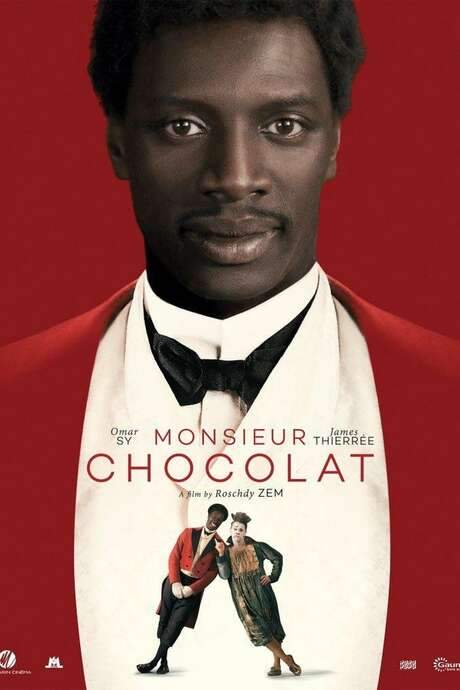
Chocolat

Chocolat

JustWatch#17,0378

Year: 2016

Runtime: 119 mins

Language: French

Director: Roschdy Zem

ComedyDrama

The story follows Chocolat, the first Black stage performer in France, as he rises from obscurity to become a celebrated figure during the Belle Époque in Paris. Forming an innovative duo with Footit, he achieves great popularity and financial success. However, the pressures of newfound wealth, gambling, and the challenges of racial discrimination ultimately strain his friendship with Footit and threaten his career.

Where to Watch Chocolat?

Find where to stream, rent, or buy Chocolat (2016) in the US with current JustWatch availability, up-to-date pricing, and platform listings for subscription, rental, and digital purchase options.

Warning: spoilers below!

Haven’t seen Chocolat yet? This summary contains major spoilers. Bookmark the page, watch the movie, and come back for the full breakdown. If you're ready, scroll on and relive the story!

Chocolat (2016) – Full Plot Summary & Ending Explained

Read the complete plot breakdown of Chocolat (2016), including all key story events, major twists, and the ending explained in detail. Discover what really happened, and what it all means.

In 1897, Rafael Padilla, a Black artist and the son of a former Cuban slave, Omar Sy steps into a small but pivotal role as Kananga, a cannibal, in the modest circus Delvaux. George Foottit, a white clown, is asked by the director to elevate his routine. He seizes on a bold idea: pairing Kananga with a new foil, a white authoritarian clown and a Black scapegoat named Chocolat.

The duo’s act spreads quickly through France, reaching Joseph Oller, the director of the Nouveau Cirque, who invites them to perform in his Parisian venue. The immediate success makes Chocolat the first famous Black clown in the country, a phenomenon that stirs envy in his former employer’s wife, who denounces him for being in France illegally.

The façade of humor masks a harsher reality: the racism Chocolat encounters in France grinds him down, even as he remains celebrated and caricatured. A poster for the show depicts Chocolat as a black stereotype, highlighting the hypocrisy of the society that schools him on stage yet judges him off it.

A negro always remains a negro, the police commander tells Chocolat when he releases him.

Chocolat is both adored as a star and reduced to a racial caricature, and the contradictions of French society become increasingly hard to bear. Faced with the pressure to evolve beyond the clown act, he experiments with a Shakespearean turn in Othello, but the premiere is booed by part of the audience.

In the end, Chocolat slips into obscurity and dies of consumption, a stark tragedy behind a groundbreaking but painful path for a performer who helped shape the era’s stage.

Last updated: February 24, 2026 at 14:17

Was this helpful?

Chocolat (2016) Plot Questions Answered – Summary FAQ

Explore frequently asked questions about Chocolat (2016) with spoiler-rich answers covering the full plot summary, major story beats, character motivations, hidden details, and ending meaning. This movie summary FAQ helps explain confusing scenes, plot twists, and narrative decisions in clear, searchable detail.

Q1

Why did Chocolat and Foottit's comedy act become so popular?

A.

The duo paired an authoritarian white clown with a Black scapegoat character, creating a provocative dynamic that fascinated audiences. This format was novel for the time, blending circus spectacle with social commentary in a way that challenged prevailing racial norms while entertaining crowds across France.

The act's controversial dynamic was already visible in its early circus performances, setting the stage for both fame and backlash.

foottitchocolat duocircus actcomedy partnershipparis nouveau cirque
Q2

Why was Chocolat arrested and tortured by police?

A.

Chocolat was denounced by his former employer's wife for being in France illegally, leading to his arrest. While in custody, he was tortured by police, who treated him as a perpetual outsider despite his celebrity status. The police commander explicitly told him that "a negro always remains a negro," highlighting the systemic racism he faced.

Earlier events had already shown the precarious legal status of Black performers in France.

chocolat arrestpolice tortureracism franceillegal immigration 1890s
Q3

Why did Chocolat's Othello performance fail?

A.

Chocolat attempted to pivot from his clown act to Shakespeare's Othello in hopes of being taken seriously as a performer. However, part of the audience booed the premiere, demonstrating the limits of mainstream acceptance for a Black artist in early 20th-century France. The rejection showed that audiences wanted him in his caricatured clown role, not as a serious dramatic actor.

The posters and promotional materials had already reduced Chocolat to a stereotype, foreshadowing audience rejection of his serious work.

chocolat othelloshakespeare失败racial barriers performerchocolat career decline
Q4

Why did Chocolat's career decline after his initial success?

A.

Multiple factors contributed to Chocolat's downfall: the constant grind of racism despite his fame, the failed Othello experiment, and his personal descent into gambling, drugs, and women. As tastes changed and prejudice remained entrenched, he became unable to adapt or sustain his earlier success, leading to obscurity.

The tension between his public adulation and private degradation was visible throughout his rise.

chocolat declineobscurityaddictiongamblingcareer end
Q5

Why was Chocolat both celebrated and discriminated against?

A.

Chocolat achieved genuine fame as the first Black clown in France, performing at prestigious venues like Nouveau Cirque. However, French society simultaneously celebrated and dehumanized him, he was a star on stage but reduced to a racial stereotype in posters and treated as a perpetual outsider by authorities. This contradiction between public acclaim and personal degradation defined his experience.

The police commander's statement about Black people foreshadowed the limits of his acceptance.

chocolat racismcelebrated Black performerfrench society hypocrisydual identity performer
Q6

Why did Chocolat and Footit's friendship strain over time?

A.

As Chocolat's fame grew, the dynamic between the partners shifted. The act's success was built on their contrasting roles, but the pressures of wealth, gambling, and the racial dynamics of their relationship created tension. Footit represented the white authoritarian figure who benefited more from their partnership, while Chocolat bore the burden of being the target of both humor and prejudice.

The original power imbalance in their act, with Footit as the authority figure, planted seeds for future conflict.

foottit chocolatpartnership tensionfriendship endedclown duo conflict
Q7

What caused Chocolat's death?

A.

Chocolat died of consumption (tuberculosis) in the early 20th century after years of personal struggle. His health deteriorated from the combined effects of poverty, addiction, and the physical and emotional toll of his experiences. He died in obscurity, his groundbreaking achievements largely forgotten by the public that had once celebrated him.

His descent into gambling, drugs, and women had already weakened his body and spirit.

chocolat deathconsumptiontuberculosisobscure deathtragic end
Q8

Why did the show posters portray Chocolat as a stereotype?

A.

The promotional posters depicted Chocolat as a Black caricature, reflecting the broader societal racism of Belle Époque France. While audiences flocked to see him perform, the entertainment industry still reduced Black performers to offensive stereotypes in marketing. This hypocrisy, celebrating him on stage while degrading him in imagery, exemplified the contradictions Chocolat navigated throughout his career.

The posters foreshadowed the audience's later rejection of his serious theatrical ambitions.

chocolat posterracist stereotypesparis circus postersblackface imagery
Q9

Why is Chocolat considered a pioneer for Black performers?

A.

Chocolat was the first Black clown to achieve genuine fame in France, breaking barriers in a segregated entertainment industry. Despite being cast in a degrading scapegoat role, his talent and charisma made him a star at Nouveau Cirque. His courage in facing systemic racism while performing opened doors for future Black artists, even though he himself died in obscurity.

His invitation to Nouveau Cirque marked the beginning of his groundbreaking status.

first Black clownpioneer black performerchocolat legacyfrench circus history
Q10

Why did Chocolat turn to gambling and substance use?

A.

The constant pressure of racism, combined with the emotional toll of performing a degrading caricature, led Chocolat to seek escape through self-destructive behaviors. Gambling, drugs, and women became coping mechanisms as he struggled with the psychological weight of his circumstances. These habits accelerated his personal decline while contrasting sharply with his earlier professional success.

The psychological toll of being both adored and denigrated was visible from early in his career.

chocolat addictiongamblingsubstance useself-destructionracism mental health
Q11

Why did Joseph Oller invite Chocolat to Nouveau Cirque?

A.

Joseph Oller, director of Nouveau Cirque, heard about the buzz surrounding Foottit and Chocolat's act and recognized its potential for drawing crowds to his Parisian venue. Their controversial dynamic had already generated excitement across France, making them an attractive booking for a venue seeking new and provocative entertainment. This invitation launched Chocolat into true Parisian celebrity.

Their act's rapid spread through France had already caught industry attention.

joseph ollernouveau cirqueparis venuefame invitation
Mobile App Preview

Coming soon on iOS and Android

The Plot Explained Mobile App

From blockbusters to hidden gems - dive into movie stories anytime, anywhere. Save your favorites, discover plots faster, and never miss a twist again.

Sign up to be the first to know when we launch. Your email stays private, always.

Explore Movie Threads

Discover curated groups of movies connected by mood, themes, and story style. Browse collections built around emotion, atmosphere, and narrative focus to easily find films that match what you feel like watching right now.

Movies about groundbreaking artists like Chocolat

Stories of pioneering artists whose success is shadowed by prejudice and personal demons.Discover movies like Chocolat that portray the bittersweet journeys of pioneering figures, exploring the intersection of artistic genius, societal prejudice, and the personal toll of fame.

historicaltragictriumphant yet tragicoppressivereflectivestrugglinglonelymelancholic

Narrative Summary

These narratives typically follow a clear biographical arc, beginning with immense talent and ambition leading to public acclaim. However, the path is fraught with the constant friction of societal barriers (like racism or classism), which often leads to internal conflict, addiction, or a tragic downfall, questioning the true cost of success.

Why These Movies?

Movies in this thread share a focus on the bittersweet reality of being first. They blend the exhilaration of artistic triumph with the melancholic weight of carrying a burden no one else understands, resulting in emotionally heavy stories with a steady pace and a predominantly tragic or sad ending feel.
Bittersweet biographical dramas like Chocolat

Character-driven stories where professional success is inextricably linked to personal sorrow.If you liked the emotional depth of Chocolat, explore these character-driven biopics that portray the heavy personal costs behind public success and fame.

bittersweetmelancholicreflectiveoppressivehistoricaltragicemotionalcharacter-driven

Narrative Summary

The narrative pattern involves a steady, chronological exploration of a life, charting a rise to prominence that is tempered by internal and external conflicts. The central character's achievements are consistently shadowed by themes of alienation, addiction, or systemic injustice, leading to an ending that feels more reflective and sorrowful than celebratory.

Why These Movies?

These films are grouped by their shared tonal blend of professional triumph and personal anguish. They maintain a medium intensity with a steady pace, ensuring the emotional weight of the protagonist's struggles lands with full force, making for a profoundly bittersweet and reflective viewing experience.

Unlock the Full Story of Chocolat

Don't stop at just watching - explore Chocolat in full detail. From the complete plot summary and scene-by-scene timeline to character breakdowns, thematic analysis, and a deep dive into the ending - every page helps you truly understand what Chocolat is all about. Plus, discover what's next after the movie.

Chocolat Timeline

Track the full timeline of Chocolat with every major event arranged chronologically. Perfect for decoding non-linear storytelling, flashbacks, or parallel narratives with a clear scene-by-scene breakdown.

Chocolat Timeline

Characters, Settings & Themes in Chocolat

Discover the characters, locations, and core themes that shape Chocolat. Get insights into symbolic elements, setting significance, and deeper narrative meaning - ideal for thematic analysis and movie breakdowns.

Characters, Settings & Themes in Chocolat

Chocolat Spoiler-Free Summary

Get a quick, spoiler-free overview of Chocolat that covers the main plot points and key details without revealing any major twists or spoilers. Perfect for those who want to know what to expect before diving in.

Chocolat Spoiler-Free Summary

More About Chocolat

Visit What's After the Movie to explore more about Chocolat: box office results, cast and crew info, production details, post-credit scenes, and external links - all in one place for movie fans and researchers.

More About Chocolat