Plot Explained Spoilers guaranteed!
Plot Explained

Browse by genre

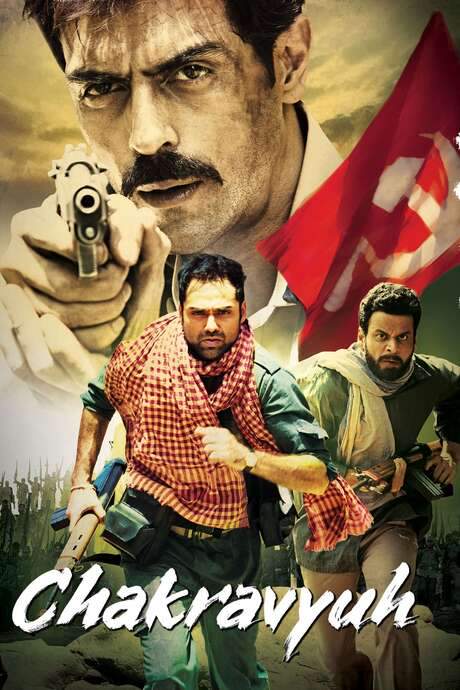
Chakravyuh (2012) movie poster

Timeline

Chakravyuh (2012) Timeline Explained – Every Event in Order

Release, runtime and language
2012 · 145 mins · Hindi
Loading streaming availability…
Directed by
Prakash Jha
Starring
Om Puri, Arjun Rampal, Abhay Deol, Esha Gupta, Deepraj Rana, Manoj Bajpayee

Responding to a friend’s request, SP Adil sends Kabir undercover to infiltrate a Naxalite group. Kabir initially acts as an informant, but as he uncovers the truth about their cause, he becomes increasingly involved and ultimately rises to become one of their leaders, finding himself caught between two worlds.

On this page (5)
  1. 1 Where to watch
  2. 2 Events in order (14)
  3. 3 Timeline questions answered
  4. 4 Movie threads
  5. 5 Every angle
Loading streaming availability…

14 events in order · contains spoilers

Chakravyuh Timeline: Events in Chronological Order

Every key event of Chakravyuh (2012) in order, scene by scene, with when and where it takes place. Use it to untangle flashbacks, time jumps and parallel storylines, to refresh your memory before the sequel or to find the exact scene you are thinking of.

  1. Adil arrives in Nandighat after the 84-police massacre

    Adil Khan is posted to Nandighat following a horrific massacre that leaves 84 policemen dead. The region already shows the power of a well-organized Maoist movement led by Rajan, with a parallel governance system in place. He confronts a security situation where conventional policing is outmatched.

    When
    Day 1 after transfer
    Where
    Nandighat
  2. Kabir proposes infiltration of Rajan's group

    Kabir, Adil's old friend, re-enters his life with a bold plan. He proposes infiltrating Rajan's Maoist group as an informer to help topple them from within. Adil agrees, hoping insider intelligence will turn the tide in Nandighat.

    When
    Before infiltration
    Where
    Nandighat area
  3. Kabir infiltrates and earns Maoist trust

    Kabir infiltrates Rajan's circle and quickly earns their trust. He secretly feeds information to Adil, enabling the police to strike more effectively against the Maoists. The operation begins to tilt in favor of the security forces.

    When
    Early operation phase
    Where
    Nandighat/Maoist camps
  4. Massive crackdown; arms cache raid and Rajan's capture

    A massive crackdown follows as an enormous arms cache is raided and two top leaders, along with 63 activists, are killed at an arms-training camp. Rajan is captured, and the Maoists begin to retreat under pressure. The early success boosts Adil and Kabir's inside operation.

    When
    Weeks into operation
    Where
    Arms-training camp, Nandighat
  5. Kabir sees rural oppression; bonds with Juhi and others

    Kabir begins glimpsing the rural poor's plight and grows sympathetic toward the activists. He forms ties with key Naxal figures like Juhi, Naga, Babu, and Venu, and Juhi starts developing feelings for him. The line between informer and ally blurs as empathy grows.

    When
    As infiltration deepens
    Where
    Maoist camps and local villages
  6. Mahanta steel plant plan accelerates; Adil sidelined

    The Mahanta Group pushes ahead with a plan to build a Rs 15,000 crore steel plant in the region, hiring private armies to evacuate villages. Adil refuses to cooperate with the project, but his superiors sideline him, diminishing his influence. The corporate motive intensifies the conflict between state, industry, and locals.

    When
    During lead-up to eviction drive
    Where
    Nandighat region; Mahanta HQ
  7. Juhi's sacrifice and brutal detention

    Juhi sacrifices herself during a police raid to protect Kabir and the Naxal cause. She is later subjected to police brutality and sexually assaulted in lock-up, exposing the brutality faced by activists. Kabir learns of her death and the cost of resistance.

    When
    Soon after attack on Mahanta
    Where
    During raid and police lock-up
  8. Kabir publicly commits to the Naxals

    Kabir declares his allegiance to the Naxals and their leadership, severing his ties with the police. He commits fully to the movement and takes on a leadership role within the group. Adil watches as the line between confidant and adversary dissolves.

    When
    After Juhi's death
    Where
    Naxal camps
  9. Attack on Mahanta HQ; Rajan's exchange plan

    Kabir leads an assault on Mahanta's HQ and abducts the group head, using the operation to demand Rajan's release in exchange. Adil counters by secretly planting an electronic tracker inside Rajan before the handover. The stage is set for a deadly confrontation over power and allegiance.

    When
    During exchange planning
    Where
    Mahanta HQ; handover site
  10. Adil turns Kabir into a public symbol; the trial begins

    To discredit Kabir, Adil releases a story portraying him as Adil's informant and friend. The Naxals hold a trial for Kabir, testing his loyalty and the cost of his double life. The polarized response hardens the rift between police and insurgents.

    When
    Around the exchange planning
    Where
    Newsrooms and field camps
  11. Tracker reveal; Juhi's death; pursuit

    Adil's forces strike using the Rajan tracker, forcing Kabir to confront the dangerous game he helped play. Kabir discovers Rajan also carries a tracker and uses the device to lure Adil away. In a fateful moment, Juhi returns to aid Kabir and is shot dead by Adil.

    When
    After trackers are deployed
    Where
    Nandighat vicinity
  12. Final confrontation: Kabir dies at Adil's hand

    In the climactic confrontation, Adil corners Kabir as he reaches for his gun and shoots him. The friendship that powered the initial infiltration ends in tragedy, underscoring the cost of violent conflict. The state and insurgents alike have paid a heavy price.

    When
    Final confrontation
    Where
    Nandighat
  13. Origins of the Naxal movement

    The film traces the Naxal movement back to Naxalbari in West Bengal 45 years ago, describing how land rights and poverty sparked a long-running insurgency. It shows how the movement spread to hundreds of districts and became a major internal security challenge. The background also explains the ideological roots fueling the conflict.

    When
    Historical background
    Where
    Naxalbari; nationwide
  14. Motive behind the conflict: land, resources, and development

    The summary highlights how private companies seek tribal lands and resources under the banner of national development, while local communities are displaced. The Mahanta steel plant plan embodies this clash between profit and people. The insurgency is driven by dispossession as much as ideology.

    When
    Background context
    Where
    Nandighat region

Last updated: October 01, 2025 at 10:22

Was this helpful?

Timeline questions answered

Chakravyuh Timeline Explained: Your Questions Answered

When does it happen, and why in that order? The questions people ask about the chronology of Chakravyuh (2012): time jumps, flashbacks, cause and effect between scenes and the correct order of events, each answered with spoilers.

Q1

Why did Kabir switch sides and join the Naxals?

Kabir turned to the Naxals after witnessing the brutal reality of rural oppression, land seizures, forest clearing, and village displacements for corporate development. His infiltration revealed how the poorest bore the cost of so-called progress. Juhi's sacrifice during a police raid, followed by her torture and death in custody, became the breaking point that cemented his full commitment to the movement.

Foreshadowing: Earlier interactions with Juhi and other activists showed Kabir increasingly questioning whether the system he served could protect the vulnerable.

  • kabir
  • naxalites
  • turn
  • sides
  • juhi
  • reason
Q2

What happened to Juhi after the police raid?

Juhi sacrificed herself during a police raid to shield Kabir and the Naxal cause. She was captured and later subjected to severe police brutality and sexual assault in lock-up, ultimately dying from her injuries. Her death highlighted the violence activists face and became a turning point that hardened Kabir's resolve against the state.

Foreshadowing: Kabir's deepening bond with Juhi foreshadowed her tragic fate and its impact on his choices.

  • juhi
  • death
  • custody
  • police
  • brutality
  • assault
Q3

Why did Adil shoot Kabir at the end?

In the final confrontation, Adil cornered Kabir who reached for his gun. Adil fired, killing his closest friend. The act wasn't personal, it was the tragic consequence of two men on opposite sides of an unwinnable conflict, each loyal to their own cause. Kabir's public commitment to the Naxals left Adil with no choice but to treat him as an enemy.

Foreshadowing: The entire operation was built on their friendship, making the ending a devastating payoff of that trust.

  • adil
  • kabir
  • shoot
  • kill
  • final
  • confrontation
Q4

What was the Mahanta steel plant controversy about?

Mahanta Group Industries planned a massive Rs 15,000 crore steel plant requiring relocation of entire villages. The project represented the clash between corporate development and tribal land rights, promised benefits never reached the displaced people. Adil refused to assist the forced evictions, leading his superiors to sideline him from the operation.

Foreshadowing: The steel plant drive intensifies the conflict between state forces and local communities throughout the story.

  • mahanta
  • steel
  • plant
  • displacement
  • village
  • development
Q5

Why was there a tracker inside Rajan during the exchange?

Adil secretly planted an electronic tracker inside Rajan before the handover to track the Naxals after the exchange. Kabir discovered the tracker and used it strategically to lure Adil's forces away from the insurgents. This deception ultimately led to Juhi's death during the pursuit that followed.

Foreshadowing: Adil's tracker decision sets up the deadly chase that defines the story's climax.

  • tracker
  • rajan
  • exchange
  • adil
  • kabir
  • lure
Q6

Why was Adil removed from the operation?

Adil was sidelined after refusing to cooperate with Mahanta Group's forced village eviction for the steel plant. His superiors wanted the operation to proceed smoothly and removed the officer who opposed corporate interests. This reduced Adil's influence over the crackdown and intensified his moral conflict.

Foreshadowing: Adil's clash with Mahanta earlier signals his growing opposition to the state's methods.

  • adil
  • sidelined
  • mahanta
  • operation
  • removed
Q7

How did the Naxal movement begin in the film?

The film traces the Naxal movement back to Naxalbari in West Bengal, 45 years before the story. It began as a peasant uprising over land rights and poverty, spreading to hundreds of districts across India. The historical context explains why the insurgency in Nandighat exists and how ideology mixes with desperation.

Foreshadowing: The historical background frames the conflict as a long-running systemic issue rather than isolated violence.

  • naxal
  • movement
  • origin
  • naxalbari
  • history
  • insurgency
Q8

What happened after Rajan was captured?

Rajan's capture dealt a significant blow to the Maoists, causing them to retreat under pressure. However, his absence created a leadership vacuum within the Naxals, leading Kabir to be chosen as their new leader. The capture also enabled the later exchange plot, where Kabir demanded Rajan's release in exchange for the Mahanta Group head.

Foreshadowing: Kabir's rise as leader after Rajan's fall shows how the operation's success backfired.

  • rajan
  • captured
  • naxals
  • leader
  • capture
  • exchange
Q9

Why was the 84-police massacre important to the story?

The massacre of 84 policemen by Naxalites before Adil's arrival established the severity of the conflict in Nandighat. It revealed how well-organized and dangerous Rajan's group had become, operating with a parallel governance system. The tragedy motivated the undercover operation and set Adil on his collision course with the insurgents.

Foreshadowing: KK's realization that the trap was deliberately set foreshadows the deeper complexity of the conflict.

  • 84
  • police
  • massacre
  • nandighat
  • rajan
  • significance
Q10

Why did Kabir agree to infiltrate Rajan's group?

Kabir proposed infiltrating Rajan's Naxal group to help Adil topple the movement from within. As an insider, he could provide crucial intelligence leading to successful raids. The plan worked initially, arms caches were seized, leaders killed, and Rajan captured. However, Kabir's deeper involvement exposed him to the Naxals' perspective, changing everything.

Foreshadowing: Kabir's early success masks the moral cost his infiltration would eventually exact.

  • kabir
  • infiltrate
  • rajan
  • informant
  • adil
  • operation
Q11

How did Adil and Kabir's friendship affect the outcome?

Their childhood friendship formed the foundation of the entire operation, Adil trusted Kabir completely as his informer. When Kabir switched sides, Adil tried to discredit him by leaking their connection to the media. The final confrontation destroyed what remained of their bond, with Adil forced to kill his best friend when Kabir reached for his weapon.

Foreshadowing: Their deep bond makes the tragic ending feel inevitable rather than accidental.

  • adil
  • kabir
  • friendship
  • tragedy
  • betrayal
  • final

Movie threads

More Movies Like Chakravyuh, by Mood & Story

Curated lists built around what makes Chakravyuh tick: the same mood, the same kind of story or the same emotional payoff. Each list explains why these movies belong together.

Undercover morality thrillers like Chakravyuh

Stories where going undercover blurs the line between duty and belief. Explore movies like Chakravyuh where undercover operations force characters into profound moral crises. These stories blend high-stakes tension with deep philosophical questions about justice, loyalty, and ideological transformation, perfect for fans of gritty political thrillers.

  • tense
  • morally ambiguous
  • ideological
  • claustrophobic
  • thought-provoking
  • gritty
  • Tone: tense, morally complex, dark
  • Pacing: steady, character-driven
Why these movies?

The story pattern: The narrative typically follows an agent infiltrating a group, beginning with clear objectives. As they delve deeper, firsthand exposure to the group's perspective and grievances creates empathy and ideological doubt, forcing a crisis of conscience that culminates in a pivotal choice between their original mission and their newfound beliefs.

Why they belong together: These films are grouped by their shared focus on the psychological metamorphosis of an undercover operative. They create a tense, morally ambiguous atmosphere where the central conflict is internal, exploring themes of identity, betrayal, and the gray areas between opposing sides of a conflict.

Gritty ideological tragedies like Chakravyuh

Gritty stories where fervent beliefs lead to inevitable, personal tragedy. If you liked the tragic conflict in Chakravyuh, discover more movies about the devastating personal cost of ideological warfare. These films are heavy, thought-provoking dramas that explore social injustice, friendship tested by beliefs, and often end in sorrow.

  • tragic
  • gritty
  • thought-provoking
  • bleak
  • urgent
  • political
  • Tone: dark, tragic, bleak
  • Pacing: steady, building dread
Why these movies?

The story pattern: Stories unfold around a central socio-political conflict, pitting two opposing worldviews against each other. The plot often follows characters—sometimes friends—who find themselves on opposite sides, exploring their motivations and the systemic forces at play. The journey is characterized by escalating tension and a growing sense of doom, leading to a climax where ideals clash with devastating personal consequences.

Why they belong together: These movies are united by their bleak exploration of how abstract ideologies manifest in real human suffering. They share a dark tone, heavy emotional weight, and a steady pacing that builds towards an emotionally crushing, often sad ending, leaving the viewer to ponder the complex issues long after the film ends.

Every angle

Chakravyuh (2012) Explained: Plot, Timeline & Characters

Everything about Chakravyuh in one place: what happens in the plot summary, the timeline in chronological order, the characters and meaning and a spoiler-free summary. What's After the Movie adds the cast, box office and post-credit scenes.

Coming soon on iOS and Android

The Plot Explained Movie Summary App

Plot summaries, endings explained and timelines on your phone. Catch up on any movie in minutes, save your favorites and never miss a twist again.

Be the first to know when we launch. Your email stays private, always.

Learn more about the app