Plot Explained Spoilers guaranteed!
Plot Explained

Browse by genre

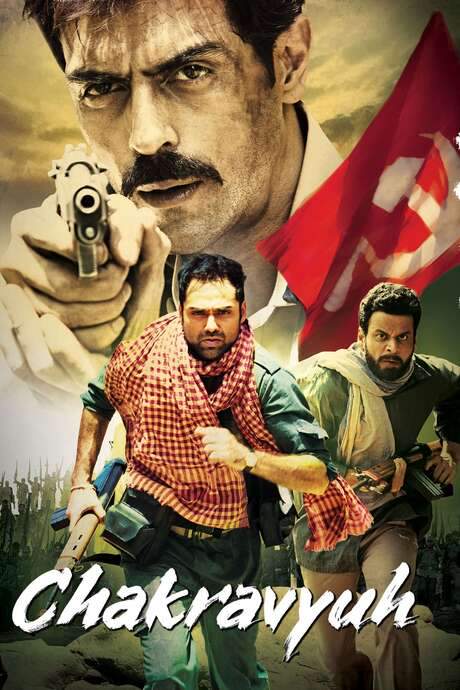
Chakravyuh (2012) movie poster

Characters & Themes

Chakravyuh (2012) Characters, Setting & Themes Explained

Release, runtime and language
2012 · 145 mins · Hindi
Loading streaming availability…
Directed by
Prakash Jha
Starring
Om Puri, Arjun Rampal, Abhay Deol, Esha Gupta, Deepraj Rana, Manoj Bajpayee

Responding to a friend’s request, SP Adil sends Kabir undercover to infiltrate a Naxalite group. Kabir initially acts as an informant, but as he uncovers the truth about their cause, he becomes increasingly involved and ultimately rises to become one of their leaders, finding himself caught between two worlds.

On this page (7)
  1. 1 Where to watch
  2. 2 Characters explained (8)
  3. 3 Where & when it takes place
  4. 4 Themes & meaning (4)
  5. 5 Character & meaning questions
  6. 6 Movie threads
  7. 7 Every angle
Loading streaming availability…

8 main characters · contains spoilers

Chakravyuh Characters Explained: Who Is Who

The main characters of Chakravyuh (2012), heroes and villains: what drives them, how they change over the course of the story and what each of them reveals about the film's bigger ideas.

  • Adil Khan (Arjun Rampal)

    A highly decorated police officer assigned to Nandighat to quell the Maoist uprising. He navigates a complex web of insider information, corrupt politics, and on-the-ground danger. He becomes increasingly conflicted as the state's heavy-handed tactics harm civilians and as development moves forward. His partnership with Kabir drives the story forward, even as he steels himself to ruthless measures.

    • 👮‍♂️ Duty
    • 🧭 Ethics
    • 🌐 Security State
  • Kabir (Abhay Deol)

    A roguish but loyal friend who infiltrates Rajan's group as an informer. He balances loyalty to Adil with empathy for the oppressed and undergoes a moral awakening as events unfold. His choices propel the conflict and reveal how personal ties collide with political aims. Ultimately, Kabir's path forces difficult sacrifices.

    • 🧭 Moral Ambiguity
    • 🎭 Loyalty
    • 💥 Violence
  • Govind Suryavanshi (Om Puri)

    A Marxist ideologue who heads the Maoist movement in the region. Oxford-educated but disillusioned by oppression, he leads a parallel system that challenges state authority. Govind embodies the theater of insurgency and the strategic thinking behind the movement.

    • 🗺️ Ideology
    • 📚 Intellectual
    • 🌍 Global Perspective
  • Rajan (Manoj Bajpayee)

    Charismatic leader of the Naxal group, Rajan commands fierce loyalty and a ruthless willingness to defend his people. He uses a nationalist rhetoric to justify violent action and maintain control over the movement. His presence sharpens the moral ambiguities at the heart of the conflict.

    • 🧭 Insurgent Leader
    • 💥 Charismatic
    • 🎯 Strategy
  • Rhea Menon (Esha Gupta)

    Adil's wife and an IPS officer who brings a personal stake to the conflict. She embodies professional duty while navigating the emotional costs of living through internal security battles. Her perspective highlights the human side of the security-state tension.

    • 👩‍💼 IPS Officer
    • 💔 Personal Stakes
    • 🤝 Partnership
  • Prashanth Mahanta (Kabir Bedi)

    Chairman of the Mahanta Group Industries, a corporate power broker pursuing land rights for a steel plant. His influence extends into politics and security arrangements, illustrating the collaboration between business interests and state power. He stands as a major obstacle to the village communities.

    • 🏢 Industrialist
    • 💰 Power Broker
    • ⚖️ Development vs People
  • Juhi (Anjali Patil)

    A dedicated revolutionary who becomes romantically involved with Kabir and witnesses the costs of resistance, including violence and police brutality. Her sacrifice marks a turning point in the struggle and intensifies the personal stakes for the protagonists.

    • 💔 Personal Sacrifice
    • 🎭 Activist
  • Home Minister (Kiran Karmarkar)

    A political figure who steers security policy and development agendas, balancing public order with industrial ambitions. His decisions shape the government's response to the uprising and affect both sides of the conflict.

    • 🏛️ Political Power
    • 📜 Policy
    • ⚖️ Authority

Last updated: October 01, 2025 at 09:45

Was this helpful?

Setting

Where and When Does Chakravyuh Take Place?

The setting of Chakravyuh (2012): the year and time period, the places and locations, and how they shape the characters, the mood and the tension of the story.

Time period

Contemporary

Set in present-day India, the story unfolds in a resource-rich belt where police operations, political maneuvering, and industrial ambitions collide. The conflict mirrors ongoing internal security challenges and land-right disputes in the 21st century. The atmosphere blends governance, development, and insurgent resistance.

Location

Nandighat

Nandighat is a mineral-rich district where security forces clash with Maoist insurgents. The region becomes a flashpoint for a mega steel plant that threatens tribal lands and local livelihoods. Local communities navigate a landscape where informal justice, police pressure, and corporate interests intersect.

  • 🏞️ Rural-Industrial Frontier
  • 🛡️ Conflict Zone
  • 🌾 Tribal Lands

Last updated: October 01, 2025 at 09:45

Was this helpful?

4 major themes

Chakravyuh Meaning: Themes & Message Explained

What is Chakravyuh (2012) really about? The emotional, social and philosophical themes the film keeps returning to, its symbolism and the message beneath the surface.

  • Loyalty

    Kabir infiltrates Rajan's group to aid Adil, risking his safety and credibility. The duo's bond is tested as deception, duty, and risk pull them in opposite directions. The narrative examines how loyalty can be manipulated by higher powers, and whether friendship can survive under such strain. The cost of loyalty is paid in trust and lives.

  • Exploitation

    Industrial interests push for land to build a mega steel plant in Nandighat, threatening livelihoods. Villagers are displaced as private armies and corrupt officials sideline their rights. The film exposes how development can become a tool of coercion when legal protections fail. It highlights the clash between corporate ambitions and the dignity of the displaced.

  • Conflict

    Two parallel forces—state security and insurgent groups—engage in a deadly game of cat and mouse. The violence includes police crackdowns, armed raids, and retaliatory attacks that blur lines between oppressor and oppressed. Civilians suffer as both sides pursue strategic advantage. The escalating confrontations drive characters to radical choices.

  • Morality

    Adil and Kabir justify their actions through different moral frameworks, raising questions about justice and legitimacy. The showdown between state power and insurgent ideals challenges viewers to redefine who is the hero or villain. The film presents a morally gray landscape where right and wrong are not clear-cut. The ending underscores the human cost of pursuing justice through violence.

Last updated: October 01, 2025 at 09:45

Was this helpful?

Character & theme questions

Chakravyuh Characters & Meaning: Your Questions Answered

The questions people ask about Chakravyuh (2012): who the characters really are, their relationships, what the symbols mean, where it takes place and what the movie is really about. Each answer contains spoilers.

Q1

What is Nandighat and why is it important in the story?

Nandighat is a mineral-rich district in India that serves as the primary setting. It represents a rural-industrial frontier where security forces clash with Maoist insurgents. The region becomes a flashpoint due to a mega steel plant that threatens tribal lands and local livelihoods, creating tension between corporate interests, state power, and indigenous communities.

  • nandighat
  • setting
  • location
  • tribal lands
  • mineral rich district
Q2

When is the movie set?

Chakravyuh is set in present-day contemporary India, specifically in a resource-rich belt where police operations, political maneuvering, and industrial ambitions collide. The story reflects ongoing internal security challenges and land-right disputes in 21st century India.

  • time period
  • contemporary
  • modern india
  • 21st century
Q3

What is the Naxalite movement portrayed in the film?

The film portrays a Maoist insurgent movement led by Govind Suryavanshi, an Oxford-educated Marxist ideologue. The Naxalites operate as a parallel system challenging state authority, using armed resistance to defend tribal communities from displacement and exploitation. Their conflict with state security forces creates a deadly game where civilians often suffer.

  • naxalite
  • maoist
  • insurgency
  • rebel movement
  • govind suryavanshi
Q4

Who is Kabir and what is his role in the story?

Kabir is a roguish but loyal friend whom police officer Adil Khan sends undercover to infiltrate Rajan's Naxalite group. Initially acting as an informant, Kabir undergoes a moral awakening as he uncovers the truth about their cause. He becomes increasingly involved with the insurgents, ultimately rising to become one of their leaders, caught between loyalty to his friend and empathy for the oppressed.

  • kabir
  • undercover
  • infiltrator
  • naxalite
  • abhay deol
Q5

Who is Adil Khan and what drives him?

Adil Khan is a highly decorated police officer assigned to quell the Maoist uprising in Nandighat. He is driven by duty but becomes increasingly conflicted as he witnesses the state's heavy-handed tactics harm civilians and as development moves forward through corrupt means. His partnership with Kabir drives the story, though he steels himself to ruthless measures to achieve his objectives.

  • adil khan
  • police officer
  • arjun rampal
  • duty
  • conflict
Q6

What role does the steel plant play in the conflict?

A mega steel plant sponsored by Prashanth Mahanta's Mahanta Group Industries drives much of the conflict. The plant requires tribal lands in Nandighat, threatening local livelihoods. Corporate interests, corrupt officials, and private armies work together to sideline villagers' rights, turning development into a tool of coercion. This industrial ambition fuels the tension between communities and the state.

  • steel plant
  • prashanth mahanta
  • corporate
  • displacement
  • land rights
Q7

What are the main themes of Chakravyuh?

Chakravyuh explores four major themes: Loyalty (the strain on friendship between Adil and Kabir as deception and duty pull them apart), Exploitation (how corporate development displaces tribal communities), Conflict (the deadly game between state security and insurgents where civilians suffer), and Morality (the morally gray landscape where right and wrong are not clear-cut).

  • themes
  • loyalty
  • exploitation
  • conflict
  • morality
  • meaning
Q8

How does the film explore the theme of loyalty?

The film examines how loyalty can be manipulated by higher powers. Kabir infiltrates Rajan's group to aid his friend Adil, risking his safety and credibility. The duo's bond is tested as deception, duty, and personal risk pull them in opposite directions. The cost of loyalty is paid in trust and ultimately lives, questioning whether friendship can survive under such extreme strain.

  • loyalty
  • friendship
  • betrayal
  • adil kabir bond
Q9

How does Chakravyuh present moral ambiguity?

The film presents a morally gray landscape where both state power and insurgent ideals are challenged. Adil and Kabir justify their actions through different moral frameworks, raising questions about justice and legitimacy. The showdown challenges viewers to redefine who is the hero or villain, with the ending underscoring the human cost of pursuing justice through violence.

  • morality
  • moral ambiguity
  • justice
  • gray areas
  • ethics
Q10

Who is Rajan and what does he represent?

Rajan is a charismatic leader of the Naxal group who commands fierce loyalty and a ruthless willingness to defend his people. He uses nationalist rhetoric to justify violent action and maintain control over the movement. His character sharpens the moral ambiguities at the heart of the conflict, representing the insurgent perspective fighting against state oppression and corporate exploitation.

  • rajan
  • naxal leader
  • manoj bajpayee
  • revolutionary
Q11

Who is Govind Suryavanshi in the movie?

Govind Suryavanshi is a Marxist ideologue who heads the Maoist movement in Nandighat. An Oxford-educated intellectual disillusioned by oppression, he leads a parallel system that challenges state authority. Govind embodies the theater of insurgency and the strategic thinking behind the movement, representing the ideological foundation of the rebel cause.

  • govind suryavanshi
  • maoist leader
  • om puri
  • ideologue
Q12

Who is Rhea Menon and what is her significance?

Rhea Menon is Adil Khan's wife and an IPS officer who brings a personal stake to the conflict. She embodies professional duty while navigating the emotional costs of living through internal security battles. Her perspective highlights the human side of the security-state tension and adds a personal dimension to the moral dilemmas faced by law enforcement.

  • rhea menon
  • ips officer
  • esha gupta
  • adil wife
Q13

Who is Prashanth Mahanta and what is his role?

Prashanth Mahanta is the chairman of Mahanta Group Industries and represents corporate power broker interests pursuing land rights for the steel plant. His influence extends into politics and security arrangements, illustrating the collaboration between business interests and state power. He stands as a major obstacle to village communities, symbolizing the exploitative face of development.

  • prashanth mahanta
  • corporate
  • businessman
  • steel plant
  • kabir bedi
Q14

Who is Juhi and what role does she play?

Juhi is a dedicated revolutionary who becomes romantically involved with Kabir. She witnesses the costs of resistance, including violence and police brutality. Her sacrifice marks a turning point in the struggle and intensifies the personal stakes for the protagonists, representing the human cost paid by those on the front lines of the conflict.

  • juhi
  • revolutionary
  • anjali patil
  • kabir love interest
Q15

What does the ending of Chakravyuh signify?

The ending is unequivocally sad, culminating in the death of a main character and the bleak realization that systemic issues remain unresolved. It underscores the heavy human cost of pursuing justice through violence, leaving the moral and political conflicts unresolved while highlighting the tragic personal consequences for those caught between two worlds.

  • ending
  • conclusion
  • tragic
  • sacrifice
  • unresolved conflict

Movie threads

More Movies Like Chakravyuh, by Mood & Story

Curated lists built around what makes Chakravyuh tick: the same mood, the same kind of story or the same emotional payoff. Each list explains why these movies belong together.

Undercover morality thrillers like Chakravyuh

Stories where going undercover blurs the line between duty and belief. Explore movies like Chakravyuh where undercover operations force characters into profound moral crises. These stories blend high-stakes tension with deep philosophical questions about justice, loyalty, and ideological transformation, perfect for fans of gritty political thrillers.

  • tense
  • morally ambiguous
  • ideological
  • claustrophobic
  • thought-provoking
  • gritty
  • Tone: tense, morally complex, dark
  • Pacing: steady, character-driven
Why these movies?

The story pattern: The narrative typically follows an agent infiltrating a group, beginning with clear objectives. As they delve deeper, firsthand exposure to the group's perspective and grievances creates empathy and ideological doubt, forcing a crisis of conscience that culminates in a pivotal choice between their original mission and their newfound beliefs.

Why they belong together: These films are grouped by their shared focus on the psychological metamorphosis of an undercover operative. They create a tense, morally ambiguous atmosphere where the central conflict is internal, exploring themes of identity, betrayal, and the gray areas between opposing sides of a conflict.

Gritty ideological tragedies like Chakravyuh

Gritty stories where fervent beliefs lead to inevitable, personal tragedy. If you liked the tragic conflict in Chakravyuh, discover more movies about the devastating personal cost of ideological warfare. These films are heavy, thought-provoking dramas that explore social injustice, friendship tested by beliefs, and often end in sorrow.

  • tragic
  • gritty
  • thought-provoking
  • bleak
  • urgent
  • political
  • Tone: dark, tragic, bleak
  • Pacing: steady, building dread
Why these movies?

The story pattern: Stories unfold around a central socio-political conflict, pitting two opposing worldviews against each other. The plot often follows characters—sometimes friends—who find themselves on opposite sides, exploring their motivations and the systemic forces at play. The journey is characterized by escalating tension and a growing sense of doom, leading to a climax where ideals clash with devastating personal consequences.

Why they belong together: These movies are united by their bleak exploration of how abstract ideologies manifest in real human suffering. They share a dark tone, heavy emotional weight, and a steady pacing that builds towards an emotionally crushing, often sad ending, leaving the viewer to ponder the complex issues long after the film ends.

Every angle

Chakravyuh (2012) Explained: Plot, Timeline & Characters

Everything about Chakravyuh in one place: what happens in the plot summary, the timeline in chronological order, the characters and meaning and a spoiler-free summary. What's After the Movie adds the cast, box office and post-credit scenes.

Coming soon on iOS and Android

The Plot Explained Movie Summary App

Plot summaries, endings explained and timelines on your phone. Catch up on any movie in minutes, save your favorites and never miss a twist again.

Be the first to know when we launch. Your email stays private, always.

Learn more about the app