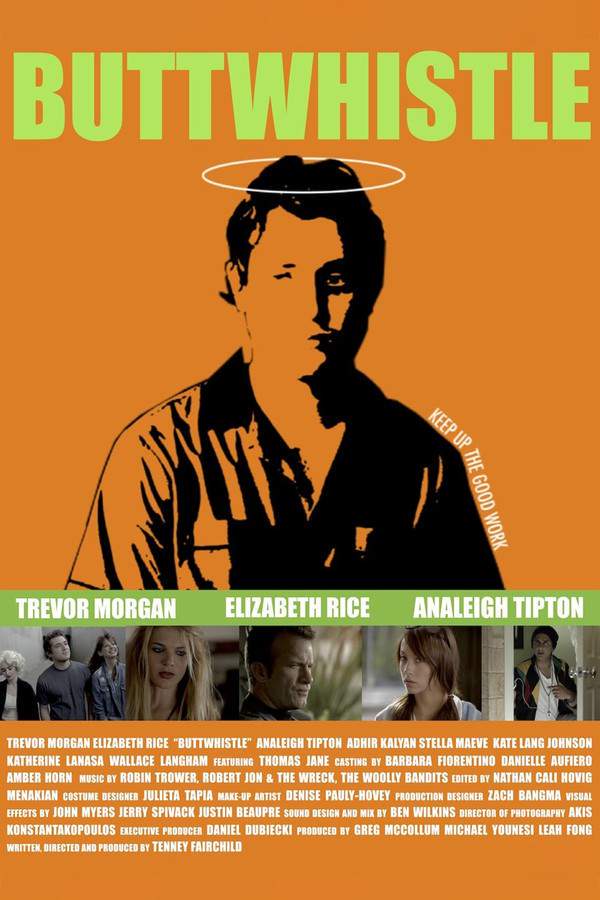
The film unfolds in a deliberately choppy, surreal rhythm, using sudden absurdities as a mirror for the dialogue and the emotional tensions simmering beneath the surface. It begins with a jarring image: a man in an office head that suddenly explodes, a moment that recurs as a quiet, ominous news bulletin threading through the narrative. In a desolate abandoned warehouse, we meet Ogden as he ruminates on a never-started gymnastics career, speaking with his friend Hate Crime John while shadows and dust swirl around them. Nearby, Roz—a young woman they both know—shows off a new tattoo and leaves with her biker boyfriend, a small but telling disruption in the social web surrounding Ogden. In rapid cuts and flashes, the film moves from moment to moment, setting a mood of uncertainty and possibility.
A pivotal sequence follows Ogden as he rescues Beth from leaping off a bridge, a moment that pulls her into his life in a way that feels both fated and fragile. He takes her home to his parents, who welcome her warmly and do their best to accept Ogden’s quirks, even as he mouths a strange line about changing his name to the sound of an airhorn. The joke about his name shifts into a troubling pattern: throughout the film, people alternately call him Ogden or punctuate his presence with the airhorn’s blast, a sonic symptom of the instability that threads through his world. Beth, sharp and antisocial, pushes back with a bold bluntness that masks deeper insecurities; she even tells Ogden’s parents that he asked her to call him “buttwhistle,” a rumor he does not refute. The result is a relationship built on a mix of tenderness and unsettling imbalance.
As Ogden and Beth grow closer, their relationship becomes emotionally freighted and uneven. Beth escalates her antisocial behavior in small but cutting ways—stealing his money, spitting in his food—acts that Ogden notices yet does not confront with the firmness one might expect. Throughout this period, Ogden experiences hallucinatory visions of a girl named Rose, who is later revealed to be a deceased friend. The world around him grows increasingly layered with surreal touches: a talking bar of soap offers odd commentary, a robotic arm seems to carry its own sly purpose, and memory and dream blur with present events in abrupt flashes. Interludes with police officers asking about missing dogs intrude on the domestic scene, underscoring a sense that nothing is stable and that truth is slippery.
Beth’s intent becomes clearer as she moves to dismantle the life Ogden has built around him and the people who care about him. She attempts to sever his contact with his grandmother by staging an accident and leaving a note that pins blame on Ogden, while an inflammatory email to a classmate drags him into a petty, escalating feud with Roz’s boyfriend—an argument that hinges on a cruel mislabeling of him with the phrase “cow tits.” Each skirmish ends with Ogden “winning” on the surface, but the victories only fuel Beth’s fury, driving her to deeper, darker acts. Her schemes reveal themselves as a calculated assault on his social world: she discards his college admissions letters, hangs a Nazi flag at his home, and even tamps up his license plate with a racial slur, a move that shows how far she’s willing to go to destabilize him.
As the evidence of Beth’s malicious plot accumulates, the cracks in Ogden’s life widen. People affected by his choices—some of them the very drivers of the accidents and misunderstandings—begin to contact the house. Ogden discovers the discarded college acceptance letters, and Rose urges him to end the relationship, suggesting an impending catastrophe if he does not. Beth, sensing the tightening noose, lures him to a warehouse once more. There, in a final, chilling act, she duct-tapes her own head, mouth, and nose, effectively cutting off communication with him and fleeing into the shadows. Ogden staggers away, only to be arrested by the police, inadvertently framed by Beth for the murders of Roz and a classmate. As he travels down the road, he passes figures from the ruined relationships Beth orchestrated, a haunting procession of memories that underscores the film’s central theme: manipulation corrodes trust and leaves a trail of broken lives. In the closing image, Beth walks away with a dog, while Ogden’s parents return from vacation and greet her with a warmth that feels both tragically naive and unnervingly systemic.
The story thus lingers in the head like a half-remembered nightmare: a tale of fragile connections, the allure and danger of a volatile bond, and a world where the line between reality and illusion wobbles under the pressure of one person’s calculated cruelty. It invites readers to consider how easily a life can be unraveled when someone chooses to weaponize sentiment, secrecy, and spectacle, leaving behind a wake of confusion, danger, and moral complexity.