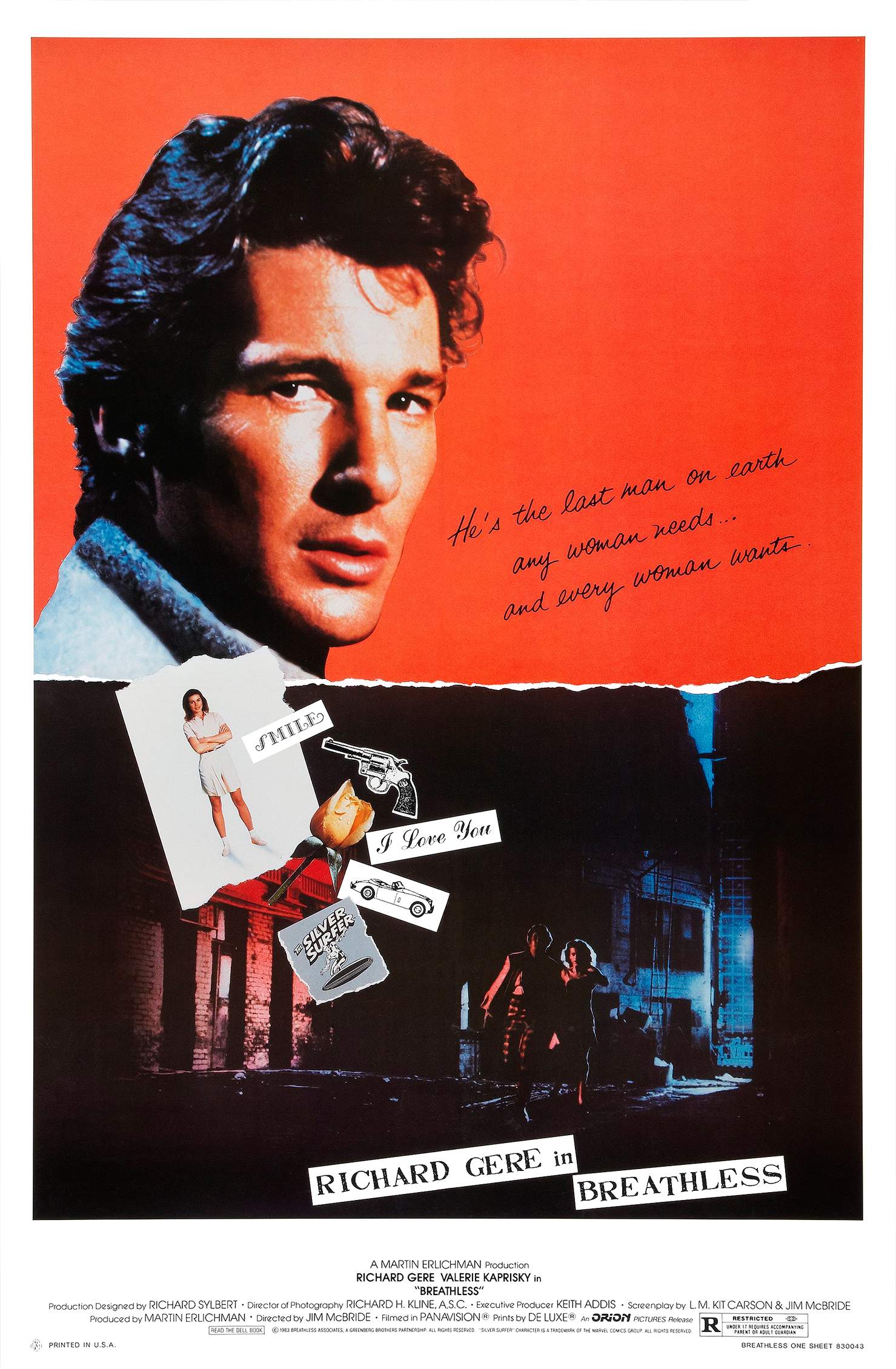
Richard Gere plays Jesse Lujack, a cocky, hedonistic drifter and small-time car thief in Las Vegas who lives for neon lights, reckless thrills, and a dangerous sense of charm. He’s obsessed with Silver Surfer comic books, the raucous music of Jerry Lee Lewis, and Monica Poiccard, a UCLA architecture student he has only met during a weekend fling while she was visiting Las Vegas.
Leaving Vegas behind, Lujack swipes a Porsche and sets out toward Los Angeles, driven by a mix of impulse and desire. While exploring the owner’s possessions, he discovers a handgun tucked in the glovebox and toys with it for a moment. A highway roadblock forces a high-stakes escape, and a patrolman gives chase. In a moment of panic, Lujack grabs the gun and fires through the back window, unintentionally fatally wounding the officer. He lowers the dying man with a coat over his head, then flees on foot, the weight of his action sinking in as he runs.
Arriving in Los Angeles, Lujack’s face blasts across newspapers and TV screens as the infamous “cop killer.” He remains on the run, unable to leave town immediately because he still needs to be paid for a prior car theft, so he decides to linger and pursue Monica. He breaks into Monica’s apartment, waiting for her return, and when she discovers him naked in her bed, she is initially wary, but they end up having sex in the shower. Lujack’s pursuit then becomes more insistent as he tries to woo her into leaving for Mexico with him, even as Monica’s reservations grow.
Lujack’s audacious behavior continues as he shows up in stolen cars to offer her rides and appears at her campus, interrupting a project presentation to professors in an attempt to win her over. Monica wavers, but Lujack’s persistence starts to wear down her defenses, and she finally agrees to consider fleeing to Mexico with him, though the romance is clearly fraught with doubt about the feasibility of their plan.
After the police start tracing Monica because of the headlines linking her to Lujack, she refuses to betray him at first. Yet as the couple drives out of Los Angeles, they pause so Lujack can repair another stolen car. Monica goes to buy a newspaper and discovers her image beside Lujack’s on the same page, a stark reminder of the danger and reality of their situation. Realizing how fragile her romantic fantasy has become, she phones the police but later returns to tell Lujack she did so. When he asks if she loves him, she answers no, and he responds with a bitter laugh: "liar."
The tension crescendos as they race toward departure, meeting an accomplice who tosses a gun to Lujack—he refuses it, letting it drop to the street. The police close in on a roadside standoff as Lujack, microphone moment of bravado and desperation, sings "Breathless" to Monica while dancing around the weapon at his feet. The scene freezes on the image of Lujack turning toward the police with the gun in hand, leaving the outcome ambiguous and the romance shattered.
Monica Poiccard, a figure torn between longing and reality, embodies the film’s pulse: a flirtation with danger that cannot outpace the truth of consequences. The narrative unfolds as a moody, sun-drenched cautionary tale about desire, risk, and the costs of running from one’s own choices.