Plot Explained Spoilers guaranteed!
Plot Explained

Browse by genre

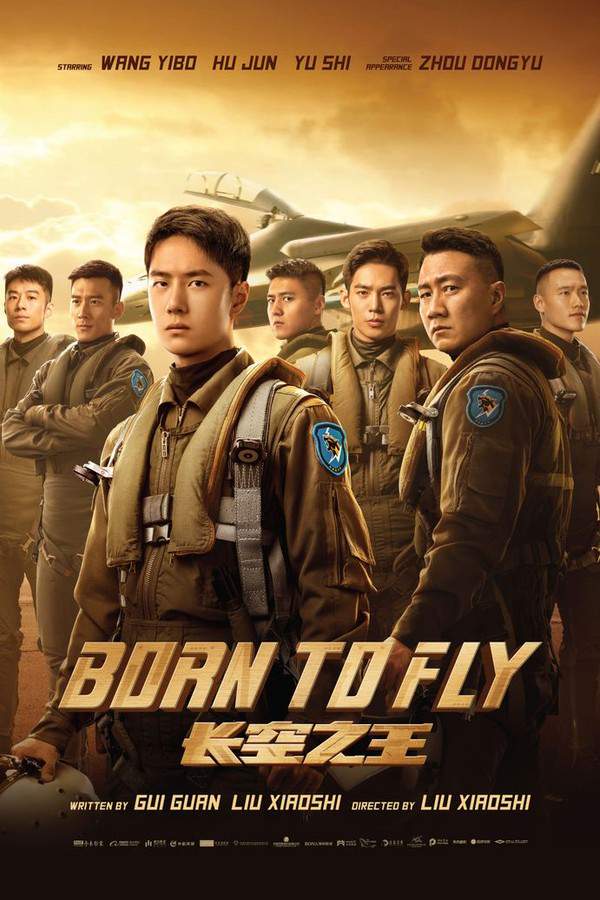
Born to Fly (2023) movie poster

Plot Summary

Born to Fly (2023) Plot Summary Explained

Release, runtime and language
2023 · 128 min · Chinese
Echo score 79
Directed by
Xiaoshi Liu
Starring
Dongyu Zhou, Jun Hu, Binlong Pan, Yibo Wang, Taisheng Chen, Xin Lu

A highly skilled air force test pilot faces a sudden and dangerous situation during a routine flight. His advanced aircraft is put to its limits as he battles to survive, pushing his physical and mental endurance to the breaking point. Every second is critical in this desperate fight for survival, forcing him to confront both external threats and his own vulnerabilities.

On this page (5)
  1. 1 What happens: full plot
  2. 2 Plot questions answered
  3. 3 Movie threads
  4. 4 Movies like Born to Fly
  5. 5 Every angle

Full plot summary · contains spoilers

What Happens in Born to Fly: Full Plot Summary

The whole story of Born to Fly (2023) explained, from the opening scene to the final frame: every key event, every twist and what it all adds up to. Read it as a quick recap before the sequel, to check a scene you missed, or to finally understand what really happened.

Two American F-35 Lightning II fighters breach Chinese airspace, causing significant disruption along the coast. Their supersonic speeds generate powerful sonic booms, resulting in damage to an oil refinery and impacting local fishing vessels. In response, Chinese pilot Lei Yu takes to the skies in his Chengdu J-10 to intercept the intruders. Pushing the boundaries of his aircraft, Lei Yu faces the formidable challenge posed by these advanced 5th generation fighters, but ultimately, the F-35s exit the airspace. However, Lei Yu's jet encounters severe engine troubles, including a flame-out during a critical vertical climb, which forces him to execute an emergency landing.

In a debrief, Lei Yu's superiors express their discontent with his aggressive flying approach. He passionately defends his decision, asserting it was the only viable tactic against superior enemy forces. The high-ranking officials contemplate the pressing issue: the vast superiority of foreign 5th generation fighters over their outdated 4th generation models. They highlight that Chinese jet engines are yet to reach a competitive standard against these advanced adversaries.

In a covert operation, China is working on developing the stealthy 5th generation Chengdu J-20 to counter such threats. Commander Zhang Ting extends an invitation to Lei Yu to join the new stealth fighter initiative, which he eagerly accepts. The test pilot team also includes notable members such as Deng Fang (Yosh Yu), Gao Yingjun, Xia Pengfei, Li Xiaohang, and Tong Gan, while Shen Tianran (Dongyu Zhou) oversees the physical fitness evaluations of all pilots.

At the training base, Lei Yu and his fellow pilots undergo intense and demanding training regimes, pushing their physical and mental limits. The J-20's development is still ongoing as the prototype WS-13 Taishan engine has not yet been finalized. They conduct various tests using alternative aircraft to evaluate the engine’s performance before it’s fitted into the J-20.

During a critical flight exercise with Commander Zhang Ting, both pilots experience a thrust failure, which leads to a perilous spiral dive. Lei Yu, sensing the imminent danger, decides to eject, while Ting valiantly manages to regain control and land the aircraft safely. Unfortunately, due to this ejection, crucial flight data is lost, rendering Lei Yu's life-risking action futile.

Subsequently, Lei Yu finds himself grounded and on the verge of being dismissed from the training facility. During this suspension, he dedicates himself to studying the mechanical issues that plagued the aircraft. He devises a proposal for an innovative anti-stall parachute that promises to enhance the safety of test pilots and aircraft, enabling them to gather vital data without catastrophic failures.

On Ting’s final day, he persuades Lei Yu to accompany him for a test flight on the fighter's engine and missile systems. Sadly, calamity strikes as both engines fail during testing, leading to catastrophic overheating. Both pilots agree to eject together, but Ting heroically decides to steer the failing aircraft away from populated areas, sacrificing his life in the process. Following his death, Ting receives a military burial, while Lei Yu resolves to honor his legacy by contributing to the J-20 program.

With Zhang gone, Deng Fang is appointed as the new chief pilot. Despite his father's concerns about China’s ability to independently produce a competitive stealth fighter, Lei Yu refuses to return home, fueled by his determination to support his country’s ambitions.

Driven by a sense of duty, he develops the anti-stall parachute deployment system, rigorously testing it on the ground. Meanwhile, the design team modifies the engine to endure the extreme conditions caused by missile exhaust without failing. In collaboration with the new chief pilot Deng Fang (Yosh Yu), they conduct successful flight tests, where the engine performs seamlessly despite ingesting missile smoke.

However, their next test takes a treacherous turn when a flock of birds strikes the cockpit, incapacitating both pilots. Nevertheless, Lei Yu rises to the challenge, determined to maintain control of the aircraft. Utilizing the newly installed anti-stall parachute, he battles through extreme adversity, proving the viability of the enhancements made.

Eventually, American stealth fighters and drone incursions repeat as they intrude once again into Chinese airspace. In a show of their advancements, Lei Yu and Deng Fang launch their newly completed J-20s, successfully shooting down the drones before confronting the F-35s. Knowing that engaging the American fighters could provoke international conflict, Lei Yu signals a warning to retreat. In a poignant end-credit scene, he and his squadron honor the memory of Commander Ting by performing a heartfelt flyby, releasing colored smoke above a soccer field as a tribute to his son.
Last updated: October 25, 2024 at 10:55

Was this helpful?

Plot questions answered

Born to Fly Plot Explained: Your Questions Answered

The questions people ask most about Born to Fly (2023): what happens in the confusing scenes, why the characters do what they do, the twists, hidden details and what the ending means. Each answer contains spoilers.

Q1

Why did Lei Yu eject during the test flight with Commander Ting?

Lei Yu ejected because both aircraft engines experienced thrust failure during a critical test, leading to a dangerous spiral dive. With the plane in an uncontrollable descent and both pilots at serious risk, Lei Yu chose to save himself by ejecting. However, this decision resulted in the loss of crucial flight data, which is why his action was ultimately deemed futile and contributed to his subsequent grounding.

Foreshadowing: Earlier training exercises had already revealed engine reliability issues with the prototype aircraft.

  • lei yu
  • ejection
  • commander ting
  • thrust failure
  • flight data
Q2

Why did Commander Ting sacrifice himself during the test flight?

When both engines failed during the test flight on Ting's final day, the aircraft began spiraling toward populated areas below. Rather than ejecting immediately alongside Lei Yu, Ting chose to stay in the failing aircraft to steer it away from civilian structures. This act of heroism ensured the plane crashed in an unpopulated area, saving potentially many lives but costing Ting his own.

Foreshadowing: Ting's leadership had consistently emphasized duty and sacrifice throughout the film.

  • commander ting
  • sacrifice
  • engine failure
  • civilian safety
  • death
Q3

Why was Lei Yu grounded after the crash?

Lei Yu was grounded and nearly dismissed from the training facility primarily because his ejection during the critical test flight resulted in the loss of essential flight data. The data was crucial for the J-20 development program, and his decision to eject rather than attempt to recover the aircraft was seen as abandoning the mission. Additionally, his earlier aggressive tactics during the F-35 interception had already drawn criticism from his superiors.

Foreshadowing: The earlier debriefing showed his superiors already unhappy with his flying style.

  • lei yu
  • grounded
  • dismissal
  • flight data
  • ejection
Q4

What was the anti-stall parachute Lei Yu developed?

The anti-stall parachute was Lei Yu's innovative solution to a critical safety problem during test flights. When aircraft engines fail during high-speed or high-altitude testing, the sudden loss of thrust can cause catastrophic stalls and crashes. The parachute system would deploy to slow the aircraft and provide pilots with a chance to regain control or eject safely, preventing the loss of both life and valuable flight data. This invention directly addressed the mechanical issues that had plagued the J-20's development.

Foreshadowing: Lei Yu's grounding gave him time to study the exact mechanical failures from the crash.

  • anti-stall parachute
  • safety innovation
  • test pilots
  • engine failure
  • lei yu
Q5

Why was developing the J-20 so important for China?

The J-20 development was crucial because American F-35 fifth-generation fighters had demonstrated overwhelming superiority over China's fourth-generation aircraft like the J-10. During the opening incursion, Lei Yu experienced firsthand how outmatched 4th generation jets were against the advanced American stealth fighters. The F-35s easily entered Chinese airspace, caused destruction with sonic booms, and escaped without consequence. The J-20 represented China's effort to close this technological gap and establish parity in modern aerial warfare.

Foreshadowing: The opening scene clearly demonstrated the technological disadvantage faced by Chinese pilots.

  • j-20
  • fifth generation
  • stealth fighter
  • technological gap
  • american fighters
Q6

Why did Lei Yu order his squadron to retreat instead of engaging the F-35s?

Lei Yu ordered the retreat because engaging the American F-35s would have risked triggering an international military conflict. Despite successfully shooting down the incursion drones and having the newly operational J-20s ready for combat, Lei Yu recognized that attacking the American fighters would escalate tensions beyond a defensive response. The J-20s had proven their capability, but a direct confrontation with U.S. military aircraft could have serious geopolitical consequences, so he chose to issue a warning and withdraw.

Foreshadowing: The entire film emphasized the delicate balance between national defense and international conflict.

  • lei yu
  • retreat
  • f-35
  • international conflict
  • j-20
  • diplomacy
Q7

Why was the WS-13 Taishan engine important for the J-20?

The WS-13 Taishan engine was the prototype engine being developed specifically for the J-20 stealth fighter. Its significance lay in the fact that China's existing engines did not meet the performance requirements for a competitive fifth-generation aircraft. The WS-13 was not yet finalized during the film's timeline, which is why the test pilots had to evaluate its performance using alternative aircraft before it could be fitted into the J-20. The engine's reliability and performance were central to whether the J-20 could actually achieve fifth-generation capabilities.

Foreshadowing: Early briefings highlighted that Chinese jet engines had not yet reached competitive standards.

  • ws-13 taishan
  • engine
  • j-20
  • prototype
  • fifth generation
  • development
Q8

Why was the bird strike incident so dangerous during the test?

The bird strike incident was critical because the birds struck directly into the cockpit, incapacitating both Lei Yu and Deng Fang. With both pilots temporarily disabled and unable to control the aircraft properly, the J-20 was left piloted only by its onboard systems in a dangerous state. This scenario tested whether the aircraft could still be safely operated under extreme duress and whether the anti-stall parachute Lei Yu had developed could handle an emergency beyond simple engine failure. The incident proved the viability of their safety enhancements.

Foreshadowing: Earlier tests had already pushed the aircraft's systems to their limits.

  • bird strike
  • cockpit
  • incapacitation
  • emergency
  • j-20
  • anti-stall parachute
Q9

What did the ending flyby with colored smoke represent?

The ending flyby was a tribute from Lei Yu and his squadron to honor Commander Ting's memory and sacrifice. They flew over a soccer field and released colored smoke, an act that held special meaning for Ting's son who was playing soccer below. This poignant scene symbolized the legacy Ting left behind, not just as a commander who gave his life for the J-20 program, but as a father and leader remembered with respect and affection by those who served under him.

Foreshadowing: The film established Ting's personal life and connection to his son through earlier references.

  • ending flyby
  • colored smoke
  • tribute
  • commander ting
  • soccer field
  • memorial
Q10

Why was Deng Fang appointed as the new chief pilot after Ting's death?

Deng Fang was appointed chief pilot because Commander Ting had died during the test flight tragedy, leaving a leadership vacuum in the J-20 program. Despite his father's concerns about China's ability to produce a competitive stealth fighter, Deng Fang possessed the necessary skills and experience to continue the development program. He worked closely with Lei Yu to conduct the successful flight tests that proved the J-20's capabilities, including the modified engine that could withstand missile smoke ingestion.

Foreshadowing: Deng Fang was already established as one of the top test pilots in the program from the beginning.

  • deng fang
  • chief pilot
  • appointment
  • j-20 program
  • leadership
Q11

Why did the F-35 incursions happen again later in the movie?

The F-35 incursions repeated to demonstrate that the threat which had motivated the entire J-20 development program was still ongoing. After Lei Yu and Deng Fang successfully completed the J-20 program, American stealth fighters and drones continued to probe Chinese airspace, essentially challenging whether the new Chinese fighter could actually counter them. This final test served as the ultimate validation of everything Lei Yu and his team had worked toward, proving the J-20 could intercept and neutralize the fifth-generation threats that had originally exposed China's technological weakness.

Foreshadowing: The opening incursion established the central problem the movie would solve.

  • f-35 incursion
  • american drones
  • j-20
  • airspace defense
  • validation

Movie threads

More Movies Like Born to Fly, by Mood & Story

Curated lists built around what makes Born to Fly tick: the same mood, the same kind of story or the same emotional payoff. Each list explains why these movies belong together.

High-Stakes Technical Thrillers like Born to Fly

Thrillers where heroes battle machinery and elements in desperate real-time crises. If you enjoyed the relentless tension and aviation drama of 'Born to Fly,' explore these movies featuring experts battling against time, technology, and the elements. This list includes films about pilots, astronauts, and specialists in equally desperate survival scenarios with a focus on technical accuracy and fast-paced, high-intensity action.

  • tense
  • urgent
  • technical
  • high-stakes
  • survival
  • determined
  • Tone: tense, urgent, determined
  • Pacing: fast, relentless
Why these movies?

The story pattern: Narratives in this thread are typically straightforward, driven by an immediate and escalating crisis. The protagonist's journey is one of endurance and quick thinking, facing a series of technical failures or environmental threats that must be overcome sequentially. The plot structure is often linear, building tension through a sequence of near-catastrophes leading to a climactic resolution.

Why they belong together: Movies are grouped here for their shared focus on a single, high-stakes survival event, a technically proficient protagonist, and a consistently tense, fast-paced atmosphere. They appeal to viewers who enjoy realistic depictions of professionals under extreme pressure, where the conflict is as much against a machine or environment as it is against a traditional antagonist.

Bittersweet Victory Stories like Born to Fly

Stories where hard-won success is profoundly shadowed by personal loss. If the ending of 'Born to Fly,' with its mix of national pride and personal tragedy, resonated with you, these movies explore similar themes. They feature stories where a great triumph is achieved, but the victory is emotionally weighted by sacrifice, loss, or heavy moral choices, resulting in a poignant and memorable conclusion.

  • bittersweet
  • grieving
  • patriotic
  • dramatic
  • solemn
  • triumphant
  • Tone: bittersweet, dramatic, heavy
  • Pacing: steady, building to climax
Why these movies?

The story pattern: The narrative pattern involves a team or individual working towards a clear, often noble goal. A key character's sacrifice partway through the story becomes the emotional catalyst that fuels the final push to success. The climax delivers the intended victory, but the resolution is introspective, acknowledging the cost and framing the achievement as a tribute, resulting in a bittersweet emotional tone.

Why they belong together: These films are connected by their specific emotional arc: a journey from determination through tragedy to a victory that feels earned yet somber. They share a heavy emotional weight and a bittersweet ending feel, appealing to viewers who appreciate stories that celebrate heroism without shying away from its real and painful consequences.

If you liked this

Movies Like Born to Fly

Similar movies to Born to Fly: the same genre, themes or kind of story. Each one comes with its own plot summary, timeline and ending explained.

Browse all movie summaries

Every angle

Born to Fly (2023) Explained: Plot, Timeline & Characters

Everything about Born to Fly in one place: what happens in the plot summary, the timeline in chronological order, the characters and meaning and a spoiler-free summary. What's After the Movie adds the cast, box office and post-credit scenes.

Coming soon on iOS and Android

The Plot Explained Movie Summary App

Plot summaries, endings explained and timelines on your phone. Catch up on any movie in minutes, save your favorites and never miss a twist again.

Be the first to know when we launch. Your email stays private, always.

Learn more about the app