Plot Explained Spoilers guaranteed!
Plot Explained

Browse by genre

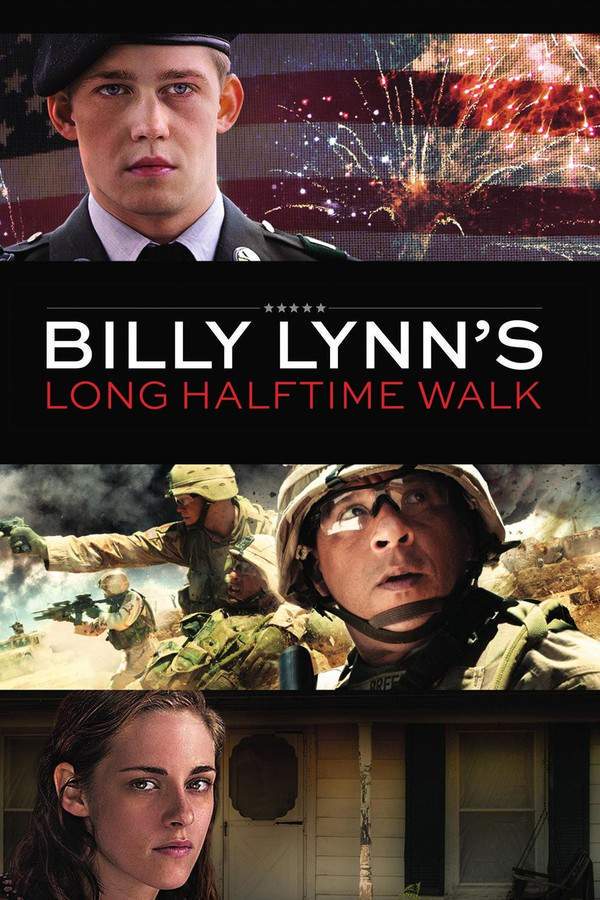
Billy Lynn's Long Halftime Walk (2016) movie poster

Plot Summary

Billy Lynn's Long Halftime Walk (2016) Plot Summary Explained

Release, runtime and language
2016 · 113 min · English
JustWatch #5,167 51
Directed by
Ang Lee
Starring
Joe Alwyn

Following a harrowing battle in Iraq, nineteen-year-old Private Billy Lynn and his unit are brought home for a celebratory tour. Thrust into a chaotic whirlwind of media appearances and public fanfare during Thanksgiving, Billy struggles to reconcile the realities of war with the idealized image presented to the American public. Fragmented flashbacks reveal the intensity of their combat experiences, contrasted with the spectacle of a halftime show performance, highlighting the emotional toll on the soldiers and the disconnect between their sacrifices and the nation's perception.

On this page (7)
  1. 1 Where to watch
  2. 2 What happens: full plot
  3. 3 Plot questions answered
  4. 4 The book behind the movie
  5. 5 Movie threads
  6. 6 Movies like Billy Lynn's Long Halftime Walk
  7. 7 Every angle

Where to watch

Where to Watch Billy Lynn's Long Halftime Walk (2016)

Where can you watch Billy Lynn's Long Halftime Walk? Stream, rent or buy it in the US, including on Tubi TV, Amazon Video and Apple TV Store: current JustWatch availability with up-to-date prices.

Streaming availability powered by JustWatch

Full plot summary · contains spoilers

What Happens in Billy Lynn's Long Halftime Walk: Full Plot Summary

The whole story of Billy Lynn's Long Halftime Walk (2016) explained, from the opening scene to the final frame: every key event, every twist and what it all adds up to. Read it as a quick recap before the sequel, to check a scene you missed, or to finally understand what really happened.

Video footage captures the intense moment when two insurgents in Iraq carry a wounded staff sergeant toward safety. Billy Lynn (Joe Alwyn), a courageous soldier, steps in and bravely shoots the insurgents, racing to save the sergeant amidst a barrage of fire. This act of valor quickly makes Billy a national hero, as the dramatic footage spreads like wildfire through the media.

Fast forward to Thanksgiving Day, 2004, and Billy joins his Bravo Squad—comprised of Sgt. David Dime (Garrett Hedlund), Mango (Arturo Castro), Foo (Mason Lee), Crack (Beau Knapp), Lodis (Brian "Astro" Bradley), Holliday (Ismael Cruz Cordova), and Skyes (Barney Harris). The squad is in the midst of a promotional tour alongside their producer Albert Brown (Chris Tucker). They receive a high-profile ride from Dallas Cowboys representative Josh (Ben Platt) in a limo, highlighting their newfound fame.

Just two days prior, the squad attended the somber funeral of their fallen sergeant, Virgil "Shroom" Breem (Vin Diesel), the very soldier Billy attempted to save in that heroic moment. After the funeral, he returned home to his mother (Deirdre Lovejoy) and sisters Kathryn (Kristen Stewart) and Patty (Laura Lundy Wheale), reminding us of the personal sacrifices that come with serving their country.

In the limo, Albert reveals he’s negotiating a deal for a film that dramatizes their experience, jokingly mentioning that Hilary Swank is interested in playing Billy—a fact that elicits laughter from the squad. During this time, it becomes clear that there is more to Billy's past; both Dime and Shroom are aware of his troubled history, stemming from a car accident involving his sister, Kathryn, which led him to take drastic measures to protect her dignity.

Amidst the celebrations, the Bravo Squad recalls their harrowing experiences, like raiding a compound where they confronted insurgents in front of their families. Billy vividly remembers the piercing gaze of a child who lost his father due to their actions, adding layers of complexity to their supposed heroism.

As the squad prepares for a halftime show at the football stadium, they are greeted with a mix of admiration and controversy from fans. During a press conference, Billy catches a smile from cheerleader Faison (Makenzie Leigh), leading to a brief but emotional encounter. He confesses to her that it feels surreal to be lauded for what he considers the worst day of his life. Following their intimate moment, they find solace in each other, even amid the chaos.

Nostalgia washes over Billy as he remembers moments with Shroom, who always brought warmth and wisdom to his teammates. Another poignant memory of a family dinner quickly devolves into an argument, exacerbating the tensions surrounding the reality of war as they witness news coverage on the television.

As the halftime show approaches, a mix of excitement and anxiety fills the air. The squad dons camouflage uniforms, and the electrifying atmosphere takes its toll on some members, particularly Crack, who grapples with PTSD. During Destiny's Child’s performance of “Soldier,” Billy walks the field, embodying both pride and turmoil.

The narrative shifts back to the fateful day of October 23rd, where the sacrifice is starkly illustrated. Shroom, having sustained grave injuries, is a haunting image as Billy fights not just for survival but for the bond they share. Fueled by desperation, he overcomes the enemy, but his victory feels hollow when he finds Shroom has succumbed to his injuries.

Later, the squad meets with Norm Oglesby (Steve Martin), the Cowboys owner, who disappointingly slashes the compensation for their film portrayal. The revelation leads to outrage among the squad, especially from Dime, who forthrightly rejects the new terms. Oglesby's words, suggesting their story now belongs to America, further alienate Billy, who refuses to have his truth exploited for profit.

Unfortunately, their promotional tour takes a dark turn when they face aggression from the stage manager, igniting Billy's deeper struggles with PTSD. As they prepare to return to serve, a significant moment arises between Billy and Faison, embodying unfulfilled wishes and heartfelt farewell as they share a kiss.

In a final emotional farewell, tension builds between Billy and his family. Though he yearns to comfort them, the path ahead feels predetermined, culminating in a bittersweet reprieve. He climbs into what represents another deployment—a humvee—reflecting on his experiences and the voices lost along the way. As they all express their love for Billy, their departure marks the continuation of his haunting journey back to war.
Last updated: November 03, 2024 at 23:07

Was this helpful?

Plot questions answered

Billy Lynn's Long Halftime Walk Plot Explained: Your Questions Answered

The questions people ask most about Billy Lynn's Long Halftime Walk (2016): what happens in the confusing scenes, why the characters do what they do, the twists, hidden details and what the ending means. Each answer contains spoilers.

Q1

Why did Billy Lynn join the army?

Billy joined the army partly due to a troubled past involving a car accident that injured his sister Kathryn. Both Sgt. Dime and Shroom were aware of this history, suggesting the incident drove Billy to seek purpose and structure through military service. The summary indicates he took "drastic measures to protect her dignity," hinting at a complex family situation that contributed to his decision to enlist.

Foreshadowing: Earlier mentions of Billy's troubled history establish why he values his bond with Shroom and the Bravo Squad so deeply.

  • billy lynn
  • army
  • enlistment
  • motivation
  • Kathryn
Q2

Why does Billy say his heroic day was the worst day of his life?

Billy saved Shroom during an intense firefight in Iraq, but despite his efforts, Shroom succumbed to his injuries. While the nation celebrates Billy as a hero for his bravery, he experienced the traumatic loss of someone he cared about deeply. This disconnect between public celebration and personal grief defines his emotional conflict throughout the film.

Foreshadowing: The halftime show's patriotic spectacle directly contrasts with Billy's traumatic memories of that day.

  • shroom
  • death
  • trauma
  • hero
  • grief
  • worst day
Q3

Why does Billy connect with the cheerleader Faison?

Billy is thrust into a whirlwind of media appearances and public fanfare that feels surreal and hollow. Faison offers him a moment of genuine human connection outside the manufactured heroism. When he confesses that being lauded feels surreal for what he considers the worst day of his life, she provides emotional understanding that no one else in his public appearances does.

Foreshadowing: Their brief relationship highlights Billy's craving for authenticity amid the artificial victory tour.

  • faison
  • cheerleader
  • connection
  • romance
  • emotional support
Q4

Why does the film deal with the Cowboys fall through?

Cowboys owner Norm Oglesby drastically reduces the compensation promised to the Bravo Squad for their story adaptation. When Dime protests, Oglesby callously states that their story now "belongs to America," effectively dismissing their right to control their own narrative. This商业 exploitation of their trauma enrages the squad and leads Billy to refuse having his truth turned into Hollywood drama.

Foreshadowing: This moment confirms the cynical exploitation theme established earlier when Albert jokes about Hilary Swank playing Billy.

  • film deal
  • norm oglesby
  • compensation
  • exploitation
  • cowboy
Q5

Why is Billy haunted by the child at the compound raid?

During a raid on an insurgent compound, Billy confronted insurgents in front of their families and remembers the piercing gaze of a child who lost his father due to their actions. This memory represents the moral complexity and collateral damage of war that contradicts the heroic narrative Billy is being forced to embody. It haunts him because it embodies the real human cost of his actions.

Foreshadowing: This memory is revealed through flashbacks during the promotional tour, contrasting with the celebratory events.

  • child
  • raid
  • memory
  • guilt
  • compound
  • father
Q6

Why does Billy have to go back to war at the end?

Despite the emotional farewell with his family and his personal struggles with trauma, Billy's deployment was always temporary. The promotional tour was designed to celebrate and then return soldiers to the front lines. He climbs into the humvee representing another deployment, highlighting the cyclical nature of his experience and the lack of real choice soldiers have in their fate.

Foreshadowing: The entire victory tour is framed as a brief interruption before returning to service.

  • deployment
  • return
  • war
  • humvee
  • ending
  • service
Q7

What triggers Billy's PTSD during the victory tour?

Billy's PTSD is triggered by the aggression he faces from the stage manager during preparations, which confronts him with hostile energy that mirrors combat stress. The overwhelming sensory experience of the halftime show, lights, noise, crowds, also affects other squad members like Crack. The entire tour forces soldiers to mask their trauma while being put on display, creating accumulated psychological pressure.

Foreshadowing: Crack's visible struggle during the halftime show demonstrates how the spectacle affects the soldiers.

  • ptsd
  • stage manager
  • trigger
  • trauma
  • stress
  • crack
Q8

Why does the family dinner argument upset Billy?

At dinner, Billy's family watches news coverage about the war, leading to an argument that exposes the disconnect between what the public understands about combat and the reality Billy has experienced. This tension reminds him why he struggles to communicate his true feelings to civilians and highlights the emotional gap between his experiences and his family's comprehension of war.
Foreshadowing: This scene establishes why Billy finds it easier to connect with Faison, another person who has no frame of reference for war.
  • family dinner
  • argument
  • war
  • news
  • tension
  • mother
Q9

What does Norm Oglesby mean when he says their story belongs to America?

Oglesby uses this phrase to justify reducing the soldiers' compensation, arguing that their story has become public property through media coverage. He essentially claims the government and public own the narrative of their heroism, not the soldiers themselves. This reflects the film's critique of how society exploits soldiers' experiences while offering them little actual support or control over their own representation.

Foreshadowing: This moment directly leads to Billy's refusal to participate in the Hollywood deal.

  • norm oglesby
  • america
  • story
  • ownership
  • exploitation
  • cowboys
Q10

Why was Shroom so important to Billy?

Shroom served as Billy's mentor and the emotional anchor of Bravo Squad, bringing warmth and wisdom to his teammates. Billy specifically tried to save Shroom during the firefight, and his failure to do so haunts him throughout the film. The fact that Shroom was aware of Billy's troubled past and still supported him suggests a deep bond that made his loss even more devastating.

Foreshadowing: Billy's memories of Shroom appear throughout the film, including during the halftime show.

  • shroom
  • virgil breem
  • sergeant
  • mentor
  • death
  • friendship
Q11

Why does Billy refuse the Hollywood film deal?

Billy refuses the deal after Oglesby's callous treatment and his statement that their story belongs to America. Billy wants to preserve the truth of his experience rather than let it be dramatized and exploited for profit. The romanticized Hollywood version would contradict everything he feels about that day being the worst day of his life rather than a heroic moment worth celebrating.

Foreshadowing: This decision follows Billy's confession to Faison about how the celebration feels surreal.

  • hollywood
  • film
  • refuse
  • truth
  • deal
  • exploitation
Q12

Why does the squad wear camouflage at the halftime show?

The squad dons camouflage uniforms for the halftime show as part of the spectacle, emphasizing the stark contrast between their combat reality and the entertainment industry. Wearing military fatigues while walking through a football stadium during a pop performance underscores the film's theme of America treating soldiers as props for patriotism rather than understanding their actual experiences.

Foreshadowing: This visual contradiction embodies the film's central critique of the gap between war and public perception.

  • camo
  • camouflage
  • halftime
  • uniform
  • football
  • destiny's child

Movie threads

More Movies Like Billy Lynn's Long Halftime Walk, by Mood & Story

Curated lists built around what makes Billy Lynn's Long Halftime Walk tick: the same mood, the same kind of story or the same emotional payoff. Each list explains why these movies belong together.

Movies about the soldier's return from war like Billy Lynn's Long Halftime Walk

Stories where the jarring return home is as complex as the battlefield. If you were captivated by the emotional conflict in Billy Lynn's Long Halftime Walk, explore other movies like it that examine the difficult transition from the battlefield to home. These similar war stories focus on PTSD, public perception, and the bittersweet reality of being a hero.

  • introspective
  • somber
  • uncomfortable
  • critical
  • disorienting
  • nostalgic
  • Tone: bittersweet, critical, melancholic
  • Pacing: variable, reflective
Why these movies?

The story pattern: These narratives often use flashbacks or parallel storytelling to juxtapose the brutal reality of combat with the surreal, often superficial, fanfare of a hero's welcome. The protagonist's journey is internal, grappling with trauma, grief, and the painful gap between their lived truth and the public's simplified narrative.

Why they belong together: They are grouped by their shared focus on the psychological toll of homecoming, a bittersweet to bleak tone, and their critical look at how society processes war. The emotional core is a heavy, introspective exploration of disillusionment and the unbridgeable distance between two worlds.

Movies with a fragmented flashback narrative like Billy Lynn's Long Halftime Walk

Films where the past intrudes on the present through jarring, emotional recall. Fans of the non-linear storytelling in Billy Lynn's Long Halftime Walk will enjoy these other movies that use flashbacks to explore trauma. Discover similar films where the past and present collide, creating a variable pace and a deeply introspective, emotionally heavy vibe.

  • disorienting
  • somber
  • psychological
  • unsettling
  • reflective
  • intense
  • Tone: introspective, somber, tense
  • Pacing: variable, jarring
Why these movies?

The story pattern: The plot unfolds through a character's subjective point of view, where present-day triggers launch them into vivid, often chaotic, recollections. This structure creates a variable pace, shifting between a steady present and intense, fast-paced memories, ultimately revealing the emotional truth piece by piece.

Why they belong together: They share a specific narrative technique where structure is inseparable from theme. The experience is defined by its disorienting contrast, moderate complexity, and the heavy emotional weight of uncovering trauma through memory. The tone is consistently introspective and often bittersweet or bleak.

If you liked this

Movies Like Billy Lynn's Long Halftime Walk

Similar movies to Billy Lynn's Long Halftime Walk: the same genre, themes or kind of story. Each one comes with its own plot summary, timeline and ending explained.

Browse all movie summaries

Every angle

Billy Lynn's Long Halftime Walk (2016) Explained: Plot, Timeline & Characters

Everything about Billy Lynn's Long Halftime Walk in one place: what happens in the plot summary, the timeline in chronological order, the characters and meaning and a spoiler-free summary. What's After the Movie adds the cast, box office and post-credit scenes.

Coming soon on iOS and Android

The Plot Explained Movie Summary App

Plot summaries, endings explained and timelines on your phone. Catch up on any movie in minutes, save your favorites and never miss a twist again.

Be the first to know when we launch. Your email stays private, always.

Learn more about the app