Plot Explained Spoilers guaranteed!
Plot Explained

Browse by genre

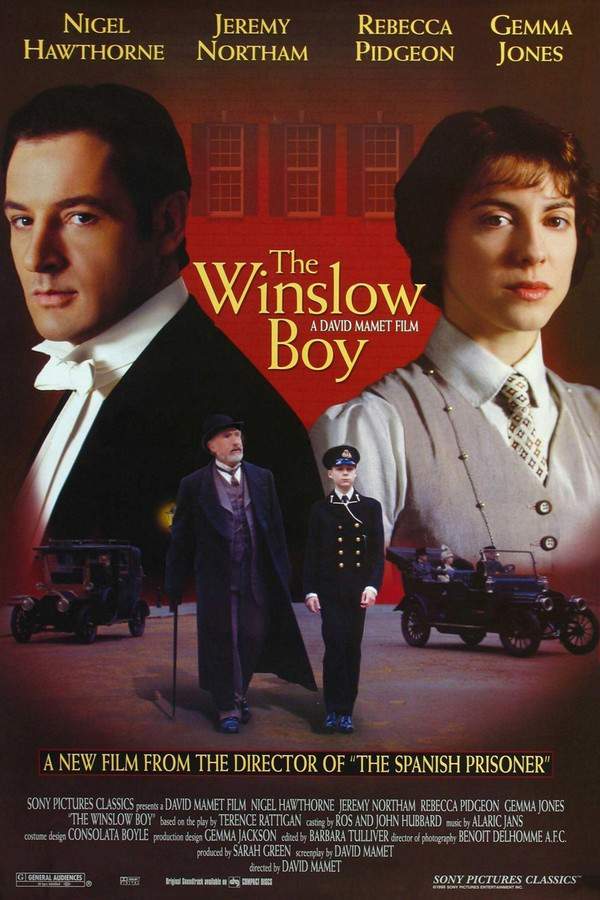
The Winslow Boy (1999) movie poster

Plot Summary

The Winslow Boy (1999) Plot Summary Explained

Release, runtime and language
1999 · 104 min · English
Directed by
David Mamet
Starring
Jeremy Northam, Nigel Hawthorne, Rebecca Pidgeon

When 14-year-old Ronnie Winslow is accused of stealing, his father, Arthur, a former barrister, takes on the case to prove his son’s innocence. Despite facing significant financial hardship and social stigma, Arthur refuses to let Ronnie be wrongly convicted. The legal battle becomes a public sensation, impacting the family's reputation and straining their relationships as they fight for justice and truth.

On this page (6)
  1. 1 Where to watch
  2. 2 What happens: full plot
  3. 3 Plot questions answered
  4. 4 Movie threads
  5. 5 Movies like The Winslow Boy
  6. 6 Every angle

Where to watch

Where to Watch The Winslow Boy (1999)

Where can you watch The Winslow Boy? Stream, rent or buy it in the US, including on Amazon Video, Apple TV Store and Fandango At Home: current JustWatch availability with up-to-date prices.

Streaming availability powered by JustWatch

Full plot summary · contains spoilers

What Happens in The Winslow Boy: Full Plot Summary

The whole story of The Winslow Boy (1999) explained, from the opening scene to the final frame: every key event, every twist and what it all adds up to. Read it as a quick recap before the sequel, to check a scene you missed, or to finally understand what really happened.

Ronnie Winslow, a 14-year-old cadet at the Royal Naval College, faces an unjust accusation of stealing a five-shilling postal order. An internal investigation, carried out without notifying his family and devoid of any representation, concludes with a guilty verdict. As a result, his father, Arthur Winslow, is compelled to withdraw Ronnie from the college—a euphemism for expulsion. Deeply convinced of his son's innocence, Arthur joins forces with his daughter, Catherine, a strong-willed suffragette, and their trusted family solicitor, Desmond Curry, to fight for Ronnie's name.

The stakes are high; under English law, Admiralty decisions cannot be challenged without government consent. Traditional wisdom dictates that any effort to question these acts must go through a lengthy process involving the attorney general. However, the Winslow family is unwavering in their determination.

In a significant turn, they engage Sir Robert Morton, the foremost barrister in England at that time. Known for his keen political acumen and as a formidable opposition MP, Sir Robert initially seems a reluctant participant. Yet, to Catherine's surprise, he quickly becomes convinced of Ronnie's innocence after conducting an impromptu interrogation that resembles cross-examination. With his characteristic composure, he advocates for the Winslows in the House of Commons, gradually mustering the political influence needed to challenge the case.

Despite government resistance, which sees the case as a nuisance, the changing tide of public opinion, fueled by the Winslows' efforts, forces the authorities to relent. As the trial unfolds, Sir Robert, alongside Desmond Curry, effectively dismantles the prosecution's arguments, leading the Admiralty to retract all charges and declare Ronnie innocent.

While the legal victory restores Ronnie's reputation, it takes a significant toll on the Winslow family. The emotional strain has severely impacted Arthur's health and family happiness. Financial burdens also emerge as the costly suit consumes funds allocated for Ronnie's brother, Dickie's, education at Oxford, jeopardizing his career ambitions. Furthermore, Catherine’s marital prospects dissolve as her fiancé, John Watherstone, breaks off their engagement due to pressures from his military-minded father. A sincere yet unreciprocated proposal from Desmond emerges as an uncomfortable option for Catherine.

Notably, Sir Robert chooses to forgo an appointment as Lord Chief Justice to prioritize the case, a decision that signifies his commitment. The play concludes with an intriguing potential for romance between Catherine and Sir Robert, both of whom acknowledge their misjudgments regarding each other. The final lines encapsulate this evolving relationship:

> "How little you know women, Sir Robert."

> "How little you know men, Miss Winslow."
Last updated: November 16, 2024 at 14:38

Was this helpful?

Plot questions answered

The Winslow Boy Plot Explained: Your Questions Answered

The questions people ask most about The Winslow Boy (1999): what happens in the confusing scenes, why the characters do what they do, the twists, hidden details and what the ending means. Each answer contains spoilers.

Q1

Why does Arthur Winslow take on his son's legal case despite the cost?

Arthur Winslow, a retired barrister, is convinced of his son Ronnie's innocence after being expelled from Royal Naval College for stealing a five-shilling postal order. His professional background compels him to fight the unjust accusation, believing that failing to challenge a wrongful verdict would destroy his son's future and honor the family name.

Foreshadowing: Early scenes show Arthur's pride in his son's naval ambitions, making the accusation particularly devastating.

  • arthur winslow
  • ronnie winslow
  • legal battle
  • father son
  • wrongful accusation
Q2

Why was Ronnie's internal investigation considered unfair?

The Royal Naval College conducted its investigation without notifying Ronnie's family and denied him any legal representation. The process concluded with a guilty verdict based solely on internal testimony, leaving the 14-year-old cadet with no opportunity to defend himself properly.

Foreshadowing: The summary notes the investigation was carried out without representation, establishing the injustice early.

  • internal investigation
  • no representation
  • unfair trial
  • cadet
  • naval college
Q3

Why does Sir Robert Morton agree to defend Ronnie after initially refusing?

Sir Robert Morton agrees to take the case after personally questioning Ronnie in what resembles a cross-examination. Despite his reputation as a reluctant participant, his interrogation convinces him of the boy's innocence, and he uses his political influence in the House of Commons to challenge the Admiralty's decision.

Foreshadowing: His initial reluctance contrasts sharply with his sudden commitment after the interrogation.

  • sir robert morton
  • barrister
  • cross examination
  • house of commons
  • political influence
Q4

Why is it so difficult to challenge the Admiralty's decision in court?

Under English law at the time, Admiralty decisions could not be formally challenged without government consent. The case required navigating political channels and obtaining the attorney general's involvement, making what should be a straightforward appeal into a complex legal and governmental battle.

Foreshadowing: The timeline notes the family must seek government consent, highlighting the institutional barriers.

  • admiralty
  • english law
  • government consent
  • legal challenge
  • institutional barrier
Q5

Why does Catherine's engagement to John Watherstone end?

Catherine's engagement dissolves when her fiancé John Watherstone breaks it off due to pressure from his military-minded father. The scandal surrounding the family's legal fight and Ronnie's accusation creates social stigma that makes the Watherstone family withdraw their approval.

Foreshadowing: Early mentions of Catherine as a suffragette establish her as someone who defies conventional expectations.

  • catherine winslow
  • engagement broken
  • john watherstone
  • social stigma
  • family scandal
Q6

Why does Sir Robert Morton decline the Lord Chief Justice position?

Sir Robert Morton declines the appointment as Lord Chief Justice to prioritize Ronnie's case, showing his commitment to the family's fight for justice. His decision signifies that defeating the Admiralty and proving Ronnie's innocence matters more to him than his own career advancement.

Foreshadowing: His political acumen and reputation suggest he had ambitions beyond this single case.

  • lord chief justice
  • career sacrifice
  • sir robert morton
  • commitment
  • justice
Q7

What causes the Admiralty to drop the charges against Ronnie?

The charges are dropped after Sir Robert Morton and solicitor Desmond Curry effectively dismantle the prosecution's arguments in court. Combined with growing public support for the Winslow family and mounting pressure on the government, the authorities ultimately retract all accusations and declare Ronnie innocent.

Foreshadowing: Public opinion shifts as the family's determination becomes a national sensation.

  • charges dropped
  • admiralty
  • trial
  • public opinion
  • innocent
Q8

Why does the legal battle create financial problems for the Winslow family?

The lengthy trial depletes the family's savings, consuming funds that were specifically allocated for Ronnie Winslow's brother Dickie's education at Oxford. This jeopardizes Dickie's future ambitions and creates lasting financial strain on the family despite their legal victory.

Foreshadowing: The timeline highlights the financial burden as a consequence of prolonged legal proceedings.

  • financial strain
  • oxford education
  • legal costs
  • family sacrifice
  • dickie winslow
Q9

What is the nature of Catherine and Sir Robert's relationship at the end?

By the play's conclusion, Catherine and Sir Robert develop romantic tension despite their earlier mutual misjudgments. Their final exchange, 'How little you know women, Sir Robert' and 'How little you know men, Miss Winslow', suggests a tentative, hopeful possibility for a future relationship between them.

Foreshadowing: Their initial interactions show intellectual sparring that evolves into mutual respect.

  • catherine winslow
  • sir robert morton
  • romance
  • relationship
  • ending
Q10

Why does Arthur Winslow's health deteriorate during the trial?

Arthur Winslow's health declines as the lengthy legal battle takes its emotional toll on him. The stress of fighting powerful institutions while believing in his son's innocence, combined with the financial burdens and family strain, severely impacts his wellbeing despite the ultimate legal victory.

Foreshadowing: The narrative establishes Arthur as the family pillar who bears the weight of their fight.

  • arthur winslow
  • health decline
  • emotional toll
  • stress
  • family sacrifice

Movie threads

More Movies Like The Winslow Boy, by Mood & Story

Curated lists built around what makes The Winslow Boy tick: the same mood, the same kind of story or the same emotional payoff. Each list explains why these movies belong together.

Legal perseverance dramas like The Winslow Boy

Stories where a principled fight against a powerful system tests personal resolve. If you liked the determined legal battle in The Winslow Boy, explore more movies where characters fight for justice against powerful institutions. These similar drama stories often involve sacrifice, public scrutiny, and a bittersweet but hopeful ending feel.

  • determined
  • urgent
  • stately
  • resilient
  • hopeful
  • formal
  • Tone: bittersweet, determined
  • Pacing: steady, procedural
Why these movies?

The story pattern: The narrative follows a protagonist or family who takes on a seemingly hopeless case against a formidable institution. The story unfolds steadily, often procedurally, focusing on the mounting pressures—financial strain, social ostracization, personal sacrifices—that threaten to break their spirit long before the final verdict.

Why they belong together: Movies are grouped here by their shared focus on a long, arduous legal battle as the central plot driver. They share a mood of determined resilience, a steady pacing driven by procedural steps, and a tone that balances the hope of victory with the sobering reality of its cost.

Bittersweet victory stories like The Winslow Boy

Narratives where a hard-worn success is shadowed by significant personal loss. Find movies like The Winslow Boy that explore the theme of victory at a personal cost. These similar drama films feature bittersweet endings where a public or legal win is tempered by private sacrifices and emotional scars.

  • bittersweet
  • melancholic
  • hopeful
  • resonant
  • solemn
  • reflective
  • Tone: bittersweet, melancholic, hopeful
  • Pacing: steady, character-driven
Why these movies?

The story pattern: The narrative follows a character's pursuit of an important external goal. The climax brings a form of success, but the resolution reveals the profound sacrifices made along the way—broken relationships, lost opportunities, or compromised ideals—creating an ending that is hopeful yet melancholic.

Why they belong together: These films are united by their exploration of the 'cost of winning.' They share a distinctly bittersweet tone where the emotional payoff is complex, a medium emotional weight that avoids being crushing, and an ending feel that acknowledges gain and loss in equal measure.

If you liked this

Movies Like The Winslow Boy

Similar movies to The Winslow Boy: the same genre, themes or kind of story. Each one comes with its own plot summary, timeline and ending explained.

Browse all movie summaries

Every angle

The Winslow Boy (1999) Explained: Plot, Timeline & Characters

Everything about The Winslow Boy in one place: what happens in the plot summary, the timeline in chronological order, the characters and meaning and a spoiler-free summary. What's After the Movie adds the cast, box office and post-credit scenes.

Coming soon on iOS and Android

The Plot Explained Movie Summary App

Plot summaries, endings explained and timelines on your phone. Catch up on any movie in minutes, save your favorites and never miss a twist again.

Be the first to know when we launch. Your email stays private, always.

Learn more about the app